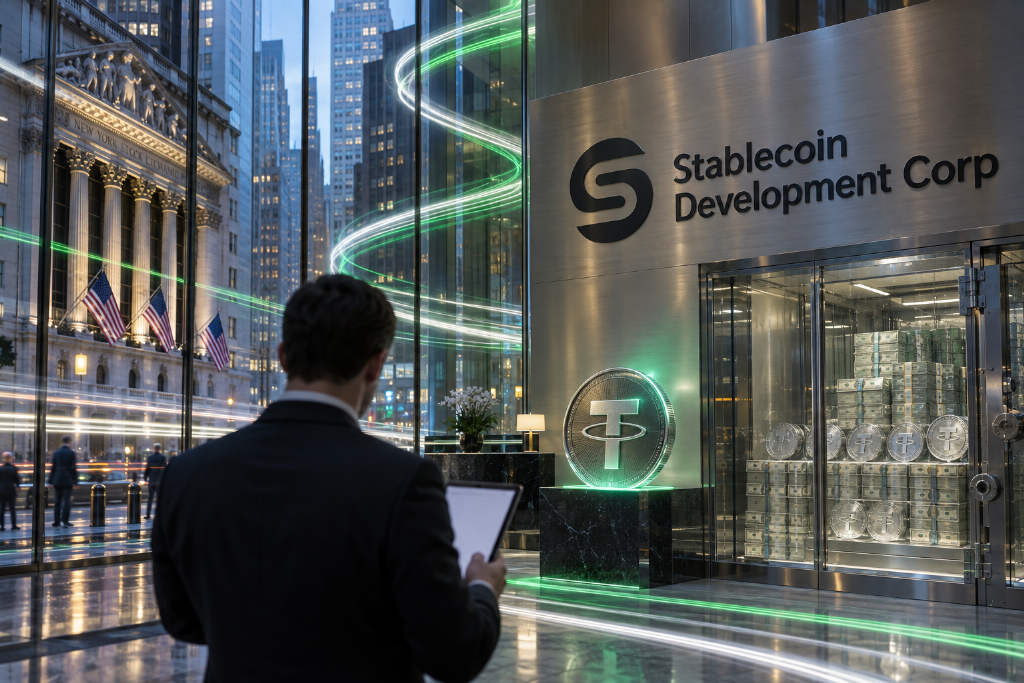
Stablecoin Development Corp surges nearly 10x in two weeks as company says it doesn’t know why

Stablecoin Development Corp surges nearly 10x in two weeks as company says it doesn’t know why

N
News Editor
2026-10-05 19:31:01
Stablecoin Development Corp, a company backed by Tether, saw its stock jump nearly tenfold over roughly two weeks after spending months trading around a $50 million market capitalization. According to Protos, there was no clear news event to explain the move. At one point, the stock briefly traded near $10, implying a market cap of about $500 million, despite the company having less than $500 million in assets. The shares later fell back to roughly $4.50, again without any identifiable catalyst. The report says the company’s core business appears to center on earning interest from USDS. Although Stablecoin Development Corp holds more than $150 million in assets and has little debt, Protos argued that the rapid repricing still lacked an obvious explanation. Four days after unusual trading activity began, the company told the U.S. Securities and Exchange Commission that it did not know why the trades were happening or who was behind them. It also said it “does not believe corrective actions are appropriate.” Tether also holds warrants tied to the company that become exercisable in mid-October. Protos noted that instruments once viewed as close to a write-off now appear much more valuable after the stock’s rise. The outlet added that Stablecoin Development Corp no longer appears to face delisting risk from NYSE American.

Stablecoin Development Corp, which had traded around a $50 million market capitalization for months, has climbed nearly 10x in about two weeks with no clear explanation, according to Protos.

Stablecoin Development Corp surges nearly 10x in two weeks as company says it doesn’t know why 2

Tether is a major investor in the company. Protos said the firm’s primary business appears to be earning interest from USDS, which it described as not necessarily a highly lucrative opportunity.

The report noted that a $50 million market cap may have looked low for a company holding more than $150 million in assets and carrying little debt. Even so, the stock briefly traded near $10 earlier today, valuing the company at roughly $500 million. For a stablecoin treasury company with far less than $500 million in assets, that valuation stood out. The shares have since dropped back to about $4.50, again with no news attached to the move.

Company told the SEC it had no explanation

Protos said short sellers have largely been unable to find affordable shares to borrow, while the stock has kept moving sharply higher since September 25. The outlet said it could identify no reason for Stablecoin Development Corp to appreciate so quickly.

Four days after unusual trading activity appeared, the company filed with the U.S. Securities and Exchange Commission, saying it did not know why the activity was happening or who was behind the trades. The company also said it “does not believe corrective actions are appropriate.”

Tether warrants are now worth much more on paper

Protos also reported that Tether holds warrants related to Stablecoin Development Corp that become exercisable in mid-October. Instruments that had more or less been treated as a write-off now appear considerably more valuable after the rally.

The report added that Stablecoin Development Corp no longer seems to face delisting danger from NYSE American.

Protos also referenced Tether having publicly listed a company that partially controls USDS.

This article was originally published by Bit.Fan. For more cryptocurrency news and market insights, visit www.bit.fan.
900

Disclaimer:

The market information, project data, and third-party content displayed on this platform are for industry information sharing only and do not constitute any form of investment advice or return commitment.

Cryptocurrency trading carries high risks. Users should fully assess their risk tolerance and make independent decisions. All profits, losses, and legal responsibilities are borne by the users themselves.