
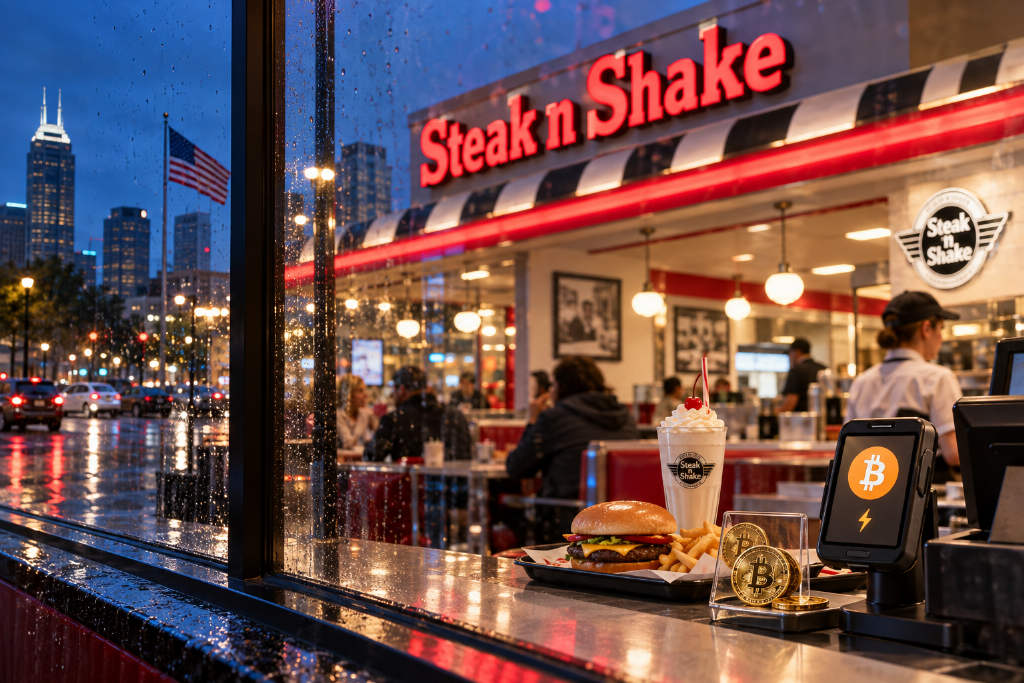
Steak n Shake said accepting Bitcoin payments has helped lift sales at the restaurant chain.

In a post on X on Tuesday, the Indianapolis, Indiana-based company said it has posted double-digit same-store sales growth since it started accepting Bitcoin in May 2025. It added that franchise-partner same-store sales rose 19% this quarter.
The company wrote: "Ever since we started accepting Bitcoin in May 2025, we have achieved double-digit same-store sales growth. And this quarter has been extraordinary, with franchise-partners same-store sales gaining 19%. Come have a Bitcoin burger and Bitcoin shake to celebrate!"
Bitcoin payments started last year
According to the report, the company began accepting Bitcoin last year and used the Lightning Network for payments. It also said it would add the cryptocurrency to its balance sheet, and in January announced that it had added $10 million in Bitcoin to its strategic reserve.
Executive previously tied Bitcoin to business performance
Back in April, Steak n Shake Chief MAHA Officer Michael Boes told attendees at the Bitcoin 2026 Conference that Bitcoin had become a core driver of the chain's business performance.
Boes said same-store sales rose 11% quarter over quarter in Q2 2025 and then accelerated to 15% in Q3 2025, ahead of major rivals including McDonald's, Taco Bell, and Domino's. He said it was the highest same-store sales growth of any restaurant in the industry, adding that Bitcoin on Lightning was cheaper and faster than traditional electronic payment methods.
Roughly 50% savings on processing fees
Boes said that when customers pay with Bitcoin instead of a credit card, Steak n Shake saves roughly 50% on processing fees. Traditional credit card processors charge merchants between 2.5% and 3.5% per transaction.
He said at the time: "Bitcoin is real money made with real energy."
Idea of adding other cryptocurrencies was dropped
The company also considered accepting other cryptocurrencies last year, according to the report. It later dropped the idea after a poll on X showed that people thought only Bitcoin was needed.
The story first appeared in Bitcoin Magazine and was written by Mathew Di Salvo.