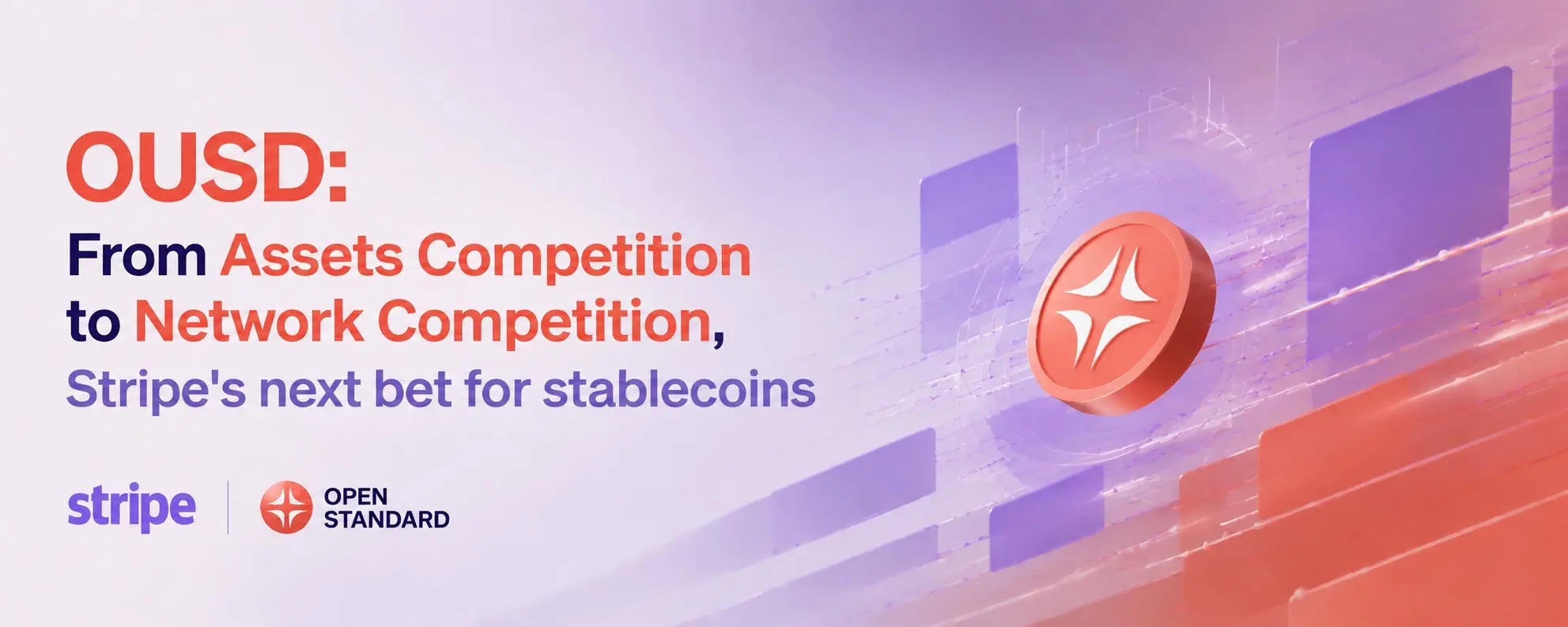
Stripe Launches Stablecoin OUSD: From Asset Competition to Network Competition

Stripe Launches Stablecoin OUSD: From Asset Competition to Network Competition

N
News Editor
2026-07-02 06:18:11
Stripe推出基于Open Standard发行的稳定币OUSD,标志着稳定币市场从资产竞争转向网络竞争。OUSD获得Visa、Mastercard和Google等巨头支持,采用共享治理与收益模式,并成为Stripe平台默认稳定币,直接挑战Circle的USDC。此举旨在重塑全球资金流动基础设施。
StripeOUSDstablecoinOpen StandardVisaMastercardpayment infrastructurenetwork effect

OUSD Model and Partners

Stripe has officially launched its stablecoin OUSD, issued by Open Standard, with global giants Visa, Mastercard, and Google as partners. OUSD adopts a shared governance and revenue model, distinguishing itself from traditional centralized stablecoins. Stripe makes OUSD the default stablecoin on its platform, meaning all Stripe merchants and services will settle in OUSD by default.


Stripe Launches Stablecoin OUSD: From Asset Competition to Network Competition 2

Stripe Launches Stablecoin OUSD: From Asset Competition to Network Competition 3

Stripe's Ambition and Market Impact

This move marks a shift in stablecoin competition from asset quality alone to network effects. OUSD directly challenges Circle's USDC, aiming to build a next-generation global payment infrastructure by integrating payment channels, e-commerce platforms, and tech giants. The shared governance mechanism may attract more developers and financial institutions to the ecosystem, accelerating stablecoin adoption in cross-border payments and supply chain finance.

Stripe Launches Stablecoin OUSD: From Asset Competition to Network Competition 4

This article was originally published by Bit.Fan. For more cryptocurrency news and market insights, visit www.bit.fan.
200

Disclaimer:

The market information, project data, and third-party content displayed on this platform are for industry information sharing only and do not constitute any form of investment advice or return commitment.

Cryptocurrency trading carries high risks. Users should fully assess their risk tolerance and make independent decisions. All profits, losses, and legal responsibilities are borne by the users themselves.