
Asset manager Strive swapped cash for Strategy’s STRC and, by July 10, was still more than $4 million worse off than if it had simply kept that cash on hand. According to Protos, Strive first deployed $50 million into STRC in March and then added roughly another $500,000, bringing its total outlay to about $50.5 million.
A newer filing showed that, as of July 10, those shares were worth $44.18 million. On that basis, the firm was sitting on a paper loss of roughly $6.3 million before dividends are counted. Protos noted that, unlike Strive’s promotional announcement when it made the purchase, the loss disclosure appeared quietly in an SEC filing between the company’s cash and BTC balances.
Measured against cash, Protos said the instrument Strive had framed as a cash-like holding had lost about 12% of its value relative to cash. The dividends Strive received from holding STRC, the report said, were nowhere near enough to erase that gap.
How Strive pitched the purchase
Strive CEO Matt Cole initially presented the trade as prudent treasury management. At the time, he said Strive chose STRC “instead of holding idle cash earning low yields in money market funds.” Cole serves at Strive after years managing money at CalPERS, the large California pension fund.
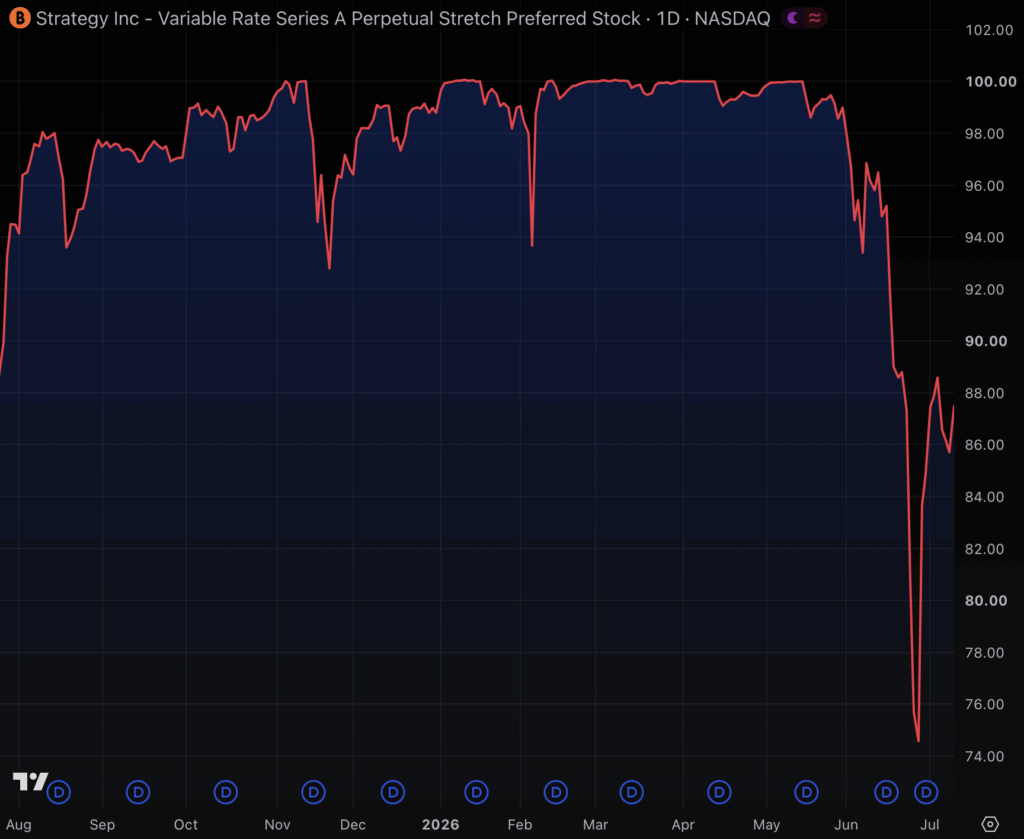
Protos challenged that comparison directly. The report said STRC is nothing like a money market fund and noted that the stock fell as low as $71.25 on June 26, down 28% from its $100 par value. Even so, Strive had originally claimed STRC would “provide strong yield dynamics while maintaining stable price behavior.”
Unlike a bank account or a money market fund, STRC trades daily on Nasdaq and its price moves with the market. Strategy has said the security should trade close to its $100 par value because of how it adjusts dividend rates. Protos described that mechanism as dubious and said it has documented the issue extensively before.
Strive also counted its STRC shares toward the so-called reserve backing dividends on SATA, its own competing quasi-stable dividend-paying stock. Protos said neither STRC nor SATA offers principal protection, deposit insurance, or the right to redeem shares with the company at par. What they are worth, the report said, comes down to the price a Nasdaq trader is willing to pay.
The actual bet was larger than $50 million
Protos said the scale of the loss looks worse once Strive’s full cost basis is counted. In March, the firm bought 500,000 STRC shares at the full $100 par value rather than bidding at a discount. Before April 2, it quietly added about 5,000 more shares.
That second purchase was worth roughly $500,000, taking the true outlay to about $50.5 million. Strive’s April 6 filing also listed its holdings at $50.5 million.
From there, STRC drifted lower and then dropped hard, losing roughly a quarter of its value within two weeks. Protos linked that slide to leverage unwinding and to a broader collapse across BTC treasury companies alongside the underlying asset. On June 26, STRC hit an all-time low of $71.25. At that level, Strive’s 505,000 shares were worth about $36 million, leaving it with a hole of more than $14 million against the $50.5 million it had committed.
Losses narrowed by July 10, but were still about $6.3 million before dividends
By July 10, STRC had recovered from its June 26 low, reducing Strive’s unrealized loss from more than $14 million to roughly $6 million. Using the $50.5 million cost basis, Protos calculated that the unrealized loss excluding dividends was about $6.3 million, or 12.5%.
The report added that when Protos checked earlier in June, Strive’s loss stood at about $1.8 million, or 3.7%. Based on the latest figures in this story, the damage is now more than three times as large.
Dividends did not close the gap
Protos did note that STRC paid dividends during the holding period, softening the hit to some extent. Since March, STRC’s annualized dividend rate has been close to 11.5%, and Strive had held the security long enough to collect 4.5 months of dividends. That works out to roughly 4.4% on principal.

Even so, that income still fell well short of offsetting a 12.5% unrealized loss on the lower value of the shares. Protos said that, after adjusting for dividends received, Strive had still lost more than $4 million by July 10 compared with simply holding cash.
The report also said STRC closed “yesterday” only about 1% above its July 10 price, meaning an update to more current pricing would barely change the math.
Protos’ conclusion
Protos concluded that Strive had told shareholders STRC would be better to hold than idle cash, but idle cash would at least have maintained its dollar value. The report also said Strategy’s own BTC treasury is deeply underwater by billions of dollars, and that STRC’s slide reflects doubt over whether Strategy can sustain the stock anywhere close to $100 per share.
According to the story, companies holding STRC and other Strategy securities have already paid the price.