
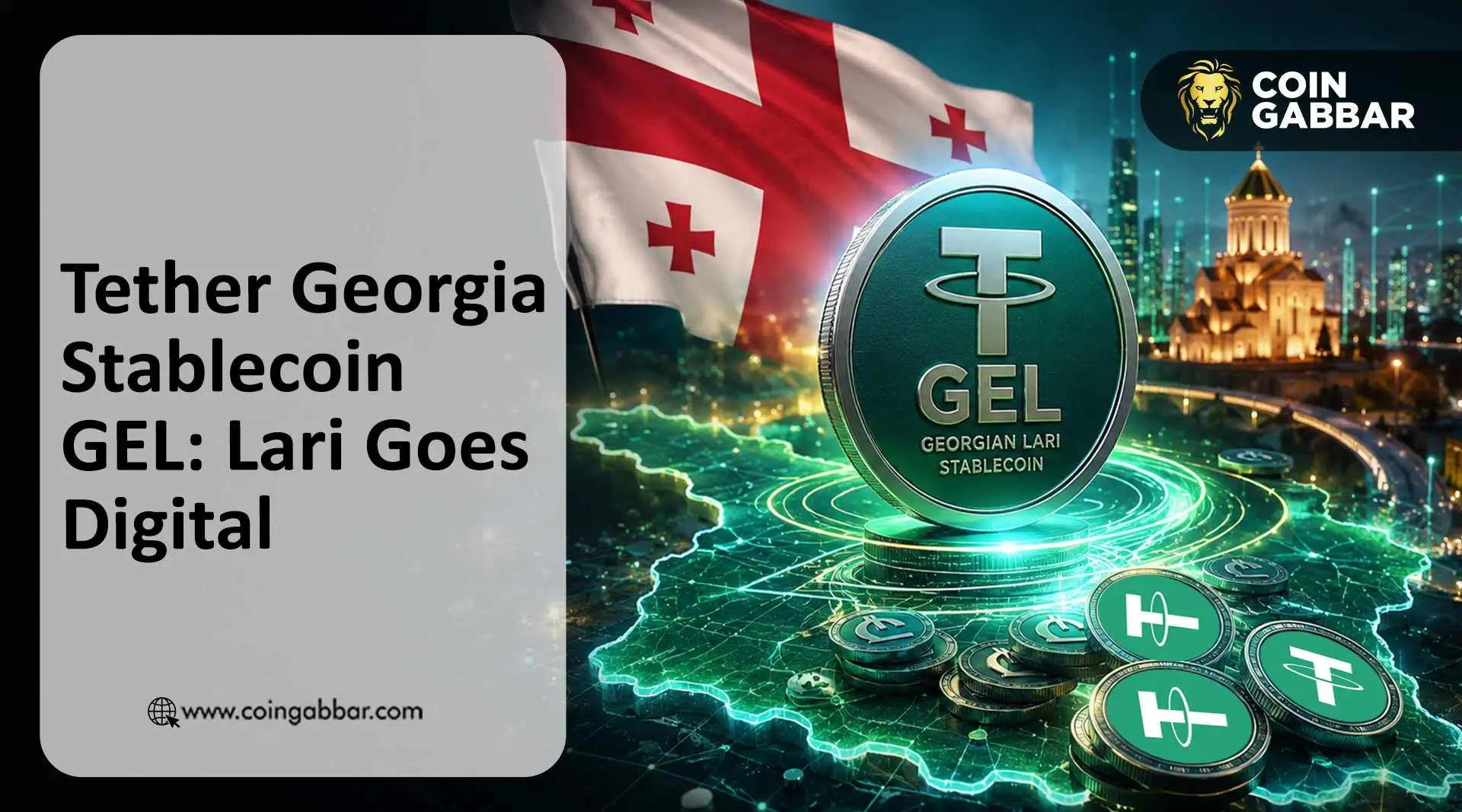
Tether announced a joint initiative with the Georgian government to launch GEL₮, a digital token backed by the national currency, the Georgian lari. This is not a pilot or sandbox test — it marks the first time a sovereign government directly partners with the world's largest stablecoin issuer for a local-currency token in a European-adjacent market.
What GEL₮ Does and How It Works
Each GEL₮ token is 1:1 backed by the Georgian lari, held in reserve by Tether. The token targets four pain points in Georgia's traditional banking system: high transaction costs, slow settlement, lack of programmability, and reliance on bank accounts. It enables near-instant on-chain settlement, supports smart-contract-based automatic payments, and transfers value across wallets without requiring a bank account on either end.
The partnership builds on a Memorandum of Understanding signed between Tether and the Georgian government in 2023, focusing on blockchain infrastructure, Bitcoin education, and peer-to-peer payment development. Irakli Nadareishvili, Georgia's Deputy Minister of Economy and Sustainable Development, confirmed the collaboration aims to develop local blockchain technologies and attract sector companies to the Georgian market.
Georgia Wrote the Rules Before the Token
Unlike most countries that launch a token and write rules afterward, Georgia did the reverse. The National Bank of Georgia published a comprehensive stablecoin regulatory framework before GEL₮'s issuance, covering 100% reserve requirements, redemption rights on demand, issuer licensing, and anti-money laundering compliance. Issuers need National Bank permission, registration as a virtual asset service provider, and a minimum capital of 500,000 lari ($182,000), scaling up to 50 million lari ($18.2 million) as reserve assets grow.
More notably, Georgia designed its framework with the U.S. GENIUS Act in mind — which passed the Senate 68-30 and the House 308-122, with specific issuer licensing, capital standards, and AML rules effective July 18, 2026. Georgia's proactive alignment with GENIUS Act signals its ambition to have its infrastructure recognized not just domestically but by U.S. financial partners.
Regional Significance and Watchpoints
No other country in the South Caucasus or Eastern Europe has paired a government stablecoin framework with a Tier-1 issuer at this level. If GEL₮ succeeds, it becomes a reference model for sovereign-currency stablecoins built from Day 1 with legal clarity, private-sector infrastructure, and U.S. regulatory alignment.
As of May 25, 2026, no official launch date has been confirmed. Analysts are watching three things: the issuance timeline, independent reserve audits, and merchant/banking adoption. Near-instant settlement only delivers value if the receiving side accepts GEL₮. Merchant and banking integration will determine whether it becomes a daily payment tool or a mere proof of concept.