
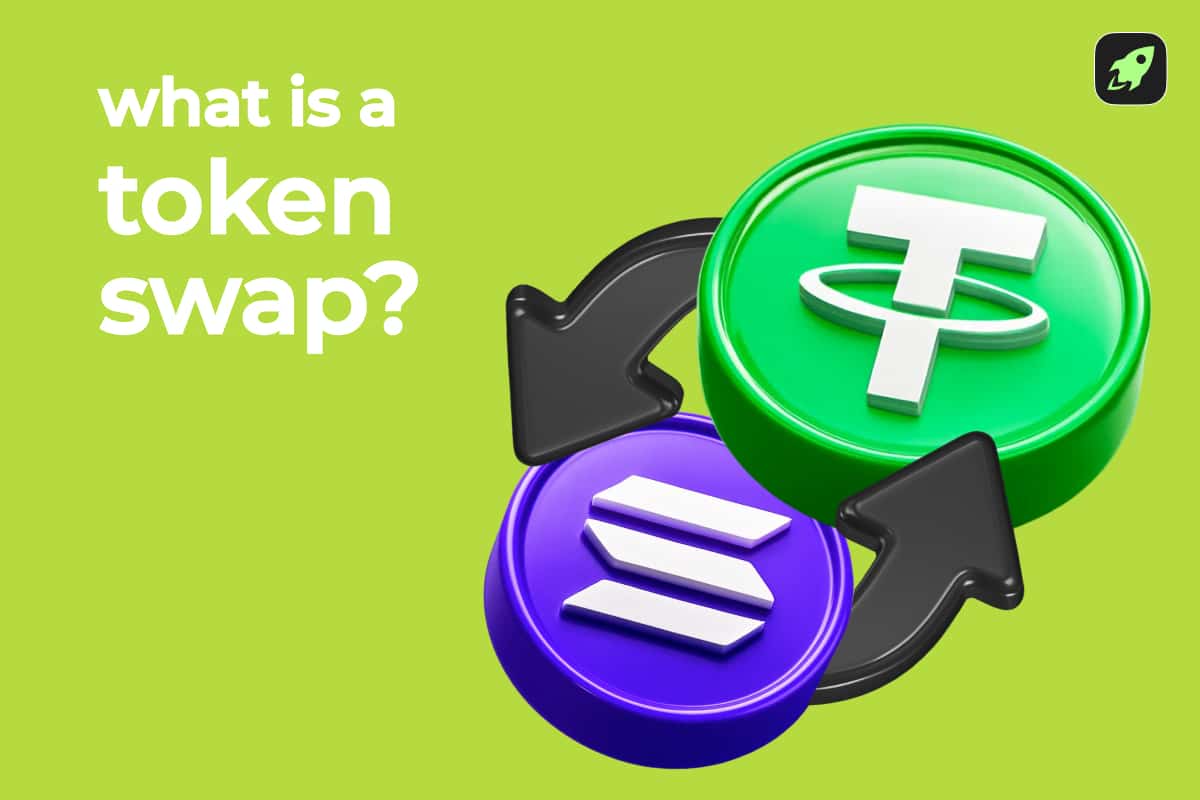
Token swaps allow direct exchange of one cryptocurrency for another without fiat conversion or order books. Most decentralized exchanges (DEXs) rely on automated market makers (AMMs) and liquidity pools — smart contracts automatically calculate rates and execute trades in a non-custodial manner.
Why People Swap Tokens
Swaps help diversify portfolios, access new DeFi protocols, or participate in staking and yield farming. Token migrations also trigger swaps: EOS initially sold placeholder tokens on Ethereum, later replaced them with native mainnet coins. Cross-chain swaps enable exchanging BTC for ETH without a centralized exchange, using atomic swap technology that either completes fully or cancels. Token burns and whitelisting events may also require swaps for security upgrades.
Swap Types and Key Mechanics
Basic swaps stay within one chain: select a trading pair, confirm amount, and the pool quotes a rate. Popular DEXs like Uniswap, PancakeSwap, and Curve Finance use the constant product formula (x×y=k) — large trades cause price impact that shifts actual execution price. Aggregators such as 1inch scan multiple platforms to split orders for best rates.
Slippage depends on liquidity depth: shallow pools amplify price moves even for small swaps. Gas fees (measured in Gwei) spike during network congestion, raising total costs. Some users switch to Layer 2 networks, BSC, or Solana to lower fees.
Advanced Strategies and Risks
Liquidity providers receive LP tokens, which can be staked or used in yield farming to earn extra rewards. Arbitrageurs exploit price differences between DEXs and centralized exchanges, but success demands fast execution and low fees. Wrapped tokens like wBTC enable cross-chain compatibility.
Watch out: multiple swaps accumulate gas fees; wrong addresses or malicious contracts can cause losses. Many jurisdictions treat token swaps as taxable events — check local regulations.