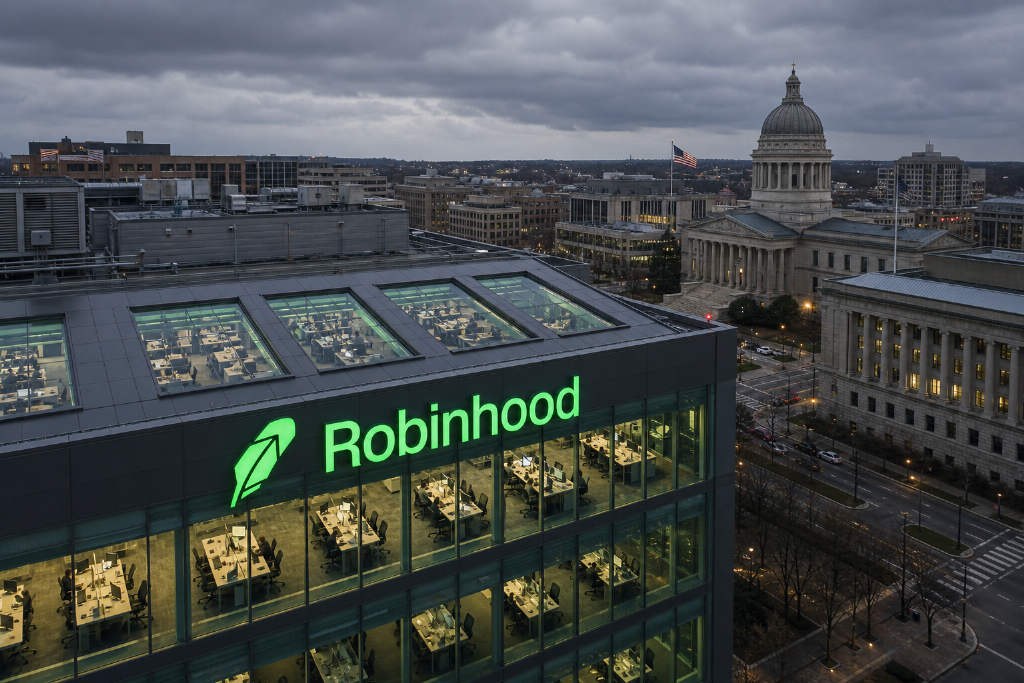
Tom Lee said in a podcast interview that if he could hold only one company for the next 10 years, he would choose Robinhood Markets rather than prediction market platform Kalshi. He argued that Robinhood has built a competitive moat through its user interface and customer relationships, adding that investors sometimes underestimate that advantage. In his view, the company has formed a real connection with users, which could serve as a key base for long-term growth.
Lee also said prediction markets still face significant regulatory uncertainty. He noted that the sector is dealing with state-level regulators and court decisions, making the path ahead difficult to call. Several U.S. states, including New York and Nevada, have already taken legal action tied to prediction market businesses, while the U.S. Court of Appeals for the Ninth Circuit is expected to issue a related ruling later this year. Lee said it may make more sense for the Commodity Futures Trading Commission, or CFTC, to hold regulatory authority over the sector. He added that changes around prediction market oversight are part of a broader reshaping of financial services regulation and business models.
Tom Lee said in a podcast interview that if he could own only one company for the next 10 years, he would choose Robinhood Markets instead of prediction market platform Kalshi.
Lee said Robinhood has a competitive moat built on its user interface, or UI, and its customer relationships, an advantage he believes investors sometimes undervalue. He added that Robinhood has established a real connection with users, which he sees as an important foundation for the company’s long-term growth.
Regulatory outlook for prediction markets remains unsettled
Speaking about regulatory risk facing prediction markets, Lee said the sector involves local regulators and judicial rulings, leaving substantial uncertainty ahead.
He pointed to legal action already taken in several U.S. states tied to prediction market-related business, including New York and Nevada. He also said the U.S. Court of Appeals for the Ninth Circuit is expected to issue a related decision later this year.
On the question of regulatory structure, Lee said it may be more reasonable for the Commodity Futures Trading Commission, or CFTC, to have regulatory authority. He added that changes in prediction market oversight are part of a broader restructuring of the financial services regulatory system, while the final outcome from the courts remains hard to predict.
Longstanding focus on fintech and digital assets
Lee has long been positive on the fintech and digital asset sectors. He said the financial services industry will see broader changes in regulation and business models in the future.
This article was originally published by Bit.Fan. For more cryptocurrency news and market insights, visit www.bit.fan. Disclaimer:
The market information, project data, and third-party content displayed on this platform are for industry information sharing only and do not constitute any form of investment advice or return commitment.
Cryptocurrency trading carries high risks. Users should fully assess their risk tolerance and make independent decisions. All profits, losses, and legal responsibilities are borne by the users themselves.