
Markets stayed focused on macro signals and Bitcoin’s next resistance test
TRON’s weekly industry report said global markets spent Aug. 3 to Aug. 9, 2026 trading around expectations for monetary policy, inflation trends and the durability of economic growth. In the report’s framing, the key variable for global asset pricing remains how long U.S. rates stay elevated and what path the Federal Reserve eventually takes on cuts. Dollar liquidity and Treasury yield swings, it said, continued to shape risk appetite across markets.
The report said Europe is still dealing with growth pressure during its recovery, with attention on coordination between fiscal support and monetary policy. In Asia, the focus has been on regional economic repair, exchange-rate stability and shifts in external demand. TRON’s overall read was that global capital is still waiting for clearer macro direction, while volatility remains elevated.
For the week of Aug. 10 to Aug. 16, 2026, the report said traders would be watching U.S. economic releases, policy signals from major central banks and changes in global liquidity. If inflation keeps easing and strengthens expectations for looser policy, risk assets could find support. If data come in stronger than expected and extend the period of high rates, markets could face another round of pressure.
BTC rebounded toward $65,000 while ETH held relatively stronger
In crypto, TRON said the market posted a volatile recovery during the week. Bitcoin rose from a low near $62,500 to roughly $64,900-$65,100, for a weekly gain of about 3%. The report tied that move to weaker-than-expected U.S. jobs data, firmer expectations for future Fed rate cuts and improving sentiment across risk assets.
At the same time, it said resistance in the $65,000-$66,000 area remains clear. Ethereum outperformed Bitcoin and held around $1,900, with flows still focused on the Ethereum ecosystem, ETF money and institutional allocation trends. SOL, BNB and other large-cap assets also rebounded, but TRON said capital still favored core assets such as BTC and ETH, while liquidity recovery in the altcoin market remained limited.
On sentiment, the report said risk appetite improved this week, but institutional capital and trading volumes have not yet shown an obvious acceleration. That leaves BTC in what TRON described as a key technical pressure zone.
Looking ahead, the report said the next week would likely revolve around macro liquidity and whether Bitcoin can break higher. If BTC clears the $65,000-$66,000 range effectively, the market may test $68,000-$70,000 next. If that breakout fails, TRON said traders should watch support around $62,000-$63,000. If ETH keeps its relative strength, it could become a more important destination for rotation, with the $2,000 level as the main line to watch.
TRON’s short-term stance was neutral to mildly bullish. It said the main drivers remain Fed policy expectations, institutional inflows and changes in stablecoin liquidity. But until BTC confirms a breakout, altcoins may continue to trade in a split pattern, with capital leaning toward AI, RWA and DeFi infrastructure segments that already have a clear narrative and real use cases.
AI+Crypto shifts toward infrastructure while DeFi keeps moving upmarket
In the sector overview, the report said AI+Crypto is entering an infrastructure competition phase. The focus, it said, is moving away from AI tokens and toward the on-chain execution, secure authorization and payment capabilities needed by AI agents. TRON cited projects including Newton Protocol and AXON, saying they are building around agent trading permissions, PayFi payments and verifiable execution.
In DeFi, the report said the trend continues toward institutionalized yield management. It pointed to Gauntlet, Morpho and Kamino as examples of projects rolling out more mature strategy products around risk management, yield optimization and on-chain asset allocation.
Sealcoin: identity and payment rails for the machine economy
TRON’s first featured project was Sealcoin, which the report said has raised $4 million with WISeKey and Hashgraph among the lead backers. It described Sealcoin as infrastructure for the machine economy.
According to the report, the protocol is designed so IoT devices, robots, satellites, AI agents and edge computing nodes can discover services, establish identity, negotiate pricing and settle payments automatically. The stated goal is a real machine-to-machine, or M2M, economic network in which machines move beyond being merely connected devices and become autonomous economic actors.
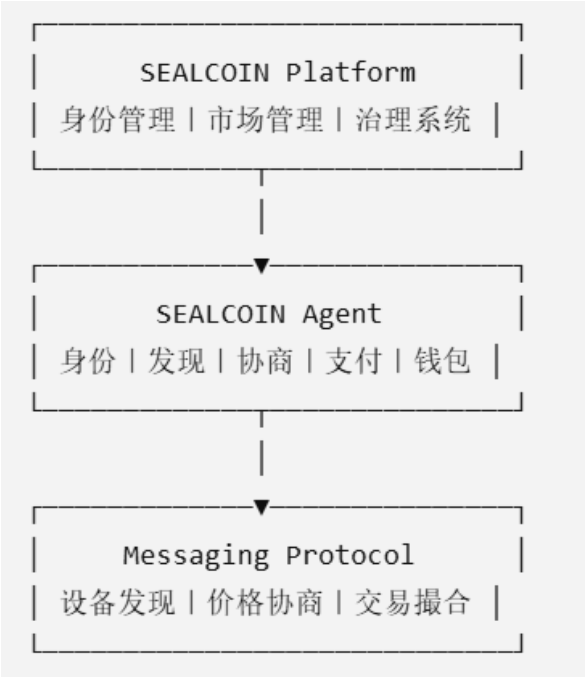
TRON said Sealcoin should not be viewed as just another DePIN project. Its aim is broader: to build an economic network that supports autonomous service discovery, price negotiation and value exchange between machines. The protocol uses a three-layer architecture made up of the Platform layer, the Agent execution layer and a Messaging Protocol layer.
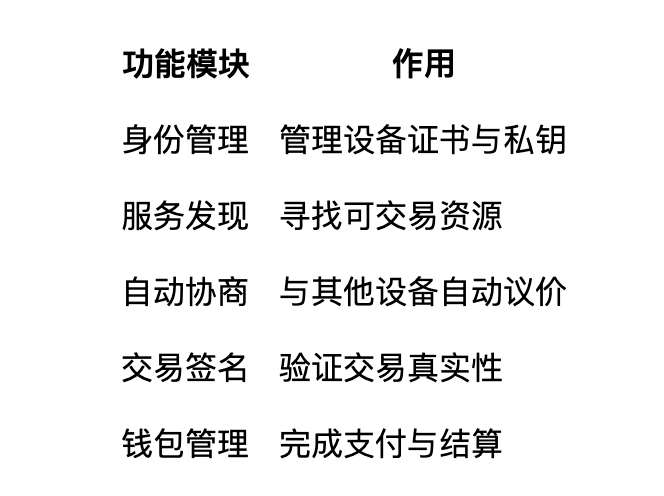
Unlike conventional IoT systems that depend on centralized cloud platforms, the report said Sealcoin is trying to turn each device into an independent participant in economic activity. The Agent is the core piece. TRON described it as the on-chain economic representative for each device. Once a satellite, vehicle, sensor or AI agent deploys a Sealcoin Agent, it can access the capabilities needed to take part in the network.
Off-chain negotiation, on-chain settlement
The report stressed that Sealcoin does not push every interaction onto a blockchain. It used a scale example: if 1 million devices each send 10 price inquiries per second, the network would need to process 10 million requests, something TRON said no existing public chain could handle.
Instead, the protocol splits activity between off-chain negotiation and on-chain settlement. Off-chain messaging handles service discovery, resource matching and price negotiation. On-chain settlement handles trade confirmation, payment settlement and records. TRON’s summary was direct: this is a hybrid design built around off-chain commercial negotiation and on-chain value settlement, meant to balance efficiency, cost and trust.
Hardware root of trust and a PKI-based identity model
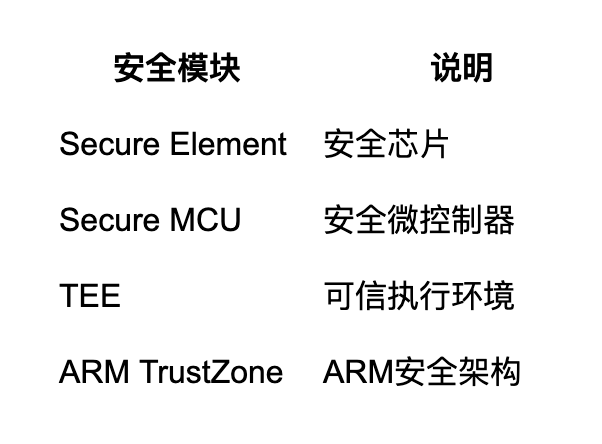
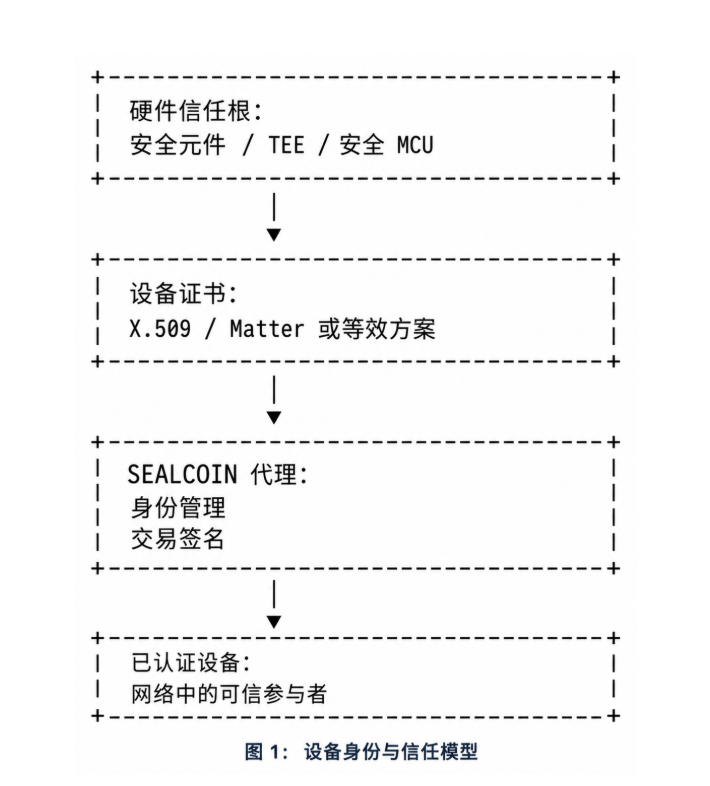
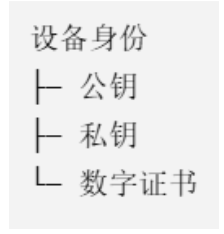
On identity, the report said Sealcoin requires private keys to be stored directly inside secure hardware rather than in a software environment, where keys can be copied, stolen or forged. TRON compared the model to bank card chips, passport chips and Ledger hardware wallets, arguing that device identities become extremely hard to duplicate.
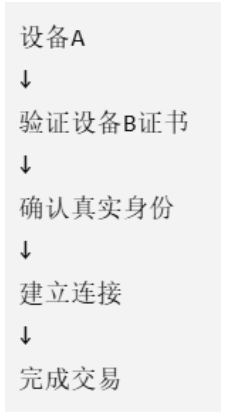
The report also said Sealcoin uses a public key infrastructure, or PKI, model that has been tested on the traditional internet for decades. Each device receives what TRON likened to a digital passport. When a device initiates a transaction, the verification process resembles a browser checking an HTTPS website, except the subject being verified is the device itself.
TRON added that Sealcoin has already planned for quantum-computing risks. The report said the project intends to gradually support post-quantum cryptographic schemes including CRYSTALS-Kyber and Dilithium. In TRON’s view, that suggests the system is being designed not only for the next five years, but for machine networks over the next 10 to 20 years.
Four marketplaces: satellites, energy, compute and data
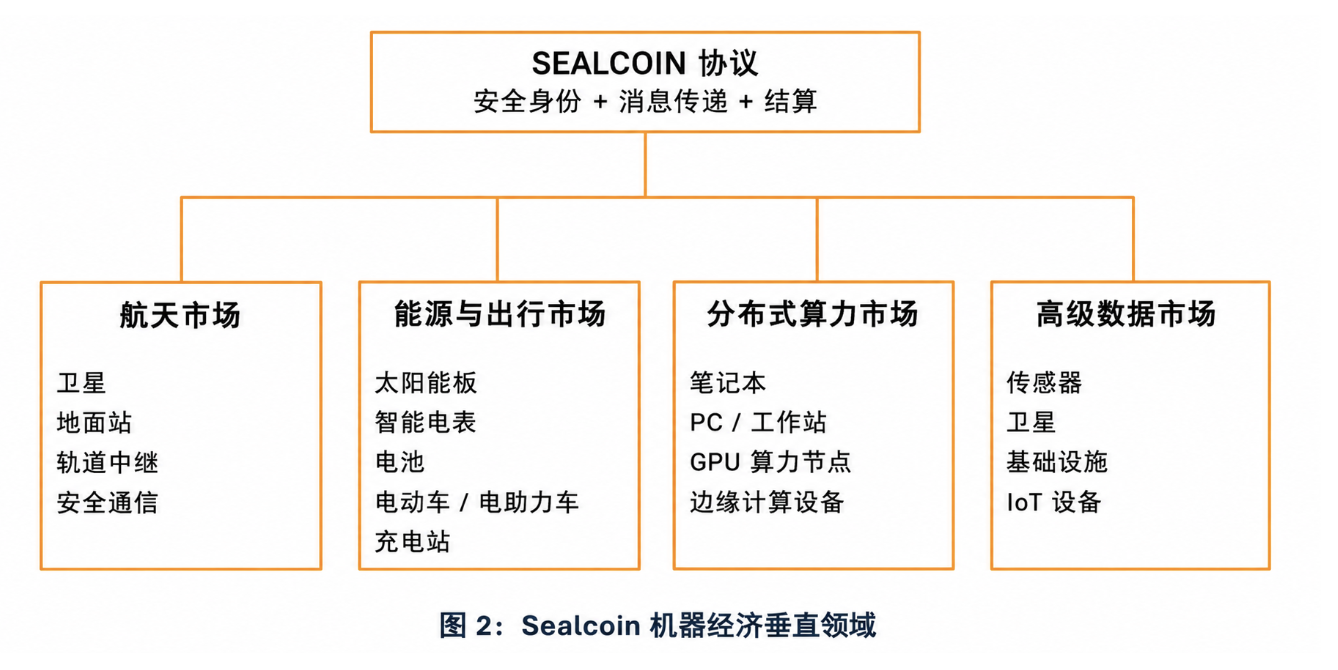
TRON said Sealcoin’s end goal is not payment alone. It is trying to build trading venues for machine resources, and the report grouped those efforts into four marketplaces.
- Space Marketplace: a satellite economy network. TRON said this is the most mature use case so far, with processes that once required manual contracts compressed into automated transactions.
- Energy Marketplace: a market for machine-led energy transactions. The report listed electric vehicles, charging stations, home storage systems, solar systems and smart meters as likely participants.
- Distributed Compute Marketplace: a market intended to activate idle hardware across the world, including PCs, laptops, GPU servers and edge devices. TRON compared it with Render, Akash and Golem, but said Sealcoin adds identity, resource verification and automatic settlement.
- Premium Data Marketplace: a data market focused on authenticity. The report said the scarce resource in the AI era is not tokens but real data, and Sealcoin is trying to sell verified data rather than ordinary data streams.
On onboarding and identity management, TRON said the Sealcoin Platform acts as the unified gateway for the machine economy network. It handles device registration, identity management, certificate management, PoSy binding and access to marketplaces. Enterprises can onboard satellites, EVs, sensors, GPU nodes and AI agents through the platform, assign digital identities, manage certificates and permissions, and then connect those devices to energy, satellite communications, compute and data markets.
For payments and treasury flow, the report described a model of platform wallet to device wallet to automated transaction. Operators first top up the platform with QAIT, then allocate balances to devices based on business needs. Devices, through their Agents, can handle service discovery, price negotiation and payment settlement on their own. TRON said the key shift is from human-controlled wallets to machine-controlled wallets, enabling scenarios such as satellites buying bandwidth, EVs paying charging fees and AI agents purchasing compute without manual action.
TRON’s assessment of Sealcoin
The report argued that Sealcoin’s strength is that it is not merely a DePIN or payments project. TRON said it is aiming for a full stack of machine identity, machine marketplace and machine payment. It highlighted the combination of a hardware root of trust, a PKI certificate system and the Agent framework, which in its view gives satellites, EVs, sensors and AI agents the ability to discover services, negotiate pricing and settle transactions autonomously. It also pointed to the presence of physical hardware and satellite resources tied to WISeKey, SEALSQ and WISeSat as a sign of stronger industrial grounding.
TRON also laid out the risks. It said the machine economy is still in a very early stage, commercialization could take time, and the network depends heavily on hardware vendor integration and device scale. Expanding that ecosystem is much harder than growing a software-only protocol. The report also noted that Sealcoin is issuing on Hedera, where developer and capital depth still trail ecosystems such as Ethereum and Solana. Whether it can form a large machine trading network, TRON said, will depend on actual device onboarding and real demand.
STRATO: a blockchain operating system for enterprise and RWA use
The second project in the report was STRATO, which TRON said has raised $1.7 million from individual investors. It described STRATO as an institutional-grade Layer1 application chain built to create a credit system backed by real-world assets.
According to the report, the ecosystem has three main parts: STRATO Chain, the USDST stablecoin and a hard-collateral asset framework. The base chain uses an EVM-compatible architecture developed in Haskell and has more than a decade of continued development history. USDST is issued through an overcollateralized CDP model and can be redeemed for USDC and USDT. Collateral includes BTC, ETH and LSTs, but also GOLDST and SILVST, which the report said are backed 1:1 by physical gold and silver, along with yield-bearing stablecoins and tokenized equities.
TRON said the design is meant to combine traditional stores of value with an on-chain credit system, creating institutional-grade stablecoin and credit infrastructure with lower borrowing costs, steadier collateral and less sensitivity to crypto-market volatility.
CDP issuance and liquidation mechanics
The report said STRATO runs on three pillars: a CDP stablecoin model, hard-asset RWA collateral and a proprietary Layer1 architecture. Users can mint USDST by pledging gold, silver, crypto assets or other RWAs, while the system maintains safety through overcollateralization and liquidation.
TRON said USDST uses a collateralized debt position model similar to MakerDAO. After depositing assets into a vault, users can mint USDST based on a required collateral ratio. Each position has a collateral ratio defined as the value of collateral divided by the value of USDST issued. Users must keep that ratio above the system minimum to absorb price swings, and they need to repay debt before they can redeem collateral.
If collateral values fall and a position drops below the minimum ratio, the report said the system liquidates it. TRON said this design is meant to force risky positions out in time, keep USDST fully backed and stop bad debt from damaging the peg. In the report’s description, the stablecoin’s safety comes from collateral value remaining above the amount of USDST in circulation.
Gold and silver as core differentiators
TRON singled out the gold and silver collateral framework as STRATO’s clearest point of difference. Unlike many DeFi systems that mainly accept crypto collateral, STRATO brings in hard real-world assets. The report identified GOLDST and SILVST as the core examples.
It said each GOLDST and SILVST token is backed by corresponding physical precious metal reserves, with 1:1 reserve support, auditable reserves, physical redemption and an on-chain/off-chain asset mapping model. TRON said that because gold and silver are usually less correlated with the crypto market, they can strengthen the system’s resilience when the market is under stress.
Haskell-based Layer1 and a revenue flywheel
TRON said STRATO is more than a stablecoin protocol because it operates its own Layer1 infrastructure. The report traced that base back to Ethereum’s earliest Haskell client implementation, with the codebase developed by BlockApps starting in 2014, before the Ethereum mainnet launched.
On the choice of Haskell, the report said the language has long been used in reliability-heavy systems including finance, aviation and defense. TRON’s point was that the architecture is meant to reduce the probability of logic flaws during operation.
The report summarized STRATO’s value capture as a revenue flywheel: higher protocol usage leads to more protocol revenue, which increases token demand and then strengthens network security and the broader ecosystem. Unlike DeFi projects that rely on token inflation for incentives, TRON said STRATO is trying to generate revenue from real credit and liquidity activity and return part of that value to network participants.
It added that protocol revenue is expected to come from real on-chain financial activity rather than token issuance alone. As USDST supply grows, borrowing demand rises and RWA scale expands, TRON said protocol income should increase as well.
TRON’s assessment of STRATO
In the report’s view, STRATO’s advantage lies in combining hard-asset RWA collateral, an overcollateralized stablecoin and independent Layer1 infrastructure into a credit system built for institutions. TRON said that compared with DeFi models that lean mostly on crypto collateral, the inclusion of 1:1 physical gold through GOLDST and silver through SILVST gives the system stronger value support during crypto drawdowns. It also said USDST maintains stability through overcollateralization and liquidation while feeding a cycle of lending expansion, protocol revenue, validator returns and token demand growth. The Haskell-based Layer1, TRON added, is better aligned with institutional demands around security, auditability and compliance.
The report’s downside case focused on ecosystem and trust assumptions. Because STRATO uses its own chain, its ecosystem size and liquidity base are still well behind major networks such as Ethereum and Solana. TRON also said custody, auditing and redemption of gold, silver and other real-world assets inevitably depend on off-chain institutions, creating a degree of centralized trust risk. The project’s long-term outcome, it said, will depend heavily on USDST adoption, expansion in RWA scale and the continued addition of institutional users.
Macro review: jobs data, unemployment, ISM services and JOLTS shaped the week
TRON also reviewed the main macro releases from Aug. 3 to Aug. 9. The U.S. nonfarm payrolls report for July, released on Aug. 7, showed job growth below market expectations. The report said that pointed to continued cooling in the labor market. After the release, TRON said, markets increased expectations for future Fed easing, Treasury yields moved lower, the dollar index came under pressure and risk sentiment improved.
U.S. unemployment data released the same day showed the rate stayed at a low level, but momentum in job growth slowed. The report said markets interpreted that as a shift from an overheated labor market toward normalization, reinforcing expectations for a policy turn.
The U.S. ISM services PMI, released on Aug. 5, still showed expansion in services activity, but TRON said expectations around future demand and cost pressure had become more divided. Markets are watching whether slower growth could affect the disinflation path. JOLTS openings data released on Aug. 4 showed vacancies continued to fall, reflecting weaker hiring demand and supporting the cooling-labor-market view, the report said.
TRON also mentioned U.S. trade data released on Aug. 5. Changes in the trade deficit, it said, reflected ongoing pressure in global demand conditions, keeping attention on how softer external demand could affect U.S. growth.
Policy watch: delayed U.S. legislation, tighter tax transparency in India and MiCA rollout in Europe
On regulation, the report tracked developments in the U.S., India and the European Union.
In the U.S., the Senate had been expected to move forward with the CLARITY Act, a digital asset market structure bill, but the vote was delayed until after the summer recess because of partisan differences and some regulatory disputes. TRON said the bill is meant to define the regulatory line between the Securities and Exchange Commission and the Commodity Futures Trading Commission, set rules for crypto trading platforms and clarify digital asset classification standards. If passed, the report said, it would provide a clearer legal foundation for the U.S. crypto market. For now, the delay means regulatory certainty has not fully arrived and the U.S. remains in a market-structure formation stage.
In India, the report said digital finance tax reporting rules were updated to bring some crypto assets, CBDCs and digital currency products into the global tax information exchange framework. The new rules strengthen due diligence obligations for financial institutions, disclosure of digital asset transaction information and oversight of cross-border fund flows. TRON’s reading was that India continues to recognize the existence of digital assets while tightening transparency, rather than moving toward a blanket ban.
In Europe, MiCA, the Markets in Crypto-Assets Regulation, continues to move through full implementation. TRON said the current areas of focus include licensing for crypto-asset service providers, oversight of stablecoin issuance and user-protection requirements. In its view, Europe’s regulatory center of gravity has shifted from rulemaking to enforcement and supervision, making the EU one of the most complete crypto regulatory systems in operation and pushing exchanges, wallets and stablecoin issuers toward compliance migration.
Report includes a risk disclaimer
TRON ended the report with a standard disclaimer, saying markets involve risk and the material does not constitute investment advice. Readers should decide for themselves whether any opinions or conclusions in the report fit their own circumstances and bear responsibility for their own investment decisions.