
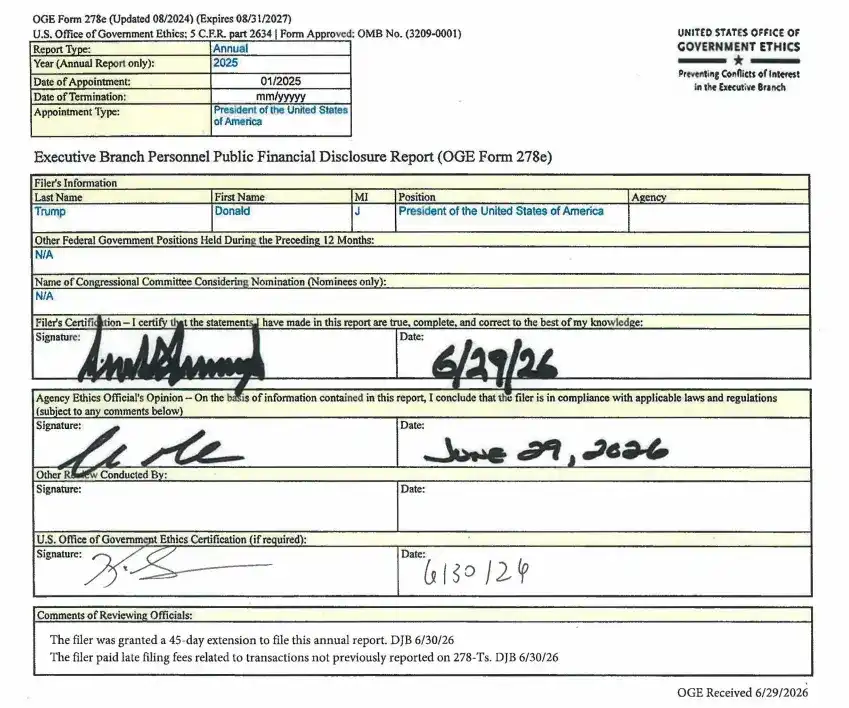
A 927-page annual financial disclosure released by the U.S. Office of Government Ethics shows that Donald Trump reported more than $2.2 billion in personal income for 2025, marking the highest annual income ever disclosed by a sitting U.S. president. According to the filing and media summaries, the total was driven by cryptocurrency ventures, real estate holdings, stock investments, licensing revenue, and legal settlement proceeds. Compared with the more than $600 million he reportedly made in 2024, Trump's earnings accelerated sharply after his return to the White House.
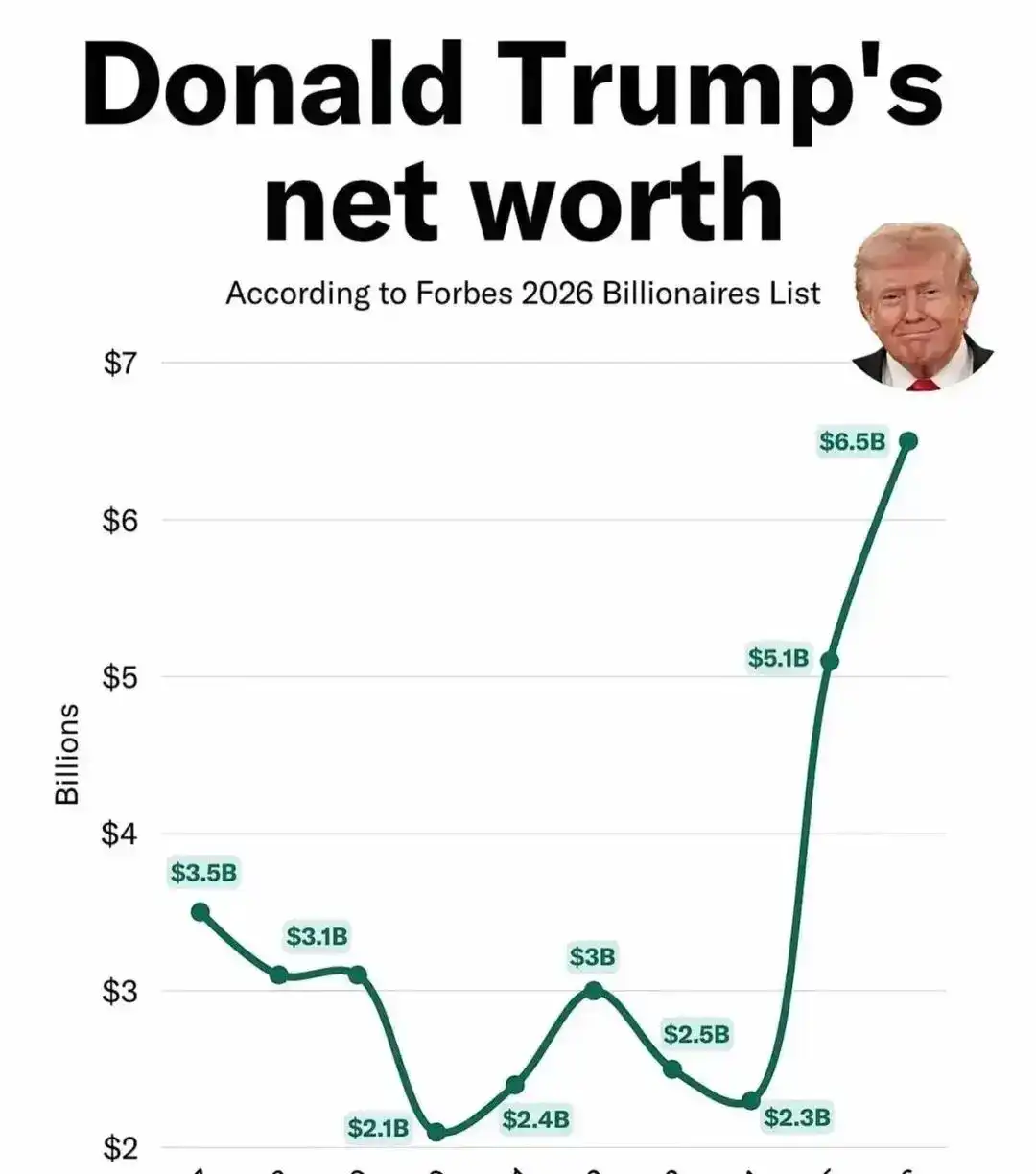
Based on the disclosed figures, Trump earned roughly $6.02 million per day and about $250,000 per hour during the year. Reports also said his net worth climbed from $2.3 billion in 2024 to $6.5 billion in 2026. Unlike the post-Watergate norm in which U.S. presidents try to reduce the overlap between public office and private assets, Trump's second term has drawn attention for deepening the ties between presidential influence and his commercial empire, reigniting debate over ethics and conflict-of-interest boundaries.
Crypto accounted for the largest share of income
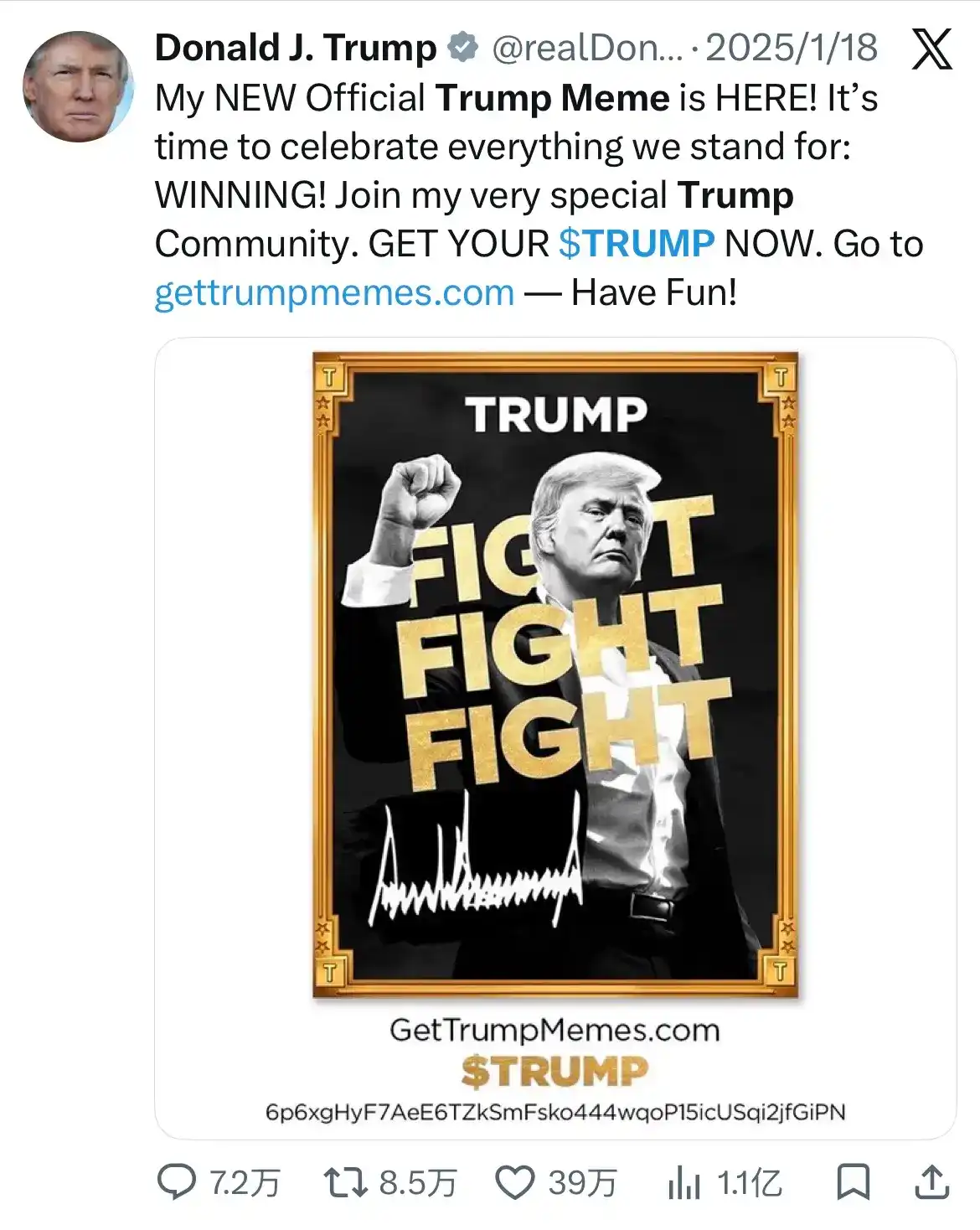
According to The Wall Street Journal's breakdown of the filing, around $1.4 billion of Trump's 2025 income came from cryptocurrency, or about 64% of the total. Real estate contributed about $575 million, roughly 26%. He also reported about $86.5 million in legal settlement income, $68.6 million in licensing revenue, and $79.3 million in stock investment gains. Combined, crypto and real estate represented close to 90% of his total disclosed income.
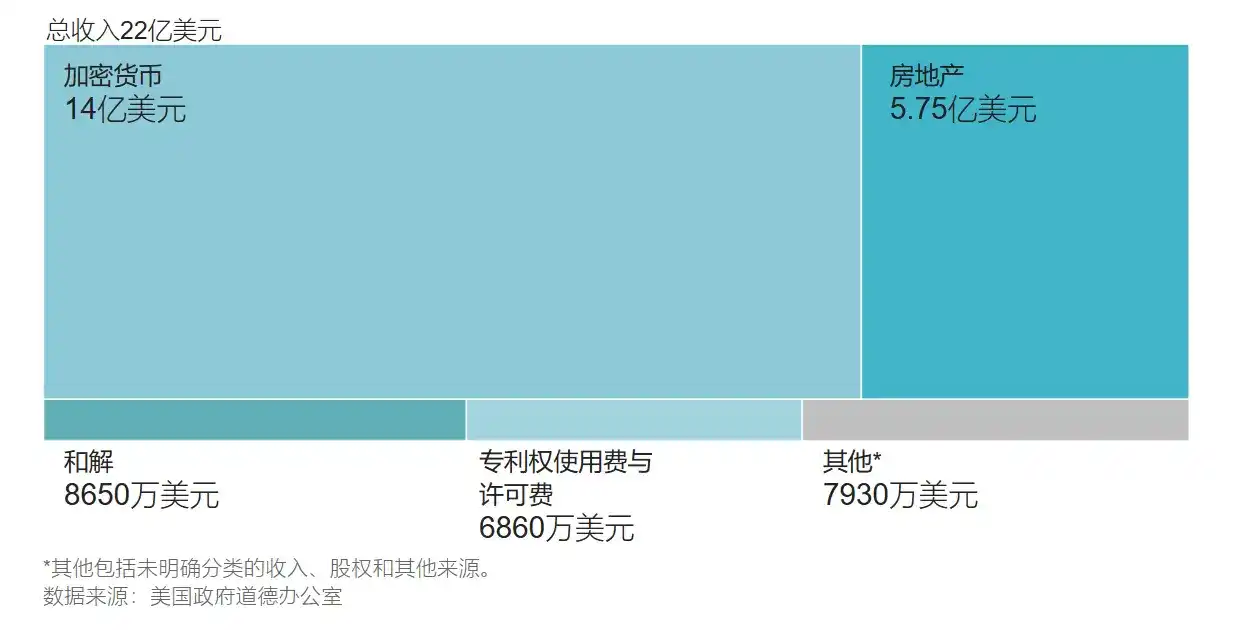
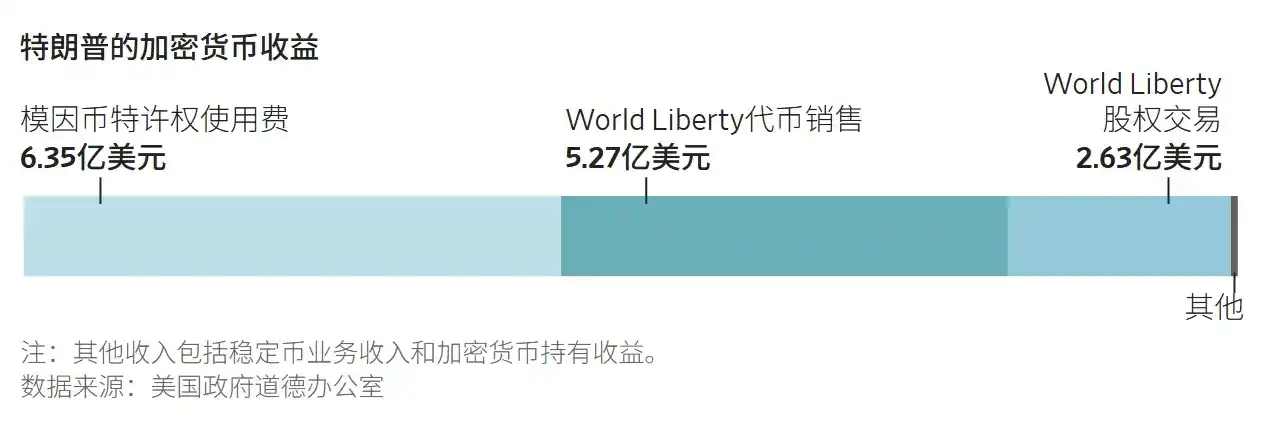
The most eye-catching crypto component was the personal memecoin $TRUMP, which reportedly generated about $635 million. According to the report, in January 2025, shortly before returning to the White House, Trump signed an IP licensing arrangement with affiliated companies to authorize a token bearing his name. After launch, the token drew significant attention, and the structure of the deal reportedly delivered more than $600 million in licensing-related proceeds to Trump.
Another major crypto revenue source was World Liberty Financial, or WLFI. The company was launched by the Trump family near the end of the 2024 presidential campaign and issued the WLFI token. The filing indicates that Trump made about $527 million from WLFI token sales in 2025, up roughly ninefold from 2024. In addition, he sold part of his equity interest in World Liberty Financial, generating another $263 million in proceeds.
Real estate remained the core asset base
Even with crypto emerging as the main growth engine, real estate remained Trump's long-standing financial base. The report noted that the broader U.S. property market was weak in 2025, with home sales hovering near 30-year lows. Many of Trump's real estate projects performed only modestly, with annual income roughly in line with, or in some cases below, levels he had reported about a decade ago.
Resorts and golf properties were the main exceptions, posting around 15% annual growth. Mar-a-Lago stood out most clearly. The filing showed that the club generated more than $77 million in 2025 revenue, up 50% year over year, while a nearby golf club saw income rise 27%. Reports argued that the financial performance of these properties appeared closely linked to Trump's political visibility and travel schedule.
During a 2025 trip to Scotland, Trump also attended a ribbon-cutting event at his own newly opened golf course. That appearance was criticized as using a presidential trip to promote a private asset, though reports said the project had generated more than $40 million in revenue for him in the prior year. Membership pricing and access at Trump-linked clubs, especially around Mar-a-Lago, have likewise remained a recurring source of scrutiny in the U.S. media.
More than 22,000 stock trades drew scrutiny
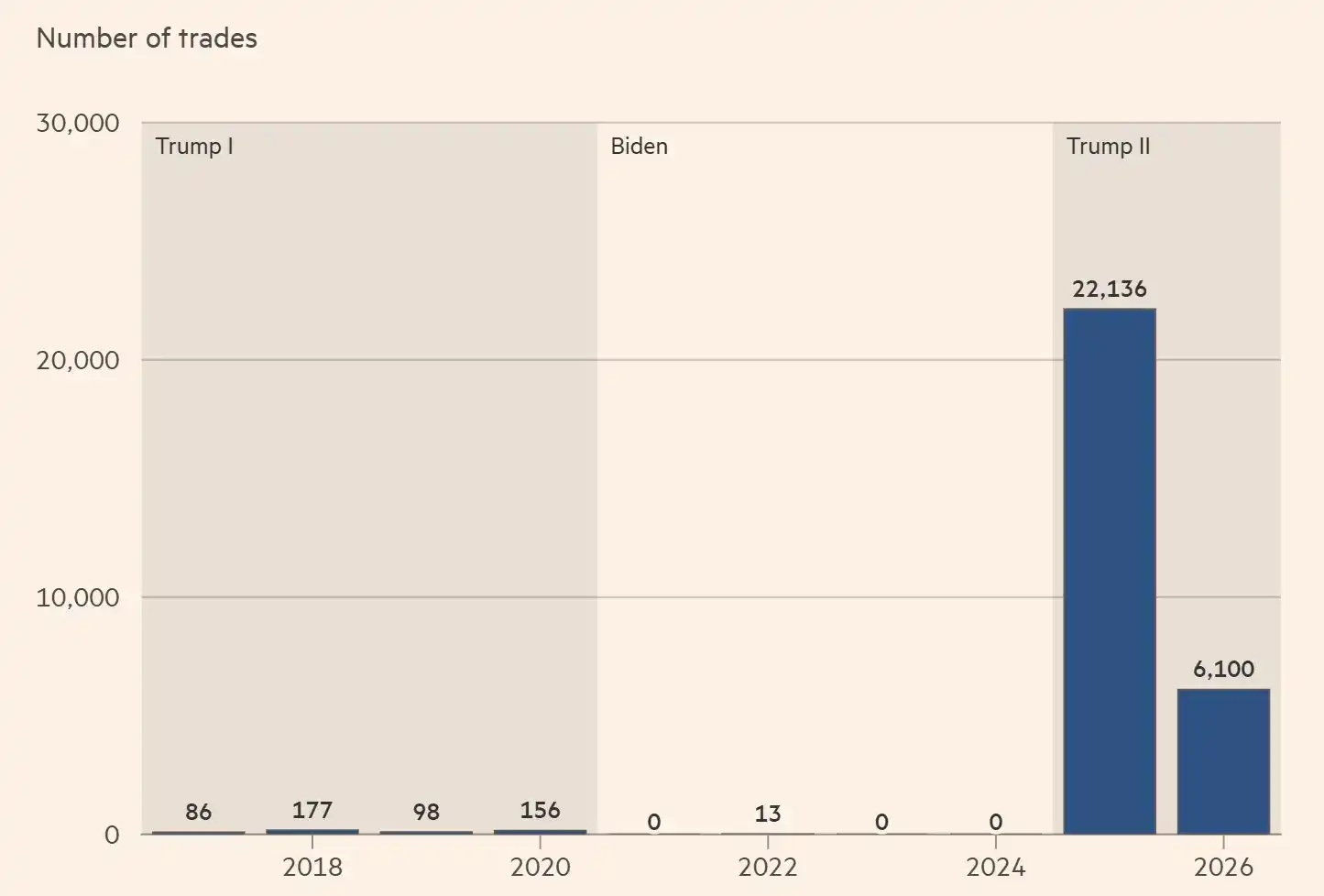
Beyond crypto and real estate, Trump's activity in public markets also attracted heavy attention. The filing showed that he reported more than 22,000 stock trades in 2025, averaging about 87 trades per trading day. For comparison, Trump made only 517 trades during his first term in total, while Biden reportedly made just 13 during his entire presidency. That shift led some outlets to describe Trump's second-term account activity as entering a “high-frequency” mode.
The timing of some trades drew even more criticism. The Wall Street Journal said Trump's accounts repeatedly traded around major policy events. In April 2025, for example, Trump announced “Liberation Day” tariffs on global trading partners, triggering sharp volatility in global equities. In the following days, his investment accounts reportedly carried out hundreds of trades. Days later, Trump posted on social media that it was “a great time to buy,” and shortly afterward he announced a pause on higher tariffs for most countries, with U.S. equities then rebounding sharply.

Reports also said that from late August to early October 2025, Trump's accounts purchased at least $82 million in corporate and municipal bonds across multiple industries, including sectors seen as likely beneficiaries of U.S. policy changes. In response to criticism, the White House said the trades were executed by professional managers overseeing Trump's trust account rather than by Trump personally. Trump himself told reporters he does not direct day-to-day portfolio management and attributed the gains to record highs in U.S. markets and his large cash base.
Trust structure and ethics concerns returned to the forefront
The core controversy is not simply how much money Trump made, but whether his personal financial interests were sufficiently insulated from public power. After Watergate, U.S. presidents generally moved to sell assets likely to be affected by policy decisions or placed them in blind trusts run by independent third parties. That structure is intended to prevent presidents from knowing or influencing specific holdings. Reports said Trump did establish a trust, but it was managed by family members rather than an independent outside party, leaving conflict-of-interest concerns unresolved.
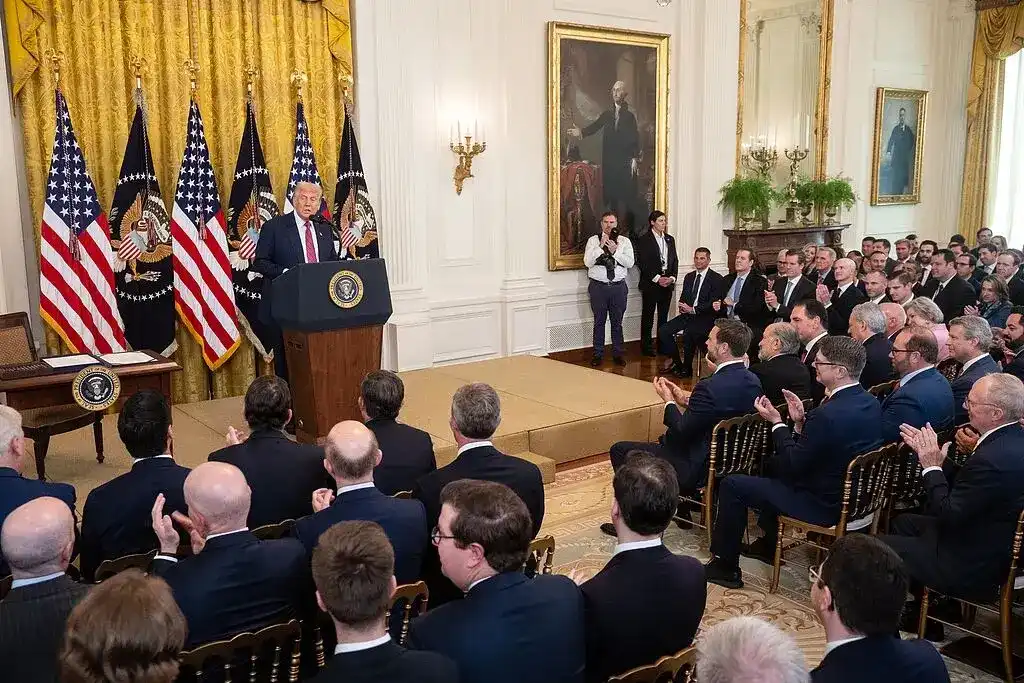
Crypto has become the clearest example. During his first term, Trump publicly criticized cryptocurrency. In his second term, he reversed course, backed policies seen as favorable to the sector, said he wanted the U.S. to become the “crypto capital,” and hosted top $TRUMP holders at the White House. At the same time, the Trump family became deeply embedded in related ventures: Trump was named World Liberty Financial's “Chief Crypto Advocate,” while Donald Trump Jr. and Eric Trump were labeled “Web3 ambassadors,” and Barron Trump was described as a “DeFi visionary.”
Less than 48 hours after the launch of $TRUMP, First Lady Melania Trump also introduced her own memecoin, $MELANIA. Reuters recently estimated that since Trump's return to the White House in 2025, the Trump family has made at least $2.3 billion from crypto-related ventures. Supporters present that as proof of entrepreneurial success, while critics argue that the presidency is being turned into an asset that can be monetized on an ongoing basis.
Debate has shifted from scale of wealth to limits of office
Questions have also extended beyond crypto. The Financial Times said that although some of Trump's stock purchases appeared to track broad market indexes, his portfolio included large positions in companies highly exposed to public policy. One example cited was Nvidia: Trump reportedly bought as much as $67 million worth of Nvidia shares, while also mentioning the company at least 31 times in public appearances and 19 times on social media after returning to office. That overlap has sharpened concerns about the relationship between official messaging and private market exposure.
Walter Shaub Fox, referenced in the report as a former acting director of the federal ethics office, argued that every president since Watergate has treated personal finances as an ethics issue, while Trump has effectively ignored those norms, showing why stronger ethics reforms may now be necessary. The Trump Organization, by contrast, said the nearly 1,000-page filing demonstrates the most comprehensive and transparent financial disclosure ever made by a president.
For now, there is no final legal determination on whether the full $2.2 billion in income was earned in a way that satisfies all applicable standards. But the disclosure has already pushed a larger institutional question back to center stage: when the office of the presidency itself has enormous market value, how far apart should public authority and private business be kept? In Washington and across U.S. media, that debate appears to be entering a new and more confrontational phase.