
WuBlockchain’s WhiteLine Daily on Thursday laid out a common thread running through several AI-related companies: demand is still driving revenue at the top of the stack, but public-market and credit investors are showing less willingness to give downstream operators and model companies the benefit of the doubt.
TSMC beats its own range and raises growth guidance
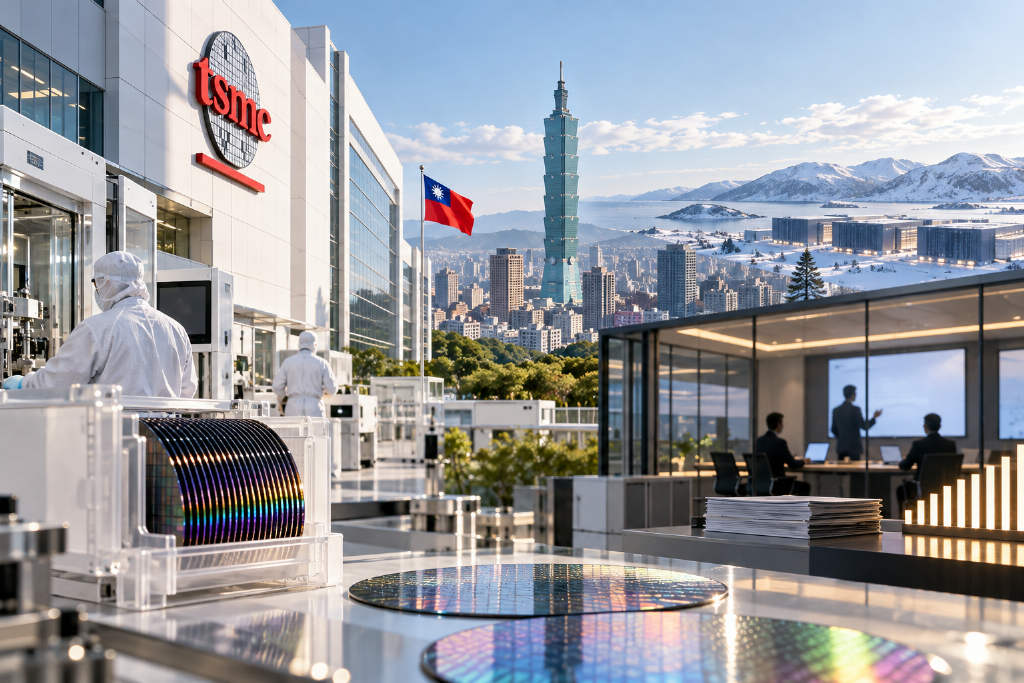
Taiwan Semiconductor Manufacturing Co. posted third-quarter revenue of $46.72 billion, up 41.2% from a year earlier. That came in above its earlier guidance of $44.6 billion to $45.8 billion.
The company also raised its 2026 U.S. dollar revenue growth outlook to about 44% and said fourth-quarter revenue is expected to reach $52.3 billion to $54.3 billion.
Chairman C.C. Wei said demand for advanced process technologies remains strong. He said fourth-quarter performance will benefit from that demand as well as the ramp of 2-nanometer capacity.
Even so, TSMC was described as staying cautious in its 2027 business planning. The factors cited were rising component prices and macroeconomic uncertainty affecting consumer and price-sensitive end markets.
WhiteLine Daily said the midpoint of TSMC’s fourth-quarter revenue guidance is about 14% above the third quarter, a sign that growth expectations are carrying through to year-end and that advanced-node demand is still translating into reported revenue.
Some Anthropic investors discuss a lower IPO valuation
Reuters, citing people familiar with the matter, reported that some existing and potential Anthropic IPO investors are considering cutting their expectations for the company’s listing valuation.
At an investor event in San Francisco, some attendees discussed a valuation of about $1.5 trillion. That is below the roughly $2 trillion level previously expected for an offering planned for November.
Anthropic told investors that third-quarter revenue reached $16.8 billion, up about 45% from the prior quarter, and that it had achieved adjusted profitability. Still, the company had previously doubled second-quarter revenue from the first quarter to $11.6 billion, and the slower growth pace in the latest quarter disappointed some investors.
Anthropic did not respond to a request for comment, Reuters said. The final valuation and listing timeline have not been determined.
WhiteLine Daily’s takeaway was that even 45% quarter-over-quarter growth was not enough for some investors, putting pressure on the assumptions behind Anthropic’s IPO pricing.
CoreWeave CDS spread tops 1,100 basis points
Reuters also reported that the five-year credit default swap spread of Nvidia-backed AI cloud company CoreWeave rose above 1,100 basis points for the first time.
A CDS is a derivative used to hedge default risk on debt. A wider spread means investors have to pay more to buy protection against a potential default.
One bond sold by the company in April this year traded at about $0.7915 on the dollar, implying a yield of about 15%, a level commonly associated with distressed debt.
CoreWeave currently carries about $50 billion in debt. The company has relied on borrowing to buy GPUs, build data centers and lease computing capacity to customers. CEO Mike Intrator said in an internal letter that the company’s backlog is sufficient to support its debt obligations and that the market’s judgment of CoreWeave is based on a misunderstanding.
WhiteLine Daily said a bond yield near 15% suggests that if CoreWeave has to raise more money on similar terms, higher interest expense will eat into the cash returns of its compute-rental business.
Nscale’s Norway flagship project is about six months behind
Bloomberg reported that British AI data center developer Nscale has fallen about six months behind schedule on its flagship project in Glomfjord, Norway.
The report said the delay was tied to a cooling-system leak, a fire, construction setbacks and local regulatory requirements. The site is designed for 30MW of capacity, but only 6.4MW is currently operational.
To speed up construction, the developer towed in a floating hotel with about 220 rooms to house workers.
Nscale is preparing for a New York listing. Media reports previously said the company was seeking to raise about $3 billion through an IPO and target a valuation of about $35 billion. The construction delay puts more focus on whether the company can deliver real buildout progress and computing capacity before it asks public investors for capital.
WhiteLine Daily noted that only about one-fifth of the project’s planned capacity is online, leaving Nscale to keep funding construction before most of the site begins generating service revenue.
The day’s through-line: revenue is showing up upstream, scrutiny is rising downstream
WhiteLine Daily summed up the day’s main theme this way: AI demand is still lifting revenue growth upstream, while the capital market is becoming more cautious in how it values downstream expansion.
Orders for advanced manufacturing are already flowing into TSMC’s top line. Model developers and compute operators, by contrast, still have to show that their growth rates and cash returns can support both their valuations and their debt loads.
For companies that depend on external financing to build facilities and buy GPUs, long-term orders only become cash available for debt service and reinvestment after projects are commissioned, compute is delivered, and customers pay.