

Ulanqab, a city in Inner Mongolia, is becoming a focal point in China’s race to secure AI computing infrastructure.
In a site visit reported by Phoenix Tech, the publication entered a local data center after passing multiple security checks and having phone cameras covered. Inside, the expected dust and noise of a construction site were replaced by the steady hum of cold air moving through container modules. Orange-and-white box units lined the facility, some still waiting for cards to be installed. The site hosts large-scale intelligent computing workloads for cloud vendors and AI companies, offering a close look at how competition over compute capacity is shifting in China.
Wang Chaoyang, general manager of global data centers at Alibaba Cloud, told Phoenix Tech: 「Today, you can say that not a single card is idle. Delivery is productivity. Faster delivery means greater value for customers.」
According to the report, companies such as DeepSeek have this year moved to build or co-build data centers of their own, pushing the sector away from the light-asset model of renting data halls and buying compute. The logic has changed. Instead of simply buying GPUs, firms are treating compute capacity as a strategic asset, with clusters of 10,000 or even 100,000 cards becoming the new starting line.
Why Ulanqab moved to the center of the buildout
Ulanqab sits in central Inner Mongolia and has an average annual temperature of 4.3 degrees Celsius. It was once better known as China’s “potato capital.” In 2013, as the mobile internet era was beginning to accelerate, the city brought in Huawei to build its first cloud data center. That marked the start of its role in China’s data infrastructure expansion. In the years that followed, Huawei, Alibaba, Apple, Kuaishou, VNET and GDS all established a presence there.
Data released by the local government and cited in the article shows that by the end of 2025, Ulanqab had signed 84 data center projects, including 81 intelligent computing centers, with total investment exceeding 500 billion yuan.
In 2026, DeepSeek became a new name drawing the AI industry’s attention to the city. The company began large-scale hiring for its intelligent computing center in Ulanqab and plans to build a super-large facility there with total power reaching 1 gigawatt. It was also recruiting IDC design and planning engineers.
Phoenix Tech visited Ulanqab in August and described a slogan visible outside the high-speed rail station: “One step west of Beijing is Ulanqab.” The city is 350 kilometers from Beijing, reachable by high-speed rail in less than two hours at the fastest. Network latency is about 4 milliseconds. Temperatures are low through the year, the climate is windy and dry, and the area is outside earthquake zones.
Power economics are a major part of the story. The report says green electricity accounts for 90% of the local mix, while power prices stand at 0.32 to 0.35 yuan per kilowatt-hour. Wang said that placing the same data center in Ulanqab rather than a neighboring city could save 5 billion yuan in annual electricity costs.
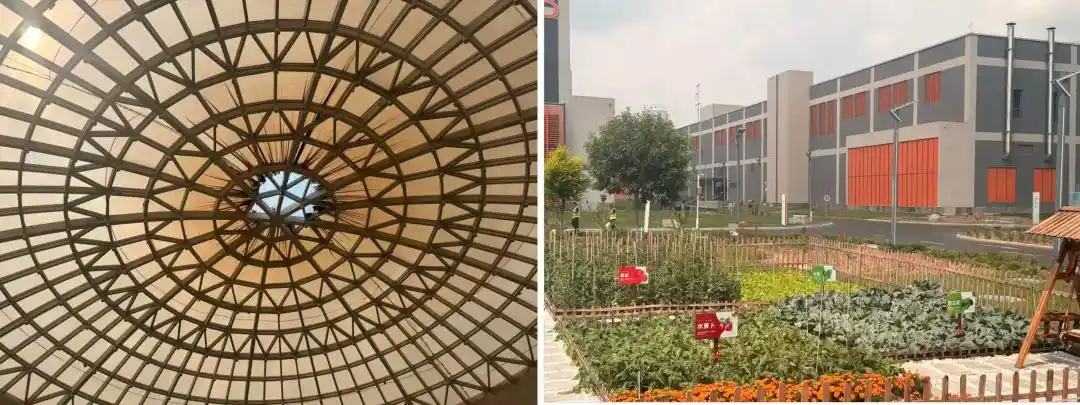
With those factors combined, the article describes Ulanqab as the country’s largest intelligent computing cluster in the current phase of the buildout and calls it a true “Token capital.”
Alibaba Cloud’s 100-day modular deployment model
Alibaba Cloud operates a data center campus in Ulanqab that includes both its older self-built facilities and a newly completed 5.0 modular containerized data center. That newer facility, built with a 100-day modular design approach, now carries 80% of Alibaba Cloud’s intelligent computing business, according to the report.
The article says building a data center here is no longer just a matter of pouring concrete and raising structures. Alibaba’s self-built 2.0 architecture facility in Ulanqab is described as the high point of an earlier generation. To reduce power consumption, Alibaba tested its self-developed “Panama” power supply there and compressed transformer stages. To save water, the site adopted a closed-loop system and even used heat from servers in winter to warm equipment rooms.
In the power distribution room, a guide told Phoenix Tech that a traditional data center typically places infrastructure on the first floor and servers on the second. In the new 5.0 architecture, that setup has been flattened.
Wang described the idea this way: 「At its core, this turns engineering into manufacturing and replaces a project with a product.」
The report says medium-voltage 10-kilovolt distribution equipment, Alibaba’s self-developed Panama power supply, lithium battery backup systems and liquid-cooled IT cabinets are all prefabricated inside the modules. On site, deployment is reduced to lifting the units into place and connecting them, much like assembling building blocks.
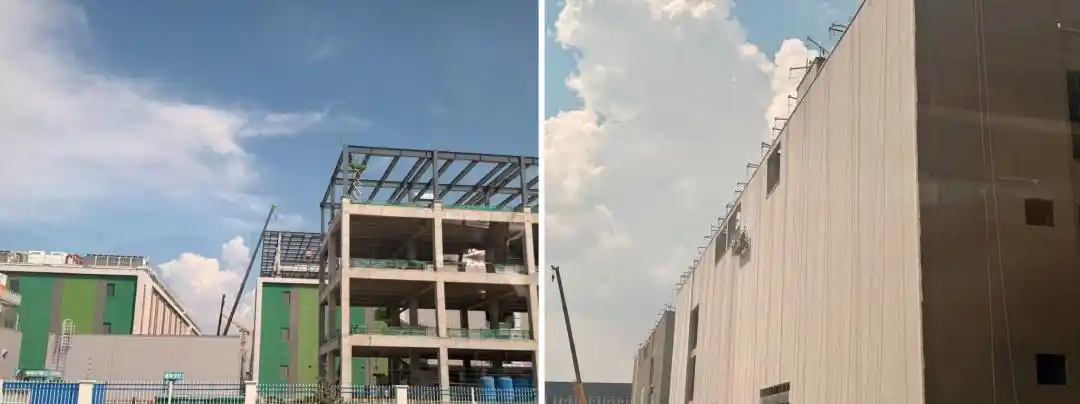
A guide at the site said data center construction once required thousands of people working on location. Now the work is centered on cranes moving container modules into position. Alibaba’s fastest delivery record, according to the report, is four and a half months from a bare site to handover. The article adds that shortages in upstream raw materials and components can still disrupt the ideal timeline, especially during the first 30 days of prefabrication, though the assembly stage itself has been compressed sharply.
DeepSeek’s move reflects a broader change in AI competition
In previous years, large model competition focused on algorithms, data and parameter counts. As training scales moved into the 10,000-card and 100,000-card era, compute stopped being just something to procure and became a strategic asset tied to survival.
The article presents DeepSeek’s investment in Ulanqab as a direct example of that shift. Available spot capacity in existing compute facilities has already been snapped up, it says, while the traditional construction cycle of 12 months is too slow for the growth in Token demand. In that environment, the companies that can obtain large-scale, high-density and low-cost dedicated compute infrastructure faster will be in a stronger position to compete.
The rise of AI agents is also driving inference demand. Citing data from China’s National Bureau of Statistics, the report says average daily Token calls nationwide topped 140 trillion in March 2026. That, in turn, points to the need for still more data center construction.
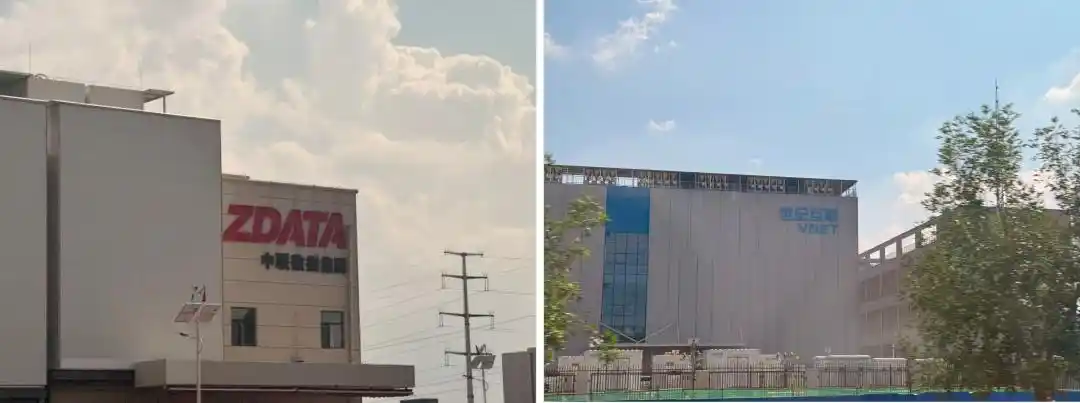
Phoenix Tech said it saw a large number of projects under construction across Ulanqab, including in Yiwutang, Bayin and Chayouqian Banner. Alongside internet companies such as Huawei, Kuaishou and Alibaba, third-party data service providers including VNET and Zhongjin Data occupy even larger areas.
Modularity spreads beyond Alibaba
How to keep Tokens moving more efficiently is turning into a new point of competition.
Wang said Alibaba Cloud faced strong internal resistance when it first proposed the modular route because many thought costs were too high. His view was that once a product enters an iteration cycle, costs come down. Resistance remained when Alibaba started working with partners. Wang recalled that one partner rejected the plan at first, only to discover later that its calculation of cost per kilowatt was overstated by more than one-third. He said many partners have now fully accepted the model.
He also pointed to reactions from competitors. 「One of the biggest competitors spent three months and basically learned it internally. When they heard we were developing the next architecture, they became very nervous. Other partners are also asking when our new standard will come out.」 In his view, the approach has moved beyond Alibaba’s own experiment and is becoming a path the industry is adopting together. Overseas operators are also following it.
Alibaba Cloud’s internal ambition goes farther. Wang said the company wants to “be the Foxconn of this industry,” using an ODM model in which suppliers manufacture at scale according to Alibaba’s in-house standards.
The article says even a single power module inside a container unit is highly standardized. It gives air conditioning as one example. Most products on the market are AC systems, but AC-to-DC conversion adds losses. To fit the new architecture, Alibaba found a smaller manufacturer to customize DC air conditioners. Wang later added that every module in the system has gone through optimal tuning, and that China’s supply chain can keep pace. 「If we want to build in any major base, these manufacturers are willing to set up factories there with us,」 he said.
Wang argued that modularization is only meaningful when it exceeds 90%. 「If it only reaches 30% or 20%, it solves only part of the product problem. First, it cannot solve the overall cost problem. Second, it cannot solve the overall delivery timeline problem.」 He also acknowledged a drawback: once a modular system is fixed internally, changes become harder. That is why, he said, modularization has to be backed by versioning and standardization.
He added that China’s manufacturing capacity creates a major advantage for this type of containerized data center. In his account, a few companies in Zhejiang could produce such modules with little difficulty. Overseas, by contrast, many markets face labor shortages and delivery times as long as 30 months. Under those conditions, exporting modular products built on China’s supply chain could become a powerful edge. 「If performance reaches parity with rivals one day, our Token cost will be overwhelmingly competitive,」 he said.
Power and water are becoming the hard constraints
The article frames the issue bluntly: the end point of compute is electricity. Once data center scale rises to more than 10 times its previous size and single-rack power can reach 1,000 kilowatts, power pricing becomes one of the few variables left to optimize beyond chips. The report describes that level of heat output as equivalent to more than 10,000 people.
Cheap power, however, does not simply appear. As AI enters a phase of rising inference demand, training loads are moving westward in search of cheaper green electricity, while inference loads are moving eastward to stay closer to economic centers. That creates what the article calls a two-way movement and exposes a major bottleneck: coordination between compute and power.
Wang said many projects marketed around source-grid-load-storage are still mainly designed for renewable energy consumption rather than genuine compute-power coordination. 「Power delivery often takes three to five years, but we have compressed compute delivery to 100 days. When Token demand is expanding at a near-exponential rate, coordinated planning becomes critical.」
He believes the gap between currently planned capacity and actual demand remains very large, to the point that the industry may need an explosive solution within two years. He also said future data centers cannot remain rigid loads. They need to become flexible and self-balancing systems, allowing compute to adapt to power and maintain dynamic balance.
Water use is another pressure point. In water-scarce Inner Mongolia, Alibaba is also trying to cut consumption. The report says all data centers in Ulanqab use reclaimed water, and a benchmark project has achieved a WUE of 0.088, using almost no water. Wang said using more water can save electricity, and low water prices often encourage that choice, but ultra-large clusters still have to weigh social cost against the point where economics and green targets meet.
From “potato capital” to what the article calls “China’s compute capital,” Ulanqab is now hosting a rapid expansion of AI infrastructure. Phoenix Tech argues that as Alibaba Cloud turns data centers from civil engineering projects into products that can be mass-manufactured, and as new players such as DeepSeek build their own compute foundations along the same path, a new China-backed model for AI infrastructure is taking shape.
The original article was published by the WeChat public account Phoenix Tech and attributed to Phoenix Tech.