
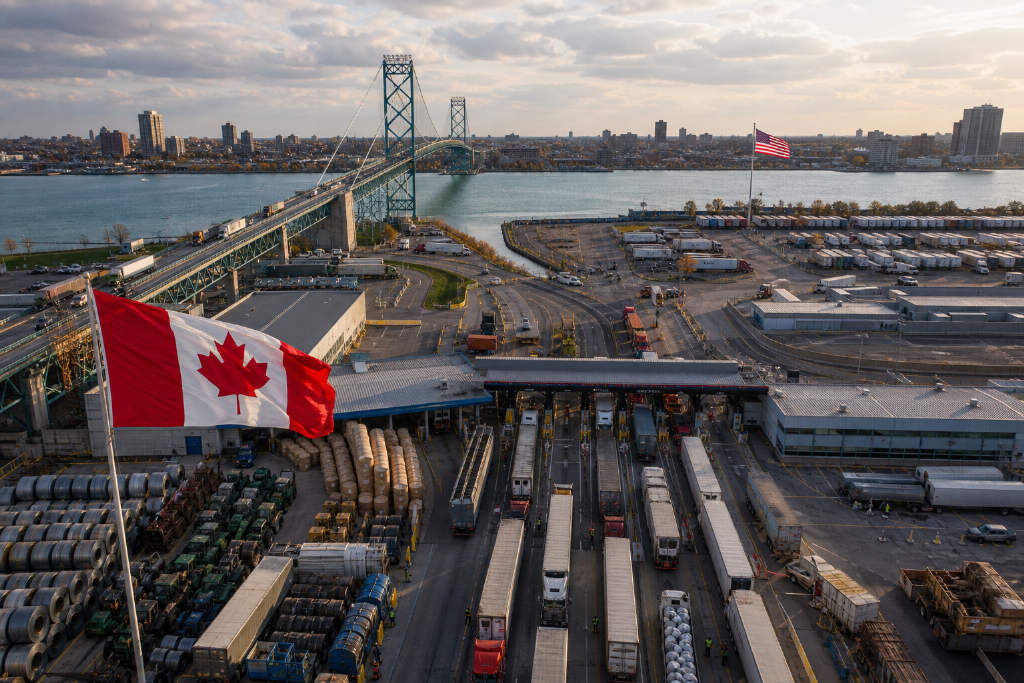
Trade talks between the United States and Canada collapsed at the last minute, triggering another round of tariff escalation between the two countries. According to CNBC, the negotiations broke down late Friday. The U.S. then moved on Saturday to impose 50% tariffs on some Canadian goods, while Canadian Prime Minister Mark Carney said Ottawa will start a matching response on Sept. 8.
U.S. imposes 50% tariffs on about $20 billion in Canadian products
CNBC reported that the U.S. imposed 50% tariffs on roughly $20 billion worth of Canadian products on Saturday. The talks had appeared close to a deal. Trump had even pushed back a Wednesday deadline and said an agreement was near.
Carney says new U.S. demands derailed the negotiations
At a press conference in Ottawa, Carney said the U.S. was "asking for too much and offering too little." He also said Washington added new demands at the final stage of the talks, covering Canada’s auto sector, cultural protections, and guarantees for the French language. Those additions, he said, caused the negotiations to fail.
Carney described Canada as being in a "state of trade war" with the United States.
Canada to launch dollar-for-dollar retaliation on Sept. 8
Carney said Canada will begin "dollar for dollar" retaliatory tariffs on Sept. 8. The measures will target steel, dairy products, agricultural machinery, pulp, and paper.
He also said Canada had been willing to remove existing retaliatory tariffs on steel, aluminum, and automobiles, provided the U.S. cut its own tariffs at the same time. That did not happen, and the talks ended without an agreement.
Markets are watching for spillover around the Sept. 8 start date
For markets, the renewed trade conflict between the U.S. and one of its largest trading partners adds another variable to broader risk sentiment. The source article said that when geopolitical and tariff tensions rise, capital often shifts toward gold and Bitcoin as hedging and anti-debasement assets. It added that the spillover from this tariff round into crypto and other risk assets may become clearer around the time Canada’s retaliation takes effect on Sept. 8.