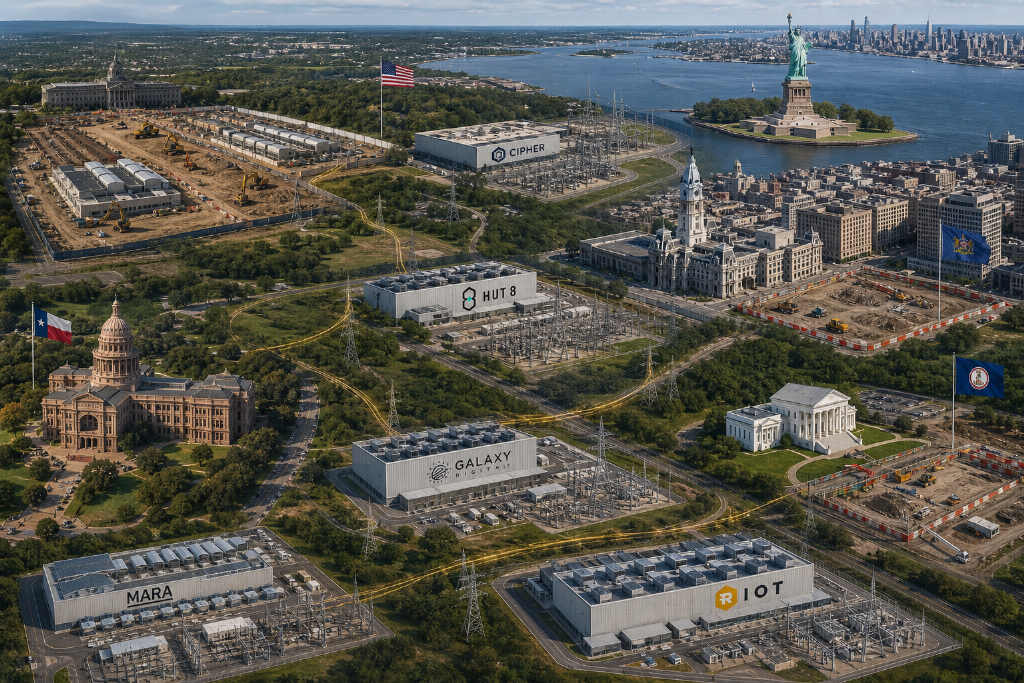
Morgan Stanley analyst Stephen Byrd said on Aug. 24 that a wave of state and local resistance to data center construction in the U.S. may end up favoring bitcoin miners, because their facilities are already plugged into the grid. The report named Cipher, Hut 8, Galaxy Digital, MARA Holdings and Riot Platforms.
Byrd’s argument comes as public opposition to data centers has widened. Gallup said 71% of Americans oppose building data centers in their own communities. More than 500 towns have already imposed restrictions, while New York, Pennsylvania, Texas and Virginia have all taken steps that slow or limit new projects.
The bottleneck is power, not concrete. Large AI data centers need hundreds of megawatts and often wait years for grid upgrades and permits. Bitcoin miners, by contrast, already have power interconnection contracts and related infrastructure in place.
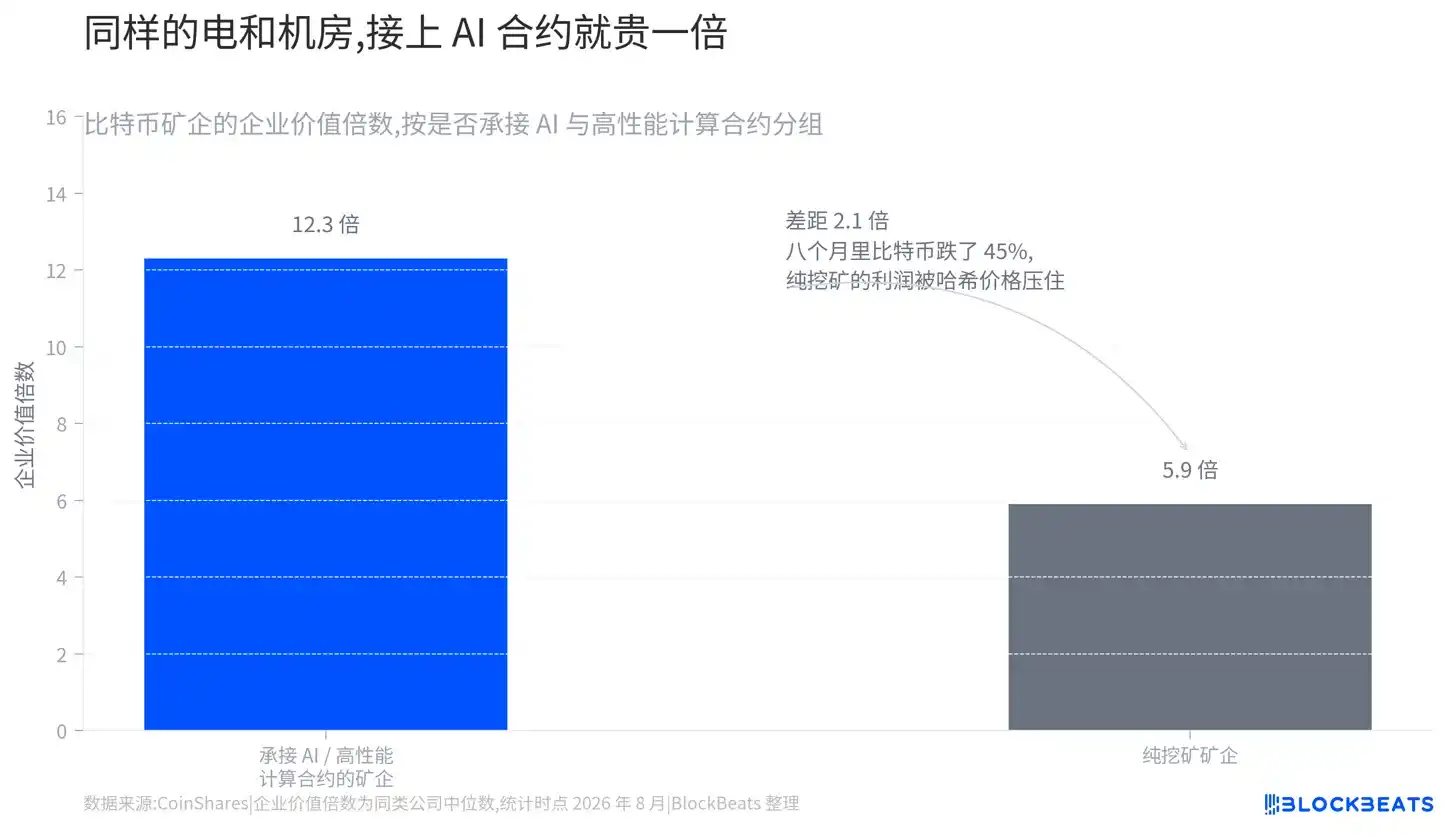
The shift is already showing up in the numbers. CoinShares said miners serving AI and high-performance computing deals trade at 12.3 times enterprise value, versus 5.9 times for pure bitcoin mining. Meanwhile, miners have sold about 28,000 bitcoins this year and MARA has pledged 18,750 bitcoins to secure $600 million in loans.
Morgan Stanley analyst Stephen Byrd said on Aug. 24 that U.S. resistance to data center construction could leave bitcoin miners as the main beneficiaries, since their facilities are already connected to the grid.
Byrd named Cipher, Hut 8, Galaxy Digital, MARA Holdings and Riot Platforms. His view rests on a simple point: when new power cannot get online, existing power becomes more valuable.
Public pushback has grown quickly. Gallup’s August survey showed 71% of Americans oppose data centers in their own communities. More than 500 towns have imposed limits, and some local officials have faced death threats, gunfire and closed public comment sessions.
State governments are moving too. New York Gov. Kathy Hochul has proposed a one-year pause on data center construction. Pennsylvania Gov. Josh Shapiro signed an executive order that places strict limits on new projects. Texas Gov. Greg Abbott moved from welcoming the industry to pausing approvals over the space of three months. Virginia became the first U.S. state to tax data centers based on electricity use, and Loudoun County is now limiting new construction as well.
The political cost is already measurable. At least 75 data center projects were delayed or shelved in the first three months of this year, representing about $130 billion.
The core problem is not building space but power. A large AI data center can require hundreds of megawatts, which means grid companies need to add lines, expand capacity and work through permit queues that can take years. In Texas, regulators have even set a schedule to review all interconnection requests from data centers and crypto mines by Dec. 10, with a report due Dec. 17.
Bitcoin miners have spent the past decade doing the opposite: hunting for cheap power and wiring up sites. Their interconnection contracts, substations and permits are already in place.
This is not a new industry pivot, but politics has sped it up. Over the past three quarters, listed miners cut 21% of their hashrate, freeing power for AI use. On Aug. 11, Anthropic and Riot Platforms signed a $9.1 billion compute deal.
CoinShares said miners with AI and high-performance computing contracts trade at 12.3 times enterprise value, compared with 5.9 times for pure bitcoin miners. The spread has widened as the bitcoin mining business has come under pressure. At the time of CoinShares’ report, bitcoin had fallen 45% over eight months, and hash price was depressed.
To keep operating, listed miners have sold about 28,000 bitcoins this year, worth roughly $1.78 billion. MARA Holdings also pledged 18,750 bitcoins to secure two loans totaling $600 million.
Two questions remain. Texas is reviewing a list that includes both data centers and crypto mines, so miners are not explicitly exempt. Whether their interconnection rights are fully protected will depend on the Dec. 17 report.
The backlash is aimed at large power-hungry facilities, not just anything called a data center. Alabama has already shown that dynamic: residents could not stop a large bitcoin mining data center there, thanks to a gap in state zoning law.
Bitcoin has also rebounded. On Aug. 24, it came close to $80,000, a multi-year high, and rose 21% over the week. CoinShares has said that if bitcoin returns to its all-time high of $126,000, hash price could recover to about $59 per PH/s, making mining economics viable again.
If that happens, the decision to hand power to AI will look very different in hindsight.
This article was originally published by Bit.Fan. For more cryptocurrency news and market insights, visit www.bit.fan. Disclaimer:
The market information, project data, and third-party content displayed on this platform are for industry information sharing only and do not constitute any form of investment advice or return commitment.
Cryptocurrency trading carries high risks. Users should fully assess their risk tolerance and make independent decisions. All profits, losses, and legal responsibilities are borne by the users themselves.