
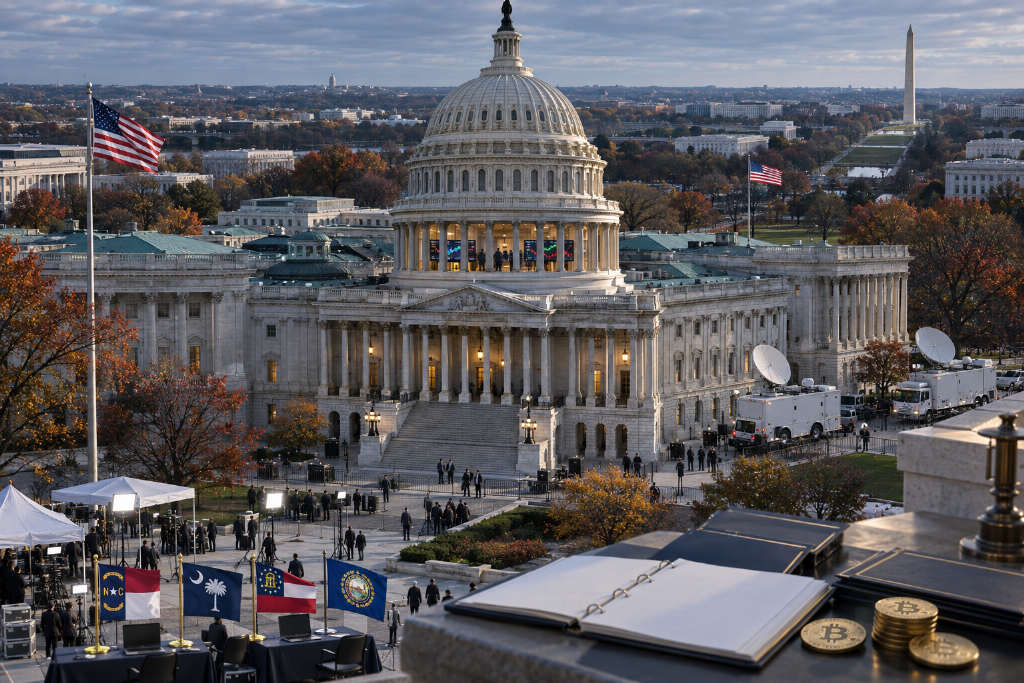
The 2026 U.S. midterm elections have produced a notable shift in the Senate race. According to the Associated Press, Democrats flipped two Republican-held Senate seats in North Carolina and South Carolina and also held key seats in Georgia and New Hampshire, putting Republican control of Congress under pressure. For the crypto market, the main question is whether the next two years of digital asset legislation and regulation under the Trump administration can still move ahead as planned. Bitcoin was volatile during the vote count and was last quoted at about $77,761.
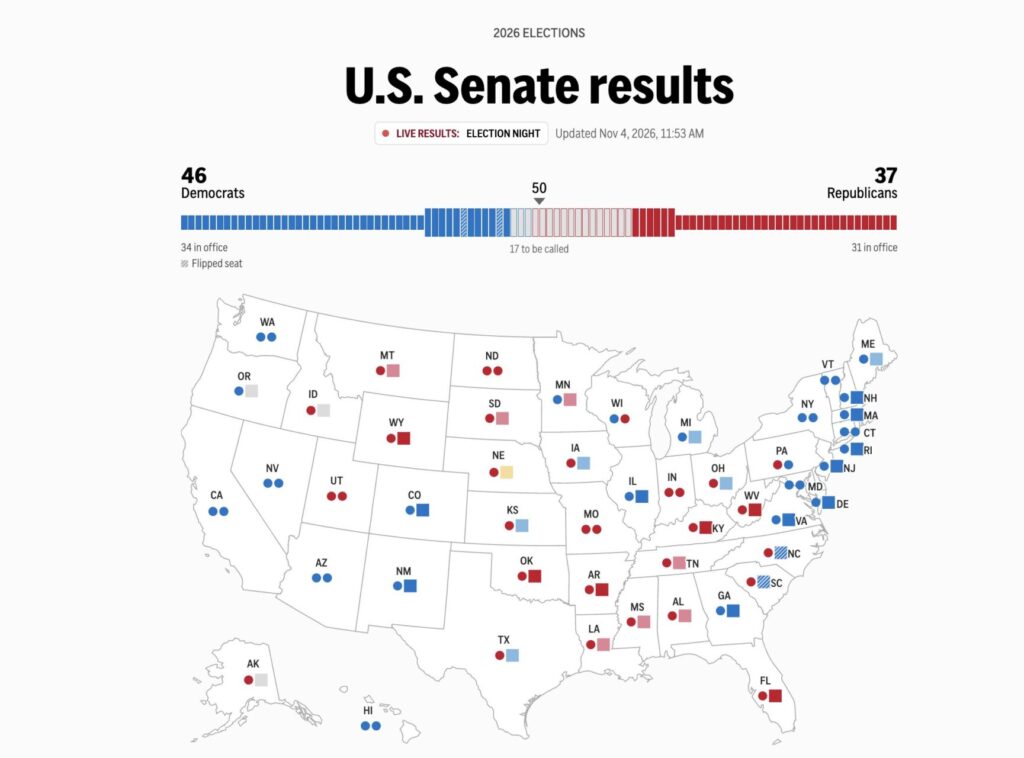
North Carolina and South Carolina flips keep Senate control unsettled
AP reported that former North Carolina Governor Roy Cooper, a Democrat, defeated Republican candidate Michael Whatley, who had been backed by Trump, to win a seat previously held by Republican Senator Thom Tillis. In South Carolina, Democratic candidate Annie Andrews defeated Republican candidate Darline Graham, giving Democrats another flipped seat.
Democrats also held two important seats. Incumbent Senator Jon Ossoff won re-election in Georgia, and Democratic candidate Chris Pappas won the New Hampshire seat that had already been in Democratic hands.
Before the election, Republicans held a 53-47 majority in the Senate. Because Vice President JD Vance can cast a tie-breaking vote, Democrats need at least 51 seats to control the chamber. Even with two Republican seats flipped, the final balance still depends on results in other races.
The CLARITY Act was already stalled before the election
For the crypto industry, one of the most closely watched policy items is the CLARITY Act, a bill designed to create a regulatory framework for digital asset markets and clarify the respective authority of the Securities and Exchange Commission, or SEC, and the Commodity Futures Trading Commission, or CFTC.
According to official Senate records, the bill failed a cloture vote on Sept. 15. It received 49 votes in favor and 50 against, well short of the 60-vote threshold required to advance. The disputes around the bill include conflicts of interest involving government officials and the crypto industry, oversight of digital asset trading, and investor protection.
That means the CLARITY Act did not run into trouble because of this midterm election. It had already failed to secure enough bipartisan support. What the new Congress can change is the bill's path from here, including committee review, possible revisions and whether it gets another chance on the agenda.
What may change is the path for new bills, not existing law
The report said the Trump administration has in recent years pushed for crypto asset regulatory reform, including stablecoin oversight, trading platform rules and broader digital asset market-structure legislation.
Still, election results do not affect every policy area in the same way. Laws that have already been enacted do not automatically lapse after the midterms. The SEC and CFTC can also continue rulemaking and enforcement within the authority they already have under existing law.
The area most likely to shift is the political path for new legislation: the conditions needed to pass bills, the policy priorities of congressional committees, and the level of oversight directed at agencies and the crypto industry. If party control ends up split between the White House and one or both chambers of Congress, some proposals may require more bipartisan negotiation. The exact effect will depend on the final election outcome and the makeup of the next Congress.
Crypto markets are watching both price action and policy direction
The election matters to crypto on two levels. In the short term, Bitcoin may react to how investors reassess the election outcome, U.S. economic data and allocations to risk assets.
Over a longer horizon, the market is watching whether the next Congress can revive the CLARITY Act and how the SEC and CFTC will keep advancing regulatory changes under the current legal framework. If control of Congress ends up divided, negotiations around crypto bills could become more complicated. It could also push both parties toward limited areas of agreement, depending on the bill text and later floor votes.
For now, Democrats have confirmed two Senate flips from Republicans, but that is still not enough to declare a formal change in Senate control. For Bitcoin investors, the bigger issue is not only the price reaction on election night, but whether the U.S. can build a stable legislative foundation for crypto market regulation over the next two years.



