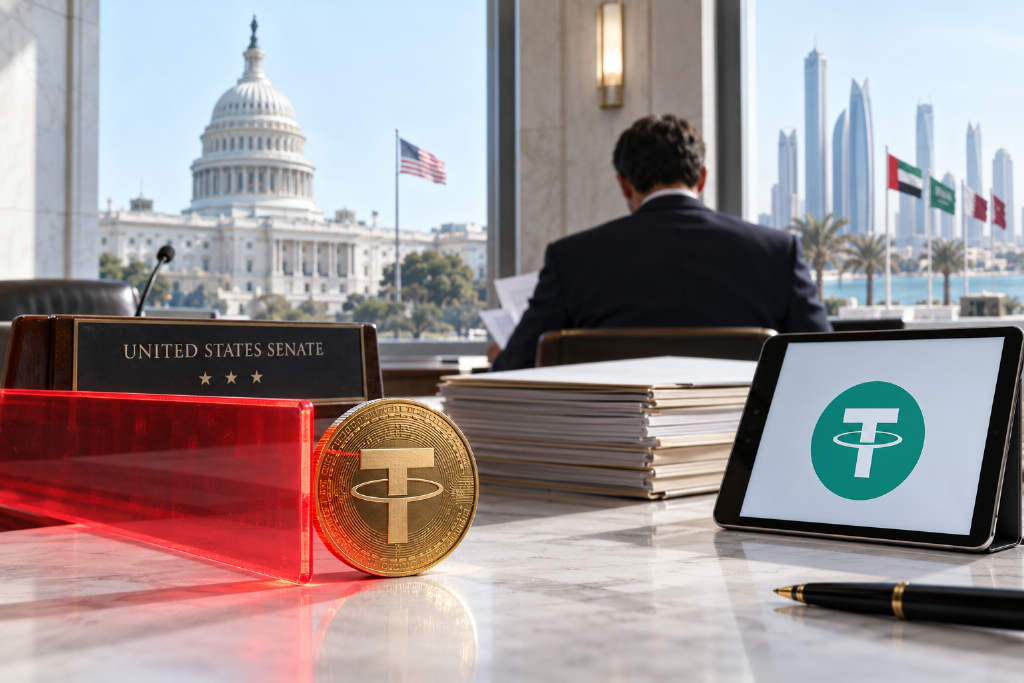
U.S. Senate report flags USDT as key channel in Iran shadow banking, raising compliance pressure on GCC VASPs

U.S. Senate report flags USDT as key channel in Iran shadow banking, raising compliance pressure on GCC VASPs

N
News Editor
2026-10-07 10:03:01
A report from the U.S. Senate Permanent Subcommittee on Investigations said stablecoins, especially USDT, serve as a key liquidity channel supporting Iran’s shadow banking system. The finding puts licensed virtual asset service providers in the Gulf Cooperation Council region under heavier sanctions-compliance pressure, with closer focus on wallet attribution and counterparty checks. Septten partner Soham Jethani said merchants do not avoid sanctions exposure simply by settling crypto into local fiat. He said liability can arise from providing funds or economic resources to designated parties, or from handling assets within a transaction chain, even before a bank completes final settlement. Jethani also said the name of a stablecoin or its denomination does not determine legal ownership, which depends instead on contractual arrangements and the actual payment flow. In regulated markets such as the UAE, licensed exchange wallets remain under ongoing monitoring, funds can be frozen before consumer settlement, and merchants must complete KYC. Regulated VASPs handling deposits and withdrawals bear responsibility for counterparty review, sanctions-risk assessment, and related controls.

A report by the U.S. Senate Permanent Subcommittee on Investigations (PSI) identified stablecoins, especially USDT, as a key liquidity channel supporting Iran’s shadow banking system.

That finding raises sanctions-compliance pressure on licensed virtual asset service providers (VASPs) in the Gulf Cooperation Council (GCC) region, which are expected to strengthen wallet attribution and counterparty assessment.

Settling into local fiat does not remove sanctions risk

Soham Jethani, a partner at law firm Septten, said merchants do not sidestep sanctions risk simply by converting crypto asset payments into local fiat currency. Liability can involve providing funds or economic resources to designated parties, as well as handling assets within a transaction chain, and it may arise before a bank completes final settlement.

Legal ownership depends on contracts and payment flows

Jethani said a stablecoin’s name or denomination does not determine legal ownership. The relevant rights depend on contractual arrangements and the actual payment process.

He also said globally circulating stablecoins may create secondary sanctions risk. An indirect or historical wallet link does not automatically amount to a violation and must be assessed in light of the applicable regime, the parties involved in the transaction, and the specific facts.

Responsibilities for licensed firms in regulated markets

In regulated markets such as the United Arab Emirates, wallets at licensed exchanges remain under continuous monitoring, and related funds can be frozen before consumer settlement. Merchants are also required to complete KYC.

Regulated VASPs that handle deposits and withdrawals bear responsibility for counterparty review, sanctions-risk assessment, and the controls tied to those obligations.

This article was originally published by Bit.Fan. For more cryptocurrency news and market insights, visit www.bit.fan.
200

Disclaimer:

The market information, project data, and third-party content displayed on this platform are for industry information sharing only and do not constitute any form of investment advice or return commitment.

Cryptocurrency trading carries high risks. Users should fully assess their risk tolerance and make independent decisions. All profits, losses, and legal responsibilities are borne by the users themselves.