
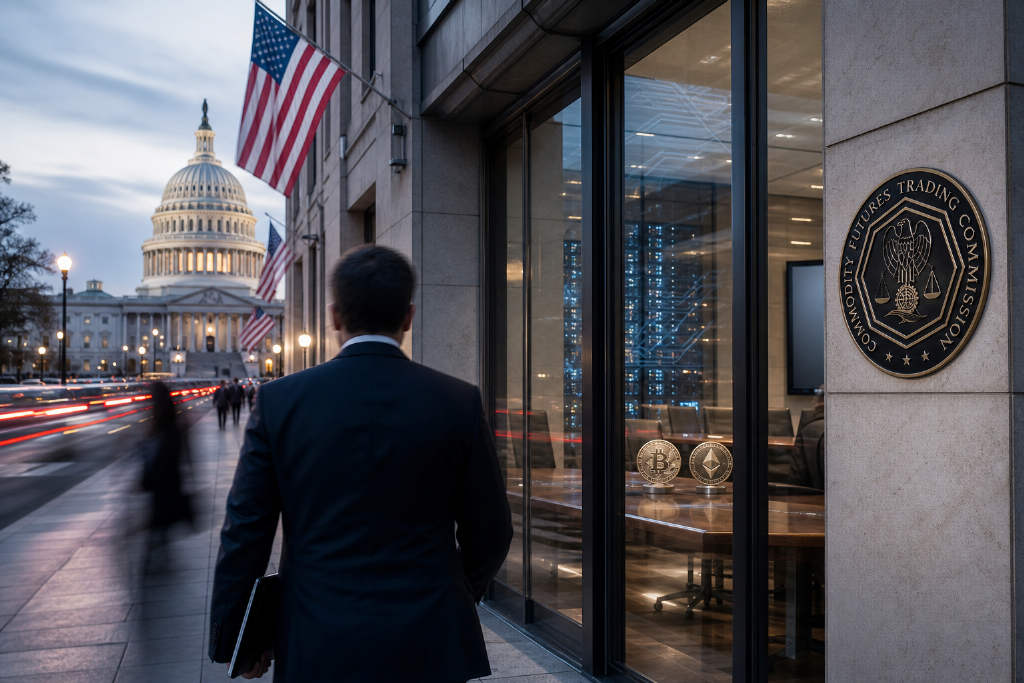
The coming week is packed with crypto policy events, exchange notices, project updates and token unlocks. The headline dates include the U.S. Commodity Futures Trading Commission’s first Innovation Advisory Committee meeting on Aug. 20, South Korea’s new rules for single-stock leveraged products on Aug. 19, and DeepSeek’s updated API pricing, which takes effect on Aug. 17.
Aug. 17: DeepSeek pricing change, Coinbase maintenance and exchange updates
DeepSeek said its API pricing will move to a peak and off-peak structure. Off-peak rates will be half of peak rates. Peak hours are 9:00-12:00 and 14:00-18:00 Beijing time, with all other hours treated as off-peak. The new pricing takes effect at 00:00 Beijing time on Aug. 17, 2026. For deepseek-v4-pro, the highest listed price for output during peak hours is 27 yuan per million tokens.
Coinbase said it plans to carry out system maintenance starting at 1 p.m. Eastern Time on Sunday, Aug. 16, which is 1 a.m. Beijing time on Aug. 17. The maintenance window is expected to last as long as four hours. The company said user funds will remain safe, though several products may see degraded performance or an unstable user experience during the work.
Coinbase Derivatives is set to launch US500 equity index perpetual-style futures for U.S. users on Aug. 17, giving traders exposure tied to large-cap U.S. stocks.
Coinbase will also stop supporting USDC deposits and withdrawals on the Noble network on Aug. 17, 2026. After that point, users will no longer be able to send or receive USDC on that network.
Hashdex said it will close and liquidate the Hashdex Bitcoin ETF, traded on NYSE Arca under the ticker DEFI. The fund had about $14.7 million in assets under management as of July 30. Hashdex said the decision was based on factors including asset size, trading liquidity, operating costs, investor interest and product-line positioning. The ETF’s last trading day is Aug. 17. It will then stop accepting creation orders and be delisted from NYSE Arca. Shareholders who hold the fund through the final trading day are expected to receive cash liquidation distributions around Aug. 28. Hashdex said it still manages more than $200 million in U.S. investor-accessible products.
Binance will delist Across Protocol (ACX), Hashflow (HFT), PIVX (PIVX), Vulcan Forged PYR (PYR), Vanar (VANRY) and Viction (VIC) at 11:00 on Aug. 17.
On the project side, Solana core development team Anza said the Agave v4.3 release plan has been published. Features slated for activation in v4.3 include the Alpenglow consensus protocol, new system calls covering SHA512 and big-integer modular exponentiation, and deeper CPI support. Under the tentative schedule, testnet is expected to begin recommended validator upgrades on Aug. 17, with feature activation starting Aug. 24. On the beta mainnet side, volunteers are expected to be sought on Sept. 8 to move 10% of stake to v4.3, then 25% on Sept. 14. Broad beta mainnet adoption is recommended on Sept. 21, and feature activation is expected to begin on Sept. 28. Anza said all dates may change.
Decentralized AI inference network DGrid AI will open its airdrop claim process on Aug. 17. Users can check eligibility through the DGrid portal. The project said it will offer several claim paths, including staking options with rewards. All tDGAI obtained through Premium mining, which will be paused before Aug. 17, will convert to DGAI airdrop allocations at a 1:1 ratio. Early DGrid growth contributors will also receive airdrop rewards based on participation.
Solana Name Service, or SNS, said on X that new .sol registrations will be paused on Aug. 17 for an eligibility snapshot. The snapshot will only cover .sol domains registered before the pause. After the snapshot, users will be able to check eligibility for a new round of benefits or upgrades. The team said .sns registration is expected to resume in mid-September, with more details to come. SNS also warned users about fake claim links and said it will not ask anyone to sign transactions or pay fees to receive a new .sns domain.
An official SNS blog post said holders of .sol domains will automatically receive matching .sns domains and a new .sol domain after the snapshot in the second half of August. Existing domains will remain in the same wallet and show as .sns, while records and subdomain settings will stay unchanged. The new .sns domain will be sent free to the wallet address holding the name at the time of the snapshot, with no wallet connection, signature or payment required.
Aug. 18: Korean exchanges to remove several tokens
South Korean crypto exchange Bithumb will end trading support for GRACY, SPURS, ZTX, WIKEN and FITFI on Aug. 18, saying the reasons behind their transaction warning designations were not resolved. Upbit has also said it will delist SPURS on Aug. 18.
Aug. 19: South Korea rule changes, possible White House meeting, and Kalshi deadline
South Korea’s Financial Services Commission said tougher rules for single-stock leveraged ETFs and ETNs will take effect on Aug. 19. In addition to the existing 30 million won base margin requirement and three hours of pre-trade education, first-time retail investors in domestic or overseas single-stock leveraged products will also have to complete simulated trading.
Deviation-rate controls will also be tightened. For domestic ETFs and ETNs, the closing deviation-rate management range will narrow from 3% to 2%. For overseas products, it will move from 6% to 5%. Negative deviation rates will be calculated on an absolute-value basis. Under the new framework, if a deviation rate exceeds twice the management range, screening and an advance designation notice will be triggered. If it exceeds twice the range again within 10 trading days after the notice, or exceeds the standard for two consecutive trading days, the product may be designated as an investment caution item and subjected to three trading days of call auction trading.
The FSC said the tighter rules reflect the negative compounding effect of single-stock leveraged products, meaning investors can still lose money even when the underlying asset trades sideways. The agency said investors should fully understand product structure and risk before investing.
Politico, citing three people familiar with the matter, reported that the White House is expected to convene crypto and prediction-market executives on Aug. 19. The report said details are not final, the attendee list remains unclear, executives from traditional finance could also be invited, and it is not known whether Trump will attend. The White House did not immediately respond to a request for comment, according to the report.
Politico said the meeting would come one day before the first session of the CFTC’s newly formed Innovation Advisory Committee, whose membership includes executives from major companies in crypto, betting, finance and prediction markets.
Also on Aug. 19, the King County Superior Court in Washington state ordered Kalshi to halt several parts of its business in the state. The court found Kalshi is likely in violation of the Washington Gambling Act and the Consumer Protection Act, amounting to illegal gambling operations. Under the order, Kalshi must stop offering, accepting or facilitating bets in Washington on sports, elections, politics, entertainment, culture, technology and science, as well as topics that mention Washington state.
The company must implement IP- and residency-based geoblocking by Aug. 19 and deploy a multi-source geoblocking solution by Sept. 2. It is also barred from advertising the related betting products to Washington consumers.
Foresight News previously reported that Kalshi submitted a supplemental letter to the U.S. Court of Appeals for the Fourth Circuit on Aug. 7 in response to the Washington court ruling. Kalshi argued that the Commodity Exchange Act preempts Washington gambling law and that state law cannot apply to prediction contracts traded on its designated contract market. The letter said the CEA gives the CFTC exclusive jurisdiction over DCM trading, covering express, field and conflict preemption. It also said allowing state-imposed geographic restrictions would fragment a unified national market. Kalshi cited recent CFTC positions on prediction markets and argued that the agency has the exclusive authority to determine whether contracts meet the public-interest standard.
Doodles said its Toy Factory will open on Aug. 19. The product is designed to turn any image or idea into a custom physical toy or collectible.
Aug. 20: CFTC committee holds first meeting; Korea expands VASP review; token unlocks ahead
On the macro calendar, the Federal Reserve will release minutes from its monetary policy meeting at 2 a.m. Beijing time on Thursday.
CFTC Chairman Michael S. Selig has published the agenda for the first meeting of the Innovation Advisory Committee, or IAC. The committee will hold its first session on Aug. 20 and will focus on regulatory issues tied to crypto assets, artificial intelligence and prediction markets.
Selig said the United States has long been a global center of financial innovation and that he wants to engage with entrepreneurs, researchers and industry builders to discuss how emerging technologies and financial products can drive market development and explore what he called the “new frontier of finance.” The meeting will be livestreamed on the CFTC website.
Members and participants will discuss digital-asset regulatory frameworks, the effect of AI technology on financial markets, and the development of prediction markets. The public can submit comments through Aug. 27, and those comments will be posted publicly on Regulations.gov. The CFTC said the agenda could change depending on the committee’s later priorities. The IAC is intended to advise the agency on emerging technologies, financial products and market innovation trends, including digital assets and artificial intelligence that could shape future market structure.
South Korea will expand registration reviews for virtual asset service providers, or VASPs, to include major shareholders starting Aug. 20. Operators must notify financial authorities 30 days in advance if a major shareholder changes or if the company’s legal compliance framework changes.
The Financial Intelligence Unit and the Financial Supervisory Service announced the revised registration manual at a briefing in Seoul on Aug. 13 for VASPs and potential operators. Review targets will include not only the largest shareholder and major shareholders with more than 10% holdings, but also shareholders specially related to the largest shareholder. If the largest shareholder is a corporation, that entity’s largest shareholder and representative may also fall within the review scope.
On token unlocks, LayerZero (ZRO) will unlock about 25.71 million tokens at 7 p.m. Beijing time on Aug. 20, equal to about 4.40% of circulating supply and worth about $19.9 million. KAITO (KAITO) will unlock about 32.60 million tokens at 8 p.m. Beijing time the same day, equal to about 7.63% of circulating supply and worth about $11.5 million.
Aug. 21: Binance network changes and Step App shutdown
Binance will stop supporting deposits and withdrawals of Sophon (SOPH) through the BNBSmartChain network at 16:00 Beijing time on Aug. 21, 2026. Deposits made through that network after the cutoff will not be credited and could result in asset loss. Users can still use other supported networks for transfers.
Binance will also support the Ontology (ONT) network upgrade and hard fork. The exchange expects to suspend ONT token deposits and withdrawals at 07:00 Beijing time on Aug. 21, 2026. The project team will carry out the upgrade and hard fork at block height 20,800,000, expected at 08:00 Beijing time on Aug. 21, 2026.
Step App said it will formally shut down after four years of operation, with all services ending on Aug. 21. Users need to unstake all locked tokens and manage exchange holdings before that date. The project said the platform recorded more than 1 million downloads, tracked billions of steps and helped drive the Move-to-Earn category while linking Web2 and Web3.
Aug. 22: MBG token unlock
MBG by MultiBank Group (MBG) will unlock about 27.15 million tokens at 8 p.m. Beijing time on Aug. 22, equal to about 6.16% of circulating supply and worth about $2.8 million.
Aug. 23: Binance restrictions involving 11 platforms, Manus backup deadline, SOON unlock
Because of recent regulatory requirement changes, Binance said it will stop processing asset transfers in, receipts or other transactions involving Rapira, Aifory Pro, ABCeX, WhiteBird, NoOnecrypto, Tradex, Monease, BitPapa, Exnode/Exnode Pay and EXMO starting Aug. 23.
Binance added that restrictions involving Shelbit and Aban Tether Exchange took effect on Aug. 7, while restrictions involving A7 Nigeria, A7 Africa and PilotFinance took effect on Aug. 13. The exchange said the new restrictions could trigger extra compliance reviews and that related wallets may be limited during the review period.
Manus said it will soon resume operations as an independent company. As part of the transition, and to comply with regulatory requirements in certain jurisdictions, some users must back up their data before 7:59 a.m. Singapore time on Aug. 23 and restore it through a recovery portal starting at 8:00 a.m. on Aug. 25 to ensure normal use. Manus said affected users will be notified by email and in-app messages. Unaffected accounts do not need to do anything. Affected users will not be charged during the transition and will receive a return reward.
SOON (SOON) is also scheduled to unlock about 20.24 million tokens at 4:30 p.m. Beijing time on Aug. 23, equal to about 3.76% of circulating supply and worth about $3.9 million.