
Daily selected stories
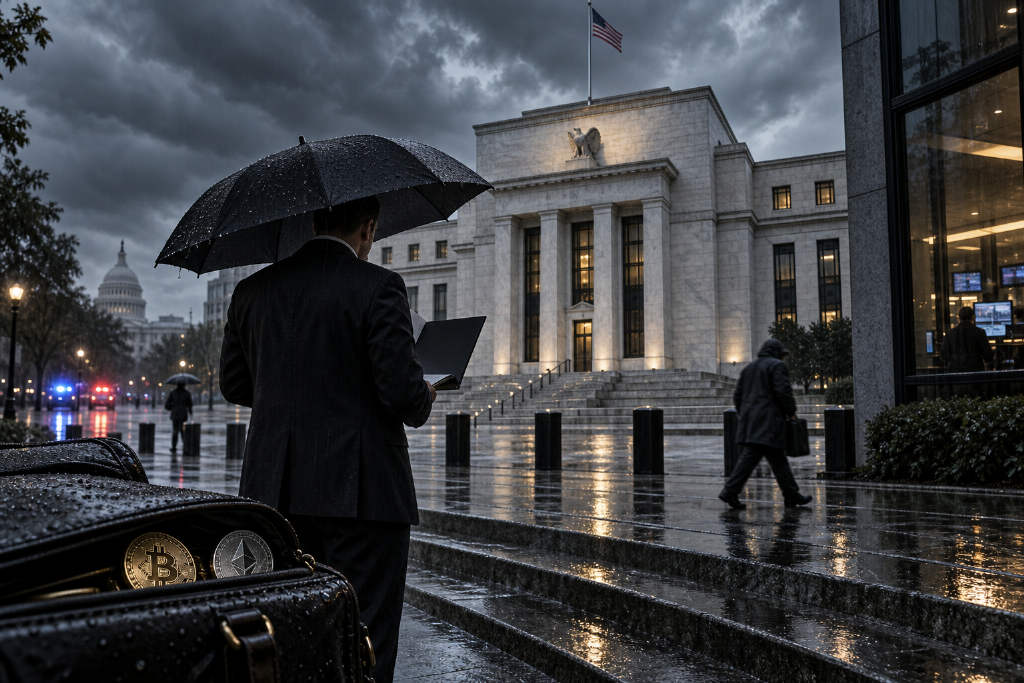
The Wall Street Journal reported that investors have largely come to view a Federal Reserve rate hike next week as a given, which would be the first increase in three years. Attention has shifted to the policy path after that meeting. The report said almost no one inside the Fed believes a single 25-basis-point move would be enough to bring down inflation. If the Fed does raise rates next week, that could signal officials see the current level as too low and may keep moving. Former Fed Vice Chair Richard Clarida said that if the central bank hikes next week, more increases will definitely follow. Markets are now pricing in at least three cumulative rate hikes by June next year, up from an earlier expectation of two.
The Seoul Northern District Court in South Korea sentenced two key figures in a cryptocurrency fraud case to 14 years in prison each. According to the case details, the group issued and sold nearly 30 tokens using fake white papers and business plans. Some of those projects failed to secure listings on overseas exchanges, and investors were not actually given tokens. Instead, the app showed fabricated receipt records, while wash trading was used to push up prices. Investigators said token sales linked to the scheme totaled about $68.1 million. Prosecutors had sought to recover about $17.3 million, but the court did not grant the request because it could not clearly distinguish how much each defendant had actually received.
Colombian prosecutors said they dismantled a criminal network accused of laundering funds through USDT and the traditional financial system. The case involved about 2.3 trillion Colombian pesos, or roughly $580 million, and led to five arrests. Prosecutors said the group allegedly moved drug trafficking proceeds through banks and virtual assets between 2018 and 2026, converted the money quickly, and then reinvested it in real estate and luxury vehicles to conceal the source of funds. Authorities imposed preservation measures on 36 assets in Medellín and Antioquia, including four properties, 19 vehicles, nine companies and four commercial establishments, with a total estimated value of more than $10.2 million. They also seized three additional properties valued at about $625,000.
On-chain investigator ZachXBT warned on his channel that Revolut may have mistaken a fake government data request for a legitimate one and handed over some user information to the requester. The material allegedly included identity and contact details, copies of identification documents and verification selfies. It also covered IBAN data, account statements, withdrawal records and full transaction histories, including Bitcoin transactions. ZachXBT said the number of affected users appears limited so far, but the request may have been targeted at high-net-worth users. Multiple users have already received notification emails from Revolut.
Mexican authorities uncovered a hidden cryptocurrency mining site in the mountains of Tlaola in northern Puebla state that is being investigated as a possible money-laundering operation. Officers seized 300 GPU mining rigs, 80 medium-voltage electrical terminals and eight satellite antenna systems at the scene. Authorities are now investigating whether the site mined crypto using electricity taken directly from a nearby hydroelectric plant. It was the fourth underground mining site of this kind discovered locally since the start of last year. Blockchain intelligence firm Chainalysis said major drug trafficking groups in Latin America are moving beyond traditional smuggling and deeper into financial crime and on-chain assets, using stolen electricity in areas they control to run near-zero-cost mining operations that can wash and move illicit money at very high gross margins.
WuBlockchain weekly Top 10
1. Revised Clarity Act would require non-decentralized DeFi protocols to register with the CFTC
Crypto reporter Eleanor Terrett said U.S. Senate Republicans released an updated draft of the Clarity Act after negotiations during the August recess. The ethics provisions, BRCA provisions and clauses tied to stablecoin yield were unchanged. The main revisions would require non-decentralized DeFi protocols to register with the Commodity Futures Trading Commission, matching Section 10301 in the Senate Banking Committee version. The draft also narrows the scope of the DeFi provisions to digital commodity spot or cash transactions, a change aimed at addressing tribal concerns tied to blockchain prediction markets, and adds clarity around the authority of credit unions to engage in crypto business.
2. U.S. Treasury raises its size for long-dated buybacks to $6 billion
The U.S. Treasury said it will buy back as much as $6 billion of Treasury securities with maturities of 10 to 20 years on Sept. 10. That is three times the size of the previous long-bond buyback operation. The Treasury had said earlier that it would at least double the size of long-dated buybacks over the next quarter to improve market liquidity. U.S. government bonds had already been under pressure, with the 30-year Treasury yield briefly rising to its highest level since 2007. After the announcement, yields continued to rise, and the 10-year yield briefly touched 4.8528%, the highest level since November 2023.
3. Germany proposes ending the one-year tax exemption for crypto holdings
The German federal government is planning a reform of crypto asset taxation. Under a ministerial draft from the Finance Ministry, gains from sales of interchangeable crypto assets such as Bitcoin and Ether acquired or received after Dec. 31, 2026, as well as income from lending and staking, would be subject to withholding tax as capital income. Those assets would no longer qualify for tax-free treatment after a 12-month holding period. Crypto assets acquired earlier would remain under the current rules. The proposal is set to take effect on Jan. 1, 2027, and crypto service providers would begin automatically withholding taxes from Jan. 1, 2028. NFTs, some stablecoins, security tokens and some crypto assets tied to real-world assets would be outside the new rules.
4. UK House of Lords backs a digital asset strategy
The UK House of Lords voted 194 to 138 on Wednesday in favor of an amendment requiring HM Treasury to develop, publish and consult on a digital asset strategy within 12 months after the Financial Services and Markets Bill becomes law. The strategy would cover crypto assets, stablecoins, tokenized securities and digital financial infrastructure. It would also address innovation, consumer protection, and access by businesses to banking, payments and settlement services. The Labour government had opposed the amendment. The bill must now return to the House of Commons, which can accept, modify or reject the Lords’ changes.
5. Canada’s OSFI says tokenized deposits have the same legal nature as traditional deposits
The Office of the Superintendent of Financial Institutions said it takes a technology-neutral approach to the businesses and activities financial institutions are permitted to conduct. Tokenized deposits and other digitized deposits are not legally different from traditional deposits, according to OSFI. The regulator said institutions and their representatives must comply with applicable laws and regulations when launching related innovations and must follow guidance including B-13 on technology and cyber risk management and B-10 on third-party risk management. Before launching a new product or service, institutions should communicate in advance with OSFI supervisors and seek legal advice when appropriate.
6. U.S. Commerce Department commits $300 million to post-quantum work
On Sept. 8, the U.S. Department of Commerce finalized research grants of up to $100 million each for quantum computing companies Rigetti, D-Wave and Quantinuum under the CHIPS and Science Act. The funding is aimed at work on quantum chips, error correction and fault-tolerant computing. At the same time, the Ethereum Foundation has set December 2029 as its internal target for Ethereum L1 to become fully quantum-resistant across the execution, consensus and data layers, while preparing for a possible Q-Day as early as 2030. There is currently no evidence that a quantum computer capable of breaking BTC or ETH keys will appear by 2029. The present work is framed as advance preparation for a cryptographic transition that could take years.
7. Nasdaq and others urge the EU to lift or sharply raise tokenization pilot caps
A coalition that includes Nasdaq, Boerse Stuttgart Group, France’s digital asset association Adan, the Crypto Innovation Council and the European Ethereum Association has formally written to the European Council and the European Parliament. The group urged regulators either to remove the size cap on tokenized securities under the EU’s distributed ledger technology pilot regime or raise it from the European Commission’s proposed 100 billion euros to 1.5 trillion euros, about $1.74 trillion. The coalition said the Commission had already proposed lifting the earlier 6 billion euro cap to 100 billion euros because participation in the pilot had been too weak, but argued that the new limit would still fall short of actual institutional demand. Some existing European projects have already reached 350 billion euros in size and are still expanding.
8. Traditional trust firms are turning away some crypto-rich clients
The Financial Times reported that more high-net-worth individuals whose wealth came from Bitcoin and other crypto assets are being refused by traditional trust companies when they seek offshore trust structures for tax planning and wealth transfer. The firms are mainly concerned about difficulties verifying the source of funds, potential money-laundering risk, sharp price volatility and trustee liability tied to lost private keys. The report said some trust companies focused on digital asset clients are taking on this business through on-chain analysis and stricter compliance reviews. Even so, most mainstream trustees remain cautious because they fear future legal and reputational exposure if crypto assets are later questioned on origin or suffer steep losses.
9. Consensys Software, parent of MetaMask, will split into two standalone companies
MetaMask said Consensys Software Inc will separate into two independently operated companies. MetaMask will focus on the consumer platform, with Joseph Lubin serving as chairman and chief executive officer. The protocol and institutional infrastructure businesses, including Linea, will sit under a newly formed Consensys, where Lubin will serve as executive chairman. MetaMask said existing users’ apps, assets, private keys and access permissions will not be affected and no action is required.
10. Crypto industry launches a seven-figure national TV campaign to push the CLARITY Act
A crypto industry political network has launched a national television ad campaign worth seven figures ahead of a planned Sept. 15 Senate vote on the Digital Asset Market Structure Clarity Act, or CLARITY Act. The bill would set federal rules for digital asset markets and split oversight between the Securities and Exchange Commission and the Commodity Futures Trading Commission, but it needs 60 votes to pass. Disputes over ethics restrictions tied to Donald Trump and his family’s crypto interests could leave the measure short of support. A reduced House voting calendar could also delay final passage until after the November midterm elections.
Selected financing deals
- Nasdaq invested in Payward, the parent company of crypto exchange Kraken, at a $21 billion valuation.
- TRM Labs completed an extension to its previous Series C financing, lifting its valuation to $2 billion.
- Stablecoin payments infrastructure company Diameter Pay raised $10 million in a Series A round.
- Stablecoin payments infrastructure company Latitude raised $35 million in a Series A round, bringing total funding to $43 million.
- More industry financing deals are available at crypto-fundraising.info.