


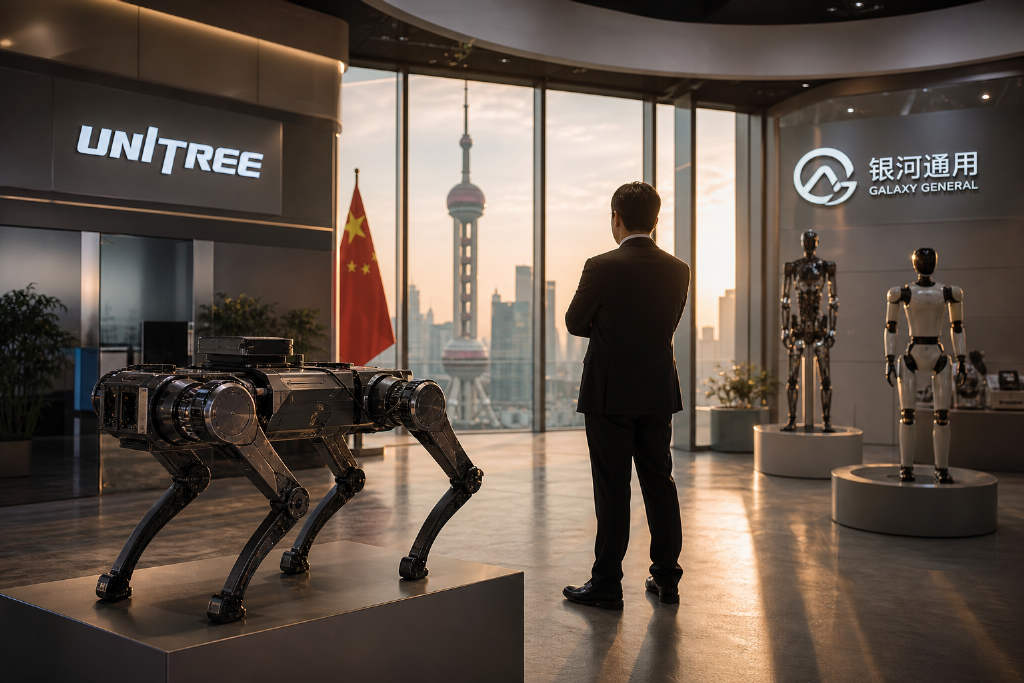
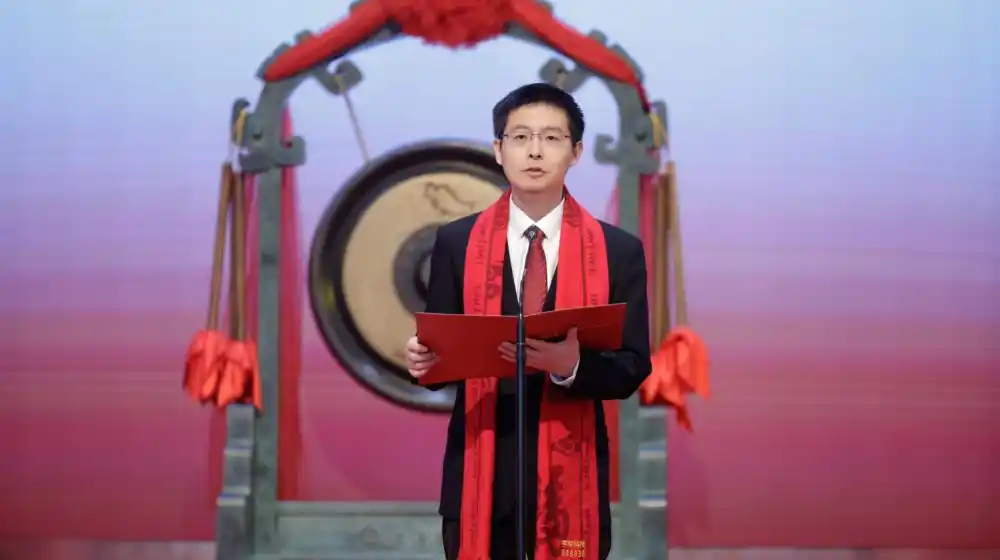
Unitree Technology, described in the report as the first A-share listed “humanoid robot” company, rang the bell on Aug. 19. The listing has also put a spotlight back on Yin Fangming, the investor who made Unitree’s first angel investment when founder Wang Xingxing was struggling to raise money.
In 2016, Yin invested RMB 2 million for a 15% stake in Unitree. Based on the IPO issue price and several later stake transfers, the report said his total return is about RMB 280 million, or more than 140 times the original investment. He has now surfaced again in another major embodied AI company: corporate filing updates show Yin became chairman of Galaxy General in July 2026.
Backing Unitree when few others would
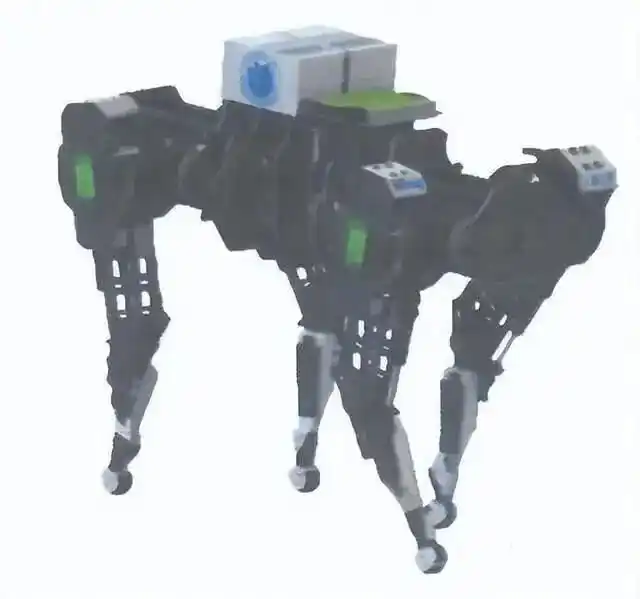
At Unitree’s headquarters, a rough-looking robot dog sits in a prominent spot in the showroom. It is XDog, the quadruped Wang developed on his own while in graduate school at Shanghai University, and the product that started Unitree’s founding story.
In 2015, Wang took XDog to a startup competition and won an award. The product later drew some attention on overseas platforms. He then tried to start a company, but interest from investors was limited. At the time, quadruped robotics was still a niche track in China, and most investors were not optimistic.
That was when Yin appeared. He approached Wang and provided Unitree’s first angel check, giving the company critical seed funding. Wang later told LatePost that the terms Yin offered were very broad, and that no agreement had even been signed when the money was wired.
The investment has since come to be seen as a contrarian decision made with a high level of trust in the founder.
Investor and founder in robotics
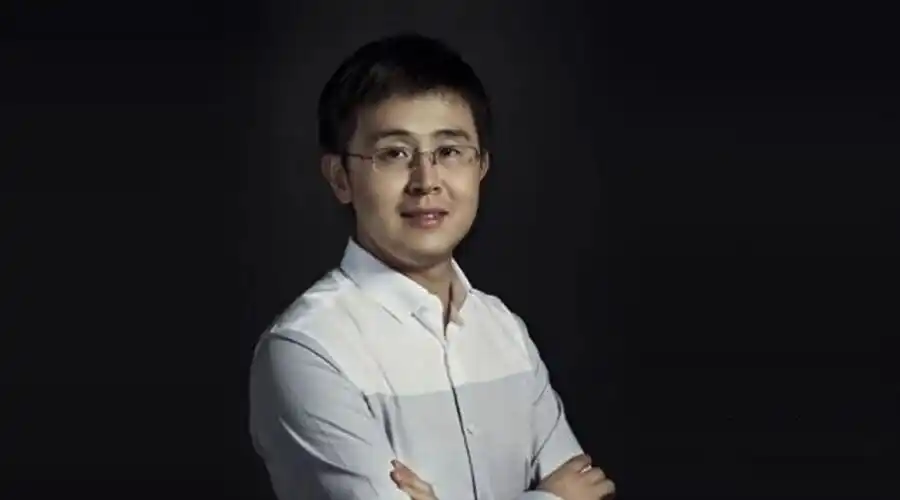
Yin was not simply a financial backer. He was also a startup founder with direct experience in robotics. In 2014, he helped found ROOBO, positioned as an “AI robot systems company” that both developed robots and invested in or incubated other smart hardware ventures.
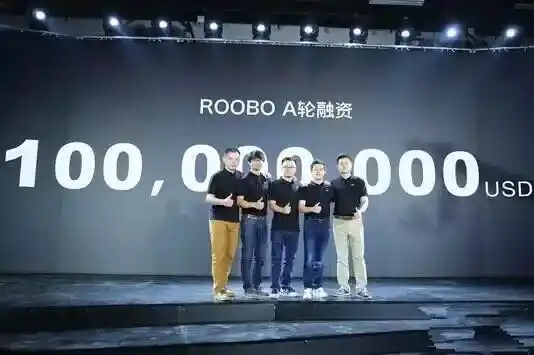
In 2016, the same year Yin invested in Unitree, ROOBO raised a $100 million Series A round, setting what the report described as a domestic record for AI Series A financing at the time. One of ROOBO’s core businesses was running an industry fund focused on smart hardware incubation. By 2017, the company had invested in more than 10 companies in China and abroad that specialized in robotic mechanical movement.
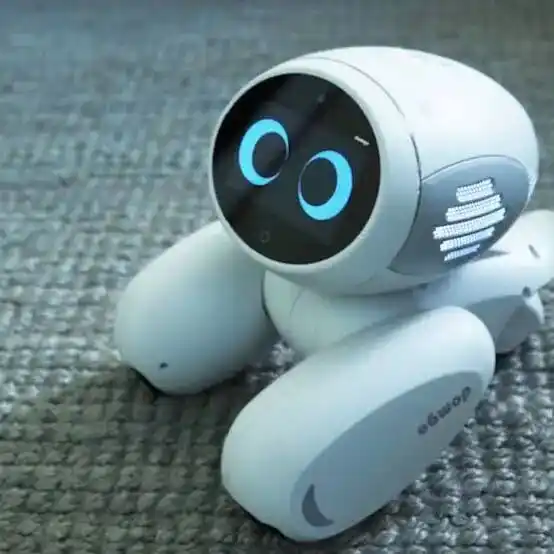
One of them was Domgy, a robot dog built by a Korean startup team as a home companion pet product. ROOBO invested while Domgy was still at the laboratory stage. Wang’s XDog was also an early lab-developed product, which made the comparison especially relevant.
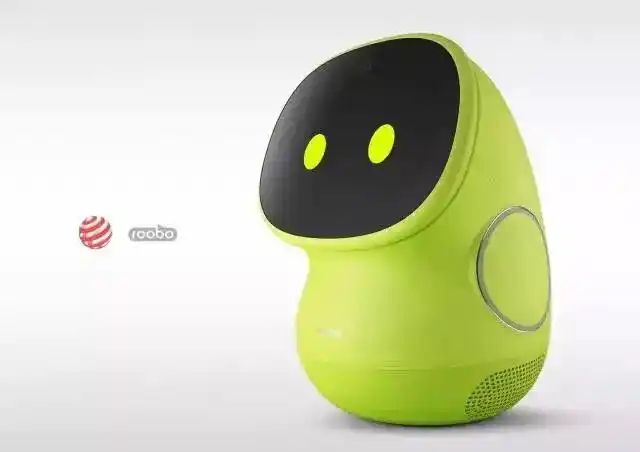
ROOBO also built robots of its own. Its first product, the Pudding Robot, used a compact and irregular hyperbolic surface design. The mold had to be redone four times before it succeeded, and each failure meant losses in the millions of yuan. Yin later said in media interviews that hardware is labor-intensive, takes a long time, and burns cash quickly, which is why many startups fail there.
Those lessons line up with what later became Unitree’s strengths. XDog earned attention early for its combination of performance and cost efficiency. The report said Unitree later insisted on in-house development for key components including motors, reducers and controllers, with more than 95% of core components developed internally. Strong hardware capability and cost control are now among Unitree’s best-known traits.
ROOBO declined as Unitree became a winning investment
Yin’s record as a founder was much less successful than his record as an investor.
ROOBO’s education companion robots, pet robot dogs and other robot products did not gain much traction in the market. Hardware projects it incubated, including VR glasses, bone-conduction headphones and drones, also failed to make much impact. By the end of 2018, ROOBO had narrowed its business direction and focused on children’s education. From 2019 to 2020, the company became involved in disputes tied to contracts, labor, intellectual property and sales contracts.
In October 2020, Yin published a statement in China Business Journal saying he was no longer serving as legal representative, manager or in other roles at Beijing RuBo Technology Co., Ltd., the ROOBO operating entity, and argued that legal liabilities arising from contracts or debts after that point should not be attributed to him personally. Even so, public business registration records later still showed him listed at times as the company’s legal representative.
ROOBO later became involved in enforcement cases. In April 2024, the Haidian District People’s Court in Beijing issued a consumption restriction order against Beijing RuBo Technology Co., Ltd., with Yin restricted from high spending in his capacity as legal representative. The enforcement amount was RMB 36,729. According to China’s public enforcement information platform, in November 2025 the company was listed as a judgment debtor, and the Beijing First Intermediate People’s Court opened enforcement proceedings with a target amount of RMB 83.655658 million.
As ROOBO weakened, Yin moved faster on investing and also took money off the table in Unitree in stages.
In 2018, he first cashed out part of his Unitree stake, reducing his holding from 15.0% to 11.4% and realizing RMB 1.3106 million. In 2020, he transferred all of the registered capital he held in Unitree to Tianjin Junwan Hongyi Enterprise Management Consulting Partnership (Limited Partnership) for RMB 14,300, exiting Unitree’s shareholder roster.
Yin is a partner in Junwan Hongyi and holds about 16.6% there. In practical terms, that meant he shifted from being a direct angel investor in Unitree to an LP with indirect exposure through an investment vehicle.
In May 2025, Junwan Hongyi transferred 22.6% of the Unitree shares it held to another institution for a total consideration of RMB 58 million. Based on Yin’s stake in Junwan Hongyi, the report estimated that he could receive RMB 9.6405 million from that transaction.
If he had held the Unitree stake all the way through, the report said the original RMB 2 million investment would correspond to a value of about RMB 1.848 billion, nearly RMB 1.6 billion more than the roughly RMB 280 million he has realized so far. The report also noted that angel investing is not limited to a single “hold forever” path, and that partial exits are common.
Investments beyond robotics
Yin’s investments extended into energy and commercial space as well.
In 2021, he invested RMB 1.5 million in Beijing Yujian Power Technology Co., Ltd., taking a 3.9% stake and becoming the company’s third-largest shareholder. Its business applies aerospace technology to the development of underground resources including oil, natural gas, shale gas, coalbed methane and geothermal energy.
In 2023, Yin became the third-largest shareholder of Beijing Yuanchen Keyao Management Consulting Partnership (Limited Partnership), gaining indirect exposure to Chongqing Tailan New Energy Co., Ltd. Tailan was founded in 2018, is a solid-state battery company, and completed a B+ round of more than RMB 400 million in December 2025.
Commercial space later entered his portfolio too. In 2025, Yin invested in Shenzhen Xiandeng Aerospace Technology Co., Ltd., which the report described as the only private commercial space company in China focused on small liquid launch vehicles tailored for constellation deployment and replenishment of 100 kg to 500 kg remote sensing and communications satellites.
In March 2026, Xiandeng Aerospace said it had completed nearly RMB 100 million in cumulative financing. Industrial and commercial records show Yin’s stake fell from 5% to 4.1026% in September 2025, then to 3.69% in March 2026.
Chairman of Galaxy General
Even with those cross-sector investments, the most important development after Unitree appears to be Galaxy General.
On July 21, 2026, the embodied AI unicorn updated its senior management filing, showing Yin Fangming as chairman and former chairman Guo Xiaoliang stepping down. Galaxy General was founded in May 2023. The report said it has raised more than RMB 6.96 billion in three years and reached a valuation above RMB 20 billion, making it one of the highest-valued unlisted embodied AI companies in China.
The report also said that in 2025, before embodied AI became as hot as it is now, someone arranged for Wang Xingxing and Galaxy General founder and CTO Wang He to sit at the same table, with Jensen Huang there as well. Earlier than that, the report said, it was Yin who had already brought the two star founders together.
If Unitree represents the first generation of robotics companies, Galaxy General is presented as part of a newer generation of embodied AI startups that focus not just on the body of the robot but also on the “brain.”
Yin had kept a low profile for years, and Galaxy General had not previously publicly disclosed his role. Outside reporting had only sketched the relationship. The Southern Metropolis Daily had previously reported that Yin was an investor behind Galaxy General. This filing marked his first formal appearance in front-stage management at the company.
The same update also revealed a broad management overhaul described in the report as “10 out, 9 in.” The timing drew attention because Galaxy General had already completed its shareholding reform in November 2025.
From mobile software to AI and robotics
Yin’s career stretches across several technology cycles. In 2002, he entered the computer science department at Northwestern Polytechnical University. Although the internet era was in full swing, he chose to work for a mobile phone maker after graduation.
In media interviews, he said the question on his mind was “What is the next,” and that the era after PCs would inevitably belong to mobile phones.
At MediaTek, he was among the first Android ROM developers in China. Later, at Sogou, he led the mobile input method product and built it into the industry leader. After joining Qihoo 360, he founded 360 Mobile Assistant. In just a year and a half, the user base exceeded hundreds of millions and annual transaction flow reached tens of billions of yuan, making it a major revenue engine for the company. He later also led the creation of 360 Portable WiFi, another breakout product.
He then left while mobile internet was still strong and moved into AI entrepreneurship. He said that while working on mobile software at Sogou, he had already seen smartphones beginning to challenge PCs. Later, while running a mobile app store business at Qihoo 360, he observed that the sector remained fixated on activation, user and activity metrics even as demand for searching and downloading long-tail apps was declining.
From that point, he concluded that mobile internet was unlikely to deliver another major breakthrough and that the next decade’s opportunity would lie in AI. That judgment led him from phones and mobile internet into artificial intelligence and robotics.
A brief final comment
The report said the author reached out to Yin in hopes of discussing his early investment in Unitree. He declined the interview and left only one sentence:
“Please give more support to outstanding embodied robotics entrepreneurs like Wang Xingxing.”