AVGO

Broadcom
2026-08-14 14:20:45

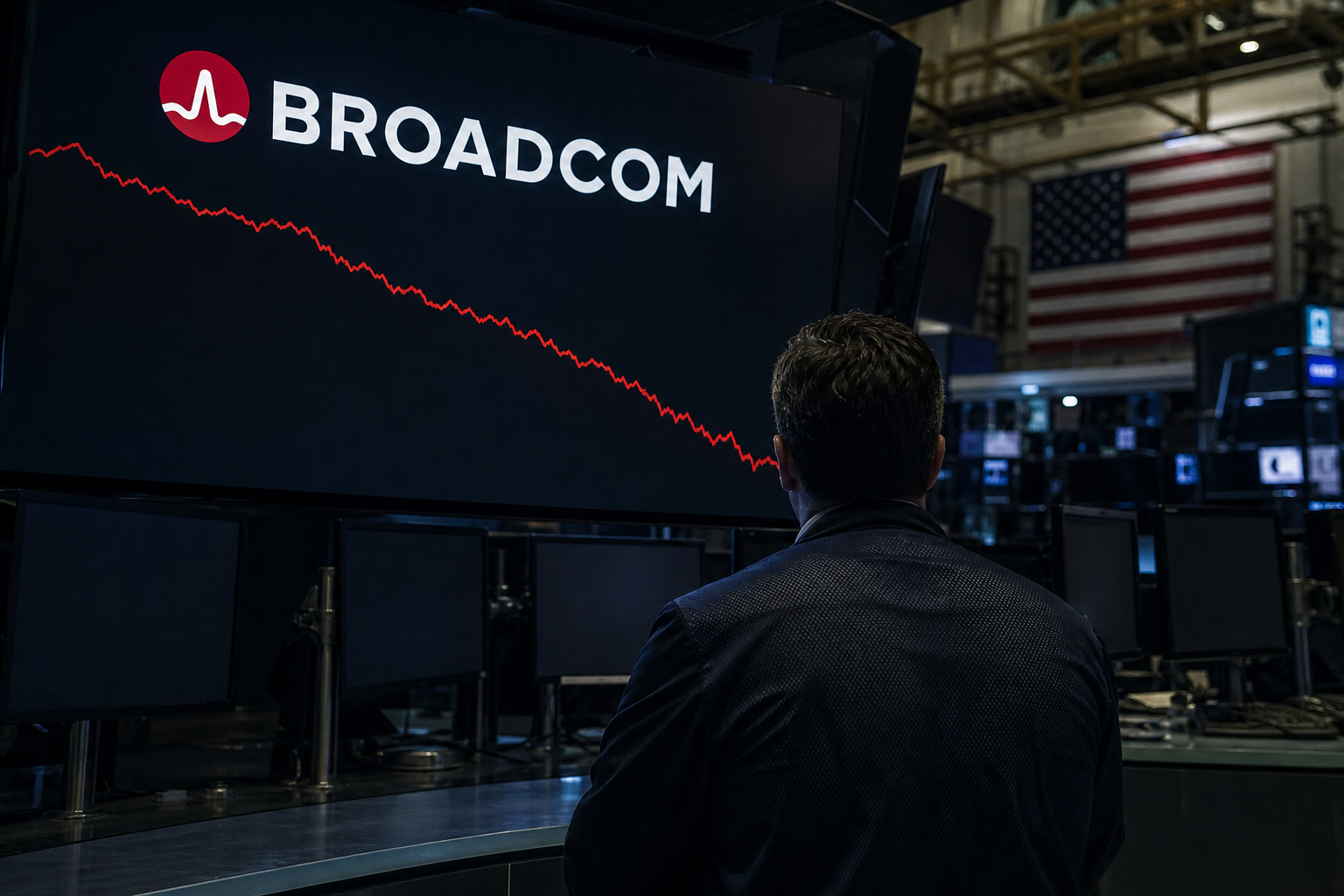
Broadcom Falls 5%, Marking the Biggest Drop in the S&P 500

Broadcom (AVGO.O) fell 5%, making it the worst-performing stock among S&P 500 constituents at the time of the update, according to market data cited by Gate. The item was published by ChainCatcher as a brief market update. No additional trading context, catalyst, or volume details were provided in the source.

220
Broadcom Falls 5%, Marking the Biggest Drop in the S&P 500
UAE
2026-08-14 14:48:30

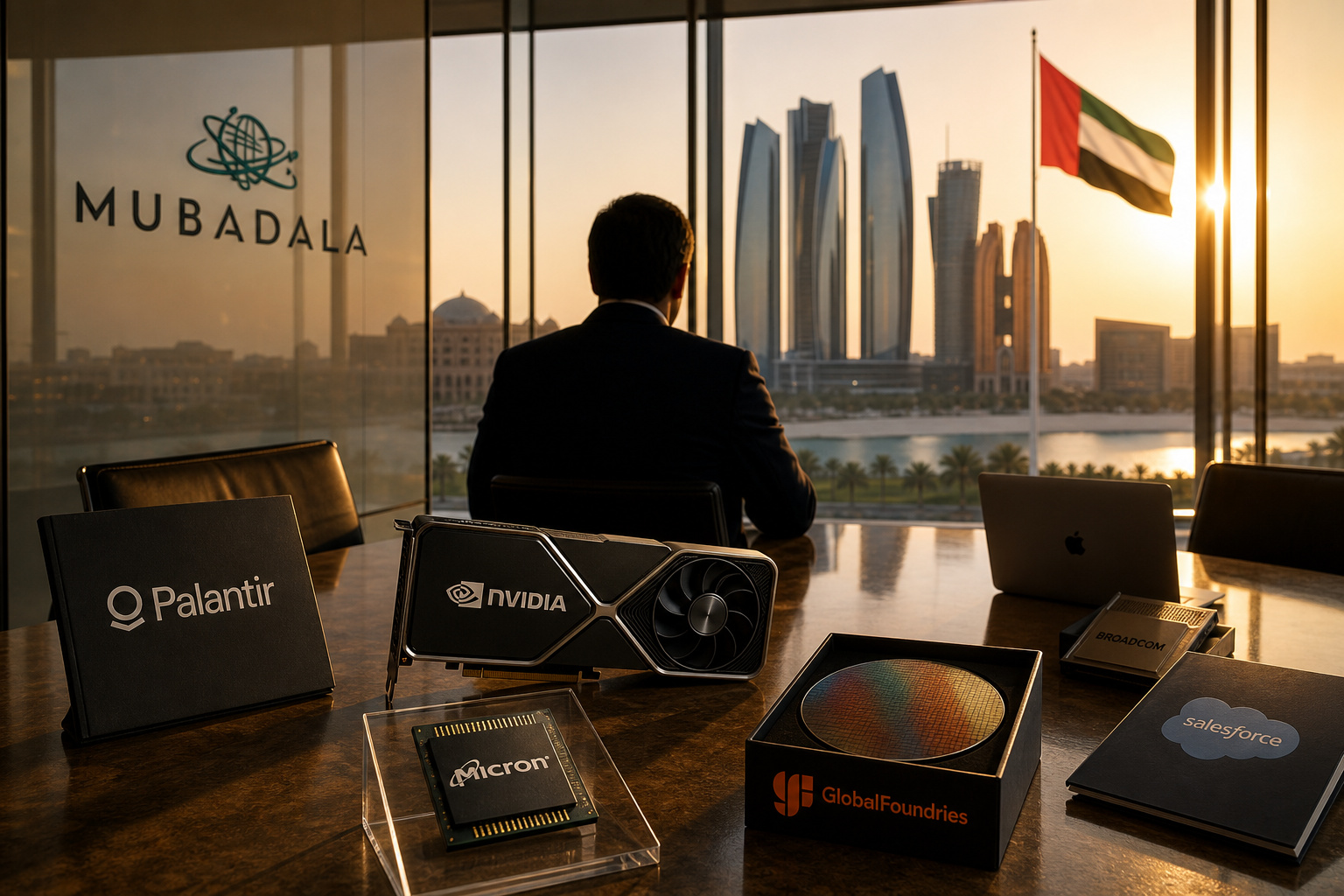
Mubadala reshuffles U.S. AI holdings, exits Apple and Broadcom, adds Micron and Palantir

A recent U.S. Securities and Exchange Commission filing shows that Abu Dhabi sovereign wealth fund Mubadala Investment Company has made notable changes to its U.S. equity portfolio, with a clear focus on artificial intelligence, semiconductors, and technology stocks. The fund fully exited its positions in Apple (AAPL), Salesforce (CRM), and Broadcom (AVGO), while keeping its stake in NVIDIA (NVDA) at 65,326 shares. It also increased its Class A holdings in Palantir Technologies (PLTR) by 40.4% to 95,656 shares. In semiconductors, Mubadala raised its position in Micron Technology (MU) by 3.0% to 45,451 shares, but trimmed its long-held stake in GlobalFoundries by 5.5% to 399.6 million shares. The filing points to a portfolio rotation away from some traditional mega-cap technology names and major chip stocks, while maintaining exposure to areas tied to AI infrastructure, data analytics software, and memory chips.

210
Mubadala reshuffles U.S. AI holdings, exits Apple and Broadcom, adds Micron and Palantir
Market Analys
2026-08-06 13:44:00

Interconnect Moves to the Top of the Bottleneck Stack as HBM and Memory Hierarchies Face Repricing

A PANews analysis argues that August 4, 2026 marked a turning point for the memory industry. On the same day, SK hynix and SanDisk introduced the first standard for high-bandwidth flash, or HBF, at FMS 2026, while TrendForce reported that Nvidia was evaluating lower HBM configurations for Rubin Ultra. The article says those two developments point in the same direction: the core constraint in AI infrastructure is shifting away from on-package memory alone and toward interconnects across chips, packages, racks, and systems. The piece traces that shift through Nvidia’s Vera Rubin launch, NVLink 6 bandwidth gains, Spectrum-X CPO shipments, Intel’s EMIB-T packaging push, TSMC’s reported work on an EMIB-like approach, and the emergence of UCIe-linked memory tiers such as HBF. In that framework, optical and electrical interconnects sit at the top of the stack, advanced packaging becomes the physical foundation, HBM remains essential but less open-ended from an investment perspective, HBF represents a new category aimed at inference-era capacity pressure, and CXL memory pooling remains an option for later years. Rather than framing this as a broad “memory bull market,” the article’s main point is that value inside the storage empire is being redistributed as the bottleneck migrates.

1040
Interconnect Moves to the Top of the Bottleneck Stack as HBM and Memory Hierarchies Face Repricing
Policy Regula
2026-08-05 11:39:35

FCC draft on Chinese data-center optical modules puts focus on non-China suppliers and InP bottlenecks

The U.S. Federal Communications Commission is considering restrictions on some new data-center optical modules made by Chinese vendors, but the proposal is still in draft form and several core definitions remain unsettled. The biggest open questions are whether the FCC will define "Chinese origin" by brand, manufacturing location, or component source, whether older models can still enter the U.S., and whether non-Chinese brands using Chinese-made substrates or lasers could still qualify for exemptions. For now, the market is trading the possibility that orders shift toward non-Chinese suppliers. WhiteLine Daily identified Coherent, Lumentum, and Applied Optoelectronics as the most direct potential beneficiaries if U.S. cloud companies continue building AI data centers while Chinese new-model supply faces limits. Marvell and Broadcom could benefit later, but only if demand passes through to DSP, driver-chip, and connectivity layers after module makers actually expand output. Over a longer horizon, the report says the more important constraint may not be module assembly capacity but the supply of indium phosphide, or InP, across substrates, epitaxial wafers, and lasers. AXT, IQE, and Sivers map to different parts of that chain, though each carries a different mix of policy risk and commercial visibility. The report argues that the real test will be the final FCC rule, confirmed customer orders, and whether non-China capacity can scale fast enough.

870
FCC draft on Chinese data-center optical modules puts focus on non-China suppliers and InP bottlenecks
Goldman Sachs
2026-08-03 10:28:01

Goldman Sachs adds Microsoft, Applied Materials and others to conviction buy list

Goldman Sachs disclosed changes to its U.S. stock conviction buy list, adding Applied Materials (AMAT.O), Delta Air Lines (DAL.N), Microsoft (MSFT.O) and United Parcel Service (UPS.N), among others. At the same time, the firm removed Broadcom (AVGO.O), Dick’s Sporting Goods (DKS.N), Johnson & Johnson (JNJ.N) and ServiceNow from the list. The update was cited by ChainCatcher in a market analysis newsflash. No further details on the reason for the adjustments were provided in the source. The report focused on the list changes themselves, naming the stocks added and those taken off the conviction buy roster. The source did not disclose any target prices, rating changes beyond the list adjustment, or a specific rationale tied to the reshuffle.

850
Goldman Sachs adds Microsoft, Applied Materials and others to conviction buy list
US stocks
2026-07-27 08:08:40

U.S. storage-related stocks rise in premarket trading, with SK Hynix up 6%

U.S. storage-related stocks moved higher in premarket trading on July 27, according to market data from BIT (Bit.com). SK Hynix led the group with a 6% gain, followed by SanDisk at 5%, Seagate Technology at 3.9%, and Micron Technology at 3.6%. Other chip names also traded higher before the open. Nvidia rose 1%, Intel added 3%, and Broadcom gained 2%. The move was reported by BlockBeats, citing BIT market data.

670
U.S. storage-related stocks rise in premarket trading, with SK Hynix up 6%
Policy Regula
2026-07-25 04:36:35

Samsung and SK Hynix enter $950 billion supply project agreements, Korean presidential office says

Samsung Electronics and SK Hynix have reached agreements with global technology companies on a series of projects worth a combined $950 billion, according to Kim Yong-beom, head of policy at South Korea’s presidential office. Speaking on July 25, Kim said the arrangements include a long-term deal under which SK Group will supply $750 billion worth of high-performance semiconductors to global tech companies, including Nvidia. Separately, Samsung Electronics will provide $200 billion worth of chips to Broadcom. The comments outline the scale of the proposed cooperation and identify the companies tied to the supply commitments. The statement was cited by BlockBeats and names Nvidia and Broadcom as counterparties in the broader set of agreements.

840
Samsung and SK Hynix enter $950 billion supply project agreements, Korean presidential office says
Hyperliquid
2026-07-24 14:28:10

ARK analyst says Hyperliquid’s HIP-3 RWA volume has overtaken crypto on a weekly basis

ARK Invest analyst Lorenzo said Hyperliquid has reached a new point in its market mix, with real-world asset trading on HIP-3 exceeding crypto-native volume for the first time in a single week. According to the figures cited in the post, RWA accounted for 54% of total platform volume, and 61% of that RWA activity came from single-stock products. The article argues this shift points to a broader change in Hyperliquid’s positioning, from a crypto perpetuals venue to a round-the-clock multi-asset derivatives platform spanning equities, indices, commodities and FX. The write-up also stresses that the RWA products in question are synthetic perpetual contracts rather than tokenized securities. Traders get price exposure, typically margined in USDC, but do not receive actual stock ownership, voting rights or legal claims on the underlying assets. It distinguishes that model from true securities tokenization and notes the two paths carry different infrastructure, legal and operational requirements. At the same time, the piece flags a math issue in the original comparison between Hyperliquid’s HIP-3 RWA volume and the rest of the DEX perpetuals market, and says the claim cannot be directly derived from the numbers presented. It further examines what the trend could mean for HYPE, USDC and Circle, while outlining the current HIP-3 market map, where activity is concentrated in stocks, commodities and indices, with much of the volume attributed to the trade[XYZ] deployment.

3930
ARK analyst says Hyperliquid’s HIP-3 RWA volume has overtaken crypto on a weekly basis