ArF

JZL Capital
2026-08-03 12:30:56

JZL Capital weekly: Fed split widens as ETF outflows keep pressure on BTC

JZL Capital’s weekly note for July 27 to Aug. 2 said markets were driven by a more divided Federal Reserve, softer headline inflation led by energy prices, widening dispersion across Chinese and U.S. equities, and renewed pressure on Bitcoin from spot ETF outflows. The July Federal Open Market Committee kept the federal funds rate at 3.50% to 3.75% by a 9-3 vote, with three officials explicitly backing a 25 basis point hike, which the report described as a hawkish pause rather than a neutral hold. In the U.S., June PCE slowed to 3.7% year over year from 4.1%, while core PCE eased only to 3.3% from 3.4%, suggesting headline disinflation came mainly from energy instead of a broad cooling in core pressures. In equities, the report said investors increasingly rewarded cloud revenue growth, earnings delivery and free cash flow, pointing to Microsoft’s 21.75% weekly rise and Azure’s 43% growth. In crypto, BTC fell from $65,400 to around $63,114 during the week, while U.S. spot BTC ETFs posted about $61.5 million in net outflows, reinforcing a market structure that JZL said is now constrained more by weak spot demand and internal selling pressure than by macro risk alone.
1340
JZL Capital weekly: Fed split widens as ETF outflows keep pressure on BTC
China lithogr
2026-07-28 02:11:00

China-made immersion DUV tools move into pilot production, but the gap with ASML remains wide

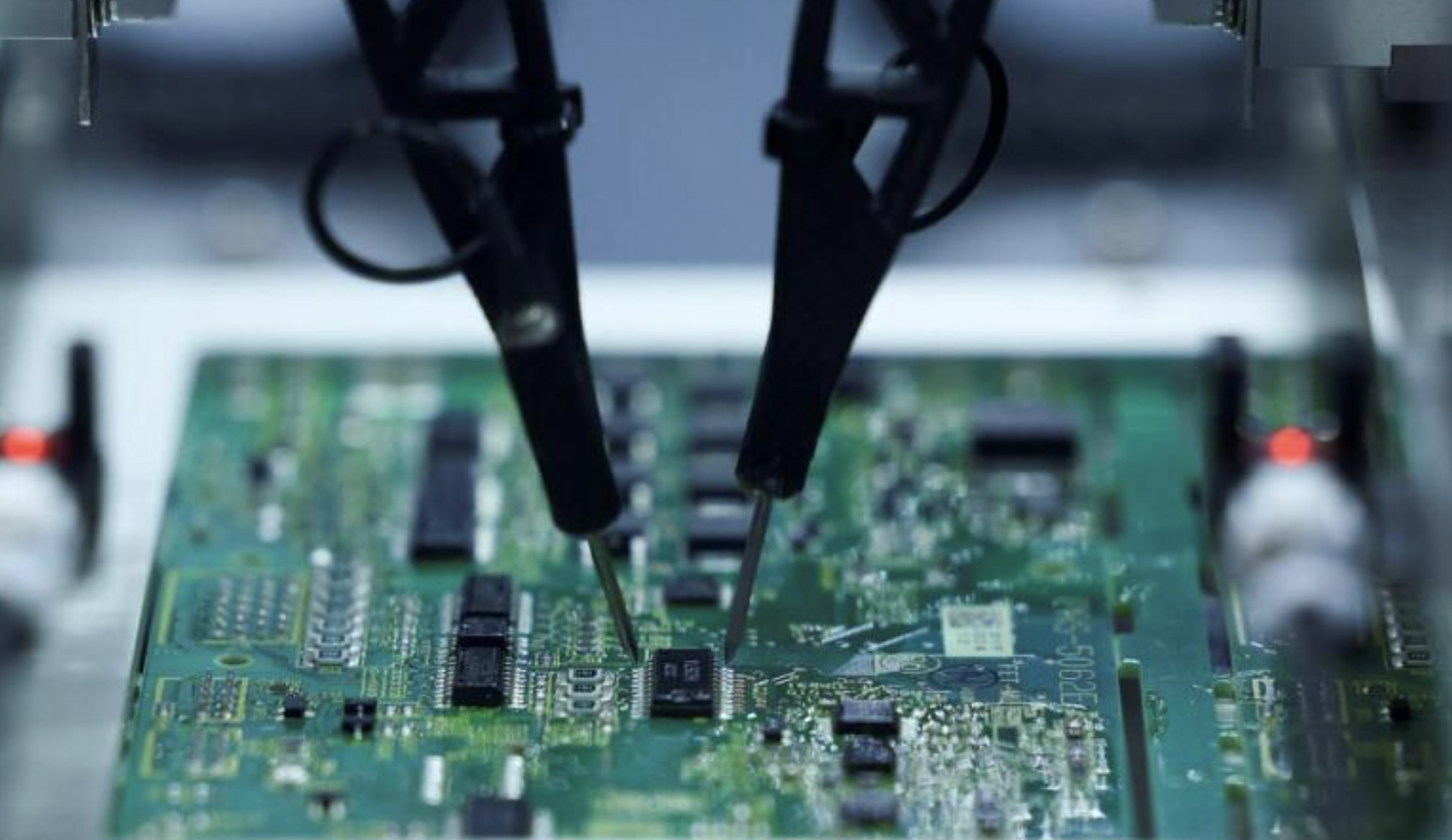
A PANews article argues that recent reports around China-made immersion deep ultraviolet lithography systems should be read with caution, not as proof that China has cracked the lithography bottleneck or entered a “DeepSeek moment” for chipmaking equipment. According to the piece, a state-backed company in Shanghai has begun small-batch production of domestic immersion DUV tools, with about five units planned this year for Semiconductor Manufacturing International Corp. (SMIC), Hua Hong Semiconductor, and ChangXin Memory Technologies, and a target of roughly 20 units in 2027. The article says the development matters because it appears to move domestic immersion DUV systems from R&D and prototype validation into initial production and customer introduction. At the same time, it stresses that public information does not yet prove the machines have passed fab acceptance or can run at full commercial standards over long periods. It also questions widely circulated figures such as support for 28 nm, localization above 85%, and yield above 90%, noting that no full testing reports or statistical definitions have been publicly disclosed. The piece draws a sharp line between DUV and EUV. Progress in immersion DUV could help China strengthen supply security for mature and some advanced nodes, but it does not mean EUV challenges have been solved. For investors, the article says the real checkpoints over the next few years will be fab acceptance, uptime, throughput, overlay precision, defect stability, repeat orders, and the domestic substitution rate of key components.

1680
China-made immersion DUV tools move into pilot production, but the gap with ASML remains wide
CXMT
2026-07-24 01:24:41

CXMT to List on Shanghai STAR Market on July 27 at Roughly RMB 580 Billion Valuation

ChangXin Memory Technologies, described in the report as China’s leading DRAM storage IDM player, is set to officially list on Shanghai’s STAR Market on July 27 with an issuance valuation of about RMB 580 billion. The company plans to raise RMB 29.5 billion, with roughly RMB 22.066 billion earmarked for equipment procurement and installation. The report also laid out a broad map of companies tied to the supply chain. In equipment, NAURA has already shipped etch and thin-film deposition tools in volume, while Advanced Micro-Fabrication Equipment Inc. China is still moving through verification and volume procurement for etch and thin-film tools. ACM Research’s CMP equipment has entered the core supply chain, and testing equipment makers Precision Measurement Electronics and Jztest are also cited as beneficiaries. On the materials side, the report named Yahc, Guanggang Gases, Jinhong Gas, Red Avenue New Materials, Jingrui Electronic Materials and Debang Technology. It also mentioned packaging and module-related names including Huatian Technology, Longsys and Delingli, as well as distributor Sunlord Electronics. According to the report, several listed firms hold indirect stakes through industry funds, with Shangfeng Cement holding about 0.1517% before the offering.

1100
CXMT to List on Shanghai STAR Market on July 27 at Roughly RMB 580 Billion Valuation
Japan photore
2026-07-22 11:38:11

Japan photoresist cutoff rumor for China clashes with customs data and public records

A widely shared report claiming that four major Japanese suppliers had halted new China orders for ArF and EUV photoresists has drawn intense attention, but the underlying evidence appears thin. The original article says the rumor named Tokyo Ohka, JSR, Shin-Etsu Chemical, and Fujifilm, and described a sweeping suspension of orders, technical support, and deliveries. Yet customs data cited in the same piece shows China imported 1,622 tons, 1,495 tons, 1,958 tons, 1,910 tons, and 1,939 tons of photoresist from Japan from January through May 2026, for a total of more than 8,900 tons, with no visible cliff-like drop in overall volumes. The report also notes that a similar claim circulated before and that Japanese official channels, corporate websites, and industry media had not publicly reported the latest alleged cutoff. From there, the article shifts to the larger issue: why advanced photoresists matter so much to chip manufacturing, how Japanese companies built their edge through decades of process-specific formulations and customer co-development, and why an outright supply halt would not be a simple decision. It points to China’s growing role as a major photoresist market, Japan’s export-control timeline that has not formally included photoresists, rising domestic substitution in China, and South Korea’s expanding ArF and EUV-related capabilities. The piece argues that the bigger question is not the rumor itself, but the industry’s continuing anxiety over supply security.

1100
Japan photoresist cutoff rumor for China clashes with customs data and public records