BOT

Policy and Re
2026-08-12 02:01:39

SEC Set to Review Crypto Fundraising Exemption as Judge Limits CFTC Reach in Kalshi Sports Contracts

The U.S. Securities and Exchange Commission is set to hold a public meeting on Aug. 14 to consider a proposed "Regulation Crypto" framework that would let some crypto projects raise capital without completing a full securities registration process. If advanced for public comment, it would become the SEC’s first formal, durable rulemaking effort aimed specifically at the crypto sector. The proposal would also outline a route for projects to exit SEC oversight once developers stop actively managing the network and the project becomes decentralized. SEC Chair Paul Atkins has previously said the exemption period could last as long as four years, though no fundraising cap was disclosed. On the litigation front, a federal judge in Connecticut ruled that Kalshi’s sports-event contracts are not swaps under the Commodity Exchange Act, meaning the Commodity Futures Trading Commission did not obtain exclusive jurisdiction on that basis. The decision lands as Kalshi remains under pressure in New York, where the CFTC said it used “emergency powers” to require the prediction-market operator to continue operating after the company sought assistance following a lawsuit from New York Attorney General Letitia James. Elsewhere, the market snapshot showed broad declines among major tokens over the past 24 hours, while project, funding, security and AI headlines spanned Bitwise layoffs, a reported COLDCARD Mk3 wallet flaw, Hyperliquid and Robinhood Chain user metrics, and a string of new financings across crypto, AI and financial infrastructure.

1190
SEC Set to Review Crypto Fundraising Exemption as Judge Limits CFTC Reach in Kalshi Sports Contracts
Unitree Robot
2026-08-11 13:00:00

Unitree and Founder Wang Xingxing Reach STAR Market Subscription After Nine-Year Rise

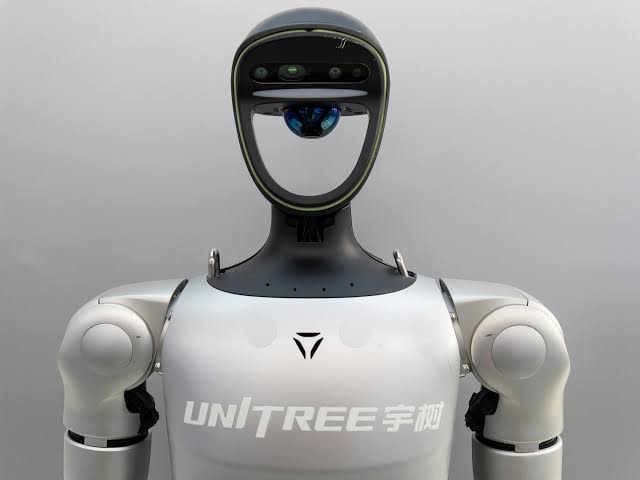
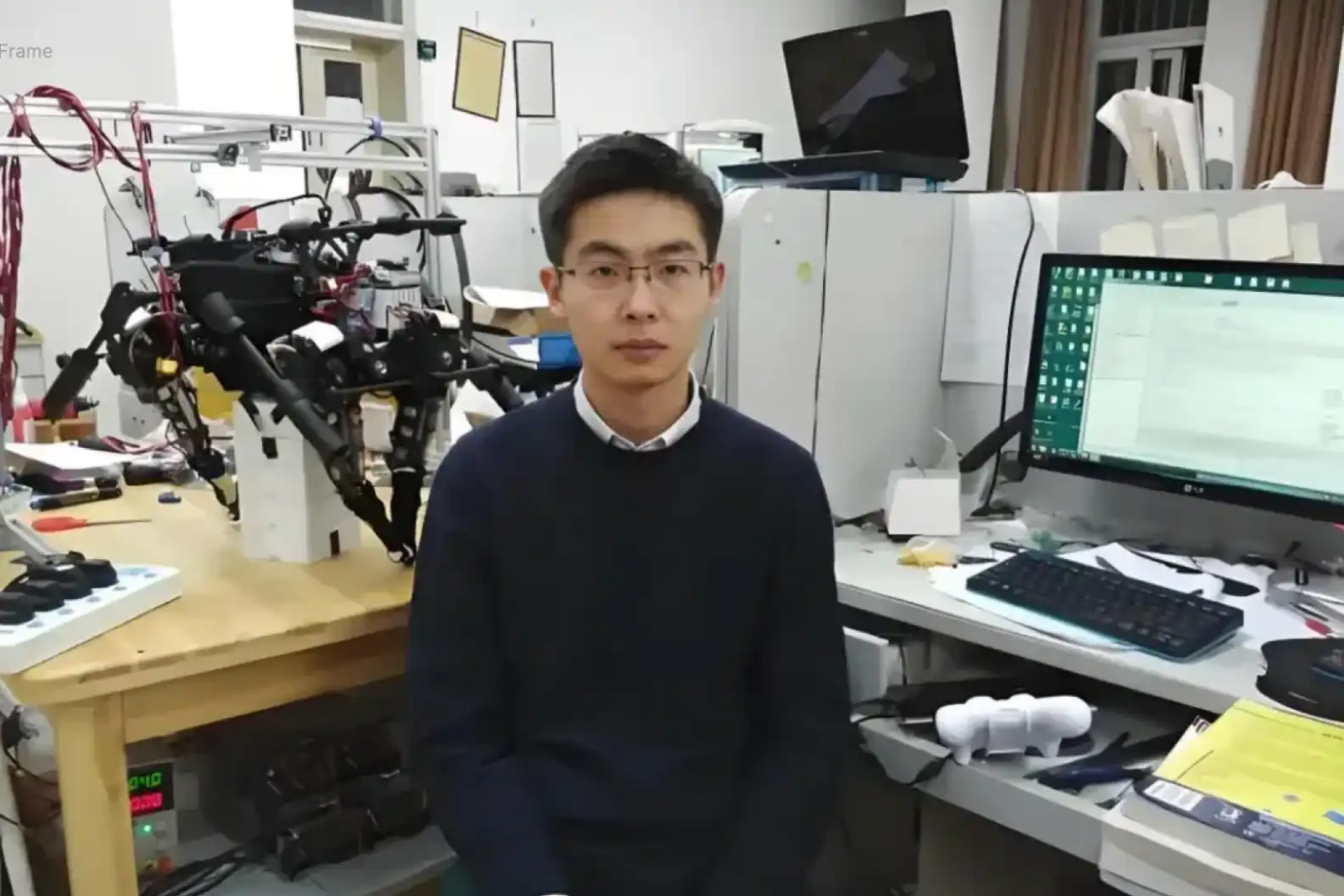
Unitree Robotics has opened subscription for its STAR Market listing at an issue price of RMB 150.80, implying a post-offering valuation of about RMB 61 billion. Founder Wang Xingxing directly and indirectly holds 33.36% of the company, giving him a paper fortune of roughly RMB 20 billion based on the filing cited in the source material. The listing caps a long climb that began with hand-built student projects, an early quadruped robot assembled on a tight budget, and an awkward 2017 appearance on the sidelines of the Wuzhen internet conference, where few people knew his name. The story tracks Unitree’s path from Wang’s early years in Zhejiang and his time at Zhejiang Sci-Tech University and Shanghai University, to the launch of XDog and the later commercial debut of Laikago. It also details the company’s financing history, including early backing from Yin Fangming, support from Zhang Peng’s fund at a cash crunch, and later rounds involving Shunwei Capital, Meituan-linked investors, Tencent-related capital, state-backed funds and others named in the source. The report also covers Unitree’s surge in public visibility through repeated appearances on China Central Television’s Spring Festival Gala, the company’s 2025 domestic revenue mix, humanoid robot sales, and Wang’s return to Wuzhen years after he first attended as a little-known founder outside the main venue.

1140
Unitree and Founder Wang Xingxing Reach STAR Market Subscription After Nine-Year Rise
GMGN
2026-08-10 03:00:00

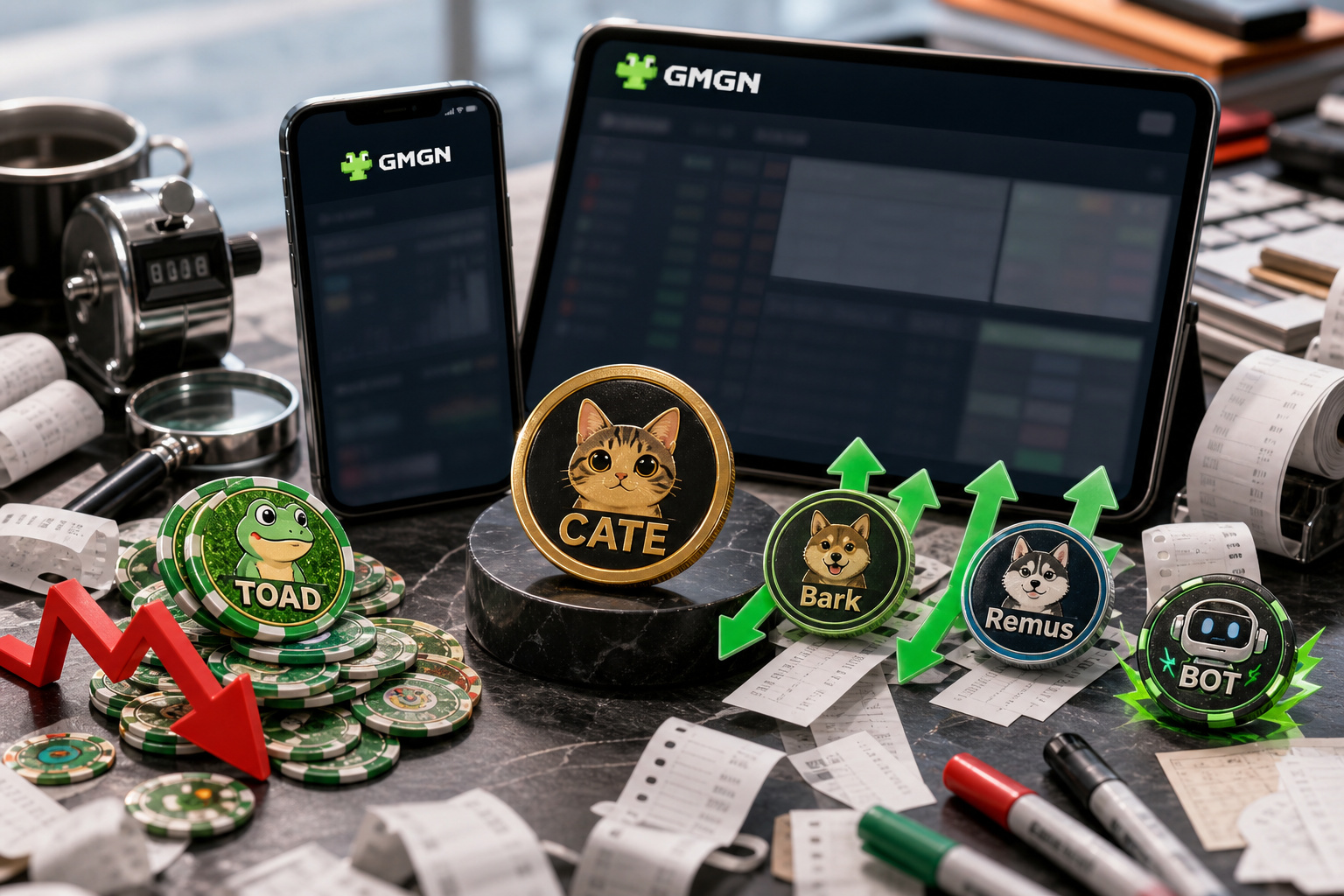
GMGN: 24H Hot-Sector Token Top 5 — CATE Leads Market Cap, TOAD Leads Volume

GMGN's 24-hour hot-sector token ranking shows sharp differences among the top five. CATE is the largest by market capitalization at $22.45 million, with a last price of $0.0234 and a 24-hour gain of 10.5%. TOAD has the highest trading volume at $28.71 million and the most trades at 175,485, but its price dropped 22.7% to $0.011. Its market cap stands at $10.55 million. Bark trades at $0.0005 with a $400,000 market cap, yet posted a 16.3K% gain and $13.92 million in volume. Remus gained 21.7K%, reaching $0.0007, with a market cap of $630,000 and $13 million in volume. BOT rose 6.53K% to $0.0002, holding a $190,000 market cap and $4.91 million in volume. The remaining trade counts are 173,432 for Bark, 139,659 for Remus, 78,051 for CATE, and 71,600 for BOT. The figures were published by ChainCatcher based on GMGN data. All percentages and trading figures refer to the same 24-hour window reported by GMGN.

1070
GMGN: 24H Hot-Sector Token Top 5 — CATE Leads Market Cap, TOAD Leads Volume
Unitree
2026-08-08 03:55:00

Unitree IPO expectation puts robot supply-chain repricing in focus, CoinW report says

A CoinW Research report carried by PANews says rising expectations for Unitree Technology’s IPO are acting as a fresh catalyst for the robotics sector, shifting market attention from headline-grabbing robot demos to commercialization, supply-chain depth and scalable delivery. The report says Unitree, one of China’s best-known embodied AI companies, has built a broad product lineup spanning quadruped robots, humanoid robots, robotic arms and core components, which sets it apart from companies focused mainly on technical showcases. According to the report, Unitree filed its listing application in March 2026 and received registration approval in June 2026. CoinW argues that this has pushed the discussion beyond whether a robotics company can go public and toward whether the industry itself is ready for large-scale commercial deployment. The note also highlights Unitree’s revenue figures disclosed in its prospectus, showing revenue of RMB 159 million in 2023, RMB 392 million in 2024 and RMB 1.708 billion in 2025. The report maps potential beneficiaries across the robotics chain, from reducers, ball screws and motors to sensing, force control, controllers, lightweight materials and precision manufacturing. It also compares industry paths in the U.S., Japan, South Korea and China, and says any sustained sector re-rating will still need to be backed by orders, shipments and real-world applications.

1360
Unitree IPO expectation puts robot supply-chain repricing in focus, CoinW report says
Self-Supervis
2026-07-28 10:08:10

VISReg targets JEPA representation collapse and wins repeated reposts from Yann LeCun

VISReg, a new self-supervised learning method built around Variance-Invariance-Sketching Regularization, has drawn repeated reposts from Turing Award winner Yann LeCun, who described the line of work as: "VICReg begat SIGReg which begat VISReg." The paper positions itself as a response to one of the central problems in JEPA-style world models: representation collapse, where distinct inputs are mapped to the same or only a few vectors and the model stops learning useful features. The method splits anti-collapse regularization into two independent targets, scale and shape. It keeps a variance term to control scale, replaces covariance constraints with a sketching objective based on Sliced Wasserstein Distance to capture distribution shape, and uses stop-gradient to separate the two during optimization. According to the paper, this avoids the vanishing-gradient issue seen in SIGReg when collapse begins. The authors report results across 15 datasets, including 8 in-domain benchmarks, 6 out-of-distribution datasets, and ADE20K dense prediction. The paper says VISReg outperformed seven mainstream self-supervised methods in aggregate and matched DINOv2 on OOD benchmarks using about one-tenth of the training data. Code, pretrained weights, and the paper are publicly available.

950
VISReg targets JEPA representation collapse and wins repeated reposts from Yann LeCun
Hyperliquid
2026-07-24 14:28:10

ARK analyst says Hyperliquid’s HIP-3 RWA volume has overtaken crypto on a weekly basis

ARK Invest analyst Lorenzo said Hyperliquid has reached a new point in its market mix, with real-world asset trading on HIP-3 exceeding crypto-native volume for the first time in a single week. According to the figures cited in the post, RWA accounted for 54% of total platform volume, and 61% of that RWA activity came from single-stock products. The article argues this shift points to a broader change in Hyperliquid’s positioning, from a crypto perpetuals venue to a round-the-clock multi-asset derivatives platform spanning equities, indices, commodities and FX. The write-up also stresses that the RWA products in question are synthetic perpetual contracts rather than tokenized securities. Traders get price exposure, typically margined in USDC, but do not receive actual stock ownership, voting rights or legal claims on the underlying assets. It distinguishes that model from true securities tokenization and notes the two paths carry different infrastructure, legal and operational requirements. At the same time, the piece flags a math issue in the original comparison between Hyperliquid’s HIP-3 RWA volume and the rest of the DEX perpetuals market, and says the claim cannot be directly derived from the numbers presented. It further examines what the trend could mean for HYPE, USDC and Circle, while outlining the current HIP-3 market map, where activity is concentrated in stocks, commodities and indices, with much of the volume attributed to the trade[XYZ] deployment.

4470
ARK analyst says Hyperliquid’s HIP-3 RWA volume has overtaken crypto on a weekly basis