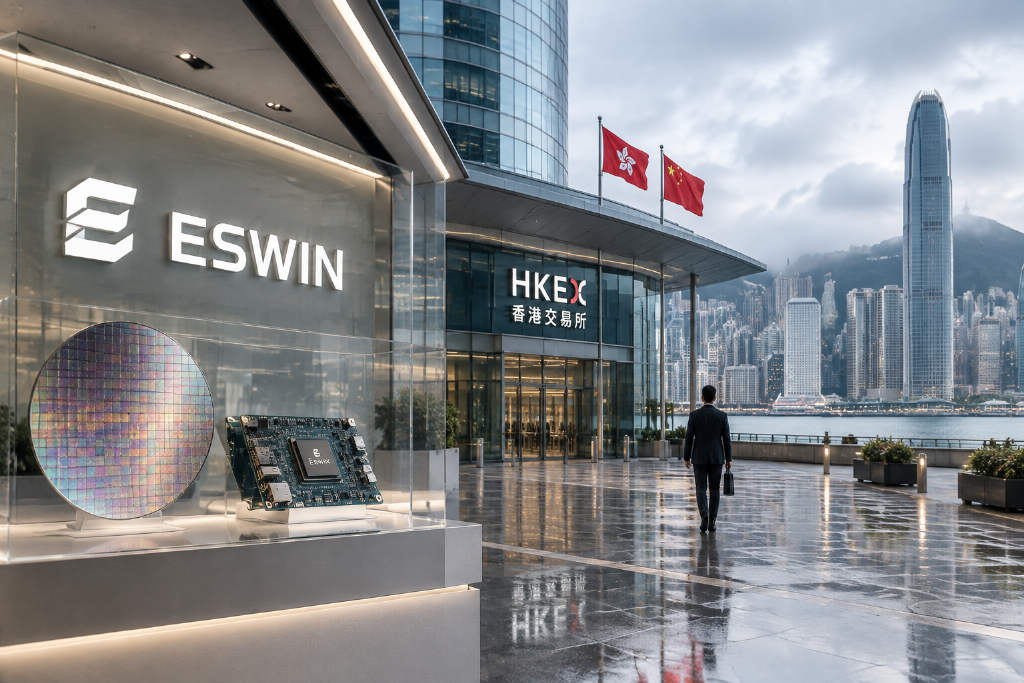
ESWIN Computi2026-09-22 07:56:14ESWIN Computing Clears HKEX Hearing as BOE Founder Wang Dongsheng Takes a Second Bet on RISC-VESWIN Computing has passed its Hong Kong listing hearing after three filing attempts, moving a step closer to becoming what its prospectus positions as the first RISC-V-focused listing in Hong Kong. The company is tied to Wang Dongsheng, founder of BOE Technology, whose first major industry wager helped build China’s LCD panel champion and whose second venture is now centered on chips and computing infrastructure. The listing documents show a business with rising revenue but persistent losses. ESWIN Computing posted revenue of RMB 1.752 billion, RMB 2.025 billion, and RMB 2.431 billion from 2023 to 2025, while net losses over the same period came to RMB 1.837 billion, RMB 1.547 billion, and RMB 1.516 billion, totaling RMB 4.9 billion over three years. Its human-machine interaction chips, still closely tied to display-related demand, remained the main revenue source in 2025, while interconnect and computing chips grew faster but from a smaller base. The prospectus also highlights two issues investors will likely focus on after the hearing: customer concentration and commercialization of the RISC-V ecosystem. ESWIN disclosed that its largest customer contributed 82.1%, 76.8%, and 64.6% of revenue from 2023 to 2025. At the same time, the company is trying to build a broader software and hardware ecosystem around RISC-V through its RISAA platform and the broader RDI concept.440
Yunyinggu Tec2026-09-15 09:36:36AMOLED chip designer Yunyinggu restarts A-share IPO process in ShenzhenYunyinggu Technology, a Shenzhen-based AMOLED display driver chip designer, has restarted its A-share initial public offering process after filing tutoring registration with the Shenzhen bureau of the China Securities Regulatory Commission on Sept. 10. GF Securities is serving as the tutoring institution. The company had already gone public in Hong Kong on May 27 this year and was valued at HK$10.5 billion as of the previous close. Founded in May 2012, Yunyinggu has registered capital of 436 million yuan. Its founder, Gu Jing, is the company’s legal representative and currently serves as executive director, chairman, general manager and chief executive officer. According to the source material, the company’s investors include Xiaomi Yangtze River and Tianjin Jinmi, both controlled by Lei Jun, Huawei-backed Hubble Technology, BOE Technology and Qualcomm China. Its revenue rose from 551 million yuan in 2022 to 1.106 billion yuan in 2025, but the company remained loss-making over the same period. For the first half of 2026, Yunyinggu reported 318 million yuan in revenue and a net loss listed in the source as 1.51 yuan, with profitability not yet achieved. Frost & Sullivan data cited in the filing ranked the company as the fifth-largest AMOLED display driver chip supplier globally by 2024 shipment volume and the largest in mainland China.770
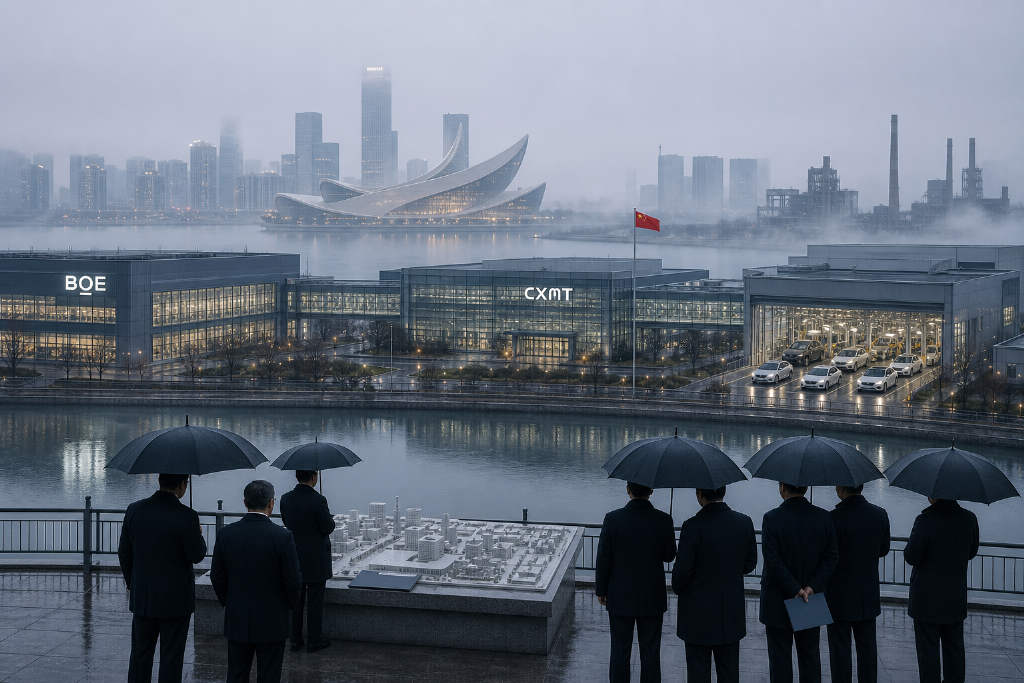
Hefei2026-08-19 10:59:17How Hefei Built a 20-Year Industrial Investment Playbook From BOE to CXMTThe listing of ChangXin Technology has pushed Hefei’s long-running industrial investment strategy back into focus. In the original MarsBit article, the city’s state-owned capital system is estimated to hold about 33.1% of the company under a neutral scenario that values ChangXin at RMB 2 trillion, implying a stake worth more than RMB 660 billion. That figure is presented as nearly half of Hefei’s projected 2025 GDP of RMB 1.4 trillion. The piece traces Hefei’s investment record across three major sectors: display panels, semiconductors, and new energy vehicles. It recounts how the city backed BOE during the 2008 financial crisis with RMB 17.5 billion for mainland China’s first TFT-LCD Gen 6 line, later exiting with roughly RMB 14 billion in net profit. It then turns to ChangXin, which the article says became the city’s highest-return investment after years of losses and heavy capital support, and to NIO, which signed with Hefei state capital and strategic investors in April 2020 before the city expanded its automotive base with BYD and Volkswagen Anhui. The article does not present Hefei’s record as a streak of perfect calls. It also lists failed projects, including Xinhao Plasma, LDK Solar, Rongsheng Heavy Industries, and WM Motor. Its central argument is that Hefei’s edge came not from luck alone, but from a full-cycle industrial investment approach spanning fundraising, deployment, post-investment management, exits, and unusually high tolerance for failure.1430
BOE2026-06-02 17:00:49BOE MPC Member Green: Case for Rate Hikes StrengtheningBOE MPC member Green said the case for raising the key interest rate is growing, a hawkish signal that keeps markets on alert for future UK rate moves.500
Bank of Engla2026-06-02 16:00:50BoE MPC Member Greene: Reasons for Raising Key Rate Are StrengtheningBank of England MPC member Megan Greene stated that the reasons for raising the key interest rate are strengthening.510