CAPE

Nintendo
2026-09-11 04:10:45

Nintendo says tariff refunds helped fund a customer sale as U.S. consumer lawsuit continues

Nintendo of America said its upcoming Customer Appreciation Sale was made possible in part by tariff-related refunds, a disclosure that has drawn renewed criticism because the company is already fighting a U.S. consumer lawsuit over the same money. The sale runs from 9 p.m. PT on Sept. 12 to 8:59 p.m. PT on Sept. 26 and includes dozens of Switch digital games and bundles at 30% off, along with discounts on some physical games, DLC, accessories, amiibo and apparel across Nintendo eShop, Nintendo’s official store and select retail partners. The company had previously disclosed in its Aug. 6 FY27 first-quarter results that it recognized about $300 million in refunds tied to tariffs imposed under the International Emergency Economic Powers Act, or IEEPA, and booked the amount as a reduction in cost of sales. Nintendo said those tariffs were borne mainly by the company rather than passed on through consumer pricing. The filing helped lift quarterly operating profit to JPY 142.5 billion, up 150.5% year over year, while gross margin rose by 22 percentage points. That position now sits alongside a class action filed in April 2026, Hoffert et al v. Nintendo, in which consumers argue the company raised prices citing tariffs and then benefited again when the government returned the money. Nintendo moved to dismiss the case in July, saying buyers received exactly what they paid for and that completed transactions do not reopen simply because tariff law later changed.

40
Nintendo says tariff refunds helped fund a customer sale as U.S. consumer lawsuit continues
Samsung Elect
2026-08-23 05:00:42

Samsung and SK Hynix shareholder payout plans draw scrutiny as Micron and SanDisk cite 100% excess cash returns

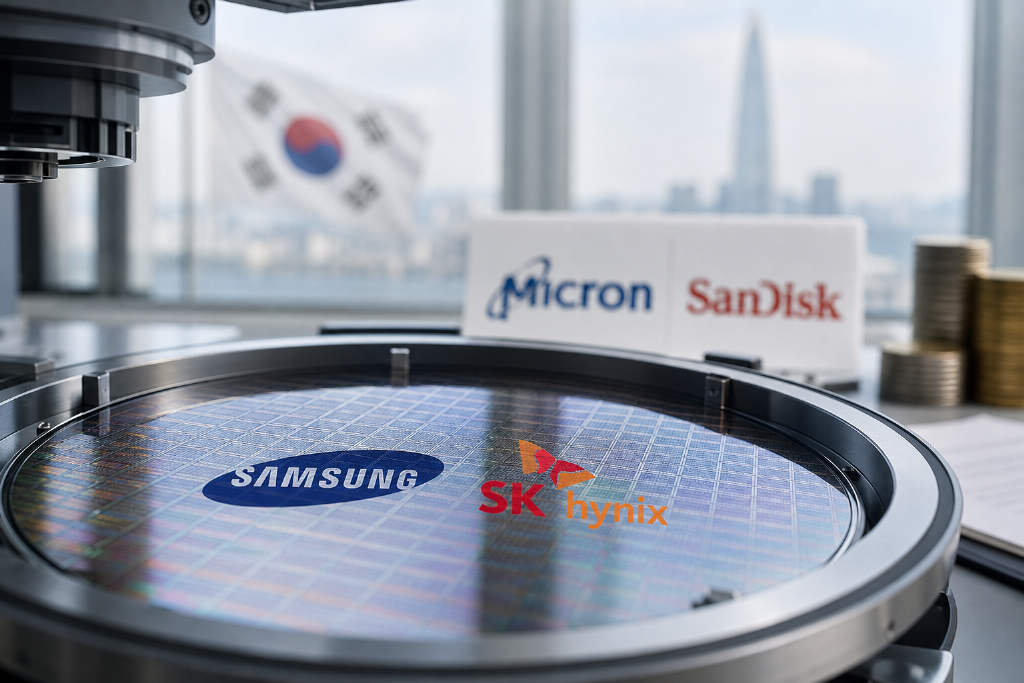
Samsung Electronics and SK Hynix have come under scrutiny after outlining shareholder return plans tied to more than 50% of free cash flow, while SanDisk and Micron have put forward policies to return 100% of excess cash to shareholders. The comparison has fueled questions over whether Korean chipmakers are offering weaker shareholder returns than their U.S. peers. Korean industry sources and financial institutions, however, say the headline percentages are not directly comparable because the underlying cash metrics are different. In their view, payout frameworks based on free cash flow offer more certainty in projected amounts, execution standards, and disclosure. Free cash flow typically refers to cash generated from operations after capital expenditures and other investment spending are deducted, making it a figure that can be calculated relatively objectively from cash flow statements. Samsung has said 50% of cumulative free cash flow from 2024 to 2026 will be used for shareholder returns, while SK Hynix plans to allocate more than 50% of cumulative free cash flow from 2025 to 2027.

500
Samsung and SK Hynix shareholder payout plans draw scrutiny as Micron and SanDisk cite 100% excess cash returns
US tariffs
2026-08-06 01:58:51

US Has Refunded About $100 Billion in IEEPA Tariffs After Supreme Court Ruling

The US government has already returned about $100 billion in tariffs collected under the International Emergency Economic Powers Act, according to a UPI report and court filings from US Customs and Border Protection. That figure accounts for roughly 60% of the estimated $166 billion in "Liberation Day" tariffs imposed by the Trump administration in 2025. CBP said more than 330,000 importers paid the duties, covering over 53 million customs entries. Refunds are being processed through the CAPE system, and the agency has received more than 250,000 refund claims so far. It added that the total value of potential and approved refunds still in processing stands at about $129 billion. The refunds stem from a 6-3 Supreme Court ruling in February, which found that IEEPA allows the executive branch to regulate trade during emergencies but does not give it the power to levy tariffs. The court said taxing authority under Article I of the US Constitution belongs to Congress. The Trump administration’s 10% tariffs on most countries exporting to the US, announced in April 2025, were based on IEEPA. After losing the case, the administration moved to impose new tariffs on global goods under different legal authorities.

1100
US Has Refunded About $100 Billion in IEEPA Tariffs After Supreme Court Ruling
South Korea s
2026-07-29 10:15:22

Repeated trading halts in South Korea revive debate over global liquidity stress

A MarsBit article has renewed debate over whether repeated trading halts in South Korea’s stock market are an early warning sign of a broader financial shock. Written by columnist “Kanbudong de SOL,” the piece argues that South Korea has often shown signs of market strain ahead of larger global dislocations, citing the 1997 Asian financial crisis, the 2000 Nasdaq collapse, the 2008 Lehman shock, and the 2020 pandemic sell-off. The article says South Korea’s role in global markets makes it especially sensitive to funding pressure. With a highly open capital market, foreign ownership that stays above 30%, and liquid names such as Samsung and SK Hynix, the market can become a place where overseas investors quickly sell holdings and pull cash back home when liquidity tightens. The author says South Korea has logged 35 program-based trading halts and five marketwide circuit breakers so far this year, surpassing the 2008 record. He describes the combination of semiconductor exuberance and leverage as the immediate trigger, but argues that the bigger issue is global liquidity withdrawal rather than a purely domestic problem. The piece also extends the discussion to U.S. equities, arguing that investors can still buy the S&P 500 and Nasdaq 100, but should avoid going all in. It frames position sizing, cash reserves, and lower leverage as the key response while saying the ultimate variable remains the Federal Reserve.

1200
Repeated trading halts in South Korea revive debate over global liquidity stress
US stocks
2026-07-22 04:26:13

US Stocks Flash Valuation Warning as Shiller P/E Nears Dot-Com Peak

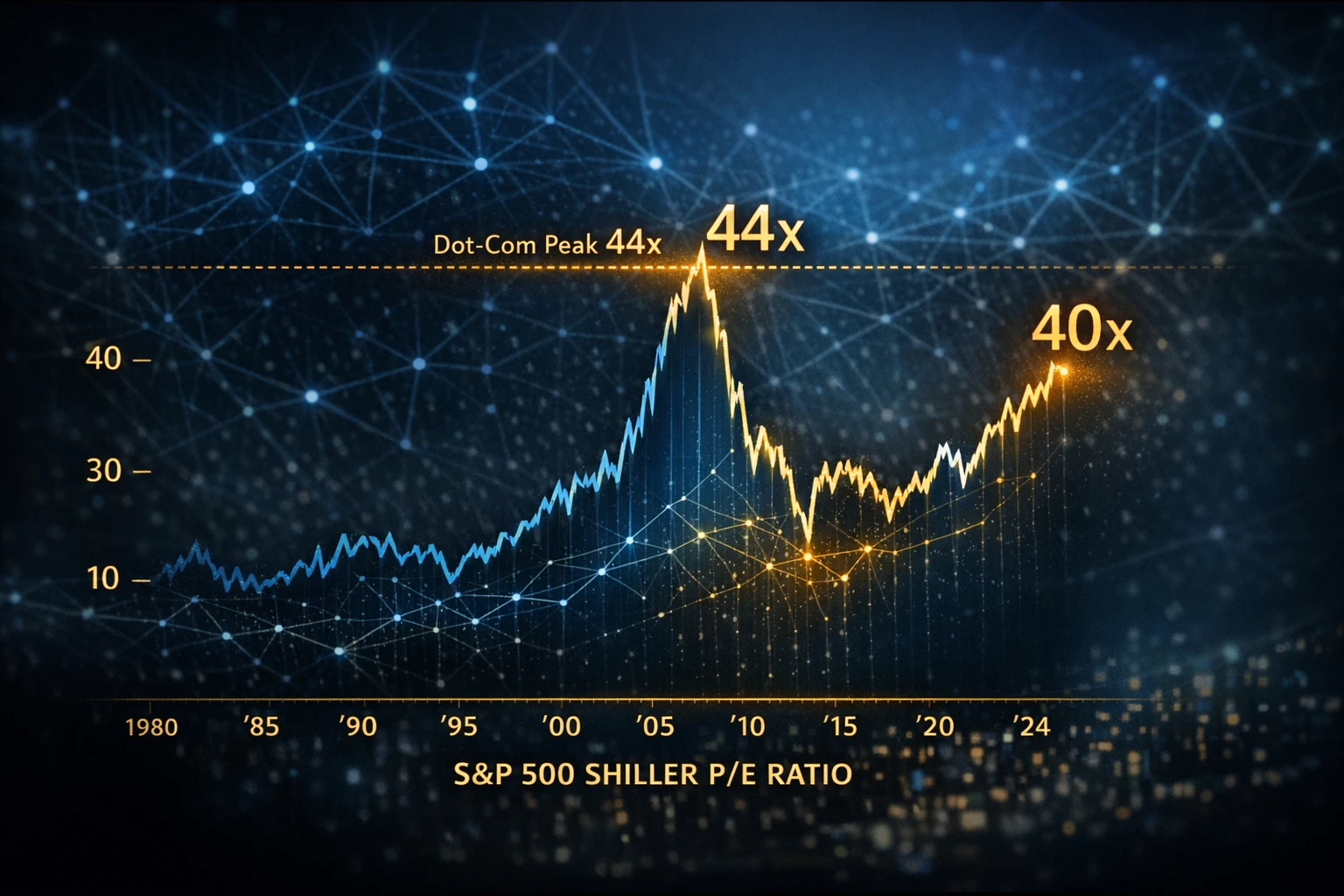
The Shiller P/E for US equities has climbed to roughly 39.5–41.7, approaching the 1999 dot-com bubble peak. While AI leaders have far stronger fundamentals than internet stocks did back then, concentration risk, interest rates, and weaker long-term return prospects remain major concerns.

190
US Stocks Flash Valuation Warning as Shiller P/E Nears Dot-Com Peak
ChainFeeds
2026-07-17 02:33:31

ChainFeeds Research roundup tracks Wintermute’s machine economy thesis, Base’s strategic pivot, and Trade[XYZ] on HIP-3

ChainFeeds published a new research roundup on July 17, pulling together five separate pieces on crypto privacy, Wintermute’s view of the next cycle, U.S. equity valuations, Base’s strategy reset, and Trade[XYZ]’s market-building model on Hyperliquid. One article said privacy tokens gained 127.3% over the past year even as most crypto sectors fell, while also noting that 73 exchanges had delisted privacy tokens in 2025. Another argued that crypto’s next major opening may come from the “machine economy,” where AI agents, robots, and autonomous systems need payment, identity, authorization, and settlement rails. The newsletter also highlighted a valuation piece on U.S. stocks that said standard market-wide indicators remain near historic highs and that valuation dispersion between growth and value is sitting in extreme percentile ranges. On Base, the roundup focused on Jesse Pollak’s admission that the network “bet right on builders, but bet wrong on social,” alongside his decision to step back from leading Base App while continuing to lead the Base chain itself. The final feature examined Trade[XYZ], saying it has built 92 markets and captured 98% of HIP-3 trading volume, with the analysis centered on listing speed, liquidity depth, market-maker participation, and after-hours risk controls.

1380
ChainFeeds Research roundup tracks Wintermute’s machine economy thesis, Base’s strategic pivot, and Trade[XYZ] on HIP-3
Ethereum
2026-07-15 09:02:44

Four research notes shaping this cycle: Ethereum’s shifting thesis, AI valuation stress, Multicoin’s ZEC and HYPE bet, and the next step for on-chain RWA

TechFlowPost compiled several recent research views that cut across crypto and AI, and together they sketch out how investors are rethinking this cycle. One strand focuses on Ethereum: activity inside the broader ecosystem remains large, but the base layer is capturing a much smaller share of that value than many bulls once expected. Another looks at the AI trade through BlackRock’s lens, comparing the current run-up with the late-1990s internet boom and flagging a tension between stretched long-term valuation metrics and still-strong earnings growth. The roundup also highlights Multicoin Capital managing partner Tushar Jain’s positioning in Solana, Hyperliquid and Zcash. His framework separates spot market leadership from derivatives leadership, while treating ZEC as a conviction bet driven by community, use case and social consensus rather than cash flow. A separate analysis examines privacy AI, asking where plaintext is exposed as prompts move between user devices, networks, model servers and external tools. It reviews protocol-based privacy, OHTTP, trusted execution environments, end-to-end encryption, FHE, MPC and local inference, then argues that agent workflows remain the harder frontier. The final theme is tokenized real-world assets, with gold used as a case study. The argument is that simply moving assets on-chain is no longer enough; the next stage is to make them productive. In that view, structured on-chain covered-call strategies tied to tokenized gold may point to a broader shift from passive tokenization toward yield-generating RWA design.

1220
Four research notes shaping this cycle: Ethereum’s shifting thesis, AI valuation stress, Multicoin’s ZEC and HYPE bet, and the next step for on-chain RWA