CBP

US tariffs
2026-08-06 01:58:51

US Has Refunded About $100 Billion in IEEPA Tariffs After Supreme Court Ruling

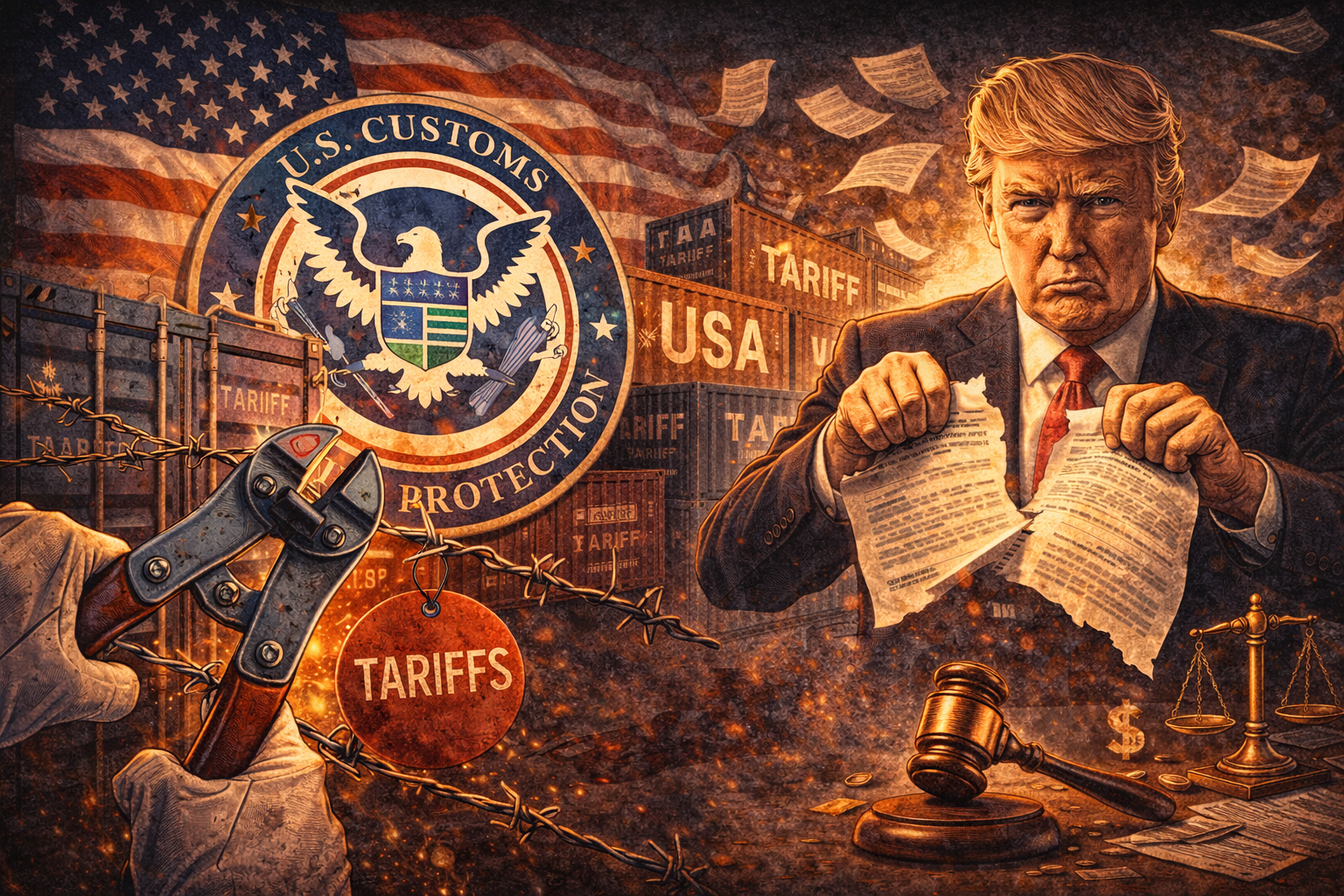
The US government has already returned about $100 billion in tariffs collected under the International Emergency Economic Powers Act, according to a UPI report and court filings from US Customs and Border Protection. That figure accounts for roughly 60% of the estimated $166 billion in "Liberation Day" tariffs imposed by the Trump administration in 2025. CBP said more than 330,000 importers paid the duties, covering over 53 million customs entries. Refunds are being processed through the CAPE system, and the agency has received more than 250,000 refund claims so far. It added that the total value of potential and approved refunds still in processing stands at about $129 billion. The refunds stem from a 6-3 Supreme Court ruling in February, which found that IEEPA allows the executive branch to regulate trade during emergencies but does not give it the power to levy tariffs. The court said taxing authority under Article I of the US Constitution belongs to Congress. The Trump administration’s 10% tariffs on most countries exporting to the US, announced in April 2025, were based on IEEPA. After losing the case, the administration moved to impose new tariffs on global goods under different legal authorities.

570
US Has Refunded About $100 Billion in IEEPA Tariffs After Supreme Court Ruling
GrapheneOS
2026-07-30 13:25:27

GrapheneOS Says Its OS Is Legal as U.S. Duress Password Case Moves Forward

GrapheneOS says its mobile operating system is "completely legal" and protected by the U.S. Constitution as a criminal case tied to one of its security features advances in court. The statement came after questions about whether the project was refusing to cooperate with Homeland Security. GrapheneOS said it could not help recover data once key material had been wiped and that bypassing encryption is not possible by design. The case centers on Atlanta activist Samuel Tunick, who was charged under 18 U.S.C. § 2232 after allegedly entering a duress code that wiped his Google Pixel during a warrantless border search in January 2025. Tunick has pleaded not guilty and faces up to five years in federal prison. A ruling on his motion to suppress is not expected before late October. Tunick told 404 Media the prosecution is intended to intimidate people from protecting their data. His lawyer, federal public defender Matthew Dodge, said DHS officers had the airport stop Tunick and search his phone, and argued agents could have sought a warrant but did not. CBP said travelers are subject to inspection and that electronic device searches are rare and handled case by case. GrapheneOS noted it added the duress PIN feature in June 2024 for precisely this kind of scenario.

260
GrapheneOS Says Its OS Is Legal as U.S. Duress Password Case Moves Forward
US border sea
2026-07-27 17:40:36

U.S. man charged after phone wipe triggered by GrapheneOS duress passcode at border

Samuel Tunick, an Atlanta resident, is facing federal charges after allegedly using a duress passcode on his phone during a warrantless border search at Hartsfield-Jackson airport on January 24, 2025. Prosecutors are relying on 18 U.S.C. § 2232, a rarely used federal statute that bars knowingly destroying property to stop authorities from seizing it. According to The Guardian, the case is the first known U.S. criminal prosecution tied to use of a duress-password feature. The feature at issue is built into GrapheneOS, a privacy-focused version of Android available only on Google Pixel devices. A duress passcode acts as a secondary unlock code: a normal PIN unlocks the phone, while the duress code wipes it by deleting encryption keys, leaving the device effectively reset. GrapheneOS added the feature in June 2024 for situations in which someone is physically compelled to hand over a device. Tunick’s lawyers say Customs and Border Protection officers demanded access to his phone without a warrant after he returned from the Dominican Republic, denied him a lawyer, and did not read him his Miranda rights. Tunick has pleaded not guilty, and a federal judge is expected to rule on his suppression motion no earlier than the end of October.

260
U.S. man charged after phone wipe triggered by GrapheneOS duress passcode at border
Bitmain
2026-07-09 13:00:13

US Customs Seizes Bitmain ASIC Miners, Storage Fees Exceed $200K

The U.S. Customs and Border Protection (CBP) has reportedly seized over 200 Bitmain Antminer S21 and T21 units at various ports, racking up more than $200,000 in storage fees. Rivals Microbt and Canaan remain unaffected, with the crackdown possibly linked to Sophgo's alleged chip ties to Huawei.

120
US Customs Seizes Bitmain ASIC Miners, Storage Fees Exceed $200K