Taiwan2026-09-29 09:20:33Taiwan plans October rollout for crypto transfer rule, with extra data required for transactions above NT$30,000Taiwan’s Financial Supervisory Commission is preparing to roll out the first phase of its crypto transfer rule, or Travel Rule, in October 2026. The initial phase will apply to transfers between domestic virtual asset service providers (VASPs) in Taiwan. Under the plan, exchanges must transmit sender and recipient information regardless of transfer size. For single transfers above NT$30,000, individual users will need to provide two additional pieces of information: date of birth and residential address. Corporate entities will need to provide an official identifier and registered address. The rule is based on Financial Action Task Force standards and is meant to extend bank-style sender and recipient identification requirements to virtual asset transfers, where blockchain records typically show wallet addresses but not the identities behind them. Taiwan-based firms including KryptoGO and XREX have outlined how user checks and platform-side verification may work once the rule takes effect. Transfers to overseas exchanges are not part of the first phase. That second stage is expected by the end of 2027, according to the FSC’s current plan. The exact implementation date still depends on the regulator’s formal announcement.150
Bitcoin2026-09-29 08:33:27Santiment says exchange BTC supply fell by 35,800 last week as spot ETF inflows tightened supplySantiment Intelligence said roughly $2.4 billion in spot Bitcoin ETF inflows last week helped pull BTC off trading platforms, adding to signs of tighter market supply. Data from the firm showed that between Sept. 20 and Sept. 27, Bitcoin held on exchanges fell by about 35,800 BTC to 1.325 million, with netflow data matching that decline. In the previous week, from Sept. 13 to Sept. 20, exchange balances had risen by nearly 20,000 BTC. Over the two-week period combined, about 15,900 BTC left exchanges, though current exchange supply still remains above every level seen during July. Santiment also highlighted Sept. 22, when exchange BTC supply dropped by about 26,700 in a single day, roughly double the usual daily outflow. The firm said that scale suggests the move was not simply the result of wallet reclassification. According to Santiment, more than half of last week’s decline reversed a move seen in the prior week, with ETF fund flows serving as an important backdrop for the recent changes in BTC supply.130
Ethereum2026-09-29 08:11:47Address Withdraws 11,600 ETH From Exchanges Over Five Hours, Now Up $552,000On-chain analyst Ai Yi said a wallet withdrew 11,600 ETH from exchanges over the past five hours, with the transfer valued at about $30.97 million at the time of withdrawal. The average withdrawal price was $2,667.46 per ETH, according to the monitoring data. Based on the latest figures cited in the update, the address is now sitting on an unrealized profit of $552,000. The report did not disclose the identity of the wallet or specify which exchanges were involved.130
Circle2026-09-28 07:01:57Circle’s payout math points to a bigger question in crypto: where liquidity comes from, and who gets paidCircle’s latest numbers offer a useful entry point into a broader question about crypto markets: where money actually comes from, how it moves, and which businesses capture the economics along the way. In the second quarter of 2026, Circle reported roughly $701.3 million in revenue and reserve income, while distribution, transaction and other costs reached about $412.5 million, or 58.8% of that total. For a stablecoin issuer, the expense looks striking at first glance. But the payment makes more sense once crypto is viewed as a chain of funding, conversion, distribution, trading and hedging rather than a set of isolated product categories. The piece walks through that chain in detail. It argues that exchanges aggregate purchasing power rather than merely list assets, token fundraising often reallocates existing crypto wealth rather than bringing in fresh dollars, stablecoins reduce friction between markets, and perpetual futures create room for capital that is not taking outright directional bets. It also revisits how DeFi liquidity mining moved funds between venues, why total value locked cannot be treated as fully independent capital, and how stress events such as FTX’s collapse and USDC’s Silicon Valley Bank exposure exposed the difference between balances on screen and assets available for redemption. ETF inflows, BlackRock’s BUIDL, and order-routing models such as Jupiter and Hyperliquid extend the same theme: in crypto, access to users, balances and order flow can be as valuable as the asset itself.180
Russia2026-09-28 03:30:47Russian finance ministry says more than 20 million people hold crypto worth 3.7 trillion rublesRussia’s Deputy Finance Minister Ivan Chebeskov said at least 20 million Russians have invested in crypto products, with combined holdings of about 3.7 trillion rubles, or roughly $44 billion. He said those assets are mainly used for foreign trade settlements, mining, trading on offshore exchanges, and savings. At the same time, Russia is moving ahead with a regulatory framework that would allow both qualified and non-qualified investors to hold and trade crypto assets on domestically regulated exchanges. The country is still keeping a ban on using crypto for everyday payments, while also advancing the digital ruble as a payment instrument under direct state oversight. The remarks outline Russia’s current two-track approach: opening space for regulated investment and trading, while limiting crypto’s role in routine payments and promoting a state-controlled digital alternative.230
Bitcoin2026-09-28 00:09:36Only Two of the Top 10 BTC-Holding Exchanges Posted Net Inflows Over the Past 7 DaysData from ChainCatcher’s dashboard shows that only two of the top 10 exchanges by BTC wallet balance recorded net inflows over the past seven days. Among them, Binance posted the largest decline in BTC wallet balance, with a drop of 2.95%. In proof-of-reserves asset flow data, Deribit, Bybit, and MEXC recorded the largest net outflows, at $340 million, $291 million, and $99.5608 million, respectively. On the inflow side, Binance ranked first with $703 million in net inflows, followed by Bitfinex with $321 million and OKX with $40.4574 million. The figures were cited by ChainCatcher based on data displayed on its official website dashboard.220
Binance2026-09-26 13:15:07Analyst says Binance-Circle deal could lift USDC, but USDT’s liquidity edge remains intact for nowBinance has bought $100 million worth of Circle shares and signed a five-year commercial agreement to expand USDC promotion and integration across its platform, according to BlockBeats. Analysts said the arrangement gives Binance a direct stake in Circle’s growth while handing USDC a major distribution channel spanning global trading activity and emerging markets. Platform data cited in the report shows that when Binance and Circle first partnered in December 2024, Binance offered 140 USDC-denominated spot markets. That figure has since climbed to 329. Monthly USDC trading volume on Binance also rose from a pre-partnership range of $20 billion to $40 billion to a level that has remained above $80 billion. Since the start of 2026, Binance has been handling $5 billion to $10 billion in daily USDC spot volume, roughly 10 to 20 times that of most other trading venues. Even so, analysts do not see USDT losing its lead quickly. USDC’s market capitalization stands at about $74 billion, still below USDT’s roughly $140 billion. Martins Benkitis, co-founder of Gravity Team, said the deal increases pressure on USDT in global trading and emerging markets, but added that distribution alone is unlikely to overturn USDT’s entrenched trading pairs, local liquidity, and long-established user habits in the near term.220
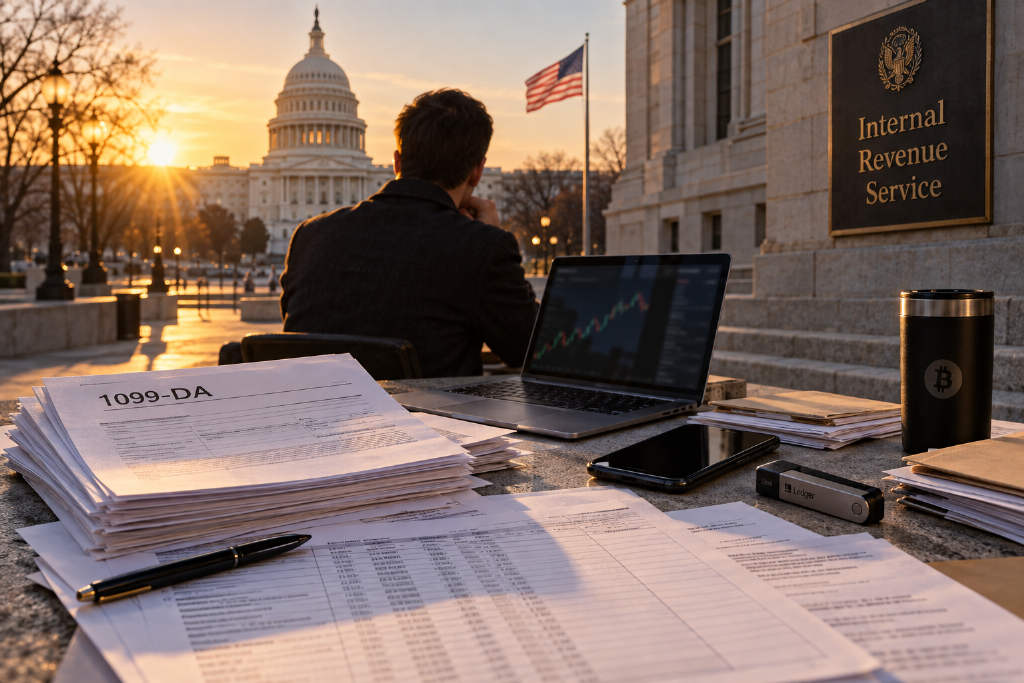
IRS2026-09-25 13:30:00IRS gets more visibility into crypto sales, but missing cost-basis data is creating filing problemsThe Internal Revenue Service now has broader visibility into Americans’ crypto sales under new reporting rules, with brokers generally required to report gross proceeds from certain digital asset transactions for the 2025 tax year. What many taxpayers still do not get, however, is the cost-basis information needed to calculate actual gains and losses. That gap is turning the first filing season under Form 1099-DA into a difficult reconciliation exercise for some investors, tax professionals and active traders. An August survey of 1,000 US crypto investors by Awaken Tax found that 21% of respondents who had filed, or planned to file, an extension were still waiting on information from an exchange or crypto platform. About one in five said their 1099-DA was incomplete or that they were unsure whether it accurately reflected their transactions. Tax advisers cited mismatches between exchange-issued forms and clients’ own records, delayed delivery of forms, inconsistent statement formats and the lack of machine-readable files for software imports. Professionals interviewed by Cointelegraph Magazine said taxpayers still need complete transaction histories across exchanges, wallets and years to determine gains correctly. While brokers are generally set to begin reporting cost basis for covered digital assets from 2026, assets transferred in from other exchanges or wallets may still fall outside those requirements.240