FIPS

BIT
2026-09-10 08:03:13

BIT Releases Trust Whitepaper V2.0 Detailing Security, Compliance and Verification Framework

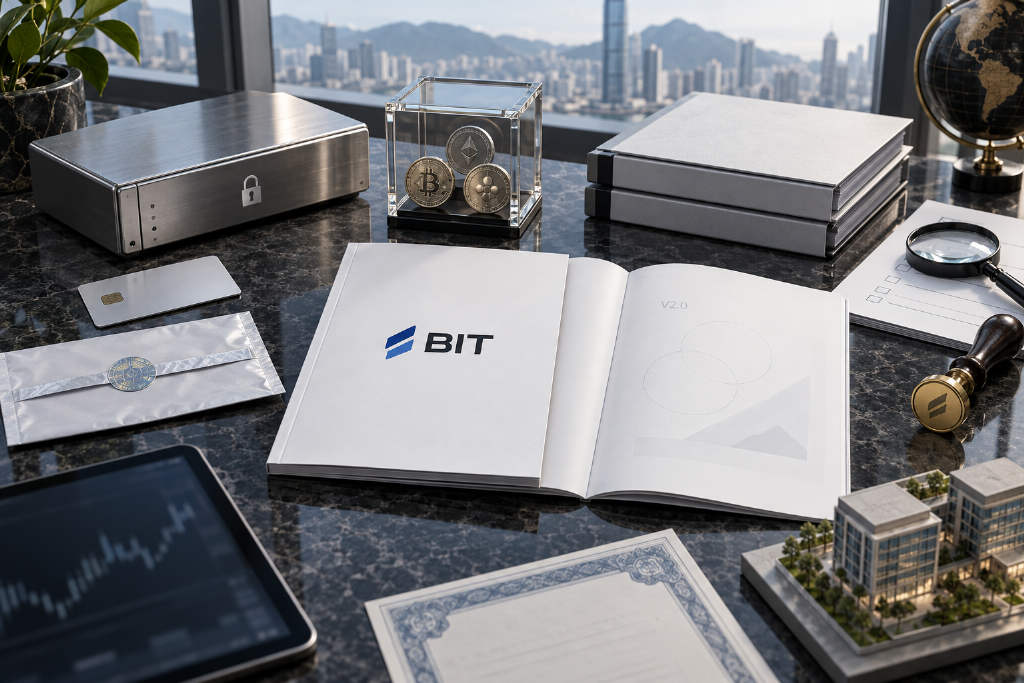
BIT, formerly Matrixport, has released version 2.0 of its Trust Whitepaper as security incidents and thefts once again push platform safety to the front of the digital asset market. The document sets out how the company frames risk governance across account security, private key management, asset transfers and third-party infrastructure, while arguing that the real test is not whether a platform claims to be secure, but whether it can detect and contain abnormal activity early. The whitepaper says BIT’s controls span pre-trade assessment, in-trade monitoring and post-trade handling. In operational terms, that includes due diligence, risk parameter setting, real-time monitoring, alerts, default handling and liquidation in areas such as financing and collateralized business. BIT also says it runs 24-hour monitoring for high-risk behavior including unusual logins, unfamiliar devices and suspicious withdrawals, with alerts, delayed processing or manual review triggered by risk level. The document also expands beyond crypto-native activity. For its U.S. equities business, BIT says operations are run by Matrix Gelephu Pte Ltd under the supervision of the Gelephu Financial Services Office, with account, clearing and custody arrangements supported by applicable licensing structures, client asset protection mechanisms and licensed third-party financial institutions. The whitepaper adds governance information for Matrixport Asset Management and outlines the group’s compliance footprint across Hong Kong, Bhutan, Singapore, Switzerland, the UK, the US and the British Virgin Islands. BIT says trust must be backed not only by internal controls, but by transparency and independent verification, including ISO audits, SOC attestation, annual financial audits and internal audit processes.
140
BIT Releases Trust Whitepaper V2.0 Detailing Security, Compliance and Verification Framework
Quantus
2026-09-09 01:23:36

Quantus to launch mainnet on Sept. 9, with mining as the only initial token access route

Quantus founder and CEO Yuvi Lightman said on X that the quantum-resistant blockchain’s mainnet is scheduled to go live on Sept. 9, a Wednesday. At launch, mining will be the only way to obtain tokens, while liquidity and trading functionality are expected to come several weeks later. Lightman said the team has merged its Immunefi security work into the public codebase and completed all fixes from its audit contest. He also outlined several protocol and infrastructure measures ahead of launch, including support for ML-DSA-65 and ML-DSA-87, contextual binding for every signature under the FIPS 204 standard, fail-closed handling for undecodable multisig transactions, and a hardened network stack designed to resist denial-of-service attacks. The team said it completed a full end-to-end rehearsal on a global pre-production mainnet spanning the Americas, Asia, Europe, and Australia. Quantus also said it deployed multi-region bootnodes and dedicated RPC nodes through infrastructure-as-code, reduced indexer memory usage from above 90% to about 26%, launched its registration page, revamped its website, added multi-account support for Keystone hardware wallets, and released CLI v2.1.3 and miner v4.0.2. A Quantum & Privacy Day event with NEAR is set for Oct. 8 in Singapore during Token2049.

250
Quantus to launch mainnet on Sept. 9, with mining as the only initial token access route
USDC
2026-09-04 04:14:18

USDC’s quantum migration problem spans 37 blockchains, and Circle cannot solve it alone

Circle has warned that the quantum resources needed to break mainstream blockchain signature schemes are falling, citing a low-resource record of 813 logical qubits. But the core issue for USDC is not Circle’s own systems alone. According to the company’s current contract documentation, USDC is deployed across 37 mainnets, which means any credible post-quantum migration would also depend on host chains, wallets, custodians, bridges, and end users adopting safer authorization methods. The report argues that the 813-qubit figure is a reference point, not a countdown clock. It reflects improving circuit efficiency, yet does not by itself describe attack depth, error-correction costs, runtime on physical hardware, or when such hardware might exist. It also challenges Circle’s comparison between attack-oriented logical qubits and Google’s Willow, which was described by Google as a 105-qubit processor rather than 105 logical qubits usable for cryptographic attacks. Circle’s Arc stack may help test post-quantum verification, including an SLH-DSA-SHA2-128s precompile, but it does not automatically replace transaction signing across public networks. The article’s conclusion is that USDC’s quantum security will require coordinated changes across 37 independent network paths, not a unilateral switch by the issuer.

290
USDC’s quantum migration problem spans 37 blockchains, and Circle cannot solve it alone
Bitcoin
2026-08-29 14:30:00

Blockstream study weighs Bitcoin lattice signatures against quantum risk, favors Falcon-1024 if forced to choose

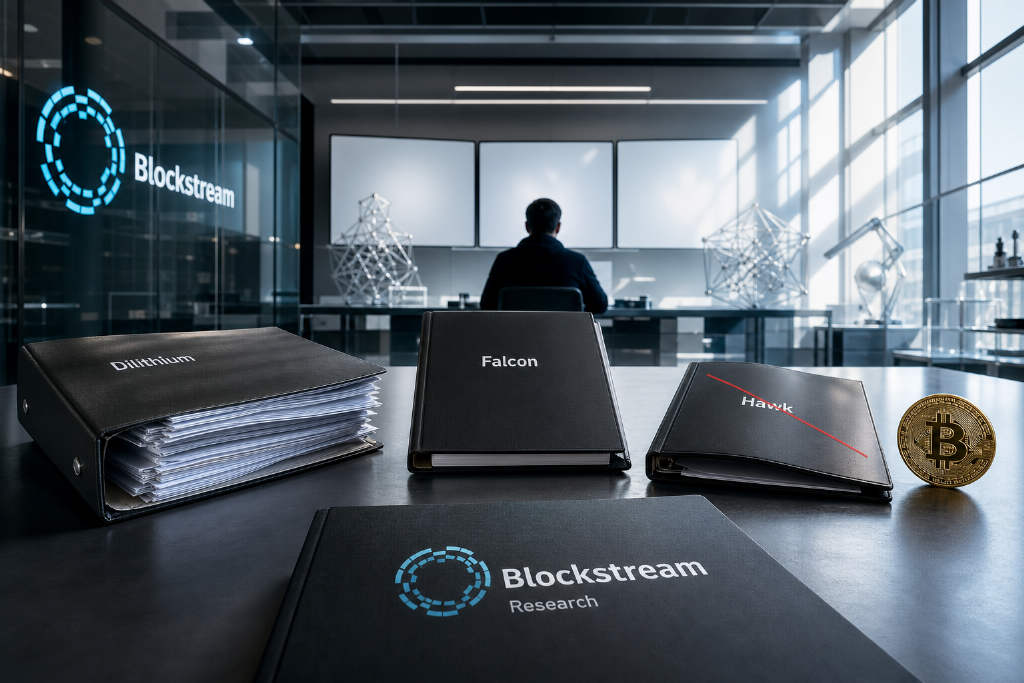
Blockstream Research has published a full review of lattice-based signature schemes for Bitcoin, comparing Dilithium, Falcon, and Hawk as post-quantum replacements for Schnorr and ECDSA. The report starts from a practical concern: Shor’s 1994 result showed that sufficiently powerful quantum computers could break today’s elliptic-curve signatures, so Bitcoin needs a deployment path before that threat becomes real. The study ranks candidates across four criteria that matter specifically to Bitcoin: on-chain cost, implementation complexity, deployment risk, and long-term development potential such as BIP-32-style key derivation. It argues that Bitcoin should target at least NIST security level 3 because outputs may remain unspent for decades. In that framework, Dilithium stands out for simple integer-only implementation and the strongest basis for future key derivation work, but its signatures are large. Hawk had looked attractive on size and memory use, yet a newly disclosed structural attack weakened confidence enough for the team behind it to withdraw the scheme from the NIST process. That leaves Falcon as the most balanced option in the report’s view. Its signatures are compact, verification is the fastest among the three, and its security assumptions are more established. Falcon still has unresolved issues, including floating-point complexity in signing, no practical key derivation method, and a standard that has not yet been finalized. Even so, the report says Falcon-1024 would be the preferred lattice-based choice today, while hash-based signatures remain the more conservative near-term path for Bitcoin.

350
Blockstream study weighs Bitcoin lattice signatures against quantum risk, favors Falcon-1024 if forced to choose
Bitcoin
2026-08-27 12:01:38

Blockstream review says Falcon-1024 is the strongest lattice-signature candidate for Bitcoin, while hash-based signatures remain the near-term fallback

Blockstream Research has published a detailed review of post-quantum lattice signatures for Bitcoin, comparing Dilithium, Falcon and Hawk across on-chain footprint, verification cost, implementation difficulty, deployment risk and long-term usability. The report starts from a practical premise: Bitcoin’s current Schnorr and ECDSA signatures are efficient today, but Shor’s 1994 result means a sufficiently capable quantum computer could break them, so migration planning cannot wait until the threat is immediate. The study argues that Bitcoin should target at least NIST security level 3 because coins can remain unspent for decades, leaving funds exposed if future cryptanalysis weakens lower-margin parameters. On that basis, Dilithium stands out for simple integer-only implementation and broad software support, but its size is a major drawback on-chain. Falcon offers much smaller signatures and the fastest verification, though its signing path is harder to implement safely because of floating-point Gaussian sampling. Blockstream says deterministic, integer-simulated Falcon can address that issue at the cost of slower signing. Hawk, once notable for very small signatures and low memory use, has dropped out after Straznickas and Weis of Anthropic found a structural flaw that sharply reduced its estimated security. Blockstream’s bottom line is that if a lattice-based option had to be chosen today, Falcon-1024 would be the pick. Even so, the report says the conservative short-term path for Bitcoin is still hash-based signatures until the FN-DSA standard is finalized and production-grade implementations and hardware support mature.

430
Blockstream review says Falcon-1024 is the strongest lattice-signature candidate for Bitcoin, while hash-based signatures remain the near-term fallback