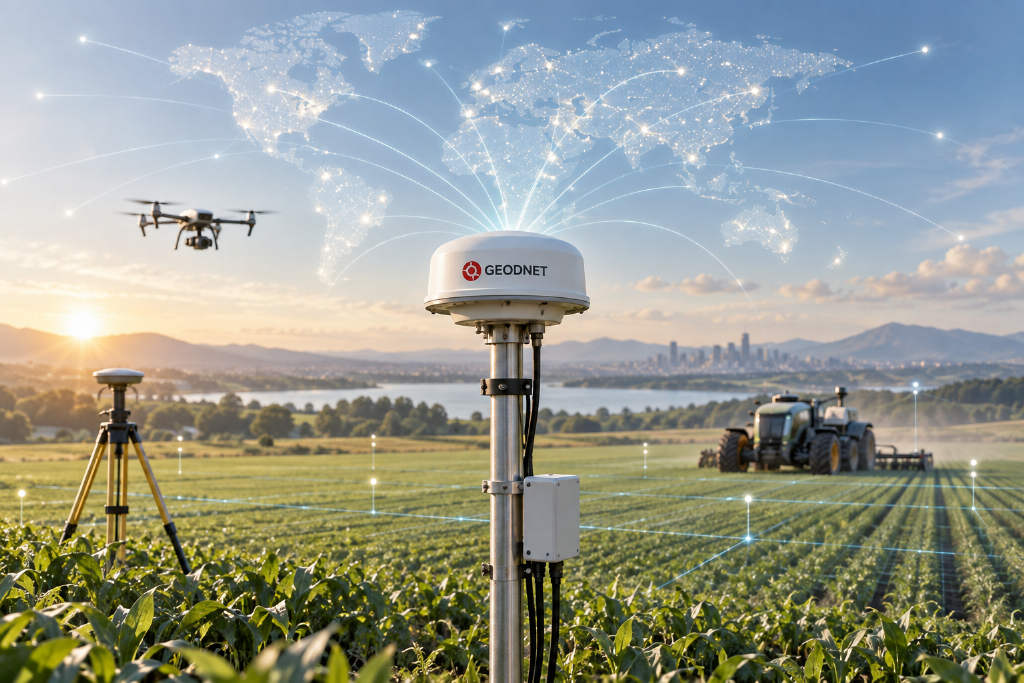
GEODNET2026-10-02 15:05:16GEODNET says it is building a positioning layer for physical AI, with Q3 revenue estimated at $2.8 millionDecentralized physical infrastructure network GEODNET is building what it describes as a positioning layer for physical AI, according to Techub News. The network’s correction data delivers centimeter-level accuracy for drones, agricultural machinery, and surveying equipment, drawing on roughly 22,000 base stations deployed by operators across 174 countries. As of August, GEODNET had more than 150 enterprise customers, while its hardware and software partners continued to expand service coverage. The company said positioning remains an ongoing need for these customers, with most spending recurring in nature. GEODNET estimated third-quarter revenue at $2.8 million, more than double the $1.2 million recorded in the same period last year. Delphi Digital said the growth of physical AI is expected to put more robots, agricultural equipment, and drones to work outdoors, where precise positioning is critical to their operation.1180
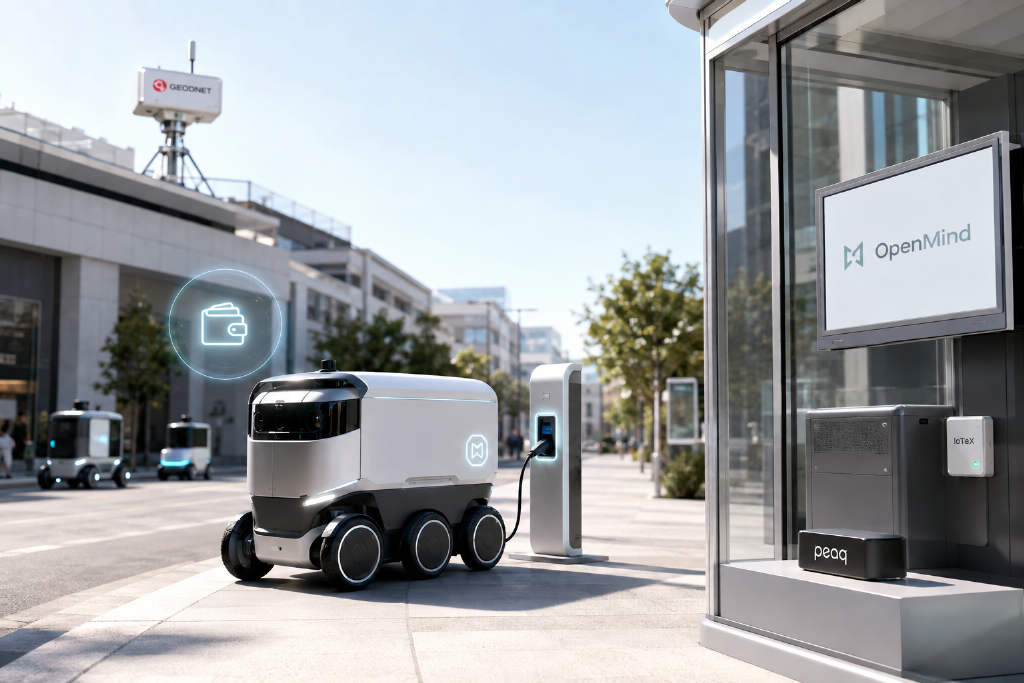
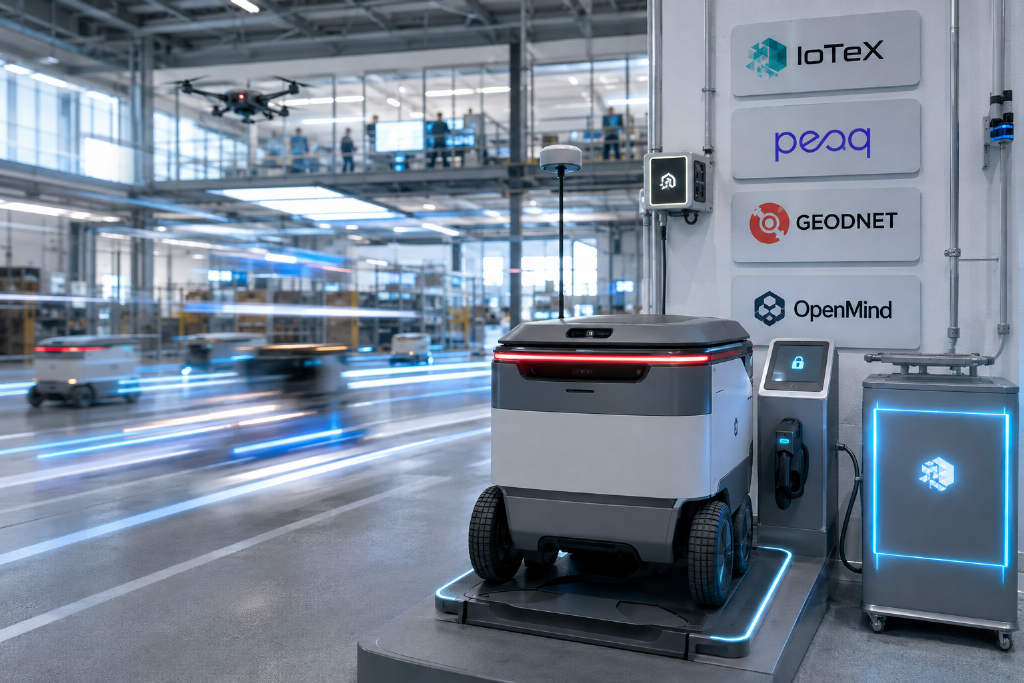
Policy and Re2026-09-04 23:56:00Crypto Projects Target a Narrow Gap in Robotics: Identity, Wallets and MicropaymentsA growing group of crypto companies is trying to solve a practical problem in robotics rather than selling a vague future vision: how machines can pay for small real-world services and prove who they are when dealing with unfamiliar counterparties. The thesis starts with a simple mismatch. Traditional payment rails were built for relatively infrequent, higher-value transfers, while robots may need to pay a few cents at a time for charging, connectivity, location data or compute. In that setting, fixed card fees and wire costs quickly become uneconomic. The article traces how several projects are approaching different parts of that stack. GEODNET uses token incentives to build RTK positioning infrastructure. OpenMind is developing a common operating layer and testing gas-free USDC micropayments. IoTeX focuses on hardware identity and proof of real-world actions. peaq is building a broader machine registry, credit framework and settlement layer, while also experimenting with tokenized machine revenue through Initial Machine Offerings. At the same time, the report draws a clear boundary around the market. Most robots do not need autonomous payment or onchain identity because they already operate inside closed systems run by large companies such as Amazon, Tesla or other platform operators. That leaves crypto serving a smaller segment: open, cross-operator and non-closed-loop machine networks.1990
Robotics2026-09-04 07:33:32Why Robots May Need Wallets, Identity, and DePIN Rails in an Open Machine EconomyA growing set of crypto and DePIN projects is trying to solve a narrow but real problem in robotics: how physical machines can pay for services, prove who they are, and work with third parties outside closed corporate systems. The article argues that robot adoption itself does not depend on crypto. What crypto can add is a coordination layer for situations where robots owned by different parties need instant authorization, low-cost micropayments, and a verifiable service history. That need only appears in specific cases. Most robots inside Amazon-style warehouses, platform-controlled delivery fleets, or vertically integrated industrial systems do not require independent wallets. The model becomes relevant when ownership is fragmented, transactions are tiny, no centralized platform clears payment, and service access has to be granted on the spot. The piece maps that stack across several projects. GEODNET focuses on high-precision RTK positioning. OpenMind is building a shared operating layer and testing gasless USDC micropayments. IoTeX works on device identity and proof of real-world activity. peaq is assembling identity, ownership, credit scoring, and multi-network settlement for machines. Even so, the author frames the sector as a small niche inside a much larger robotics market. The real question is not whether robots need crypto by default, but whether open robotic labor markets ever become large enough to need it.1800
UPBIT2026-07-27 03:22:36UPBIT to list GEODNET (GEOD) on July 27 with KRW, BTC and USDT pairsUPBIT will list GEODNET (GEOD) for trading at 15:00 on July 27, according to ChainCatcher. The exchange said the token will be available across three markets: KRW, BTC and USDT. Users will be able to begin making deposits within two hours after the listing notice is published. UPBIT added that the exact time when trading support goes live should be checked in a later announcement. The notice outlines the planned market rollout and deposit schedule, while leaving the detailed trading support timeline to follow-up updates from the exchange.1970
GEODNET2026-07-24 06:05:17GEODNET's Coinbase Roadmap Addition Triggers Price Drop, Bounce, and GRAM SpeculationGEODNET token crashed over 10% then recovered to 5% decline after Coinbase roadmap addition. The article explores profit-taking as the cause, tokenomics, short-term outlook, and GRAM listing expectations following TON-PERP suspension.930
Coinbase2026-07-23 00:15:14Coinbase Confirms GEOD Spot Listing as Geodnet’s 80% Revenue Burn Model Draws AttentionCoinbase has confirmed GEOD-USD spot trading for June 23, 2026. Geodnet says 80% of network data-service revenue is used to buy back and burn GEOD, while the project operates more than 21,000 GNSS RTK base stations across 160 countries.710
GEODNET2026-07-08 10:30:12GEODNET Overview: DePIN Infrastructure, 3,000+ Nodes, and the Current State of GEODGEODNET is building a decentralized earth observation and GNSS correction network with more than 3,000 nodes. Here is a fact-based look at its use cases, token supply, storage options, and all-time high price.740
Geodnet2026-07-08 10:32:13Geodnet (GEOD) Deep Dive: How the DePIN Dark Horse Is Revolutionizing Navigation with Centimeter-Level PositioningGeodnet (GEOD) is a leading DePIN project with over 3,000 nodes providing centimeter-level GNSS correction data for autonomous driving, precision agriculture, and more. Current circulating supply is ~439 million tokens, max supply 1 billion, and price is down from its all-time high of $0.37.640