GMO

RWA
2026-08-28 09:52:10

RWA Weekly: Four Banks Move on a Global Stablecoin Alliance as Coinbase Brings Tokenized Stocks to Base

Real-world asset markets kept expanding during the Aug. 21 to Aug. 27 tracking window, with on-chain RWA market capitalization reaching $38.7 billion and total holders climbing to 2.952 million, according to the figures cited in the report. Stablecoins also grew in scale, with total market capitalization rebounding to $303.04 billion and monthly transfer volume rising 20.33% from a month earlier to $6.49 trillion, even as monthly active addresses slipped 1.24% to 52.87 million. The report described that split as a market where larger holders are rebalancing frequently while smaller users are staying on the sidelines. Regulatory developments came from three major jurisdictions. In the U.S., the Financial Accounting Standards Board proposed guidance on when some digital assets, including stablecoins, may qualify as cash equivalents under GAAP, with comments due by Nov. 19, 2026. In the U.K., the government is moving to give the Bank of England a secondary legal objective to support innovation in digital currency and payments. In Japan, regulators are preparing to ease limits on large-value stablecoin payments, potentially allowing single transactions above 1 million yen. On the corporate and product side, The Wall Street Journal reported that JPMorgan Chase, Bank of America, Wells Fargo and Santander are working toward a global stablecoin alliance. Coinbase has launched tokenized stocks natively on Base under its B20 standard, while Franklin Templeton, Bitwise, Bitfinex Securities, Revolut, Fasset and Entropy.io also posted fresh RWA and stablecoin developments.

130
RWA Weekly: Four Banks Move on a Global Stablecoin Alliance as Coinbase Brings Tokenized Stocks to Base
Japan regulat
2026-08-26 13:13:00

Nomura’s Laser Digital wins Japan crypto license as market structure shifts toward institutional services

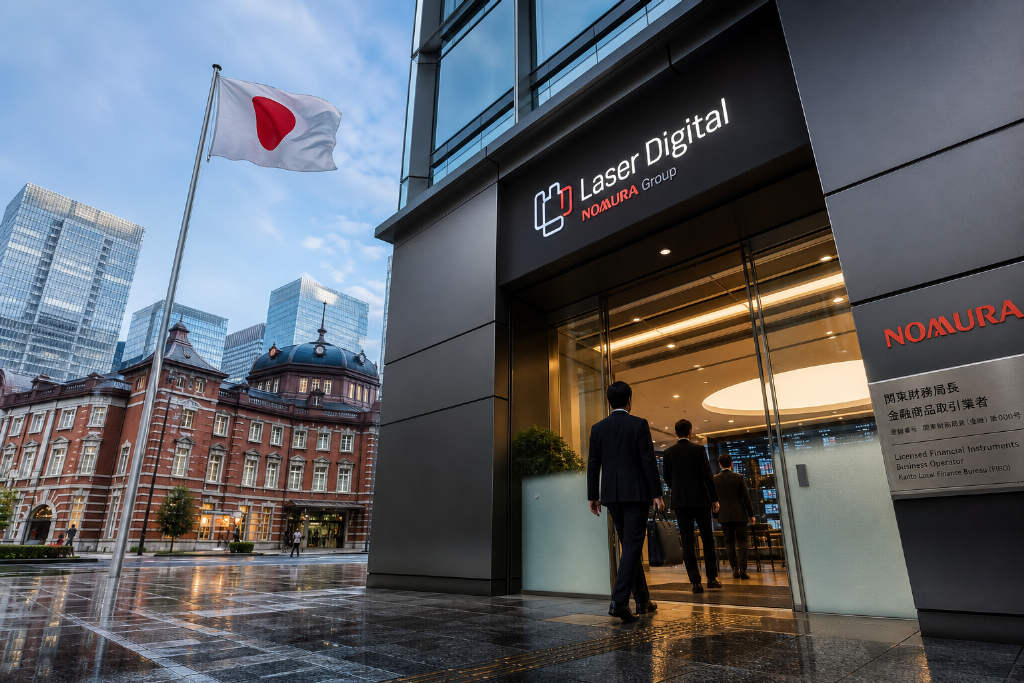
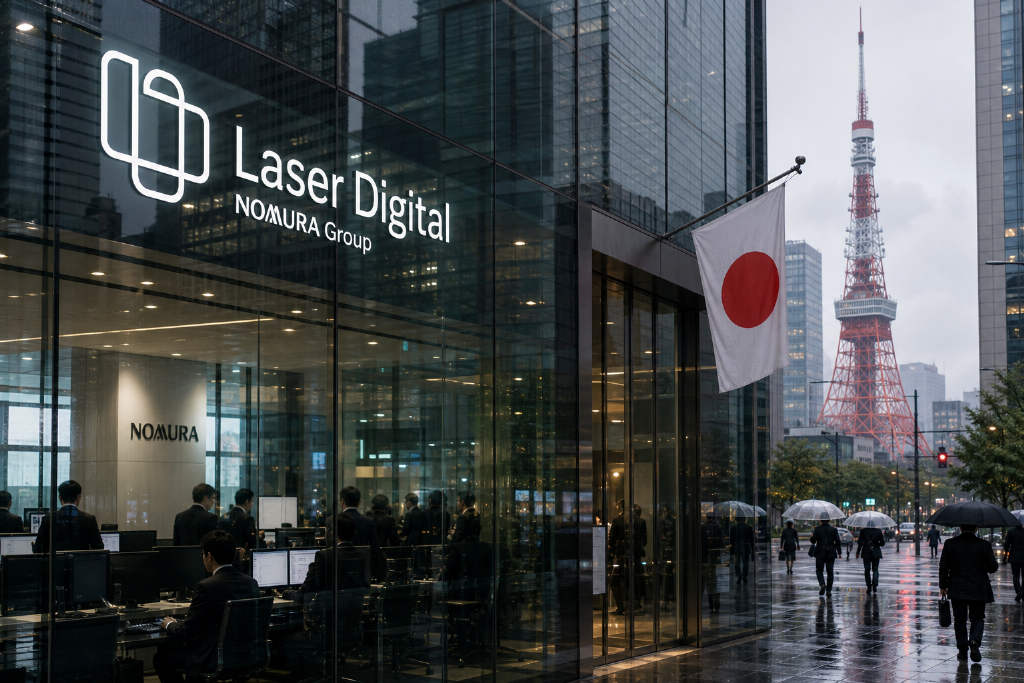
After nearly four years without a new entrant, Japan has added a fresh licensed crypto exchange operator. On Aug. 21, Laser Digital Japan, part of Nomura Holdings, completed registration as a crypto asset exchange service provider, becoming the first newly added licensed trading institution in the country since 2022. Rather than targeting retail traders, the company plans to start by providing liquidity to locally licensed virtual asset service providers in Japan, then expand into digital asset trading services for institutional investors. The development stands out not only because of the rarity of the license, but because it reflects a broader change in how Japan’s crypto market is being reorganized. Japan was one of the first jurisdictions to establish a formal regulatory framework for crypto trading, but tighter rules introduced after major platform security incidents raised entry barriers and helped create a market with limited, tightly supervised participants. At the same time, new legal and tax reforms are gradually bringing crypto closer to the country’s capital markets framework, lowering the cost for traditional financial institutions to plug crypto services into existing channels. In that setting, Laser Digital’s strategy points to a different competitive model: instead of building a retail exchange from scratch, it is moving into liquidity, execution, and institutional-facing services, areas where Nomura’s existing client network, compliance systems, and market infrastructure can be put to work.

150
Nomura’s Laser Digital wins Japan crypto license as market structure shifts toward institutional services
Japan regulat
2026-08-26 13:26:11

Nomura’s Laser Digital wins a rare Japan crypto license and heads straight for institutional flow

Japan has added its first new licensed crypto trading operator since 2022, with Laser Digital Japan, a unit of Nomura Holdings, completing its crypto-asset exchange registration on Aug. 21. The approval ends a nearly four-year stretch without a new entrant and stands out not only because of the scarcity of licenses, but because of what Nomura plans to do with it. Laser Digital is not starting with retail. Its initial plan is to provide liquidity to licensed domestic virtual asset service providers in Japan, then expand into digital asset trading for institutional investors. That approach reflects the structure of Japan’s market, where established platforms such as Coincheck, bitFlyer, bitbank, SBI VC Trade, GMO Coin and Binance Japan already dominate retail channels with existing users, apps, brands and payment rails. The move also lands as Japan is reshaping how crypto fits into its wider financial system. Legal amendments passed in July 2026 set a direction for shifting crypto trading oversight from the Payment Services Act to the Financial Instruments and Exchange Act. Tax reform proposals for fiscal 2026 also point to a 20% separate tax rate for qualifying crypto trading gains, with losses allowed to be carried forward for three years, subject to the regulatory changes taking effect. At the same time, a new intermediary framework introduced in June is lowering the cost for financial institutions to offer crypto-related services without operating a full exchange themselves.

120
Nomura’s Laser Digital wins a rare Japan crypto license and heads straight for institutional flow
Japan
2026-08-26 08:27:44

Japan launches tokenized deposit interbank settlement trial with 43 participants

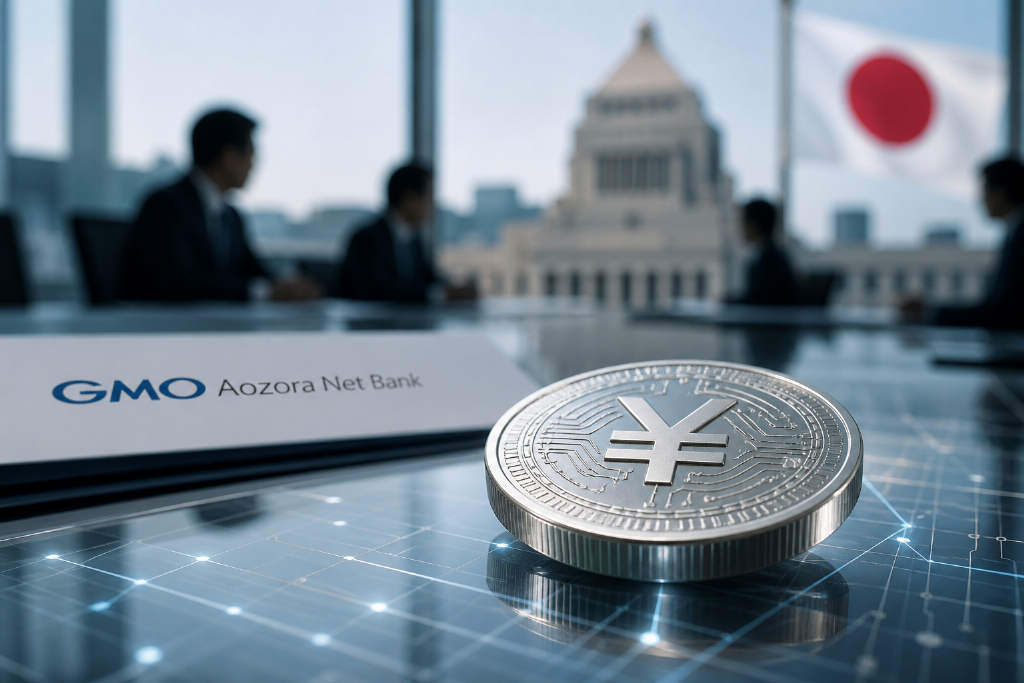
A large-scale verification project for interbank settlement using tokenized deposits, or TD, began on Aug. 20 in Japan with support from the Financial Services Agency’s FinTech Proof-of-Concept Hub. The trial brings together 43 companies, including DCP, GMO Aozora Net Bank and Abeam Consulting. Thirteen banks, including Resona Bank and Bank of Yokohama, are participating directly, while 21 more have joined as observers. The project will test whether blockchain can support 24/7/365 real-time gross settlement, or RTGS, for bank-to-bank payments. It will compare two settlement structures, the TD lead bank model and the TD-SC linked model, and assess them in terms of legality, usefulness and feasibility. The verification will also examine whether the framework could open new business opportunities and reduce settlement costs and risks. The effort comes as the Bank of Japan has signaled that it is considering tokenized central bank money, while Japan’s Cabinet Office has stated that it is moving ahead with on-chain finance policies.

130
Japan launches tokenized deposit interbank settlement trial with 43 participants
Japan banks
2026-08-26 00:51:26

Around 40 Japanese Banks to Test Tokenized Deposit Transfers for 24/7 Instant Settlement

Around 40 banks in Japan are set to begin a proof-of-concept for mutual digital currency transfers using tokenized deposits on blockchain rails. The initiative is led by GMO Aozora Net Bank, working with ABeam Consulting, a subsidiary of NEC, and fintech firm DCP. The stated goal is to build low-cost settlement infrastructure that can operate instantly on a 24-hour, year-round basis. The trial is part of a fintech demonstration hub program supported by Japan’s Financial Services Agency. Participants include about 40 institutions, with Resona Bank, Shoko Chukin Bank, and Bank of Yokohama named among them. Some other banks will join as observers rather than full participants. DCP said it plans to put the service into practical use in fiscal 2027. The trial centers on transfers made with tokenized deposits issued and moved on blockchain infrastructure, as Japanese financial institutions explore new settlement rails.

230
Around 40 Japanese Banks to Test Tokenized Deposit Transfers for 24/7 Instant Settlement
Taiwan stocks
2026-08-12 00:38:22

Foreign investors return to Taiwan stocks as gains edge past South Korea’s Kospi

Foreign investors have turned back into net buyers of Taiwan equities after six straight weeks of selling, with August inflows reaching $1.7 billion so far, according to Bloomberg data cited by ABMedia. Over the same period, South Korean stocks saw net foreign outflows of $6.2 billion, marking a sharp divergence between the two major Asian technology markets following July’s global tech selloff. The shift has also altered the year-to-date performance rankings. Taiwan’s benchmark index is up 54% this year, overtaking South Korea’s Kospi at 52%. Fund managers and strategists cited in the report pointed to Taiwan’s broader technology supply chain exposure, stronger earnings revisions, and lower reliance on leveraged trading as reasons global capital has started favoring the market again. Bloomberg data showed analysts have raised 12-month earnings-per-share forecasts for Taiwan stocks by 9.5%, above the 7.4% increase for Korean shares. At the same time, some investors still see value in Korea after July’s pullback, with Aberdeen saying the Kospi’s valuation discount versus Taiwan has widened to a historic level. Societe Generale’s Frank Benzimra said the longer-term question remains whether global tech companies can turn heavy AI spending into real profits.

1010
Foreign investors return to Taiwan stocks as gains edge past South Korea’s Kospi
Japan FSA
2026-07-25 09:07:05

Japan FSA wraps up crypto AML information-sharing pilot led by Hitachi and 15 institutions

Japan’s Financial Services Agency said on July 24 that it had completed a proof-of-concept project on anti-money laundering information sharing for crypto assets and electronic payment instruments under its FinTech PoC Hub. The pilot, run from March to May 2026, was designed to test whether private-sector participants could exchange risk data across institutions, including suspicious blockchain addresses, transaction data, risk classifications, risk scores, and the basis for those assessments. The project was proposed and led by Hitachi, Ltd., with more than 15 organizations taking part. Participants included Aozora Bank, yen stablecoin issuer JPYC, GMO Coin, Chainalysis Japan, NEC, and Rakuten Wallet. According to the FSA, the trial covered three monitoring models: post-transaction reviews, real-time pre-transaction assessments, and token monitoring for issued electronic payment instruments. All three were found to be workable in practice. The agency said cross-institution information sharing could expose industry-wide risk patterns that a single exchange or company might miss on its own. It also said a combination of rule-based screening and machine learning helped identify known sanctioned entities as well as newly emerging suspicious patterns. At the same time, the FSA stressed that system alerts alone were not enough and that institutions must verify alerts themselves before restricting a transaction, while also putting data governance safeguards in place.

1130
Japan FSA wraps up crypto AML information-sharing pilot led by Hitachi and 15 institutions