
RWA and stablecoins expanded during the Aug. 21-Aug. 27 window
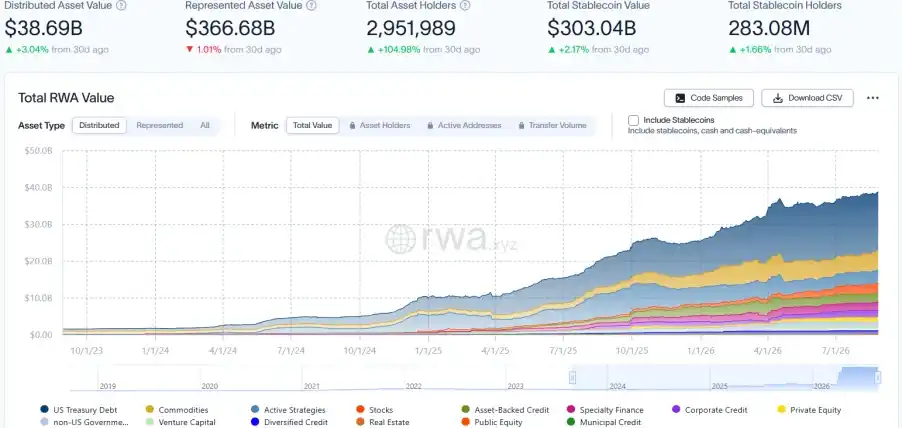
This weekly roundup covers Aug. 21 to Aug. 27, 2026. Over those days, the real-world asset sector kept climbing. Figures cited from RWA.xyz show on-chain RWA market capitalization hit $38.7 billion as of Aug. 27, up 3.04% from the same date a month earlier. Total asset holders reached 2.952 million, a 104.98% surge from a month earlier.

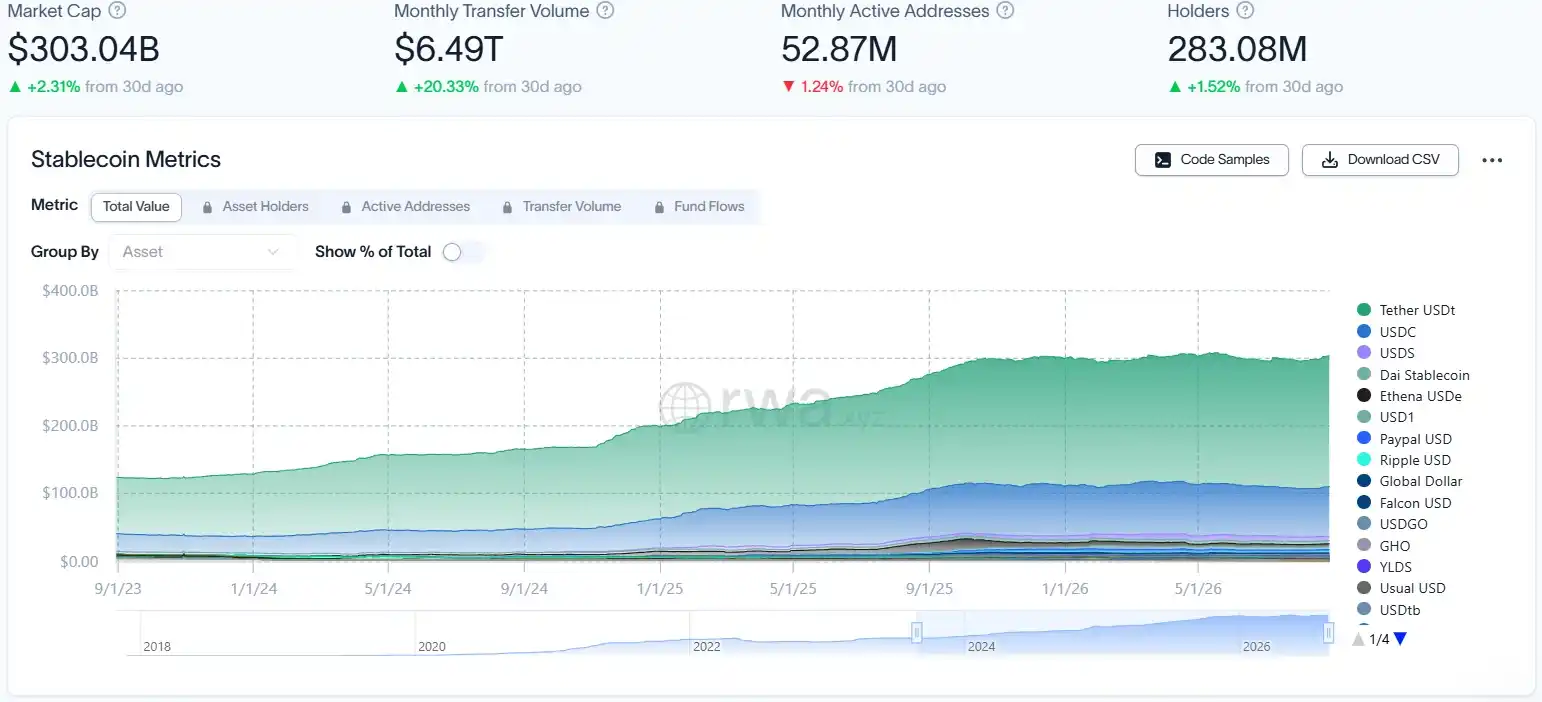
Stablecoins rose too, in aggregate. Total market capitalization bounced back to $303.04 billion, up 2.31% month over month. Monthly transfer volume climbed to $6.49 trillion, a 20.33% increase. Monthly active addresses slipped to 52.87 million, down 1.24%, while total holders rose to 283 million, up 1.52%.
The report flagged a split between higher transfer volume and lower monthly active addresses. Its read: the market is separating structurally, with bigger holders rebalancing often while smaller users sit tight and wait.
The top stablecoins were still USDT, USDC and USDS. USDT market capitalization rose 2.14% from a month earlier, USDC gained 1.65%, and USDS added 1.09%.
Regulatory moves in the U.S., U.K. and Japan
FASB seeks comments on cash-equivalent treatment for stablecoins and other digital assets
The Financial Accounting Standards Board recently put out a proposed Accounting Standards Update meant to clarify how the U.S. GAAP definition of cash equivalents applies to certain digital assets, including stablecoins, while also tightening disclosure requirements around what makes up cash equivalents.
Under the proposal, FASB would rely on illustrative examples to help companies present qualifying digital assets as cash equivalents more consistently and with better comparability, without changing the current definition of cash equivalents. The proposed ASU would also require any company that presents assets as cash equivalents to disclose the major components and amounts of those assets, whether digital assets are part of them or not. FASB is taking comments through Nov. 19, 2026.
U.K. plans a secondary legal objective for the Bank of England
Bloomberg reported that the U.K. government plans to give the Bank of England a new duty: promote innovation in digital currency and payments. That goal would be secondary. It would not replace the central bank’s main mandate of maintaining financial stability.
City Minister Lucy Rigby said tokenization and distributed ledger technology “have the potential to change global financial markets” ("you qianli gaibian quanqiu jinrong shichang"). She said the secondary objective would back ongoing work in payments and digital finance innovation and help the U.K. maintain its place as a leading global financial services center. Earlier, the U.K. and the U.S. formed a joint working group to encourage stablecoin adoption.
The Bank of England scrapped a previous proposal in June that would have capped how many stablecoins individuals and businesses could hold. Deputy Governor Sarah Breeden welcomed the new responsibility.
Decrypt reported separately that the U.K. Treasury will give the Bank of England a secondary statutory objective to support innovation in payments and digital currency through an amendment to the Financial Services and Markets Bill. The bill is scheduled to go before the House of Lords in September and would require the Bank of England to report its progress to Parliament every year.
Japan may ease restrictions on large-value stablecoin payments
Nikkei said Japan’s Financial Services Agency is pushing to loosen regulatory restrictions on stablecoins issued by trust banks. If procedures such as document submissions are removed, stablecoins could be used in large-ticket payment settings like automobiles and real estate, with individual transactions potentially topping 1 million yen. The measures are expected to be included in a tax reform request package now being finalized.
Institutional and local developments across the RWA market
Franklin Templeton and HashKey launch a tokenized money market fund in Asia
The Block reported that Franklin Templeton has teamed up with Hong Kong-based HashKey Exchange to list the Franklin OnChain U.S. Government Liquidity Fund in the HashKey Earn channel. The tokenized money market fund mainly puts money into U.S. government money market instruments and U.S. dollar cash assets. It is open to professional investors and not available to the Hong Kong public.
Chetan Karkhanis, senior vice president of digital assets client relations at Franklin Templeton, said the firm expects to use HashKey’s multi-jurisdiction platform across Hong Kong, Singapore, Tokyo, Dubai and Bermuda to broaden its lineup of tokenized products. The fund is Franklin Templeton’s first tokenized money market fund introduced in Hong Kong in November 2025, and it is also the first project under the Hong Kong Monetary Authority’s Fintech 2030 plan.
Bitfire launches a compliant crypto quantitative strategy in Hong Kong
Bitfire, the licensed and listed Hong Kong company trading as New Huo Group (01611.HK), said it is widening its business into a broader RWA operator model while also launching what it called Hong Kong’s first compliant crypto asset quantitative strategy.
The company said it wants to move RWA from a conceptual issuance story into standardized financial services that can be invested in, traded, quantified and allocated. Inside a compliance framework, it plans to build three business lines around RWA issuance and circulation: RWA asset management, RWA trading and market making, and RWA custody.

First out of that model: Alpha RWA. The group said the strategy uses RWA as the core medium to capture market-neutral arbitrage opportunities involving AI assets and crypto assets, then wraps those returns into an asset management product. The firm said this gives professional investors and institutions structured exposure tied to AI and crypto assets without putting them directly in front of the underlying market volatility.
Projects: tokenized stocks, securities tokens and tokenized deposits
Bitwise plans automated tokenized stock portfolios for non-U.S. investors
Bloomberg reported that Bitwise Asset Management, which oversees about $9 billion in client assets, plans to launch Automated Token Portfolios, or ATP. The product would allow qualified investors outside the U.S. to hold baskets of tokenized equities in self-custody wallets.
The portfolios will use tokenized U.S. stocks from Coinbase, along with technology from Glider and automated rebalancing based on weightings set by Bitwise. The first offerings will target the Magnificent Seven, artificial intelligence and robotics. Unlike a traditional fund, the assets will not be pooled into an investment vehicle. They will stay in the investor’s own wallet. The product will charge a 0.15% methodology access fee and is expected to go live in the coming weeks.
Coinbase launches tokenized stocks natively on Base
Coinbase said the tokenized stocks it issues are now live natively on the Base network under the B20 standard. The assets are held 1:1 by a regulated custodian, and token holders have full ownership of the underlying shares.
Under the setup described by Coinbase, institutional market makers acting as authorized participants buy the shares and place them with regulated broker Alpaca for custody, using a bankruptcy-remote structure regulated by Abu Dhabi Global Market. The first batch includes U.S. equities such as Apple and Nvidia. Users can hold the assets in self-custody wallets, tap Aerodrome for liquidity, and use them across the Base DeFi ecosystem for lending and composability. The design also supports dividends and use as collateral.
B20 extends ERC-20 and does not need whitelists or platform lock-in. Dividends and stock splits are handled through on-chain multipliers so DeFi positions are not disrupted. For now, the tokenized stocks are available only to eligible users outside the U.S. and offer 24/7 global access. Base said more stocks and other RWA assets are expected in the coming weeks, and the Base Ecosystem Fund is backing teams building in this area.
Bitfinex Securities prepares ALKN, a securities token tied to high-purity nickel wire
CoinDesk reported that Bitfinex Securities, the tokenized asset trading platform affiliated with crypto exchange Bitfinex, plans to raise $50 million for Luxembourg industrial metals platform Alkemya Metacore and list ALKN, a securities token linked to high-purity nickel wire.
The platform is backed by roughly $1.6 billion in high-purity nickel wire inventory totaling 7 million meters and stored in Switzerland. That material is used mainly in semiconductors, aerospace and defense. ALKN will be offered in a primary subscription open to qualified investors, ending Oct. 15. The proceeds are earmarked for developing engineered nickel products, including green hydrogen applications, with the goal of turning industrial nickel into an on-chain asset that can be traded and pledged as collateral.
About 40 Japanese banks begin trials for tokenized deposit transfers
Nikkei reported that about 40 Japanese banks are set to begin proof-of-concept trials for mutual transfers of digital currency. The initiative is led by GMO Aozora Net Bank, together with NEC subsidiary Abeam Consulting and fintech company DCP, and it uses tokenized deposits on blockchain rails. The stated goal is simple: a 24/7, low-cost instant settlement infrastructure.
The trial is part of a Financial Services Agency-backed fintech proof-of-concept hub. Participants include Resona Bank, Shoko Chukin Bank and Yokohama Bank, along with roughly 40 institutions, while some other banks are joining as observers. DCP plans to put the service into practical use in fiscal 2027.
POSCO tokenizes trade receivables on Avalanche
CoinDesk reported that POSCO International, South Korea’s largest trading company, tokenized its trade receivables on the Avalanche blockchain in a live RWA transaction. One month earlier, the company completed a similar pilot on Injective.
The transaction involved POSCO’s U.S. unit, trade finance platform Olea and asset-backed fintech company Intain. After Intain used AI to match invoices, purchase orders and shipping documents, the receivables were verified and recorded on its Avalanche-based Layer 1 network.
POSCO International brings in annual revenue of $22.2 billion, operates across steel, energy and battery materials, and runs more than 80 overseas branches. The three companies said they plan to test more tokenized trade finance uses, including cross-border settlement based on stablecoins and digital treasury management tools.
Two South Korean Visa partnerships target stablecoins and AI payments
Yonhap reported that Shinhan Financial Group signed a strategic partnership with Visa to work together on digital assets including stablecoins and on future finance initiatives. Shinhan will use Visa’s stablecoin platform to test core functions such as issuance, remittance and redemption, while the two sides shape business models suited to South Korea’s financial environment.
The partners also plan to examine stablecoin use in card settlement and other financial services, along with AI payments and expansion in B2B and B2C payments. Chairman Jin Ok-dong said Shinhan plans to extend its long-standing relationship with Visa into the wider field of digital finance and jointly design new future finance models.
The Block reported separately that Dunamu, the parent company of Upbit, also signed a strategic partnership with Visa to explore new financial services built on stablecoins and AI. The companies plan to combine Dunamu’s digital asset technology with Visa’s global payments network to build services covering stablecoin payments, cross-border remittances and AI-driven finance, and to connect stablecoins with existing global payments infrastructure.
On the AI side, the focus is agentic commerce, where AI agents search for products and complete payments for users. Dunamu said it will also evaluate the potential role of Open Standard’s Open USD stablecoin in the partnership. CEO Oh Kyung-seok said, “The spread of AI, stablecoins and tokenization will change how finance and commerce operate.” ("AI, wendingbi he daibihua de puji jiang gaibian jinrong he shangye de yunzuo fangshi.") The announcement came two days after Visa struck a similar deal with Shinhan Financial Group.
BNB Chain joins Mastercard’s crypto partner program
CoinDesk reported that BNB Chain has joined Mastercard’s Crypto Partner Program. Its blockchain will link up with Mastercard’s payments infrastructure for stablecoin payments, cross-border remittances and fiat on- and off-ramps for digital assets.
JPMorgan, Bank of America, Wells Fargo and Santander move toward a global stablecoin alliance
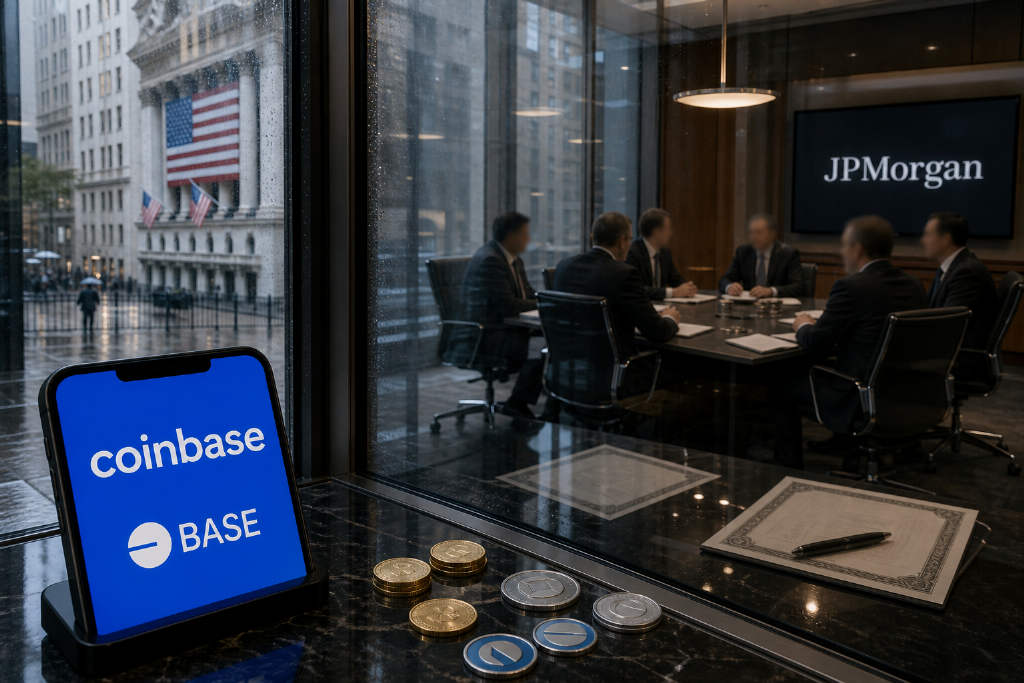
The Wall Street Journal reported that JPMorgan Chase, Bank of America, Wells Fargo and Santander are working toward forming a global stablecoin alliance. The report, citing people familiar with the matter, also said JPMorgan recently considered launching its own stablecoin on a standalone basis.
The plans are still being weighed and developed, and no issuance date or specific product structure has been disclosed.
Revolut launches euro stablecoin EURR
Bloomberg reported that U.K. fintech company Revolut has launched the euro stablecoin EURR. At first, it is available to eligible users in Denmark, Poland and Portugal, with expansion to other markets in the European Economic Area planned later this year.
EURR will be built into the Revolut app, letting users move freely between euros and on-chain crypto assets. Revolut said EURR is the “first step” in a broader stablecoin strategy and that tokens tied to other currencies will come next. EURR is issued by Bridge, the stablecoin infrastructure company owned by Stripe, which also manages the reserve assets.
Security incident and platform activity
GoPlus says Realio was attacked and about $6.2 million in RIO was stolen
According to monitoring from GoPlus, realio[.]fund, the RWA token issuance platform operated by Realio Network, was attacked on Aug. 25. The attacker took over the platform’s signing stack and drained treasury and custody wallets across Ethereum, BNB Chain, Algorand, Stellar and Realio’s native chain. In total, 127.9 million RIO was stolen, worth about $6.2 million, and roughly $317,000 has already been cashed out.
GoPlus said the root cause was theft of the platform’s hot signing key. realio[.]fund had been using a single hot signer to manage treasury, reserves and user custody subaccounts. Once the attacker got that authority, transfers could be signed directly across multiple chains without user approval, without rekeying, and without any smart contract exploit.
MSX opens subscriptions for the third Pre-IPO batch on Aug. 31
MSX said subscriptions for the third batch of its Pre-IPO projects will open at 18:00 UTC+8 on Aug. 31, 2026. This round will feature only two closely watched AI unicorns: Elon Musk-backed brain-computer interface company Neuralink and U.S. AI defense technology company Anduril Industries.
MSX said its second Pre-IPO batch, Polymarket, is already open for redemption and delivered a subscription return of 33.3%. Adding Neuralink and Anduril broadens the platform’s lineup of frontier technology assets in its Pre-IPO offering.
Users taking part in this round must hold MSX. Allocation will be based on effective token holdings, with detailed participation rules and tiers to be announced on the MSX platform.
Funding activity: Entropy.io and Fasset raise fresh capital
Entropy.io closes a $14 million round
According to an official announcement, on-chain private equity trading platform Entropy.io has raised $14 million in funding led by Ribbit Capital and secured another $40 million in HYPE staking support. Its first market, Anthropic pre-IPO, is already live on Hyperliquid.
Entropy is an independent market deployer under Hyperliquid’s HIP-3 framework. It offers perpetual contract trading tied to global equities, commodities, indexes and long-dated Pre-IPO equities. The team includes researchers and traders from Citadel Securities, Optiver, Polymarket and Millennium. Its main effort is building a liquidity-weighted oracle to deal with weak liquidity and after-hours manipulation risk in Pre-IPO perpetual markets, with the stated aim of enabling deep 24/7 trading for all assets in a single venue.
Fasset raises $68 million led by SBI Group
CoinDesk reported that stablecoin-focused digital bank Fasset has raised $68 million in a round led by Japan’s SBI Group, giving the company a valuation of $1 billion.
The financing follows a $51 million round completed in May, bringing Fasset’s total funding this year to $119 million. Fasset is based in Los Angeles and runs a financial platform that lets consumers and businesses hold, send, spend and invest in different currencies and assets while using stablecoins in the background as part of its settlement infrastructure.
The company said it operates in 125 countries and processes more than $40 billion in annualized transaction volume. Chief executive Mohammad Raafi Hossain said the business grew quickly over the past year, with revenue up about sixfold year over year, and that the company has been profitable for 12 straight months. Fasset did not disclose revenue or profit figures.
Selected commentary excerpts included in the roundup
Entropy and the push into Pre-IPO markets
A PANews summary said Entropy, a market deployer built on Hyperliquid’s HIP-3 framework, raised $14 million led by Ribbit Capital, along with about $40 million in HYPE token staking support. Its first Pre-IPO perpetual contract, ANTH, references the equity valuation of AI unicorn Anthropic and is now live.
The summary said the team blends Wall Street quantitative experience with crypto-native expertise and uses a liquidity-weighted oracle plus time-segmented funding rate mechanisms to improve pricing and carrying costs. The contract offers 24/7 trading, leveraged long and short exposure, and pure price exposure.
PANews also pointed to several risks. A few obvious ones. Similar projects have shut down before, market competition is intense, prices may diverge from actual valuation, and regulators may take a harder look. It said the project shows DeFi derivatives moving further into traditional asset markets, though the market structure is still far from mature.
Real estate tokenization and the question of rights, risk and liquidity
Another PANews summary said real-estate RWA is moving away from broad storytelling and back to basics: asset quality and legal structure. Dubai commercial property tokenization project OneAsset is focused on prime local commercial real estate and uses a single-asset vault paired with a bankruptcy-remote special purpose vehicle. Token holders get economic rights tied to the property, not direct legal title.
The platform argues that fractionalization by itself does not create liquidity. In its view, real liquidity comes from the quality of the underlying asset, steady cash flow, credible disclosure and enough buyer demand, not just technical transferability.
On compliance, OneAsset follows a design principle it calls regulation by design and is applying for a Dubai VARA license. It is also using identity-recognizable tokens, automated KYC and AML, and unified disclosure standards across multiple jurisdictions. Its longer-term objective is machine-readable asset data that can support future AiFi allocation, though the model still needs to be tested through live asset listings, regulatory approval and secondary market performance.
Robinhood Chain’s DeFi buildout and RWA positioning
One more PANews summary said the DeFi side of Robinhood Chain is shifting away from a meme-coin-led setup toward a broader financial buildout. AMMs, CLOBs, lending, perpetuals, ve (3,3) systems and OHM-style designs are being deployed, with tweaks for tokenized stocks and other RWA instruments.
Uniswap holds the core AMM position, and V4 adds a programmable liquidity layer. Deepstate uses a fully on-chain order book for large and high-frequency trading. In lending, Morpho has partnered to launch an Earn savings product, while Arrow Finance supports overcollateralized stablecoin minting against stocks. Perpetual protocols Lighter and Arcus accept tokenized stocks as collateral, and Arcus also tokenizes positions. UponRH and Fables use ve (3,3) designs, and NetNet is trying to rebuild an OHM-style reserve currency through code constraints and real asset reserves.
The summary said Robinhood Chain is turning into a DeFi testing ground that links crypto-native markets with traditional finance and increases the composability of traditional assets on-chain.