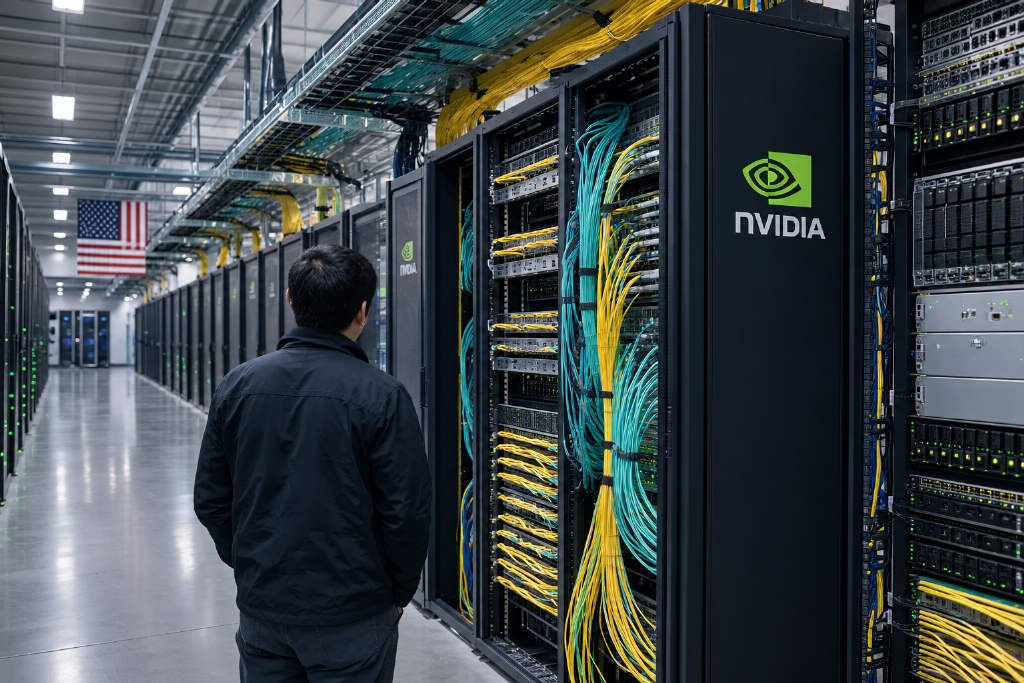
AI infrastruc2026-09-29 06:19:19AI Infrastructure Spending Shifts Toward Optical Interconnects as GPU Share FallsTwo research reports from Jefferies and Bank of America argue that the cost structure of AI infrastructure is changing as rack-scale systems grow larger. Jefferies’ bill-of-materials analysis of NVIDIA AI rack platforms shows GPU costs taking a smaller share of total rack spending, falling from 62.5% in the early GB300 NVL72 generation to 46% in the Rubin-era NVL576 Pod. Over the same period, total procurement cost for a single rack jumped from $4.16 million to $55.25 million, while networking and fiber interconnect rose from 8.6% to 22.4%, or more than $12 million in absolute terms. Bank of America, citing an interview with former Microsoft engineering vice president Fran Cardells, said the shift is tied to inference workloads rather than training. In agentic AI systems, KV cache must hold prior token sequences, enterprise context, guardrail rules, and agent decision logs, and in some cases can reach 10 times the size of model weights. As context windows expand from about 128K tokens toward 1 million tokens and multiple agents run at once, memory demand keeps rising. Cardells said the bottleneck is no longer simply how many GPUs a system has, but how quickly data can move across GPUs, memory, and storage. Both reports point to optical networking, photonics, memory pooling, and related infrastructure as areas the market may still be underestimating.330
Aave2026-09-28 04:08:11Aave says collateralized lending could expand to GPUs, robotics and space infrastructureAave founder and CEO Stani Kulechov said the protocol’s addressable market should be measured by the range of assets that can be used as collateral. In his view, a broader set of collateral translates into a larger lending market. Aave started with crypto assets, then expanded into securities through Coinbase tokenized stocks and Horizon RWA, according to his post. Kulechov added that the next phase could extend collateral-backed finance into sectors tied to what he called an "abundance economy," including solar, batteries, GPUs, robotics and space infrastructure. He said that transition will continue through 2050. Aave’s goal, he wrote, is to finance assets that drive that shift and bring the timeline forward by 10 years.240
compute tradi2026-09-28 00:46:17gpugene says short-term B300 compute prices are rising, with derivatives seen as a hedgeChainCatcher reported that X user gpugene discussed pricing in the compute market and said some B300 deals have cleared above $24 per GPU hour, while contracts shorter than one year have held above $7 per GPU hour and are still moving higher. In the post, gpugene argued that compute derivatives could help buyers hedge against increases in GPU-hour prices while preserving flexibility over rental duration. He added that if an inference cloud sells services at a fixed price while its own GPU bill floats, it is effectively taking on compute price risk. As an example, the post described an offer for 2,048 B300 GPUs leased from now for five years at $4.15 per GPU hour, for a total of $372,264,960. Assuming a customer goes live after 12 months and uses that capacity from months 13 to 15, total demand would reach 4,485,120 GPU hours. gpugene also modeled a call option with a $4.50 strike, a compound option alternative, and 4,000 hypothetical five-year rent and demand paths to compare average and worst-case outcomes.210
StarkWare2026-09-26 16:54:17StarkWare challenge cuts estimate for quantum-safe Bitcoin compute by 79%TheDefiant reported that an AI-assisted challenge run by StarkWare reduced an estimate tied to quantum-safe Bitcoin computation by 79%. The report drew a clear line around what the result does and does not cover. It said the contest focused on offchain GPU work rather than Bitcoin transaction fees, meaning the revised estimate applies to a computing task outside the fee market on the Bitcoin network. The article also noted that the method remains experimental and still requires a direct path to a miner, which leaves an important practical condition attached to the approach. Beyond those points, the source did not provide additional technical details in the supplied text. The publication also stated that its articles are stored on Filecoin.230
AI2026-09-27 11:31:29Analyst says claims of 10-year AI demand visibility do not hold up as memory, ABF substrates and power emerge as bottlenecksP Equity Research analyst Mr. P said in a Sept. 26 podcast that the market narrative claiming hyperscale cloud providers have "10 years of demand visibility" is not credible. In his view, cloud companies struggle to forecast demand even two years out, and AI infrastructure spending will still be constrained by cyclical capital expenditure patterns. In the near term, inference demand is expected to keep lifting demand for memory products including HBM, DRAM and NAND. Mr. P estimates hyperscaler capex could reach $1.1 trillion to $1.2 trillion next year, with memory accounting for 50% to 60%, or roughly $500 billion to $700 billion. UBS has projected the figure could be as high as $900 billion. He also argued that AI compute constraints are shifting away from GPU unit counts alone toward power, advanced packaging, memory and ABF substrates. He added that used prices for older GPUs such as the H100 remain elevated, B-series GPU rental rates are still rising, ABF substrate tightness may last until 2028 to beyond 2030, and gas turbine order books at Mitsubishi, Siemens and GE Vernova are already filled past 2030.210
Silicon Data2026-09-22 05:09:57Silicon Data CEO Carmen Li says GPU prices may be turned into a futures marketSilicon Data CEO Carmen Li said the company plans to turn GPU pricing into a futures market, according to a Techub News brief citing Crypto Briefing. The proposal is framed as an effort to reshape how AI computing is priced through financial derivatives. If pursued, the move would connect GPU pricing more directly with market-based trading tools commonly used in other asset classes. The report said the idea could affect the global technology economy and financial trading strategies, though no timeline or product details were disclosed in the source item. Silicon Data was identified as an AI computing infrastructure company, and Li was named as the executive behind the plan.360
Nvidia2026-09-21 11:40:42Nvidia plans Rubin-based RTX 60 series GPU launch in 2028Techub, citing Crypto Briefing, reported that Nvidia plans to release its RTX 60 series GPUs under the codename Rubin in 2028. The brief points to a broader shift inside the company, with Nvidia placing more emphasis on AI chips than on gaming GPUs. According to the report, that strategic change could affect the pace of innovation in gaming hardware and reshape parts of the market structure. No additional product specifications, pricing details, or launch timeline beyond the 2028 target were disclosed in the source item. The report was published as a short market analysis update.320
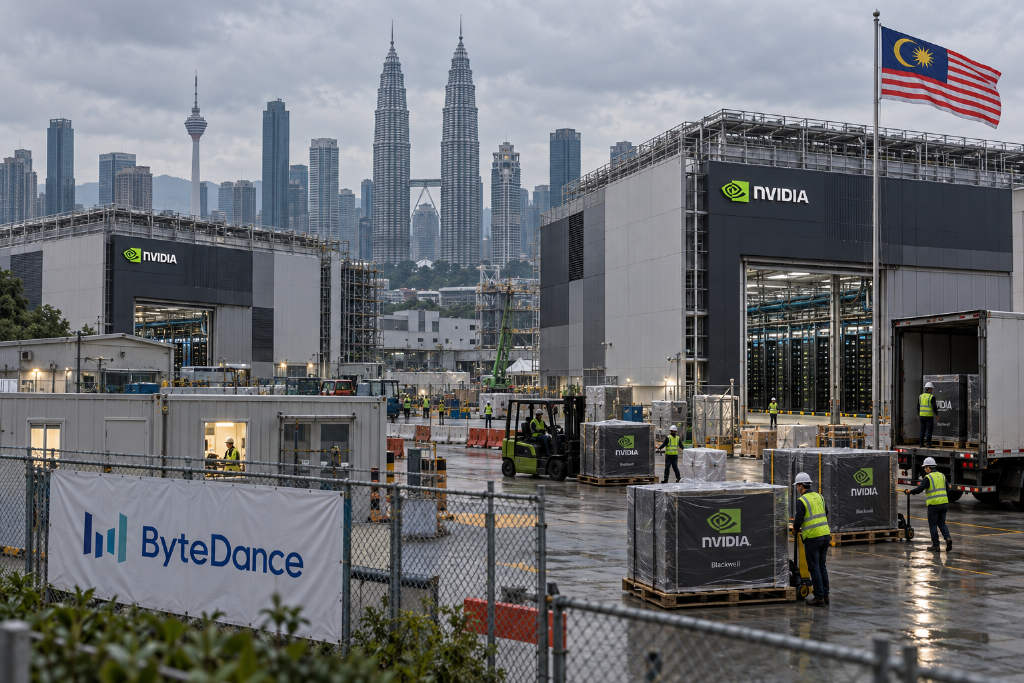
ByteDance2026-09-21 09:36:27ByteDance plans 22,000 Nvidia Blackwell Ultra GPUs for AI factory in MalaysiaByteDance plans to deploy 22,000 Nvidia Blackwell Ultra graphics processing units in Malaysia as part of an AI factory buildout, according to a Techub report citing Tech in Asia. The deployment is expected to be completed across two sites in early 2027. The report did not disclose further details on the facilities, investment size, or specific workloads tied to the project. The key points available are the location, the scale of the GPU deployment, the use case tied to an AI factory, and the expected completion window. The information was published by Techub as a brief item and attributed to Tech in Asia.290