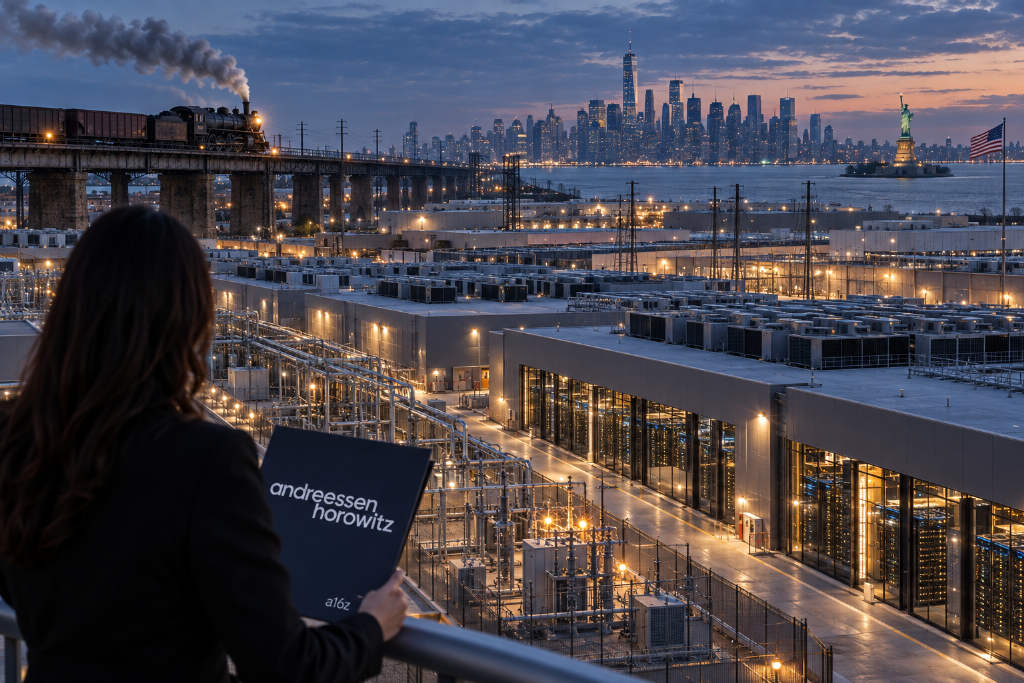
a16z2026-10-04 06:29:51a16z says tech has become the market’s “everything cycle” as AI spending pushes hardware and infrastructure back to center stageAndreessen Horowitz’s growth team has published the second edition of State of Markets II, arguing that technology is no longer just another equity sector but the main engine of earnings growth across global capital markets. In the report, a16z says the center of gravity inside tech has shifted away from software and toward hardware, semiconductors, power, networking, manufacturing, robotics, and defense as AI buildouts accelerate. The firm describes AI as a generational platform shift and points to a sharp jump in hyperscaler capital expenditures, from about $97 billion in 2020 to an estimated $777 billion in 2026, with spending expected to exceed $1 trillion annually from 2027. It also says 86% of venture capital deal value now goes to AI, up from 15% in 2016. On the public-market side, the report says technology contributed about 76% of total S&P 500 earnings growth through the end of August 2026. The report also pushes back on the idea that GPUs quickly become obsolete, saying rental rates and residual values for older chips such as the A100 have held up or risen. At the same time, it argues that enterprise and consumer AI adoption remains broad but shallow. Software, in a16z’s view, is not facing extinction, but a tougher phase in which growth quality, profitability, and measurable outcomes matter much more.40
Palantir2026-10-02 23:55:36Palantir and Armada team up on modular data centers for sovereign AI deploymentsPalantir Technologies said it has entered a strategic partnership with edge computing and distributed infrastructure startup Armada to bring Palantir’s Sovereign AI Operating System into Armada’s hardened modular data centers. The joint offering is aimed at defense users, allied governments, and heavily regulated industries that want tighter control over data, model weights, and the hardware running AI workloads. According to the report, the setup combines Palantir’s AIP, Ontology, Foundry, and Apollo software stack with Armada’s Galleon modular facilities, whose hardware is limited to manufacturing in the United States and allied countries. The companies also say the system can keep operating in highly isolated environments, including cases where external network connections are fully cut off, while internal power, cooling, GPU clusters, and inference pipelines remain functional. Armada’s container-like design is also pitched as a faster alternative to traditional large-scale data center builds, which the report says can take two to five years, with deployment timelines shortened to months where basic power or a microgrid is available.40
SpaceXAI2026-10-02 13:14:40SpaceXAI plans to bring about 420,000 Nvidia GPUs online in NovemberSpaceXAI plans to activate about 420,000 Nvidia GPUs in November, according to Techub News, which cited Crypto Briefing. The report says the move could reshape competition in artificial intelligence and highlights the strategic weight of computing capacity as well as long-term partner relationships. No further operational details were provided in the source item, but the scale cited in the report points to a significant buildout in AI infrastructure. The update was published as a brief by Techub under its technology coverage.40
Ataraxos AI2026-10-01 16:39:31Ataraxos AI beats Stratego world champion 15-1 using 16 GPUsAtaraxos AI defeated Stratego world champion Pim Niemeijer by a 15-1 score in a head-to-head match, according to a Techub News brief citing Crypto Briefing. The result stands out not only for the margin of victory, but also for the hardware footprint behind it: the company used just 16 GPUs. The report says the match suggests advanced AI performance can be achieved with relatively limited computing resources. That point matters because training and deployment costs remain a central issue across the AI sector. In this case, the stated resource level is part of the story, not a side note. Techub did not provide additional technical details in the brief, and no further information was given on the model architecture, training method, or match format. The item focuses on the score, the opponent, and the computing resources involved, while citing Crypto Briefing as the source.40
NVIDIA2026-10-01 13:10:35NVIDIA says AI factory returns hinge on productivity, durability and interchangeabilityNVIDIA said in an official blog post that maximizing returns from AI factories depends on three factors: productivity, durability, and interchangeability. The company defined productivity as achieving the highest throughput per megawatt and the lowest cost per token, with the goal of lifting annual revenue capacity. Durability refers to NVIDIA GPUs and systems continuing to generate revenue years after shipment. Interchangeability, in NVIDIA’s framing, means the same infrastructure can run a wide range of AI and non-AI workloads, broadening demand. The post cited SemiAnalysis AgentX data showing that NVIDIA’s Vera Rubin NVL72 system delivers more than 30 times higher throughput per megawatt than the GB300 NVL72. It also said cost per million tokens on the DeepSeek V4 Pro model can be reduced by as much as 45 times. NVIDIA added that its A100 GPUs, first shipped in 2020, are still in commercial service, and that CoreWeave has extended reservations for some of those units through 2029.70
a16z2026-10-01 10:14:28a16z says AI infrastructure buildout has surpassed the railroad era in share of U.S. GDPAndreessen Horowitz said in its second annual State of the Market report, released on Sept. 30, that the current AI infrastructure buildout now represents a larger share of U.S. GDP than the 19th-century railroad boom, a comparison often used by markets to frame the scale of the cycle. The firm said capital spending by the four largest U.S. cloud providers and other hyperscalers reached about $416 billion in 2025, could rise to roughly $780 billion in 2026, and may exceed $1 trillion a year starting in 2027. According to the report, technology companies accounted for about 76% of S&P 500 earnings growth in 2026, while high-tech equipment, software and R&D together made up about 55% of total U.S. capital expenditure. a16z also pushed back on the idea that GPUs quickly lose value after three to four years, saying Nvidia’s A100 chips installed one or two years ago still perform well even as demand for the newer B200 remains strong. The report added that AI adoption is broad but still shallow: about 69% of S&P 500 companies have launched AI applications, nearly 30% reported measurable benefits, yet only about 2% consistently track outcomes.30
a16z2026-10-01 06:31:46a16z says AI spending gap has widened to 8x as tech drives most S&P 500 earnings growthAndreessen Horowitz, or a16z, said in its 2026 first-half market report that the gap in AI spending among technology companies has widened to nearly 8x, highlighting how uneven the buildout has become across the sector. The report, presented through more than 100 charts, argues that technology has moved beyond being just another market sector and has become the main engine of earnings growth in the S&P 500. As of the end of August 2026, tech accounted for about 76% of the index’s total earnings growth, according to the report. The firm also said the market narrative has shifted from software to hardware and infrastructure, with AI-related demand lifting semiconductors, power, and networking equipment. It pushed back on the idea that GPUs quickly lose value, saying demand for compute still exceeds supply and that NVIDIA A100 pricing has held at or above levels seen at the start of the year. At the same time, a16z said AI adoption remains early. Nearly 30% of S&P 500 companies reported some measurable AI impact, but only about 2% are tracking specific metrics, while only around 2% of U.S. households were paying for an AI service as of April. On software, the report said SaaS is not dead, but the sector is going through a broad repricing that now rewards proof of durable growth and profitability.50
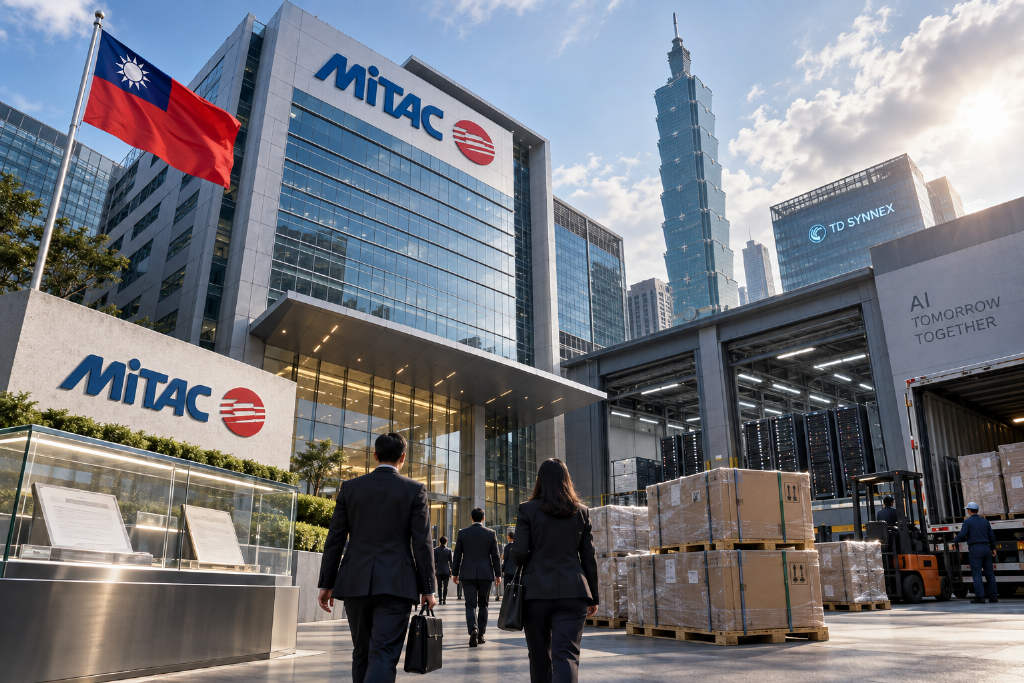
MiTAC2026-09-30 23:42:03MiTAC plans NT$12 billion in convertible bonds and 120 million new shares to fund AI server expansionMiTAC Holdings has approved a large fundraising plan that combines convertible bond issuance, a cash equity offering, and an asset disposal move, all aimed at strengthening liquidity as its AI server business scales. The board approved two unsecured zero-coupon convertible bond tranches with a combined ceiling of NT$12 billion, alongside a cash capital increase of 120 million new shares. The first bond tranche is capped at NT$10 billion and will be sold to specific institutional investors through book building at 100.5% to 101% of par value. The second, capped at NT$2 billion, will be offered through a public underwriting auction with a floor price set at 105% of par. For the equity raise, 10% of the new shares will be reserved for employees, 10% for public underwriting, and the remaining 80% for existing shareholders. The final offering price will be determined after the filing becomes effective. MiTAC said the proceeds are intended to replenish working capital. The report notes that market observers have linked the move to AI server expansion, U.S. production buildout, and high-end GPU procurement, though the company’s filing only states working capital needs. The board also approved the sale of shares in TD Synnex Corp. to improve group cash flow. Investors are expected to watch pricing, conversion terms, and whether the incoming capital can translate into revenue and profit growth without heavier EPS dilution.40