GSR
Oct 7, 2026

GSR raises Bitcoin weighting in Core3 model portfolio to 40.9%

GSR released its weekly Core3 model portfolio report on Oct. 7 and increased Bitcoin’s weighting by 12.3% to 40.9%. At the same time, the firm cut Ethereum’s allocation to 28.7% and lowered Solana’s share to 30.4%. According to the report, Bitcoin showed the lowest volatility during the latest week’s pullback in the crypto market. GSR also said Bitcoin had the deepest trading-volume support among the assets in the model. On that basis, the firm adjusted the portfolio to give Bitcoin a larger share and reduce overall volatility risk. The update was carried by Techub News and cited Wu Blockchain.

540

GSR raises Bitcoin weighting in Core3 model portfolio to 40.9%
GSR
Oct 7, 2026

GSR Commits $100 Million to Back Hare’s On-Chain Treasury Push

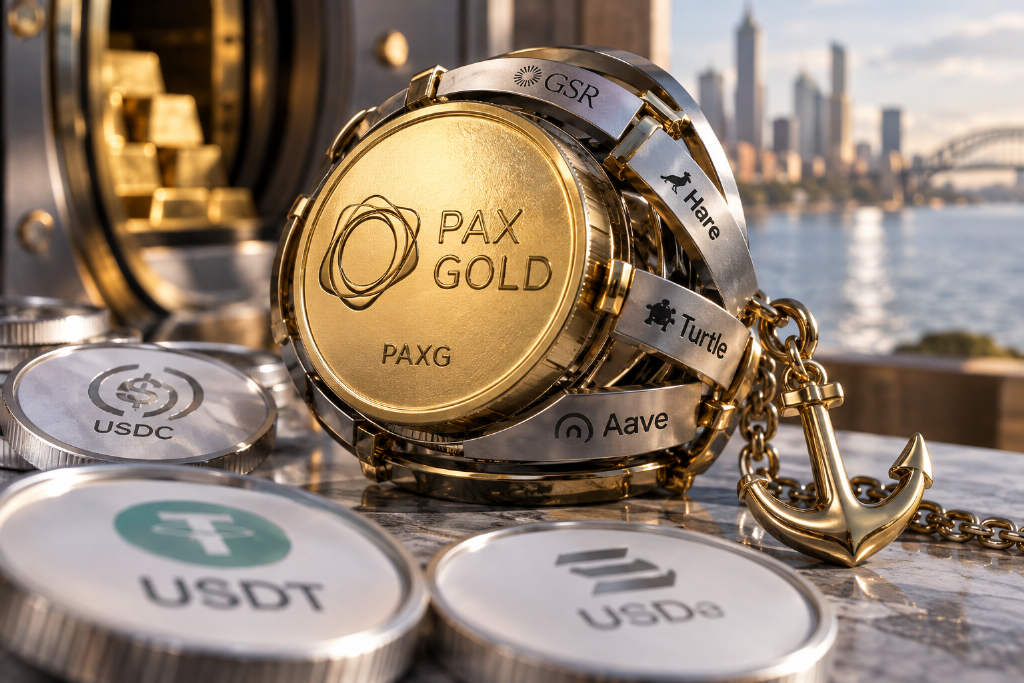
Crypto trading firm GSR has committed $100 million to support Hare, a new business focused on on-chain treasury products, with the funding set to be provided mainly through credit lines. Hare is working with liquidity platform Turtle to create and manage on-chain vaults. Its initial rollout will feature vaults supported by the lending protocol Aave, giving investors a way to earn yield through major U.S. dollar stablecoins and Paxos’ tokenized gold product. GSR will also provide anchored liquidity for the offering. The development was reported by CoinDesk and cited by Odaily.

1180
GSR Commits $100 Million to Back Hare’s On-Chain Treasury Push
GSR
Oct 7, 2026

GSR commits $100 million to launch Hare, an on-chain vault and credit business

Crypto trading and market-making firm GSR is committing $100 million to build Hare, a new on-chain credit business reported by CoinDesk. The project is being developed with liquidity distribution platform Turtle and will focus on creating and managing on-chain vaults. GSR said the multi-year commitment will mainly be provided in the form of credit lines and used as anchor liquidity for Hare’s products, allowing the firm to deploy its own capital before outside investors join. Hare’s first rollout includes two Aave-based products. Hare USD Earn will let users deposit major U.S. dollar stablecoins into a single vault to earn yield. Hare Gold Earn is designed for holders of Paxos tokenized gold assets PAXG and PAXGy, with Paxos Labs participating in the collaboration. Looking ahead, Hare plans to focus on assessing collateral, counterparties, and position risk during periods of market stress.

1470
GSR commits $100 million to launch Hare, an on-chain vault and credit business
GSR
Oct 7, 2026

GSR commits $100 million to Turtle-backed on-chain credit venture Hare

Crypto trading and market-making firm GSR has committed $100 million to Hare, an on-chain credit business being built with liquidity distribution platform Turtle. The multi-year commitment will mainly come in the form of credit facilities, with GSR deploying its own capital first to provide initial liquidity before outside investors enter. Hare plans to launch two products built on Aave: Hare USD Earn, which will accept major dollar stablecoins through a single vault, and Hare Gold Earn, which will offer yield to holders of Paxos tokenized gold products PAXG and PAXGy. Paxos Labs will take part in the gold product partnership. According to Hare CEO Connor Milner, the capital from GSR will be deployed directly so issuers have liquidity from day one, while investors can see that GSR’s own money sits in the same vault as theirs. Hare said it will focus its assessments on collateral, counterparties and how related positions could perform during periods of market stress.

2030
GSR commits $100 million to Turtle-backed on-chain credit venture Hare
GSR
Oct 7, 2026

GSR commits $100 million to Hare, betting on onchain credit and institutional vault demand

Crypto trading and market-making firm GSR has committed $100 million to Hare, a new onchain credit business being built with liquidity distribution platform Turtle. The capital commitment, described as multi-year and structured mostly as a credit facility, will be used to seed Hare’s vault products before outside investors come in, giving the business anchor liquidity from the start. Hare’s first offerings will be two Aave-powered vaults: one for major U.S. dollar stablecoins and another for Paxos tokenized gold products PAXG and PAXGy, with Paxos Labs partnering on the gold strategy. The move comes as institutional interest in curated onchain vaults grows alongside the broader tokenization push across traditional finance. Vaults let capital be deployed across lending markets and other yield strategies rather than simply sit idle in wallets. Hare said its focus will be the credit layer, including collateral analysis, counterparty assessment and position behavior during market stress. According to Vaults.fyi, curated vaults held $8.6 billion across 788 vaults as of July, with the figure reaching 1.4 million.

1120
GSR commits $100 million to Hare, betting on onchain credit and institutional vault demand
GSR
Oct 7, 2026

GSR commits $100 million to launch onchain credit business Hare

Crypto trading and market-making firm GSR said it is committing $100 million to launch Hare, a new onchain credit business built with liquidity distribution platform Turtle. The venture will create and manage onchain vaults, with GSR’s multi-year commitment mainly structured as credit lines. The firm said its own capital will enter Hare products first as anchor liquidity before outside investors are brought in. Hare is starting with two products backed by lending protocol Aave. Hare USD Earn accepts major U.S. dollar stablecoins in a single vault, while Hare Gold Earn is designed to generate yield for holders of Paxos tokenized gold products PAXG and PAXGy. Paxos Labs is involved in the gold product partnership. Hare CEO Connor Milner said GSR’s commitment is deployable capital, allowing issuers to access liquidity from day one while allocators can see GSR’s own funds sitting in the same vault. Milner previously served as a senior director at London-based DeFi hedge fund Re7 Capital. According to Vaults.fyi, 788 curated vaults managed a combined $8.6 billion in assets as of July.

1680
GSR commits $100 million to launch onchain credit business Hare
Market Makers
Oct 9, 2026

Market-maker announcements say little without contract terms, BigTime says

A BigTime research note on market-making agreements argues that the phrase "a market maker has officially come on board" often reveals far less than investors assume. The report says these arrangements usually combine three layers at once: service obligations, token inventory and derivatives. Which layer dominates determines how the deal actually affects token supply. Citing industry statistics from April 2026, BigTime says fewer than 1% of crypto projects disclosed the terms of their market-making agreements, making it hard to tell whether an announcement reflects a straightforward liquidity service purchase or a future distribution structure built around borrowed tokens and options. The note breaks typical contracts into five parts: token lending and inventory, option structures, quoting obligations, fees and incentives, and exit terms. The report also points to two reference cases. One is GSR’s asset-management business, including the actively managed ETF BESO, listed on Nasdaq in April 2026, and the publicly updated Core3 model portfolio. The other is Binance’s tightening of market-maker rules in March 2026, as cited by media reports. BigTime says neither example means the sector has become transparent, but both show that disclosure standards tend to rise when institutional capital enters. For readers evaluating these announcements, the note suggests four checks: what service is actually being provided, whether any contract terms are disclosed, how maturity dates line up with token unlock schedules, and how long quoting obligations last.

980
Market-maker announcements say little without contract terms, BigTime says
BigTime
Oct 9, 2026

BigTime says market-making announcements often leave key contract terms hidden

BigTime argues that one of crypto’s most common headlines — a market maker officially coming on board — often reveals far less than readers assume. In a research note focused on market-making partnerships and disclosure, the firm said industry statistics from April 2026 showed that fewer than 1% of crypto projects disclosed the terms of their market-making agreements. Without those terms, the market cannot tell whether a deal is simply a liquidity service arrangement or a structure that also includes future token sale pathways. The report breaks typical agreements into five parts: token lending and inventory, option structures, quoting obligations, fees and incentives, and exit terms. BigTime said the overlap between contract expiry and token unlock schedules can make real sell pressure difficult to verify. It also stressed that opaque terms do not by themselves prove manipulation; the issue is that outside observers cannot verify what is happening without full records. As reference points, the report cited GSR’s asset-management disclosure practices, including its BESO active ETF listed on Nasdaq in April 2026 and weekly updates for its Core3 model portfolio, as well as Binance’s tightening of market-maker rules in March 2026. BigTime said readers should ask four questions when they see these announcements: what service is being provided, whether any terms are disclosed, how expiry dates line up with unlock schedules, and how long quoting obligations last.

1260
BigTime says market-making announcements often leave key contract terms hidden
Total 47 items
Go topage