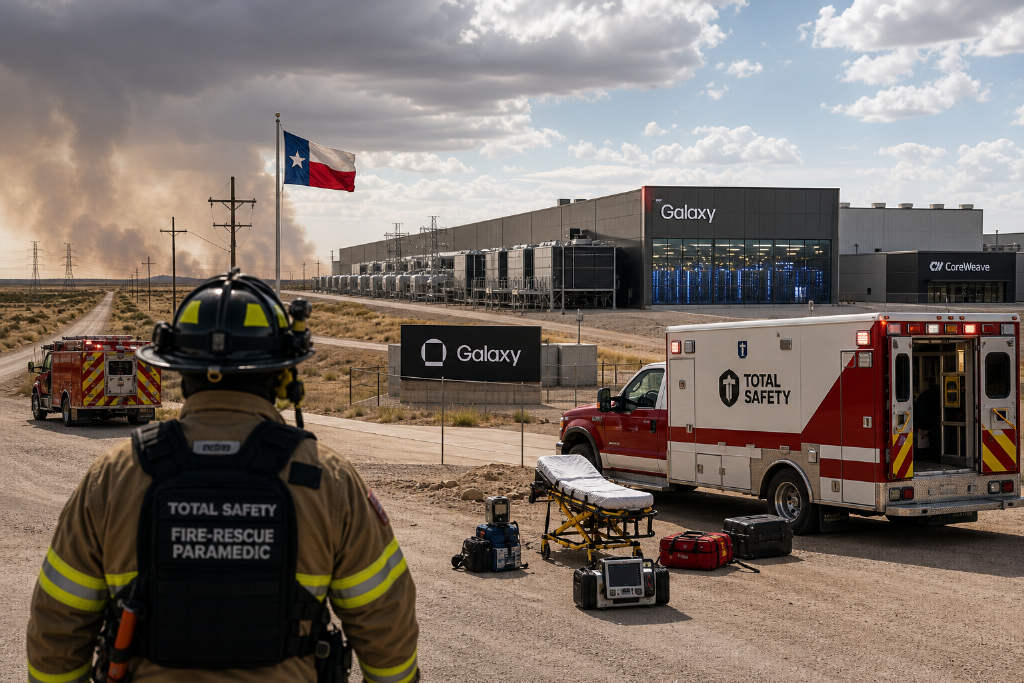
Galaxy2026-08-28 14:18:22Galaxy taps Total Safety for around-the-clock emergency coverage at Helios data centerGalaxy has partnered with industrial safety provider Total Safety to deliver 24/7 fire protection, rescue support, and emergency medical services at its Helios data center in Texas. The site is being converted from a Bitcoin mining facility into an artificial intelligence and high-performance computing hub, and it currently supports 133 megawatts of critical computing load for CoreWeave. The facility sits in a remote part of Dickens County, with the nearest trauma center about 60 miles away, making on-site emergency response a practical requirement rather than an added layer of support. According to the report, on-site medical personnel will be able to assess and stabilize patients before transport, which is expected to ease pressure on local volunteer responders. Under mutual aid agreements, the service can also support local authorities during larger emergencies such as wildfires and severe weather. Galaxy did not disclose the value of the contract, the number of personnel assigned, or the date when the service will be fully rolled out.890
Policy Regula2026-08-27 10:50:35Galaxy executive Zac Prince rolls out new crypto lending offer as BlockFi settlement payouts remain pendingZac Prince, the founder of BlockFi and now a managing director at GalaxyOne, has launched a new crypto-backed borrowing program featuring interest-only loans, waived origination fees, and other promotional terms aimed at attracting customer assets. The rollout comes while members of a BlockFi class action that targeted Prince are still waiting to receive funds from a $13.25 million court-approved settlement. Prince was a defendant in litigation over BlockFi Interest Accounts, with plaintiffs alleging that the products were sold without adequate disclosures under US securities law. A judge ordered insurers backing Prince and BlockFi’s executive team to fund the $13.25 million settlement pool, though the defendants waived any admission of wrongdoing. The settlement was approved in December 2025, but distribution is still pending as the claims administrator prepares the next steps. GalaxyOne’s new line of credit allows clients to borrow against BTC, ETH, and SOL. Galaxy says the product has no origination fee and does not rehypothecate collateral, though borrowers still face liquidation risk if pledged assets fall in value. The article also points to Galaxy’s prior settlement with New York over its promotion and sale of LUNA, which required $200 million in disgorgement to be paid in four installments through 2028.1060
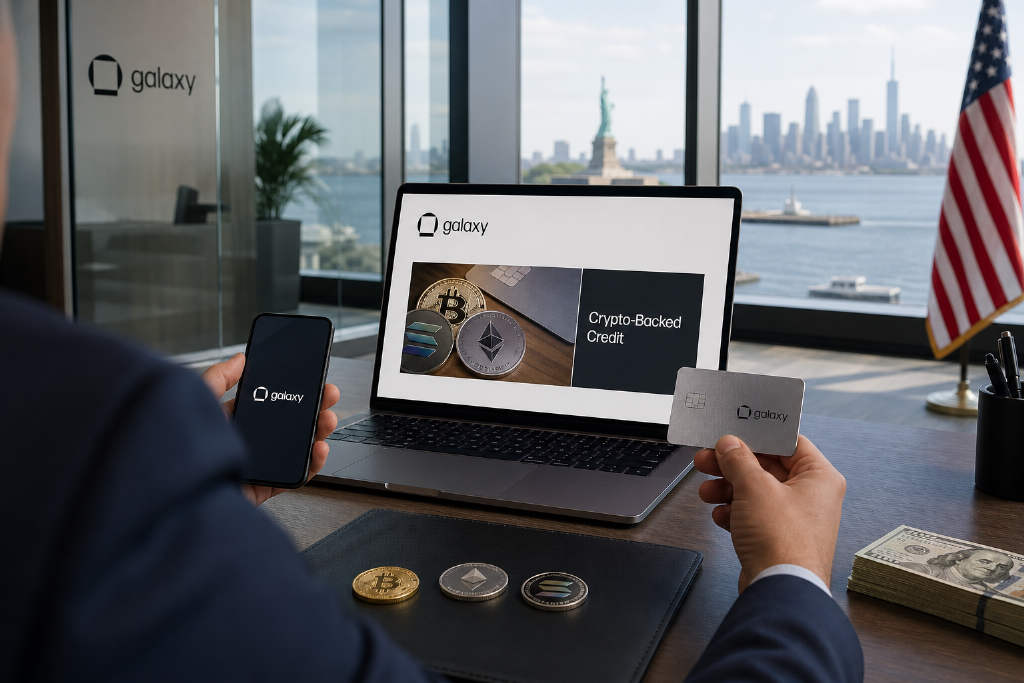
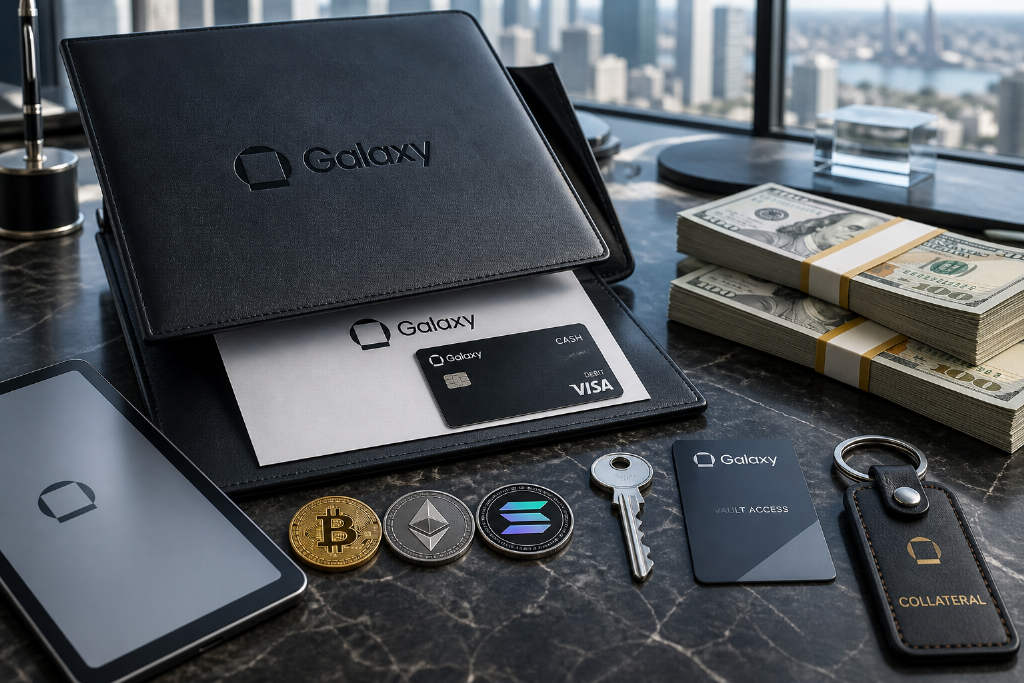
Galaxy2026-08-26 20:03:28Galaxy launches crypto-backed revolving credit line for eligible U.S. clientsGalaxy launched its GalaxyOne Crypto Portfolio Line of Credit, or PLOC, on Aug. 25 for eligible U.S. customers, offering a new retail crypto lending product built around pledged digital assets rather than forced sales. The facility lets borrowers post BTC, ETH and SOL — including staked SOL — under a single revolving credit line and draw cash without selling their holdings. Galaxy said the product carries no origination fee, uses a variable annual percentage rate of 8.99%, and starts at a 50% loan-to-value ratio, meaning $100,000 in pledged assets can support roughly $50,000 in borrowing. According to Galaxy, collateral values are monitored on an ongoing basis and customers receive advance warnings if asset prices decline. Draws are typically available instantly, with funds usable on platform or withdrawable as USD or the USDC stablecoin. The company also said pledged crypto is not rehypothecated or lent out, while staked SOL continues earning rewards during the collateral period. The product is offered by GalaxyOne Lending LLC in 40 states, excluding California, Delaware, Idaho, Indiana, Minnesota, Mississippi, Missouri, Nevada and South Dakota. ChainCatcher described the launch as an attempt to revive retail crypto lending on a regulated track after the 2022 collapses of Celsius, BlockFi and Voyager.880
Galaxy2026-08-26 19:56:03Galaxy Opens Retail Crypto-Backed Credit Lines for BTC, ETH and SOL on GalaxyOneGalaxy on Tuesday launched a retail crypto-backed credit product that lets eligible GalaxyOne clients borrow cash against Bitcoin, Ethereum and Solana without selling their holdings. The new Crypto Portfolio Line of Credit, or PLOC, combines BTC, ETH and SOL into a single revolving credit line rather than requiring a separate loan for each asset. Galaxy set the variable annual percentage rate at 8.99% and the origination loan-to-value ratio at 50%, meaning a $100,000 portfolio would support roughly $50,000 in borrowing. The company said collateral values are monitored continuously and that users are warned before any collateral action is taken if asset prices fall. Borrowed funds are usually available instantly and can be used on-platform or withdrawn in U.S. dollars or USDC. Galaxy also said pledged assets are not rehypothecated while backing the credit line, and staked SOL can continue earning rewards without being unstaked. The launch comes years after the 2022 failures of Celsius, BlockFi and Voyager, which froze customer funds and triggered liquidations during the market downturn. GalaxyOne Lending LLC currently offers the product in 40 U.S. states, excluding California, Delaware, Idaho, Indiana, Minnesota, Mississippi, Missouri, Nevada and South Dakota.1010
Galaxy2026-08-25 16:07:20Galaxy launches portfolio credit product backed by BTC, ETH and SOLAccording to The Block, Galaxy has launched a portfolio credit product backed by crypto assets. Eligible GalaxyOne customers can borrow cash without selling their holdings, using BTC, ETH and SOL as collateral. The revolving credit line is secured by a qualified asset portfolio and is designed to give customers liquidity while they continue to hold their crypto assets for everyday spending or investment needs.860
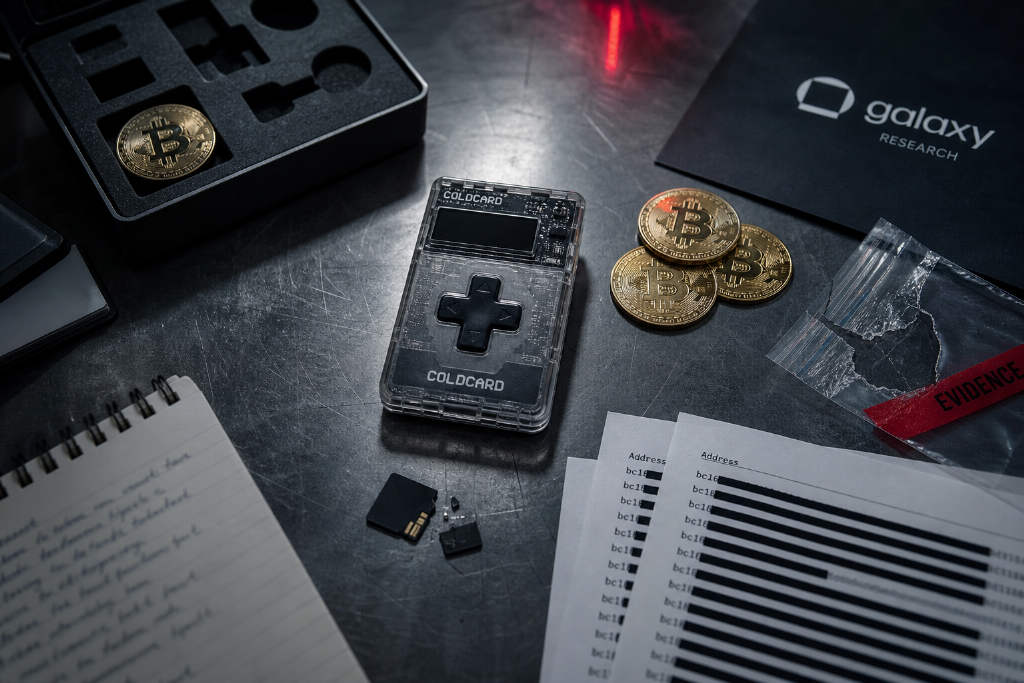
Coldcard2026-08-24 11:39:51Galaxy research head tracks 8,865 addresses hit in Coldcard exploit, with 1,789.28 BTC lostData tracked by Galaxy’s head of research shows the Coldcard exploit affected 8,865 addresses and resulted in losses of 1,789.28 BTC. At the time of the theft, the stolen bitcoin was worth $114.7 million, and its value now stands at $138.8 million. On an address basis, the median loss was 0.00152 BTC and the average loss was 0.20184 BTC, while the median dormancy period was 3.2 years and the average was 3.6 years. Across 221 victim reports, the median loss came to 1.04272 BTC and the average loss was 3.57792 BTC. Those reports accounted for 790.72 BTC, or 44.2% of the total losses. If medium-confidence losses are included, though those losses have not yet been confirmed, the total would rise to 1,824 BTC, worth $140 million at prices at the time the losses occurred.1100
Galaxy2026-08-24 01:30:47Galaxy research head says BIP-110 nodes peaked at only about 20% of networkGalaxy’s head of research said in a post on X that BIP-110 nodes reached a peak of only about 20% of the entire network, even under an assumption that there was a relatively high probability of Sybil nodes. The comment framed the node share as far too small to support the level of backing some observers appeared to imply. The executive also said it was "quite amusing" to see Mechanic and others act so shocked that BIP-110 did not pass. In the same post, he argued that even if that roughly 20% were fully counted, the associated hashpower share would still be nowhere near enough. He described the mining power behind it as very small, while reiterating that the node share itself was only about one-fifth of the network and still far from the stated goal.1240
Bitcoin2026-08-21 11:15:30Treasury bond buybacks spark Bitcoin rebound as debate over a market bottom intensifiesBitcoin surged 8.7% on Aug. 19, briefly trading near $69,700 for the first time since June, after the U.S. Treasury announced a larger long-dated bond buyback program. The move triggered a wider market reaction: long-end Treasury yields fell, the dollar weakened, gold rose, and roughly $1 billion in crypto shorts were liquidated, with some estimates putting the figure at $1.4 billion. The ChainCatcher article argues that the market read the Treasury’s decision as a loosening signal, even though officials are financing the purchases by issuing short-term debt rather than printing money. That distinction fueled three competing interpretations on Wall Street: a duration swap rather than quantitative easing, a functional "QE Lite," or simply a signaling exercise aimed at bond bears. The piece does not treat the rally as proof that Bitcoin has already bottomed. It says the jump was driven in part by a short squeeze and points instead to weak spot volume, described as the lowest since 2019, as the more important metric. It also lays out the split in current market thinking: some firms and analysts still expect another leg lower, while others see the Treasury move as the catalyst bulls had been waiting for. In the article’s framing, the real question is no longer whether one up day marks the bottom, but whether selling pressure has cleared, whether the catalyst is durable, and whether another major risk event still sits ahead.1300