BackKashkari

Kashkari

Federal Reser
2026-08-05 12:43:06

Kashkari Says Clear Communication of Fed's Policy Reaction Function Helps Markets

Federal Reserve official Kashkari said Wednesday that it is helpful for the Fed to clearly explain to the public and markets how it would adjust its policy reaction under different economic scenarios — a framework known as the "reaction function" — and that this practice should continue. Speaking on CNBC, Kashkari said explaining the central bank's policy reaction mechanism remains valuable. He repeated his call for the Fed to begin a series of modest interest-rate increases to bring down inflation, which currently exceeds the Fed's 2% target. "I think there is value in continuing the tradition of explaining our policy reaction function to the public, and then letting the public make their own judgments based on that information," Kashkari said. The remarks were reported by Jinshi.


920
Kashkari Says Clear Communication of Fed's Policy Reaction Function Helps Markets
Federal Reser
2026-08-05 12:50:18

Fed's Kashkari: Rate Hikes Should Be Gradual, Staying Open on Policy

Minneapolis Fed President Neel Kashkari said in a CNBC interview that he remains open-minded about future policy choices and does not favor aggressive rate hikes. He attributes most recent inflation to supply shocks, with some demand factors layered on top. Kashkari said it is time to begin gradually raising rates, but he does not support large increases. He also stressed the value of maintaining the tradition of explaining the Fed's policy reaction function to the public, and cautioned against assuming any particular number of meetings determines policy action.

880
Fed's Kashkari: Rate Hikes Should Be Gradual, Staying Open on Policy
Federal Reser
2026-08-05 01:53:46

Five Regional Fed Presidents Back Rate Hikes, Deepening Policy Split

Five of the Fed's 12 regional bank presidents have publicly voiced support for raising interest rates after the July policy meeting, signaling a growing hawkish tilt inside the central bank. Cleveland Fed President Beth Hammack said she favored a hike at the latest meeting, calling the current stance "not restrictive enough." Dallas Fed's Lorie Logan said core inflation remains near 2.5% even after stripping out recent shocks, backing tighter policy. Minneapolis Fed's Neel Kashkari argued for gradual tightening while more inflation and employment data arrives, saying "small, consecutive moves" are better than being forced into larger action later. Kansas City Fed's Jeff Schmid said strong demand and investment mean policy is not yet restrictive enough to hit the 2% target. St. Louis Fed's Alberto Musalem also backed a hike, warning that recent Treasury selloffs reflect doubts about Fed credibility and that persistent supply shocks are spreading price pressures. In contrast, seven Fed governors, New York Fed President John Williams and Philadelphia Fed President Patrick Harker have supported holding rates steady, underlining a clear split over the path ahead.

1620
Five Regional Fed Presidents Back Rate Hikes, Deepening Policy Split
Federal Reser
2026-08-03 02:00:36

September rate-hike bets jump as crypto and U.S. stocks face repricing pressure

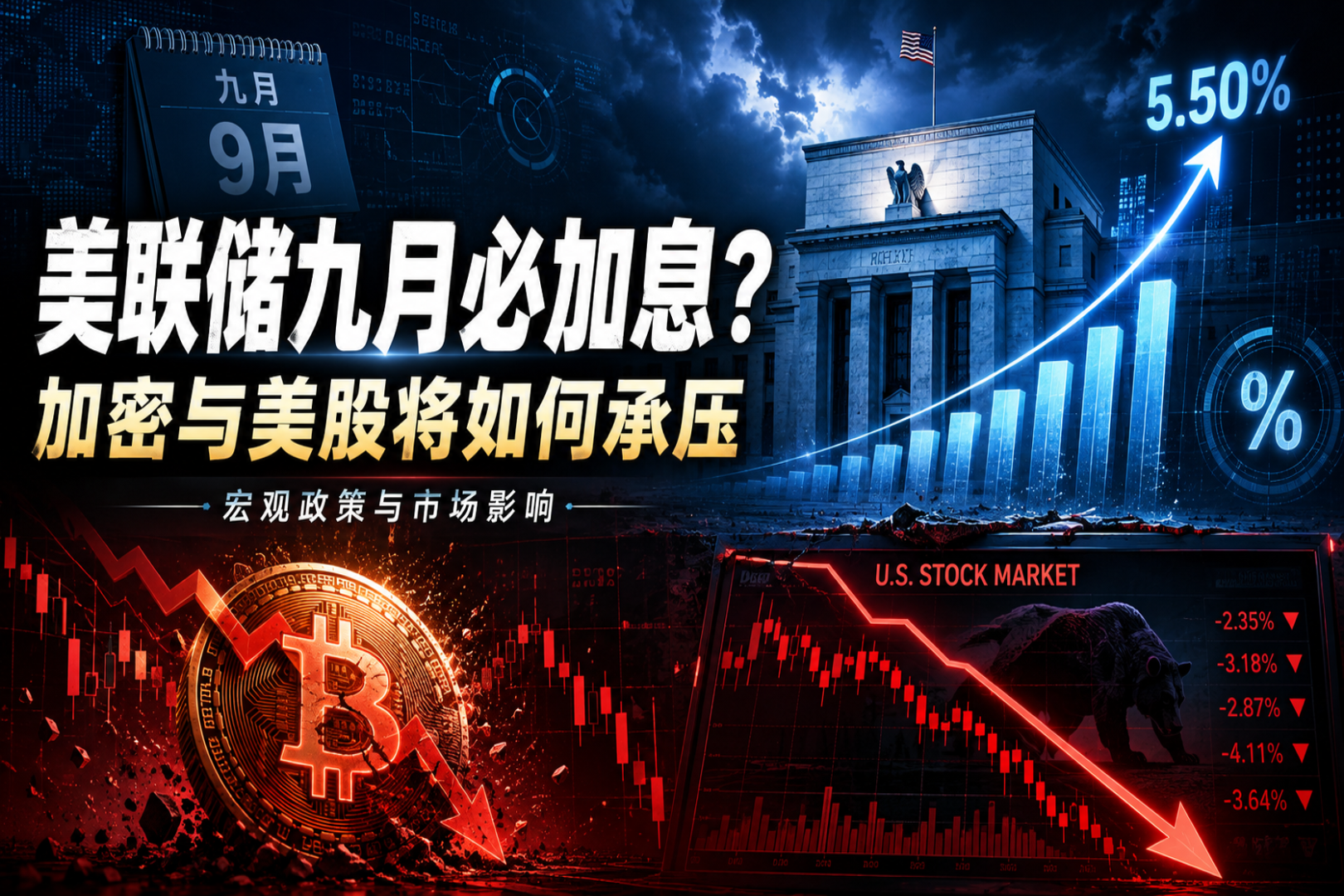
Markets have sharply raised the odds of a Federal Reserve rate hike in September after the central bank’s July 29 meeting exposed a wider internal split. The Fed held its target range for the federal funds rate at 3.50% to 3.75% in a 9-3 vote, marking a fifth straight pause, but three dissenting officials backed an immediate 25-basis-point increase. According to CME FedWatch, market-implied odds of a September hike climbed from below 53% a week before the meeting to as high as 82%, and were last at 73%. The report ties that repricing to rising oil prices and renewed inflation concerns linked to conflict near the Strait of Hormuz. WTI crude futures rose about 20% in July, while June CPI, released on July 14, showed a 3.5% annual increase after energy prices had fallen 5.7% during a ceasefire period. Attention is now turning to the July CPI report due Aug. 12, the August nonfarm payrolls report, and comments from Fed officials at Jackson Hole. For crypto markets, the article says higher rate expectations usually weigh on Bitcoin and other non-yielding assets by raising opportunity costs and pulling capital toward money market funds and short-dated bonds. Crypto-linked equities including Coinbase, Circle, and Strategy may see even larger moves because higher rates also pressure valuation multiples. The same backdrop could add strain to major U.S. tech stocks already under scrutiny over heavy capital spending.

1870
September rate-hike bets jump as crypto and U.S. stocks face repricing pressure
US Treasury y
2026-08-02 07:32:32

30-year Treasury yield tops 5.2% as Fed holds rates steady and Bitcoin slips below $80,000

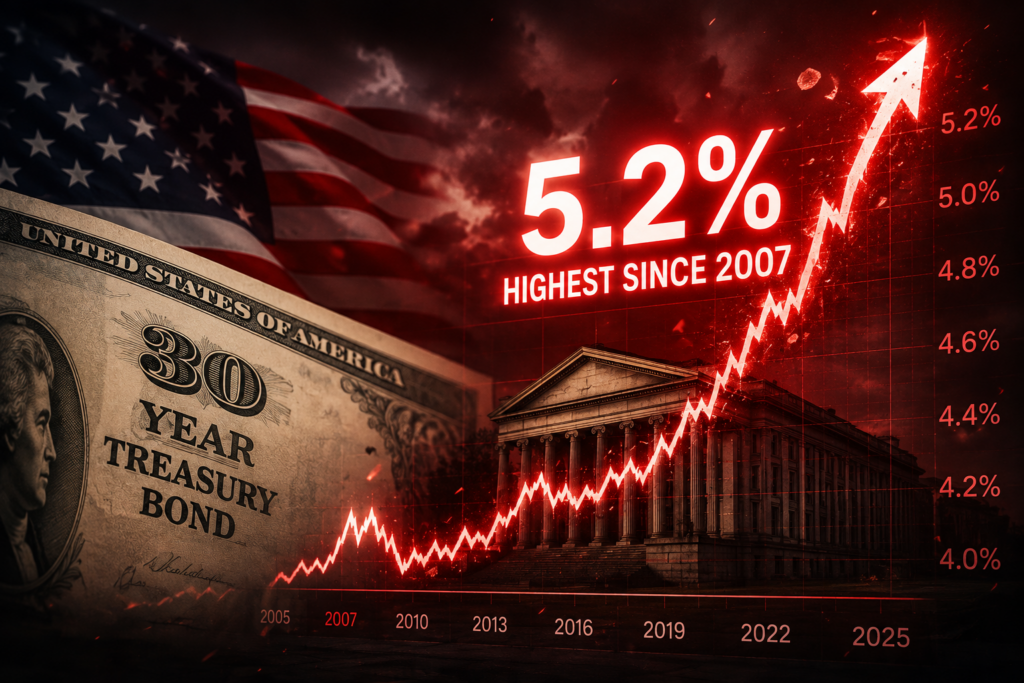
U.S. long-dated Treasury yields climbed sharply on July 29, with the 30-year yield moving above 5.2%, its highest level since July 2007, while the 10-year yield rose past 4.5%, the highest since June 2025. The move came on the same day the Federal Reserve left its policy rate unchanged at 3.5% to 3.75%, but the decision drew three dissenting votes in favor of a rate hike from Cleveland Fed President Beth Hammack, Minneapolis Fed President Neel Kashkari, and Dallas Fed President Lorie Logan. According to BlockTempo, the dissent reflected rising concern inside the Fed that inflation remains above target. The report said tariff policies under the Trump administration and higher oil prices tied to tensions involving Iran in the Middle East have kept inflation pressures elevated. In that context, rising long-term Treasury yields are being read as a sign that investors still want greater compensation to hold long-dated U.S. debt and remain concerned about inflation and fiscal deficits. The jump in yields also weighed on risk assets. Bitcoin fell below the $80,000 mark as selling pressure built. Still, not everyone reads the move as a straightforward signal of tighter policy ahead. Some traders cited in the report argued the rise in yields may reflect structural inflation and deficit concerns more than an imminent shift by the Fed toward renewed tightening.

1010
30-year Treasury yield tops 5.2% as Fed holds rates steady and Bitcoin slips below $80,000
Federal Reser
2026-07-31 14:32:44

Three Fed officials back rate hikes as internal pressure builds over inflation

Three Federal Reserve policymakers said on July 31 that their support for rate hikes reflected concern that inflation remains stubborn, adding to internal pressure on Chair Waller to act. In statements released Friday morning, Beth Hammack and Neel Kashkari said the latest bout of price increases may be tied to short-term factors such as President Donald Trump’s tariff policy and the war with Iran, but argued inflation has reached a point where policy action is warranted. Lorie Logan took a similar view, saying inflation is unlikely to fully return to the Fed’s 2% target without higher rates, even if price pressures ease somewhat. Kashkari said that if inflation stays sticky, he could support a series of rate increases rather than a single move. Hammack said price growth could keep accelerating if the Fed does not tighten policy. The report was cited by BlockBeats and attributed to Jin10.

940
Three Fed officials back rate hikes as internal pressure builds over inflation
Bitcoin
2026-07-31 15:26:42

Bitcoin Trails Stock Rally as Hawkish Fed Hold Pushes Rate-Cut Hopes Further Out

Crypto ended July on weaker footing even as U.S. stocks rallied, with Bitcoin sliding 3.5% over 24 hours to $62,464 and Ether losing 3.1% to $1,863, according to CoinGecko. The pullback came after the Federal Reserve held rates at 3.50%–3.75% for a fifth straight meeting and delivered a notably hawkish signal: the vote was 9-3, and all three dissenters — Beth Hammack, Neel Kashkari and Lorie Logan — favored a hike. Fed Chair Kevin Warsh said the committee would not soften its inflation stance, while fresh data showed June PCE inflation at 3.7% year over year and core PCE at 3.3%, both still well above the 2% target. With second-quarter GDP growth at 3.0% and new tariffs set to take effect Aug. 7, markets saw little in the data that would force a policy pivot. ETF flows improved, but not enough to change the broader tone: spot Bitcoin ETFs took in $233.1 million on Thursday after four days of outflows, while derivatives positioning, weak August seasonality, losses at Strategy, and a Coldcard wallet flaw that led to the theft of 594 BTC kept pressure on sentiment.

1110
Bitcoin Trails Stock Rally as Hawkish Fed Hold Pushes Rate-Cut Hopes Further Out