LPs

Metronome
2026-07-31 20:30:56

Metronome reports $15.7 million synth backing gap and points to oracle lag in swap module

MetronomeDAO said about 6,367 msETH and 4.57 million msUSD in circulation are not backed by collateral, leaving a gap worth roughly $15.7 million at current prices. In a July 30 post-mortem, the protocol said trading bots spent months exploiting delayed price updates in its swap module, buying whichever synth was mispriced by stale Chainlink ETH/USD data. The shortfall represents about 31% of all msETH and 16% of all msUSD outstanding, and Metronome said any realized losses would fall on liquidity providers in pools on venues such as Curve and Aerodrome. The team said the issue is limited to the swap module, while its Morpho lending markets, MetBasis product, and core minting system continue to operate normally. Metronome has raised synth swap fees to suppress volume, built treasury-backed defensive positions, and said a roughly 30% drop in msETH or msUSD would make those positions profitable enough to buy back and burn all unbacked tokens. If prices do not fall that far, the protocol said interest from more than $51 million in outstanding debt will be used for gradual buybacks until full backing is restored.


2190
Metronome reports $15.7 million synth backing gap and points to oracle lag in swap module
Uniswap
2026-07-31 12:50:30

Uniswap fee switch lifts protocol revenue, but September looms as the first real test for UNI

Uniswap’s newly activated fee switch has quickly changed the economics around the protocol. After the feature went live on Uniswap V4 on July 27, average daily protocol revenue climbed from $118,000 in early July to $318,000, a roughly 2.7x increase. Robinhood Chain alone contributed $168,000 a day on average, accounting for more than half of protocol-wide revenue and becoming the biggest driver behind the recent rise in UNI burns. The market reaction was immediate. UNI moved back above $4 on July 30, up more than 10% on the day and over 17% for the week, according to the source article. Yet the same report argues that the strength of this revenue surge may be less durable than it appears. Oak Research said more than 99% of Robinhood Chain’s trading volume since launch has been driven by meme tokens such as CASHCAT, while the chain’s current activity is also supported by a gas-fee subsidy scheduled to expire in late September. That has left Uniswap facing several overlapping questions at once: whether revenue can hold up after subsidies end, whether UNI’s valuation already prices in too much growth, and whether protocol-level fees will eventually hurt liquidity providers even if Uniswap says V4 fees are added on top rather than deducted from LP earnings.

1110
Uniswap fee switch lifts protocol revenue, but September looms as the first real test for UNI
UNI
2026-07-31 08:30:41

UNI Nearly Doubled in Two Months as Uniswap Buyback-and-Burn Starts Showing Up in Cash Flow

UNI has been one of the stronger large-cap crypto tokens through June and July, rising from around $2.3 in early June to nearly $4.6 by the end of July. According to Foresight News, the move was not simply a delayed reaction to Uniswap’s long-debated fee switch, but a repricing tied to visible protocol revenue and token burn data after the UNIfication proposal went live on Dec. 28, 2025. Under that framework, parts of trading fees from Ethereum mainnet v2 pools and some v3 pools, along with Unichain sequencer revenue after OP sharing and L1 data costs, are routed into TokenJar. The treasury contract can only send funds to Firepit, which buys UNI on the market and burns it permanently. Uniswap also burned 100 million UNI from its treasury, while Uniswap Labs cut front-end, wallet, and API fees to zero and received an annual 20 million UNI growth budget. The first months were quiet, with burn value too small to impress the market. That changed in July after Robinhood Chain launched and v4 fee activation expanded the mechanism. Foresight News argues that the market is no longer trading UNI as a pure governance token story, but increasingly as an asset tied to protocol cash flow.

430
UNI Nearly Doubled in Two Months as Uniswap Buyback-and-Burn Starts Showing Up in Cash Flow
Whale Movemen
2026-07-29 02:34:00

Crypto and AI Roundup on July 29: Regulation, listings, hacks and market stress

A broad set of crypto and AI developments landed over the past day, spanning regulation, market structure, fundraising, protocol upgrades and security incidents. Kenya cut the paid-in capital requirement for stablecoin issuers by 40% to about $2.32 million while keeping strict reserve and redemption rules in place. Russia’s central bank published its first draft framework for organized trading in digital assets, and Myanmar passed a cybercrime law that allows life sentences for crypto-related fraud. In the U.S., Senate Republicans are still trying to move the Clarity Act before the August recess, though ethics provisions and bank lobbying remain major obstacles. On the corporate side, PayPal posted better-than-expected second-quarter results and did not address a previously reported buyout approach. Luno and Visa both outlined layoffs tied to restructuring and capital allocation, while Morgan Stanley Investment Management rolled out exchange-traded products tied to Ethereum and Solana. Zcash activated its Ironwood NU6.3 upgrade, Layer 2 TVL on Ethereum fell to its lowest level since 2023, and Bitcoin briefly dropped below $63,000 as AI and semiconductor weakness spilled into crypto. Security reports also stayed in focus, with Blockaid saying crypto losses from hacks topped $1 billion in the first half of 2026 and several fresh token incidents reported across the market.

1430
Crypto and AI Roundup on July 29: Regulation, listings, hacks and market stress
Uniswap
2026-07-29 00:54:00

Uniswap founder says v4 protocol fee is additive, not taken from LP earnings

Uniswap founder Hayden Adams responded on X to criticism around the v4 fee switch, arguing that claims about reduced LP income are based on a misunderstanding of how the protocol fee works. He said the protocol fee is added on top of the trading fee rather than deducted from what liquidity providers already earn. In his example, LPs in a 30 basis point pool still receive 30 basis points per trade. Adams also pushed back on the claim that the protocol is taking 25% of LP profits. He said that in a 30 basis point pool, the protocol fee is 5 basis points, or about 14% of the total trading fee, while LP earnings remain unchanged. He compared that charge with centralized exchanges that he said collect 100 to 200 basis points per trade, arguing Uniswap’s 5 basis point fee at the 30 basis point tier is 20 to 40 times cheaper. Adams also criticized some forked projects for charging 100% of trading fees while using uneven token inflation set by governance votes to “compensate” LPs.

1010
Uniswap founder says v4 protocol fee is additive, not taken from LP earnings
Policy and Re
2026-07-28 10:46:08

Crypto’s utopian phase is over, and the industry is being forced into a more practical era

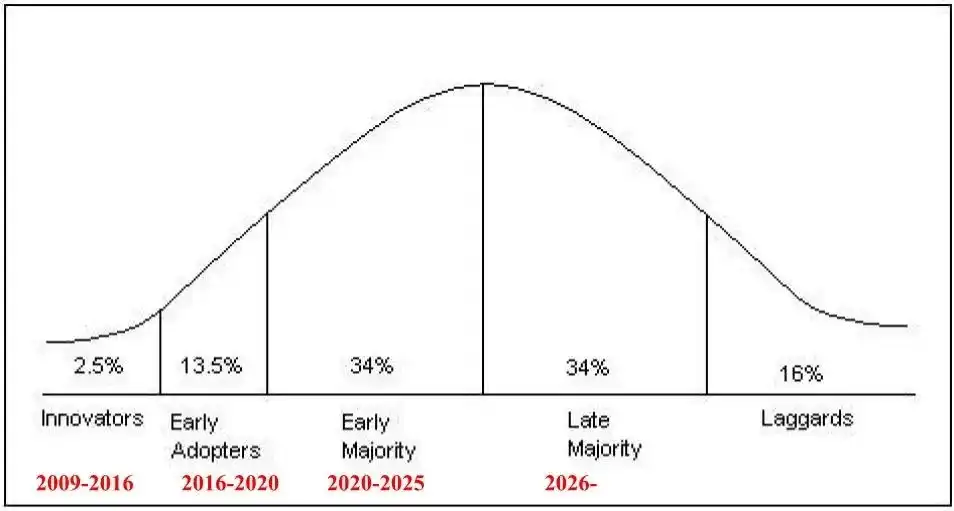
A commentary by Matti, translated by Chopper for Foresight News and published by MarsBit, argues that crypto has reached a turning point after the speculative excesses that peaked in 2021. The piece says many market participants are leaving because the financial returns delivered by the sector have fallen far short of the expectations built over the past decade, and that the latest bear market marks the end of an era rather than just another downturn. The article frames 2021 as the peak of inflated expectations in a Gartner Hype Cycle sense, with the current period serving as a reset. In that reset, the industry is being pushed back to first principles: reassessing token value, improving DeFi protocol security, and searching for applications that produce real utility. Matti also argues that crypto’s early token liquidity helped create a reflexive boom that later collapsed, and says the industry had already chosen monetization over exploration by 2024. The piece rejects the claim that crypto venture capital is dead, instead describing a broader venture slowdown and a return from exceptional 2016-2021 gains to a more normal environment. It also says crypto is no longer a frontier movement in the old sense, but is becoming a regulated business domain centered on areas such as stablecoins, prediction markets, tokenized assets, perpetuals, and AI agents.

1030
Crypto’s utopian phase is over, and the industry is being forced into a more practical era
Odin
2026-07-27 09:58:42

Odin survey says micro-fund plus SPV model may outperform a single large VC fund

A new survey from Odin argues that the classic 10-year blind-pool venture fund is under structural pressure, especially for smaller managers. Based on responses from 56 general partners, the report says 84% have already used special purpose vehicles, or SPVs, or plan to do so. Follow-on capital is the dominant use case, with 39 of the 47 respondents who use or expect to use SPVs citing that purpose. The report lays out a case for a hybrid approach: a small fund for early, high-uncertainty bets, paired with deal-by-deal SPVs for selective follow-on rounds. Odin says this setup can lower blended fee drag for limited partners and create tighter alignment between GPs and investment outcomes. In a hypothetical comparison, a $10 million micro-fund backed by SPVs is presented as superior on DPI to a $38.3 million fund making the same investments internally, assuming both portfolios return 4x. Survey data also points to emerging market norms around SPV economics. Management fees of 0%-0.5% were the most common, carry of 16%-20% was the most frequently cited range, and two-thirds of managers said setup and administration costs are passed through to LPs at cost. Odin also proposes a template for aligned SPV terms, including GP commitment of at least 2%, zero management fee, and 10%-20% carry.

370
Odin survey says micro-fund plus SPV model may outperform a single large VC fund
Venture Capit
2026-07-27 07:03:55

Microfunds and SPVs Gain Ground as Traditional Blind-Pool VC Funds Face Pressure

A new research note from Shoal Research and Odin argues that the traditional 10-year blind-pool venture fund is losing its grip as smaller managers increasingly combine microfunds with deal-by-deal special purpose vehicles, or SPVs. The premise is straightforward: use a small fund to capture the hardest early-stage bets, then bring in co-invest capital later when a company has clearer traction, stronger metrics, or a more established market position. The article says this hybrid structure can lower blended fee loads for limited partners while keeping general partners focused on the earliest part of the market. It also claims the model aligns incentives better than a single larger fund. In one example, the authors compare a $10 million microfund backed by SPVs with a $38.3 million fund that executes the same strategy internally, and conclude the smaller fund structure can produce better DPI if portfolio outcomes are identical. Odin also surveyed 56 GPs earlier this year. Of those, 39 already use SPVs and another 8 plan to do so, bringing current and prospective adoption to 84%. Follow-on financing was the dominant use case. The piece argues that co-investment is moving toward a standard feature of venture capital, but says both GPs and LPs still need clearer norms on fees, GP commitments, transparency, and allocation priorities.

300
Microfunds and SPVs Gain Ground as Traditional Blind-Pool VC Funds Face Pressure