altcoin marke2026-07-29 03:03:23How altcoin market-making can create hidden sell pressure through token loans and call optionsA TechFlowPost feature, translated from a WuBlockchain article, argues that one of the least visible forces in the altcoin market is the standard agreement many projects sign with market makers before token generation events. The structure described in the piece is simple on paper: projects lend tokens to a market maker and attach a call option, often with a strike set 25% to 100% above the TGE price and a term of 12 to 24 months. In practice, the article says, that setup can create persistent sell pressure outside official unlock schedules, because market makers may rationally sell borrowed inventory and buy it back lower if spot stays well below the strike, or hedge near the strike by selling into rallies. The article uses Movement Labs’ MOVE token as a case study because details of its market-making arrangement reportedly surfaced through social media, investigation threads and community discussion, including holdings, strike prices and borrowed token amounts. It frames that episode not as an exception but as a rare window into a broader market structure. The piece also links this issue to three long-running asymmetries in crypto: access to leverage, access to shorting and access to information. It says perpetual futures helped democratize leverage, on-chain shorting protocols such as Shortit are trying to broaden directional access for long-tail tokens, and on-chain disclosure of market-maker loan terms could tackle the last gap by exposing the incentive parameters that shape supply in the secondary market.2020
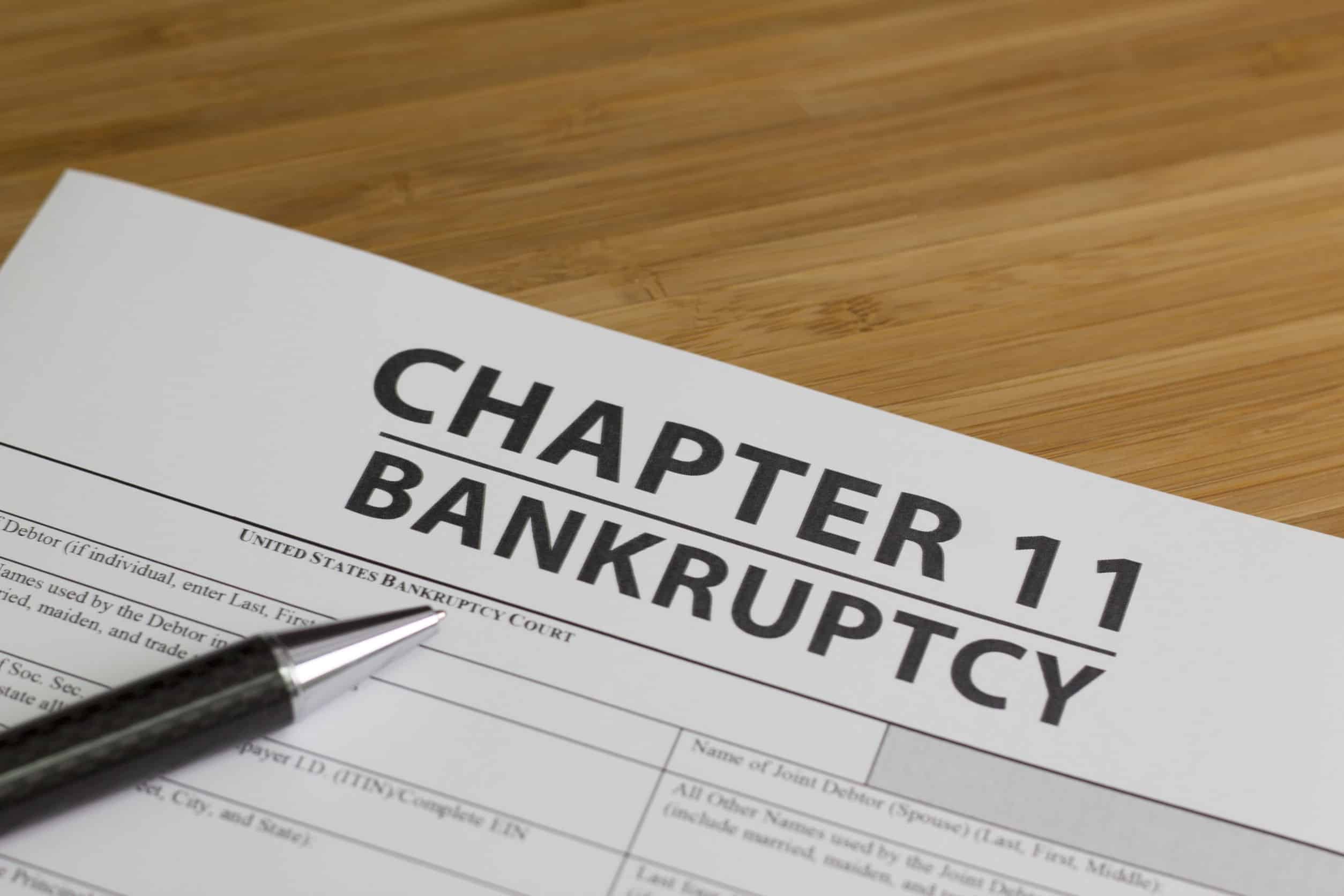
Storj2026-07-27 10:41:03Storj files for Chapter 11 as four crypto firms exit or falter within a weekStorj Labs, the company behind the decentralized cloud storage platform Storj, has filed for Chapter 11 bankruptcy protection in the United States, saying the move is aimed at resolving legacy debt rather than addressing a breakdown in its current business. The company said the platform will continue operating without service disruption during the restructuring process, and added that Inveniam, which acquired Storj last year, supports the plan and will continue assisting the company. Storj also plans to sell some previously acquired business lines and non-core assets to simplify its operating structure. The filing came as STORJ, the project’s native token, fell about 16% to roughly $0.06. Reported daily trading volume was close to $20 million, against a market capitalization of about $27 million. The article also said STORJ is down 79% over the past year and about 98% from its March 2021 peak of $3.81. Storj’s restructuring proposal includes an unusual provision: equity in the reorganized company would be distributed to management, token holders, and investors. Over the past seven days, BitMEX, BitMart, and Ethereum Layer2 project Movement Labs have also announced shutdowns, wind-downs, or Chapter 11 proceedings, as capital is increasingly redirected toward AI.2100
ChainFeeds2026-07-23 04:08:36ChainFeeds research roundup: Movement Labs collapse, shifting public-chain models, and Japan’s tightening crypto rulebookChainFeeds’ July 23 research briefing pulled together five major crypto themes shaping the market in 2026. The package ranged from the collapse of Movement Labs after a disputed market-making agreement, to a broader debate over whether blockchains can keep relying on block-space sales as their core business model. It also highlighted a structural turn in market demand, with stablecoins and prediction markets standing out as sectors tied to real usage rather than pure narrative cycles. One report revisited the MOVE token launch and the agreement that handed control of roughly 66 million MOVE tokens to market maker Rentech, a setup later tied to a selloff, exchange trading suspensions, and the bankruptcy of MVMT Labs. Another looked at Japan’s long regulatory buildout, tracing the path from Mt. Gox and Coincheck to the 2026 expansion of Financial Instruments and Exchange Act oversight over 105 approved spot crypto assets. The briefing also examined how crypto-native assets are feeding the AI buildout. Power access, data-center infrastructure, experienced founders, and bull-market capital from the previous cycle are being redirected into AI facilities and compute businesses, with examples including Crusoe, CoreWeave, Voltage Park, Anthropic, and Cursor.1960
Polymarket2026-07-23 01:03:25Polymarket to challenge French block as U.S. CLARITY bill enters final pushPolymarket said it will challenge France’s decision to block access to its prediction market platform, according to Reuters, setting up a legal fight with the country’s gambling regulator. The French National Gambling Authority, or ANJ, blocked the site last week, arguing that the platform could expose users to significant gambling losses and that its markets were vulnerable to manipulation. Polymarket said it was disappointed and would seek relief through French legal channels. The development came alongside a broader set of crypto and tech updates. U.S. Treasury Secretary Scott Bessent said lawmakers are in the “final sprint” on the CLARITY bill and urged Congress to pass it before recess, according to Cointelegraph. Separately, The Block reported that Movement Labs, the former core developer behind the Movement blockchain, filed for Chapter 11 bankruptcy protection in Delaware on July 15, listing liabilities of as much as $10 million and naming co-founder Rushikesh “Rushi” Manche as its largest unsecured creditor with claims exceeding $1.6 million. Other developments included Google’s release of new Gemini Flash models, a response from Xiaohongshu denying IPO rumors, layoffs in Amazon’s AGI unit, fresh on-chain tracking of funds stolen from Summer Fi, an OpenAI security incident disclosed during internal model testing, and Kraken parent Payward’s plan to expand xStocks into additional overseas equity markets.1960
Movement Labs2026-07-22 10:34:39Movement Labs files for Chapter 11 after MOVE token controversyMovement Labs, the original developer of the Movement blockchain, filed for Chapter 11 bankruptcy protection earlier this week, according to a report from Unchained. Court filings show the company listed assets of between $100,001 and $500,000, while liabilities could reach as much as $10 million. Among the largest creditors named were co-founder Rushikesh “Rushi” Manche, the Delaware Division of Revenue, and Anchorage Digital. The filing comes after months of fallout tied to the December 2024 launch of the MOVE token. A market-making agreement had handed little-known firm Rentech control over 66 million MOVE tokens that could be sold into the market one day after launch, a setup that contributed to a sharp decline in price. The episode led to internal investigations, a break with Manche in May 2025, and a restructuring that moved development of the Movement blockchain to a separate company, Move Industries. Last month, Move Industries said it was shifting away from competing with other Ethereum scaling networks and would focus instead on cross-border payments, remittances, and stablecoin settlement.1840
Movement Labs2026-07-22 03:25:16Movement Labs files for Chapter 11 after contract scandal, token sell-off, and internal falloutMovement Labs, once promoted as a rising Ethereum Layer 2 project built around the Move programming language, has filed for Chapter 11 bankruptcy protection in Delaware. Court filings show MVMT Labs listed assets of just $100,000 to $500,000 against liabilities of up to $10 million, with no more than 299 creditors. Its largest listed creditor is former co-founder Rushi Manche, who holds more than $1.6 million in unsecured claims and still owns 34.25% of the company. The filing caps a collapse that began almost immediately after MOVE debuted on Binance on Dec. 9, 2024. The next day, wallets tied to market maker Web3Port sold 66 million MOVE tokens, roughly 5% of total supply, for about $38 million. A later CoinDesk investigation described a contract involving intermediary Rentech, which appeared on both sides of the same deal. The Movement Foundation’s legal counsel reportedly called it “possibly the worst agreement” they had seen, but it was signed anyway. Binance later banned the market maker account involved, Coinbase suspended MOVE trading on May 15, 2025, and the foundation launched a $38 million USDT buyback. Meanwhile, engineering work shifted to a separate entity, Move Industries, which says it remains legally independent from MVMT Labs.1960
Kalshi2026-07-22 02:43:17Crypto market roundup for July 22: Kalshi seeks gold perpetuals, Movement Labs files Chapter 11Crypto markets on July 22 were shaped by a mix of price action, regulatory developments, project updates, and financing news. Among the most-traded assets on centralized exchanges, BTC rose 1.77%, ETH gained 1.27%, XRP added 2.68%, and ADA climbed 2.47%, while DEXE fell 83.73%. OKX data showed NIGHT leading the 24-hour gainers at 27.05%, and msx.com’s crypto-equity board was led by GREE.M at 42.25%. The day’s headline items centered on Kalshi and Movement Labs. Kalshi has reportedly filed with the U.S. Commodity Futures Trading Commission to launch gold-linked perpetual futures. Movement Labs, the developer behind the Movement blockchain, filed for Chapter 11 bankruptcy protection after earlier scrutiny over a market-making agreement that allowed the rapid sale of 66 million MOVE tokens, followed by a sharp price drop, an investigation, and a token buyback. Other developments included SpaceX setting Aug. 4 for its 2026 second-quarter earnings release, with insider share unlocks due to begin two days later; the U.S. Department of Justice seizing more than $25 million in crypto tied to alleged cross-border investment fraud; Polymarket registering a standalone X account for Polymarket Perps; Robinhood opening trading accounts to AI agents; and Telegram founder Pavel Durov saying Telegram plans to roll out a native self-custodial Gram wallet across all apps this summer.1520
Movement Labs2026-07-22 01:38:18Movement Labs files for Chapter 11, with fired co-founder listed as top creditorMovement Labs, once one of crypto’s more closely watched Ethereum Layer 2 projects, has filed for Chapter 11 bankruptcy protection in Delaware. Court documents dated July 15, 2026 show MVMT Labs, the legal entity behind the project, holding between $100,000 and $500,000 in assets against liabilities of as much as $10 million, with no more than 299 creditors. The largest creditor is Rushi Manche, a co-founder the company had already removed. He is listed with more than $1.6 million in unsecured claims and still holds a 34.25% equity stake. The filing caps a steep collapse for a startup that had raised about $41.4 million, was backed by Polychain Capital, received public support from World Liberty Financial, and was reportedly preparing a $100 million Series B at a $3 billion valuation. Its decline accelerated after MOVE listed on Binance in December 2024. Wallets tied to market maker Web3Port sold 66 million MOVE, roughly 5% of total supply, for about $38 million one day after listing. Later reporting by CoinDesk and others drew scrutiny to agreements involving Rentech, a middle entity tied to the token flow. Binance, Coinbase, the Movement Foundation, and company leadership all took actions in the aftermath, but the project ultimately still ended up in bankruptcy court.500