Near

Bitcoin
2026-09-09 10:38:29

Bitcoin Faces Heavy Selling Near $82,000, but Short Volatility Positions Could Turn Into Buyers

Bitcoin has been trading around the $78,000 to $80,000 range, with the $82,000 to $83,000 area standing out as a key resistance zone. Yet the more important force may sit outside spot market flows. According to Two Prime founder and CEO Alexander Blume, institutional investors had previously sold BTC call options aggressively, pushing implied volatility down to unusually low levels. If Bitcoin rallies quickly again, those same traders may need to buy back options or add hedges, creating fresh demand instead of supply. Blume said BTC implied volatility had fallen to roughly 23% to 24% in August before rebounding to around 40% during the recent recovery. Deribit data showed at-the-money implied volatility at about 34.9% for Sept. 10 expiry, 36.2% for Sept. 11, 39.4% for Sept. 18, and around 40% by late December. CryptoGamma also estimated on Sept. 8 that implied volatility was 39.6% versus realized volatility of 34.2%, a gap of about 5.4 percentage points. The report also highlighted a separate market shift among miners. MARA disclosed in an SEC filing that on Aug. 4 it entered Bitcoin-backed loan arrangements with Coinbase and Two Prime, raising a combined $600 million against 18,750 BTC initially valued at about $1.2 billion. The structure may reduce immediate spot selling, though it also introduces margin call and liquidation risk if BTC collateral falls below required thresholds.

110
Bitcoin Faces Heavy Selling Near $82,000, but Short Volatility Positions Could Turn Into Buyers
BlockBeats
2026-09-09 10:55:43

Dormant Address Returns After Nearly a Year and Builds a Large VVV Long Before the Rally

A wallet tracked by TradingBeats, identified as 0xc1e7, returned to crypto derivatives trading after an 11-month gap and built a large VVV long position shortly before the token moved sharply higher. According to BlockBeats, the address had stopped trading XPL and HYPE contracts on Oct. 13 following last year’s “1011 crash” event and had not traded crypto perpetuals again until the night of Sept. 8. At 21:38 on Sept. 8, the address deposited about 678,500 USDC. Just 2 minutes and 14 seconds later, it started going long VVV, with the first fill at $18.86. By 21:59, the wallet had accumulated roughly 78,700 VVV, equal to 86.52% of its final position. TradingBeats data cited by BlockBeats shows the address completed its build at 22:33, ending with 90,940 VVV at an average entry of $19.39 using 3x leverage. VVV then accelerated higher. Between 22:00 and 23:00, the price rose from about $19.53 to a high of $24.56, a maximum hourly gain of about 25.7%. VVV later reached as high as $29.45 on Hyperliquid, up about 56.13% from the wallet’s first entry price. At one point, the unrealized profit reached about $914,000, with a return of 155.4%. As of publication, the address had not reduced its VVV holdings, with the open position valued at about $2.3634 million and unrealized profit at about $599,200.

210
Dormant Address Returns After Nearly a Year and Builds a Large VVV Long Before the Rally
Policy and Re
2026-09-09 09:27:16

Viral X post says GPT-6 Astra can build a personal hedge fund, but paper citations and cost claims face scrutiny

A viral post on X claimed users could recreate an institutional-grade quantitative strategy factory with GPT-6 Astra for as little as $300 a month. The post, published by Roan on Sept. 8, drew 211,600 views, 846 likes and 2,100 bookmarks, framing the setup as a low-cost path to a "personal hedge fund." BlockTempo reviewed the academic references and pricing figures cited in the thread and found several mismatches. Roan divided tradable "mispricings" into four categories, including statistical arbitrage, volatility surface dislocations, factor residual returns and insider-trading signals. According to BlockTempo, the first three references broadly matched the cited papers, but the insider-trading example did not. The post attributed a 5.3% annualized alpha to a 2012 Journal of Finance paper by Lauren Cohen, Christopher Malloy and Lukasz Pomorski. BlockTempo said that figure does not appear in the paper, which instead reported 82 basis points per month, or 9.8% annualized, for a value-weighted long-short portfolio, and 180 basis points per month, or 21.6% annualized, for an equal-weighted version. The report also questioned the economics behind the thread. While the post said institutional quant infrastructure once cost $2 million to $50 million a year and can now be replicated for $300 to $500 a month, BlockTempo said those figures imply a cost reduction of about 417x to 2,083x, not the claimed 10,000x. It also flagged the thread’s statistical thresholds, especially a t-stat above 2.0 without any adjustment for multiple testing, as a central weakness in a system designed to generate and backtest many strategies continuously.

600
Viral X post says GPT-6 Astra can build a personal hedge fund, but paper citations and cost claims face scrutiny
whale
2026-09-09 09:07:20

Four wallets tied to one entity wake after six months, loading up on ETH and ZEC

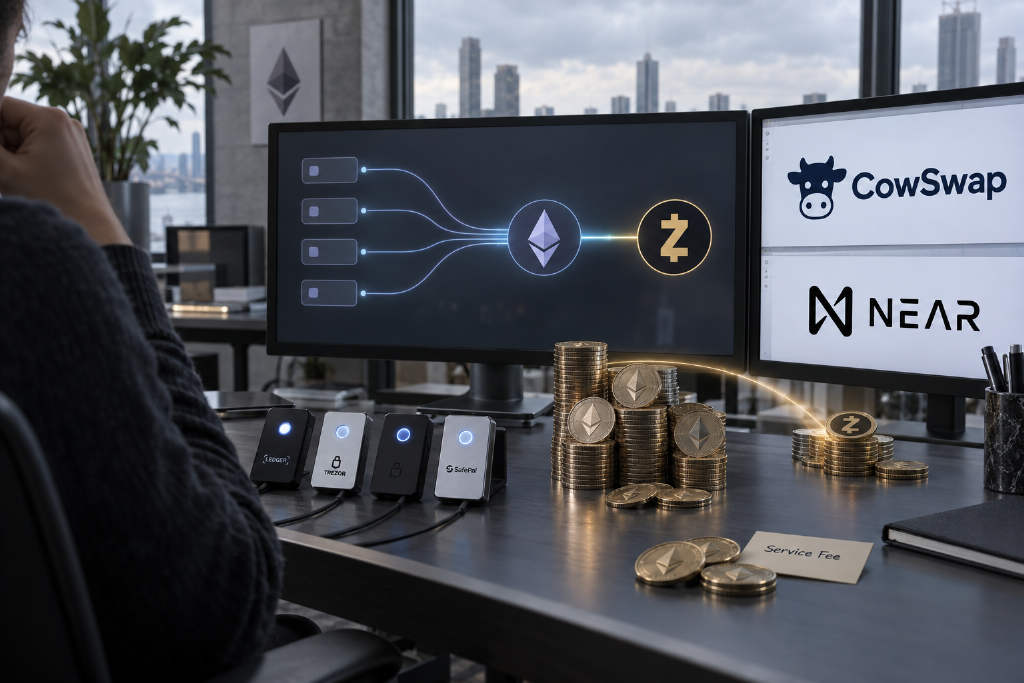
Four wallets linked to the same entity or whale became active at the same time after six months of dormancy, according to on-chain analyst Ai Yi (@ai_9684xtpa), cited by BlockBeats on Sept. 9. The wallets have been accumulating both Ether and Zcash. The entity bought 13,290.6 ETH through Cowswap at an average price of $2,511, the monitoring data showed. It also used Near Intents, a cross-chain intent protocol, to spend 2,500 ETH on 6,601.37 ZEC. Ai Yi said the buyer had already paid 16.75 ETH in service fees for the ZEC purchase, equal to about $42,000. The buying has not stopped yet, based on the analyst’s update. The activity centers on four addresses that were previously inactive for half a year before moving at the same time.

140
Four wallets tied to one entity wake after six months, loading up on ETH and ZEC
ChainCatcher
2026-09-09 09:06:49

Four wallets dormant for six months reactivate and keep buying ETH and ZEC

ChainCatcher reported, citing on-chain analyst monitoring, that four wallets tied to the same entity became active at the same time after six months of dormancy. The addresses bought 13,290.6 ETH through Cowswap at an average price of $2,511. They also used Near Intents for a cross-chain purchase, spending 2,500 ETH to acquire 6,601.37 ZEC. In the process, they paid 16.75 ETH in service fees, worth about $42,000. According to the report, the buying has not stopped and remains ongoing. The activity involves two separate legs: a direct ETH purchase through Cowswap and a cross-chain ZEC purchase via Near Intents. No further identity details about the entity were disclosed in the source.

50
Four wallets dormant for six months reactivate and keep buying ETH and ZEC
whale wallet
2026-09-09 09:05:49

Dormant whale-linked addresses reawaken, buy $33.37 million in ETH and $8.21 million in ZEC

Four addresses tied to the same entity became active again after six months of dormancy, according to monitoring by Ai Yi. The wallets bought 13,290.6 ETH through CowSwap at an average price of $2,511, with the purchase valued at about $33.37 million. The same entity also used Near Intents to spend 2,500 ETH on a cross-chain purchase of 6,601.37 ZEC worth roughly $8.21 million. For that transaction, it paid about 16.75 ETH in service fees, or around $42,000. Ai Yi said the buying activity appears to still be ongoing. The transactions point to a coordinated move by a single holder returning to the market after a six-month pause.

110
Dormant whale-linked addresses reawaken, buy $33.37 million in ETH and $8.21 million in ZEC
ZEC
2026-09-09 08:51:10

ZEC Enters the Top 10 as Grayscale’s Long Game Meets Pushback From Chinese Crypto Veterans

Zcash’s native token, ZEC, has become one of the strongest performers in crypto, rising 130.9% over the past 30 days and 2252.0% over the past year, according to CoinGecko data cited in the source article. Its market capitalization has climbed to nearly $20 billion, overtaking DOGE and pushing ZEC into the global top 10 by market value. As of Sept. 9, ZEC accounted for more than 66.7% of the privacy-coin sector’s total market capitalization, while Glassnode said privacy is the only major crypto sector still above its October 2025 peak, up 213% from that level. The rally has also spilled into related assets such as ZCAT, and liquidations in ZEC markets have been led by short positions, including a large short on Hyperliquid linked to Garrett Jin. The move has split opinion. Overseas bulls including Balaji, Bitwise CIO Matt Hougan, Multicoin partner Tushar Jain, and crypto commentator Ansem have publicly backed ZEC, with Balaji calling for a $100,000 target. In contrast, Chinese-speaking market veterans and KOLs such as Wang Chun, Cobo CEO Shenyu, Jademont Zheng, Lanhu, and 0xTodd have questioned whether the rally reflects strong fundamentals. Their critiques cover Zcash’s founder rewards, governance disputes, the optional nature of privacy addresses, historical security concerns, and market structure. The article also traces Digital Currency Group and Grayscale’s involvement in Zcash from 2016 through mining, trust products, and the recent conversion of ZCSH into what the source describes as the first U.S. ETF directly tracking a privacy coin.

220
ZEC Enters the Top 10 as Grayscale’s Long Game Meets Pushback From Chinese Crypto Veterans
Policy Regula
2026-09-09 05:38:04

Oil Nears $100 Again as Strategist Warns Fed Could Repeat a 2008-Style Policy Mistake

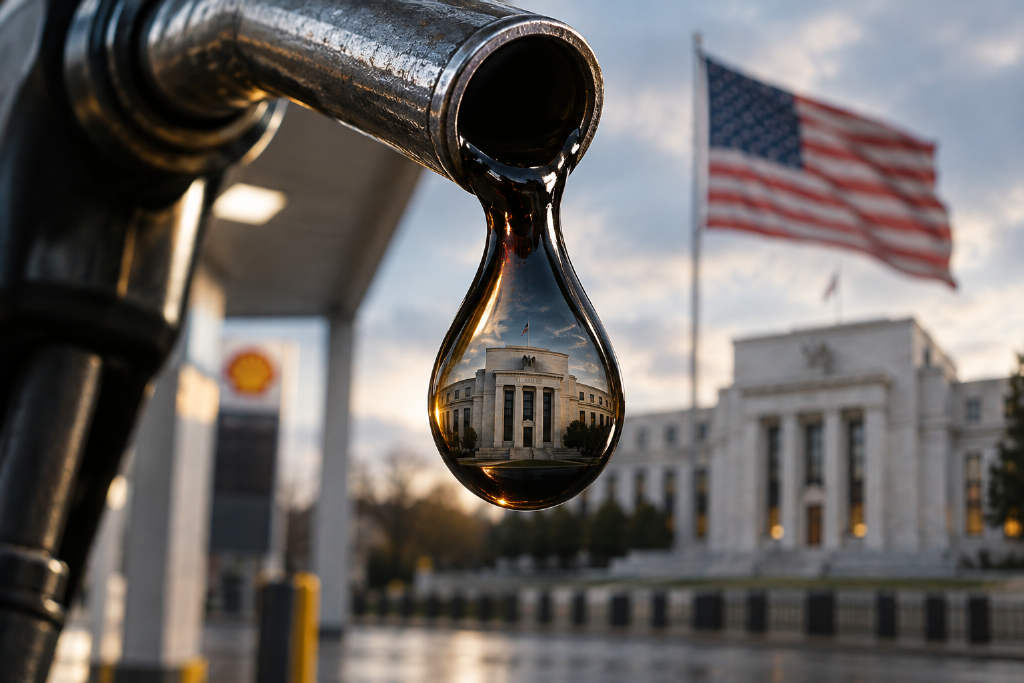
Oil prices moving back toward $100 a barrel are reviving concerns about how the Federal Reserve may read inflation pressure tied to energy. On Sept. 9, BlockBeats reported that Wellington Altus chief market strategist James Thorne warned the Fed could repeat a policy error seen before the 2008 financial crisis if it chooses to raise rates during an energy supply shock. His point was that higher energy costs do lift inflation, but they also erode household purchasing power and weigh on growth, making the policy trade-off harder than a simple demand-overheating story. Thorne said tighter financial conditions, if imposed to demonstrate the Fed’s resolve on inflation, could deepen downside risks for the economy instead of containing them cleanly. He drew a parallel with the period before the 2008 crisis, when the Fed paid too much attention to inflation risk from energy prices and underestimated the broader drag from high energy costs. Recent market moves add context. WTI crude has risen more than 20% over the past month, while Brent crude is up more than 18%. At the same time, a New York Fed survey showed a further deterioration in how U.S. consumers view their household finances, with the perceived probability of unemployment rising over the next year climbing to 44.4%, the highest level since April 2020. Investors are now watching U.S. August PPI and CPI data due this week, ahead of the Fed’s Sept. 15-16 policy meeting, after five straight decisions to leave rates unchanged.

240
Oil Nears $100 Again as Strategist Warns Fed Could Repeat a 2008-Style Policy Mistake