POL

SoSoValue
2026-08-26 02:31:18

SoSoValue data shows broad crypto pullback, with Layer2 up 1.13%

Data from SoSoValue showed a broad pullback across the crypto market after a sharp rebound, with Layer2 standing out as the only relatively resilient sector over the past 24 hours. The segment rose 1.13%, led by Stacks (STX), which gained 16.73%, and Polygon (POL), up 6.29%. Among major cryptocurrencies, Bitcoin (BTC) fell 1.10% and slipped below $79,000, while Ethereum (ETH) dropped 1.61% and moved below $2,500. Other sectors were mostly in the red. DeFi declined 0.38%, with Ethena (ENA) down 7.78%, though Hyperliquid (HYPE) posted a 1.89% gain. CeFi fell 1.65%, with OKB down 3.12%. Layer1 lost 2.39%, as Zcash (ZEC) dropped 6.44%. Meme tokens fell 3.42%, although SPX6900 (SPX) rose 13.33% against the trend. PayFi recorded the steepest sector decline in the report, down 3.99%, while Dash (DASH) fell 10.10%.

150
SoSoValue data shows broad crypto pullback, with Layer2 up 1.13%
THORChain
2026-08-25 14:33:03

THORChain rolls out v3.2 with native cross-chain swaps for XMR and ZEC

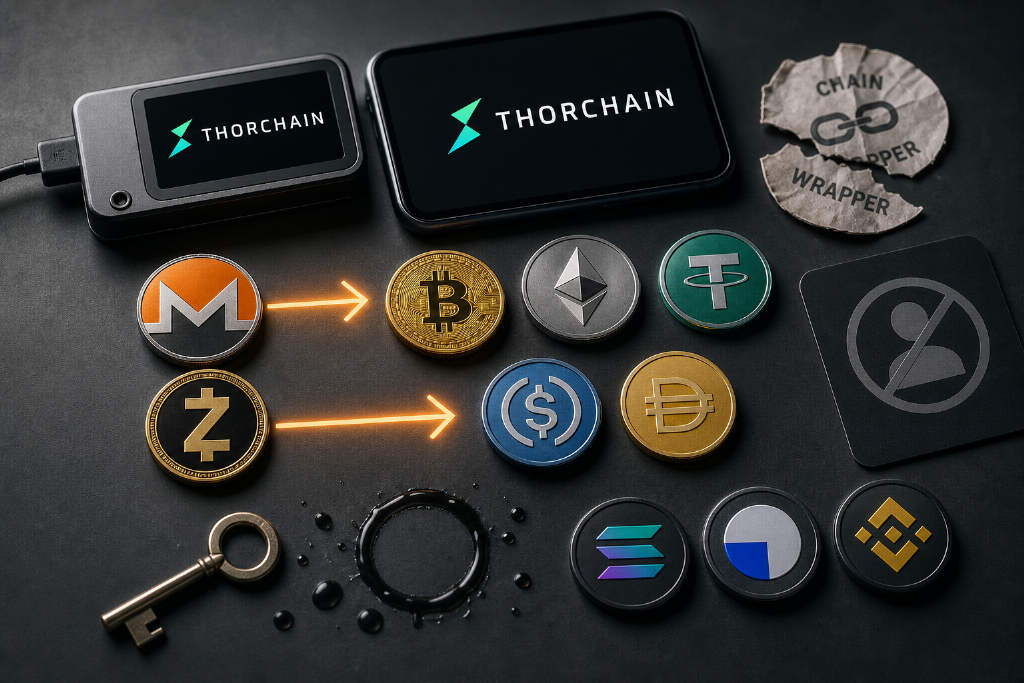
THORChain has launched version 3.2, adding native cross-chain swap support for Monero (XMR) and Zcash (ZEC), according to Decrypt. The upgrade lets users swap XMR and ZEC directly into BTC, ETH, and stablecoins without wrapped assets, a centralized exchange account, or handing over custody of their funds. The release also adds Protocol-Owned Liquidity, or POL, and a Stable Reserve feature. THORChain said the Stable Reserve allows stablecoin-to-stablecoin swaps with zero liquidity fees. In the same update, support for Solana, Base, and BNB has been restored. The rollout comes as some users have seen liquidity channels for XMR shrink after centralized exchanges delisted or restricted the token, creating a new non-custodial trading route for those affected.

20
THORChain rolls out v3.2 with native cross-chain swaps for XMR and ZEC
DeFi
2026-08-25 01:34:09

DeFi rebound puts protocol revenue back in focus across DEX, lending, and ETH staking

DeFi has been one of the most active corners of the crypto rebound as Bitcoin and Ethereum rallied over the past few days, lifting a wide range of altcoins with them. Rather than chasing price alone, the article argues that protocol revenue offers a cleaner way to judge whether a project still has real users and real demand. Using revenue data from Tokenomist and DefiLlama, with revenue defined as protocol income after distributions to supply-side participants such as LPs, the piece reviews top earners across decentralized exchanges, lending markets, and ETH staking. Uniswap led DEX revenue over the past 30 days at $7.18 million, while Solana-based Jupiter, Meteora, and Raydium also ranked high. PancakeSwap on BNB Chain and Aerodrome on Base were highlighted for their own strong income and distinct value-capture models. In lending, World Liberty Financial posted the highest 30-day revenue at $10.47 million, ahead of Aave. In ETH staking, ether.fi and Lido both made the list. A key takeaway is that high revenue does not automatically translate into direct tokenholder returns: some protocols use buybacks and burns, some route income to locked-token holders, and others generate strong protocol income without passing it through in full.

70
DeFi rebound puts protocol revenue back in focus across DEX, lending, and ETH staking
Polygon
2026-08-23 00:00:38

Polygon weighs staking and tokenomics overhaul to route priority fees to POL stakers

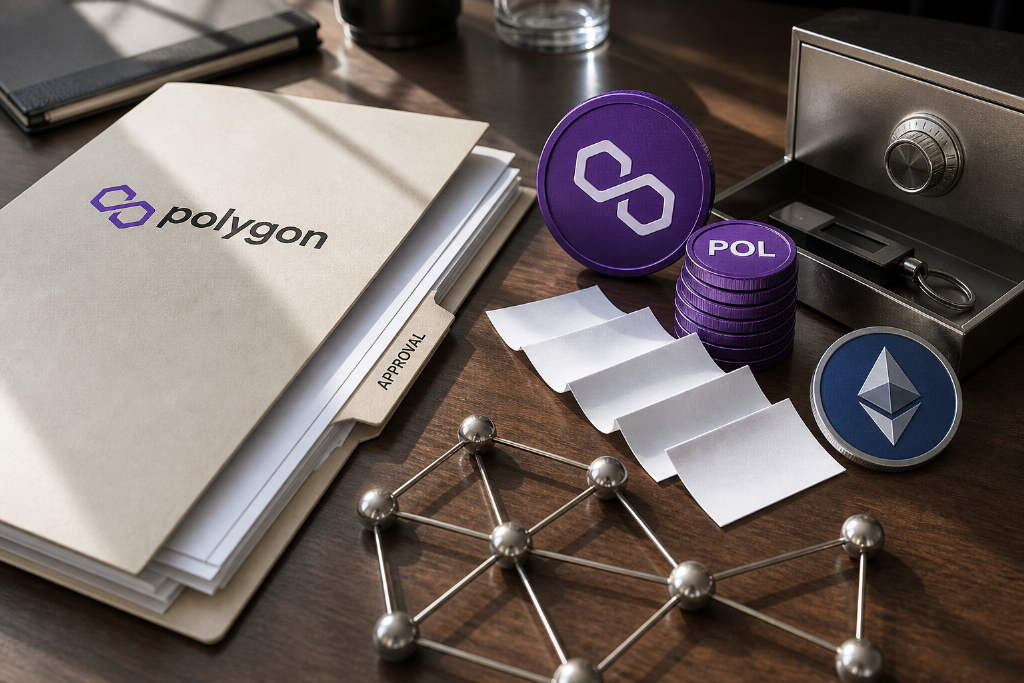
Polygon is preparing a community-facing proposal to reshape staking and tokenomics on Polygon PoS, according to co-founder Sandeep Nailwal. He said the effort comes in response to community calls and follows a year in which Polygon posted 10x revenue growth, delivered 5k TPS, and reduced block time by 25%, with work continuing toward sub-one-second block times. In Nailwal’s framing, the next step is to give stakers a larger share of network economics. The proposal would introduce L1-like native staking on Polygon PoS that can run in parallel with Ethereum staking. It would also direct transaction priority fees to POL stakers, building on the already approved PIP-85 and, in Nailwal’s words, making implementation cleaner through native staking. Expected staking yield would move closer to doubling and would be backed by real network fees rather than inflation. The plan also contemplates extra incentives for staked POL, such as gas fee discounts, while keeping sPOL liquid and usable across DeFi. Polygon Labs is set to write the code and submit the proposal to the community forum for review.

280
Polygon weighs staking and tokenomics overhaul to route priority fees to POL stakers
Lawson
2026-08-20 08:59:18

Lawson tests in-store stablecoin payments again, adding USDT while Japan’s rules remain unresolved

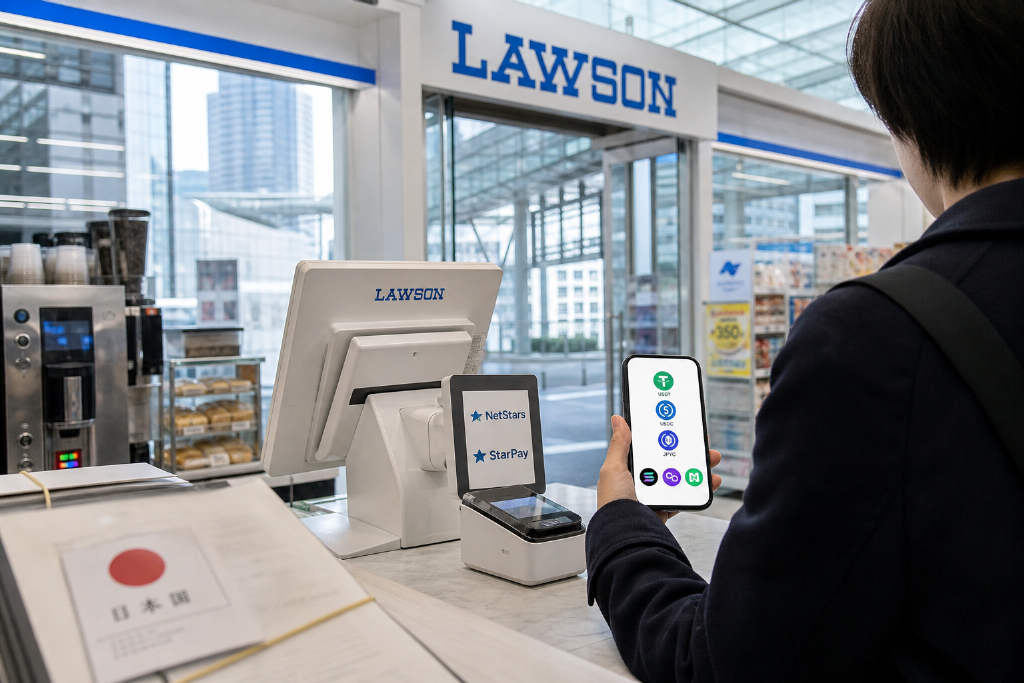
Lawson and NetStars ran a second-stage stablecoin payment trial at a Lawson convenience store on Aug. 17, expanding an earlier proof of concept that had used only JPYC on Polygon. This round tested three stablecoins — USDC, USDT and JPYC — across Solana, Morph and Polygon, with MetaMask used on the customer side and NetStars’ Stablecoin Pay linked to Lawson’s existing POS system. According to the companies, the trial was designed to check whether stablecoin payments could be processed in a physical retail setting without disrupting normal store operations. NetStars said the payments confirmed during interviews were generally completed within five seconds, a key metric for busy convenience store checkout flows. Store settlement was still handled in Japanese yen, meaning customers paid in stablecoins while Lawson received yen, similar to conventional barcode payment rails. The most sensitive point is USDT. The report notes that USDT is not included in the latest list of assets that registered electronic payment instrument service providers in Japan may handle. NetStars COO Hisahiro Chofuku said the model relies on users paying from self-custodied wallets and that the company does not hold customer assets as a financial institution. Even so, NetStars is still consulting Japan’s Financial Services Agency on how USDT payments should be treated legally and how received USDT or USDC would be converted safely into yen. Lawson said commercialization timing has not been decided.

320
Lawson tests in-store stablecoin payments again, adding USDT while Japan’s rules remain unresolved
Trump
2026-08-19 16:58:03

Trump to meet crypto executives at the White House as U.S. digital asset policy moves ahead

U.S. President Donald Trump is scheduled to host crypto industry executives at the White House on Wednesday for talks centered on regulation, according to a report first surfaced by POLITICO last week and later covered by Bitcoin Magazine. The expected guest list reportedly includes executives from Coinbase, Payward, the parent company of Kraken, and Blockchain.com, though the specific prediction market executives attending had not been identified in the report. The meeting comes as Washington continues to reshape its approach to digital assets even though the long-awaited market structure bill, the Clarity Act, has been delayed. The U.S. Securities and Exchange Commission on Tuesday put forward its own framework for crypto asset offerings, moving ahead while the legislation remains stalled. Lawmakers who support the sector had wanted the bill passed before Congress left for its August recess, but the vote is now expected in September. The article also notes that Democrats have criticized Trump over alleged conflicts of interest tied to his family’s crypto ventures, claims that Trump and the White House deny. Bitcoin Magazine said Trump has reported more than $1.4 billion in income from his family’s cryptocurrency businesses.

310
Trump to meet crypto executives at the White House as U.S. digital asset policy moves ahead
Pump.fun
2026-08-18 12:37:02

PUMP posts first golden cross as Pump.fun revenue climbs to a seven-month high

Decrypt’s Morning Minute said Pump.fun’s PUMP token is showing its first golden cross since launch, with the 50-day EMA moving above the 200-day EMA after a prolonged downturn. The token fell to $0.001491 in July, traded as high as $0.003 intraday on Monday, and later changed hands near $0.002733. The report tied the move to improving business performance rather than price action alone. According to DefiLlama data cited in the piece, Pump.fun generated $11.52 million in revenue over the past seven days, ranking fourth among all crypto protocols behind Tether, Circle, and Canton. The newsletter also said annualized revenue stands at $458 million against a $1.09 billion market cap, while August 10 to 16 fees reached $10.74 million, up 7% week over week. Pump said Tuesday’s $1.73 million marked its strongest single revenue day since January 30. The article also highlighted Pump.fun’s buyback-and-burn structure, recent product changes including Callout Rewards and lower trading fees, plus broader market, macro, ETF, memecoin, token, and NFT developments covered in the daily roundup.

480
PUMP posts first golden cross as Pump.fun revenue climbs to a seven-month high
analog chips
2026-08-04 10:04:07

Analog Chipmakers Show Broader Recovery as Inventories Normalize and AI Demand Adds Support

A recovery is taking shape across the analog semiconductor market, with ON Semiconductor, Texas Instruments, STMicroelectronics and NXP Semiconductors all reporting year-over-year and sequential revenue growth, while third-quarter guidance also pointed to further sequential gains. The rebound is no longer tied to a single end market. Industrial demand moved first, data center demand followed, and automotive improved visibly in the second quarter. Inventory metrics shifted at the same time: STMicroelectronics said its book-to-bill ratio was close to 2, NXP’s channel inventory fell back to 11 weeks, and Texas Instruments reported rising backlog with lead times extending by several weeks from a level below 13 weeks. Management commentary across the group suggested the analog market had moved from a long destocking phase toward normalization, with new orders beginning to flow again. The report also shows the upcycle is uneven. Some categories, including automotive analog, power management, AI server power chains, optical module analog front ends and certain sensors, are tightening. General-purpose parts, consumer electronics and parts of the power and discrete segment still face pricing pressure. AI is becoming a more important growth driver as data center power conversion, thermal management, optical connectivity and industrial or automotive applications increase the content value of analog chips. Even so, forecasts cited in the report indicate analog is improving rather than leading the broader semiconductor boom, which is still being driven much more sharply by memory.

1230
Analog Chipmakers Show Broader Recovery as Inventories Normalize and AI Demand Adds Support