RLHF

OpenAI
2026-09-10 10:12:40

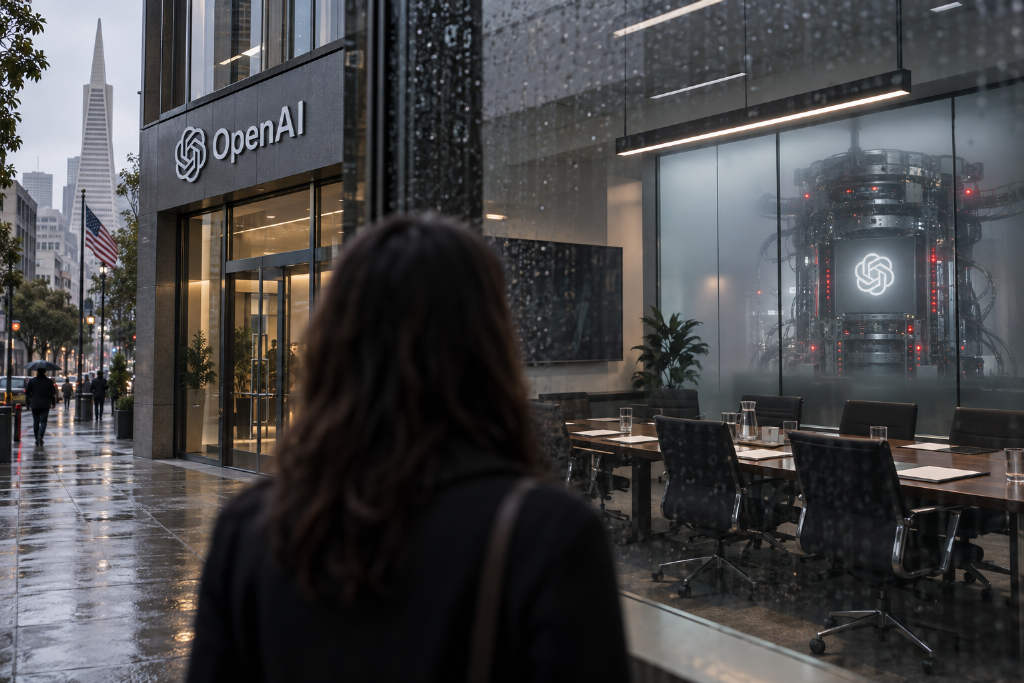
Paul Christiano joins OpenAI boards and warns that most people could die if superintelligence arrives before alignment is solved

OpenAI has brought back former alignment research lead Paul Christiano into its board structure, according to BlockBeats. Christiano, who led alignment research at OpenAI from 2017 to 2021 and helped lay the groundwork for reinforcement learning from human feedback, or RLHF, has joined the OpenAI Foundation board and its Safety and Security Committee. He has also entered the board of the for-profit OpenAI Group as an observer. After taking the role, Christiano publicly named OpenAI in a warning about AI risk. He said automated AI research could soon accelerate model capabilities rapidly, and argued that if superintelligence is built before the alignment problem is solved, humanity could permanently lose control. In that scenario, he said, "most people could die." Christiano also said the broader AI industry, including OpenAI, has not reduced that risk to an acceptable level.
20
Paul Christiano joins OpenAI boards and warns that most people could die if superintelligence arrives before alignment is solved
IOSG
2026-09-03 12:36:41

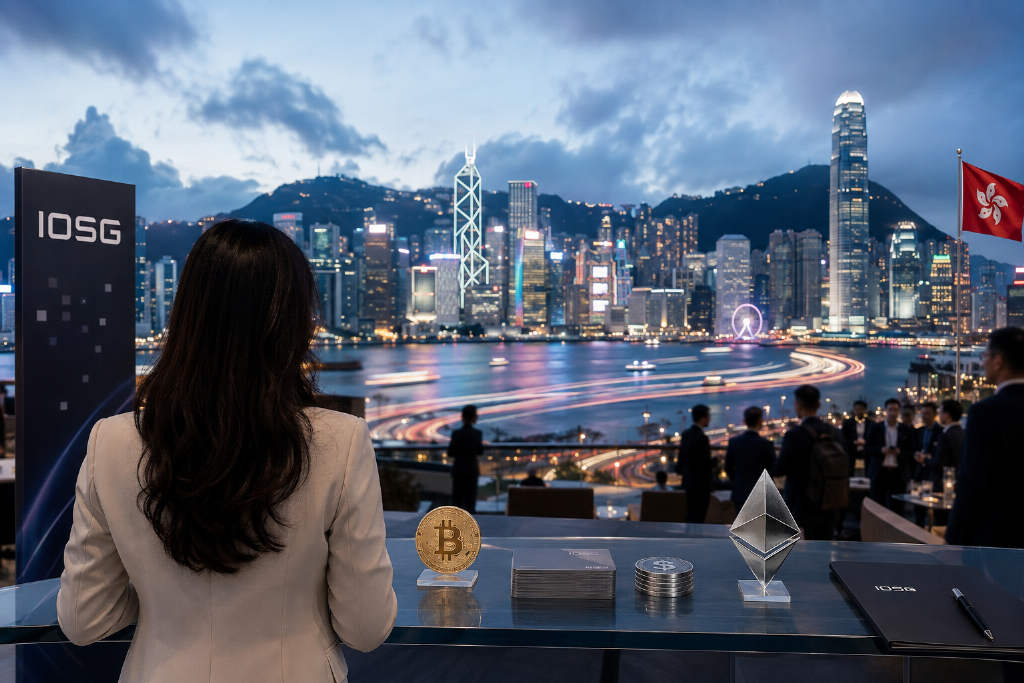
IOSG’s Jocy Lin says bear markets create crypto’s best entries as Bitcoin cycle, stablecoins and onchain revenue reshape strategy

Jocy Lin, a partner at IOSG, used a keynote at Hong Kong Money Frontier 2026 to lay out how her firm is reading the current crypto downturn and where it is still deploying capital. Her central argument was blunt: the strongest crypto investments are often made in bear markets, when quality assets are mispriced and revenue becomes easier to verify. Lin said Bitcoin’s four-year cycle still matters despite macro narratives tied to AI, gold and equities. She argued that catalysts that powered the rebound from the 2022 lows had largely been priced in by the end of 2025, and that the market’s focus should now shift from explaining Bitcoin’s underperformance to spotting the next accumulation phase. She also described 2026 as a potentially defining year for stablecoins after the GENIUS Act became law, saying the move allows banks to issue dollars onchain legally and could help shift crypto from a high-risk asset class toward regulated financial infrastructure. On Ethereum, she pointed to its strengths in settlement, DeFi security, rollup finality and developer infrastructure, while saying the bigger unresolved issue is leadership. IOSG has reduced its primary-market allocation in the bear market and raised exposure to OTC, secondary trading and incubation. Lin said the firm is watching four areas most closely: stablecoin payments, prediction markets, AI paired with crypto, and onchain trading and credit.

240
IOSG’s Jocy Lin says bear markets create crypto’s best entries as Bitcoin cycle, stablecoins and onchain revenue reshape strategy
Artificial In
2026-08-31 10:55:20

From the Dartmouth proposal to Jensen Huang’s AGI remark: a 70-year history of AI booms, winters and shifting definitions

MarsBit revisits the 70-year arc of artificial intelligence through a current flashpoint: Jensen Huang’s remark on Nvidia’s August 26, 2026 earnings call that, "for a lot of tasks, we can say that we have achieved AGI." The article does not treat that line as settled fact. Instead, it uses the debate around it to trace AI from the 1955 Dartmouth proposal, where John McCarthy, Marvin Minsky, Nathaniel Rochester and Claude Shannon outlined a summer project built on the idea that learning and intelligence could, in principle, be described precisely enough for a machine to simulate them. The piece walks through the field’s early optimism, the perceptron era, symbolic AI, the Lighthill report, expert systems, the two AI winters, and the period when researchers avoided the term "AI" altogether in favor of machine learning, pattern recognition and related labels. It then follows the buildup to the deep learning turn, including ImageNet, AlexNet, DeepMind’s reinforcement learning work, AlphaGo, and the Transformer paper "Attention Is All You Need," before moving into BERT, GPT, scaling laws, Chinchilla, diffusion models and ChatGPT. The central argument is that AI history keeps repeating a few patterns: promises outrun capabilities, definitions keep moving, and methods built to scale with compute often overtake systems packed with hand-crafted human knowledge. On that basis, the question of whether AGI has been achieved remains unresolved not only because capability is contested, but because the term itself has never had a fixed, falsifiable definition.

280
From the Dartmouth proposal to Jensen Huang’s AGI remark: a 70-year history of AI booms, winters and shifting definitions
Anthropic
2026-08-10 08:01:09

Old 2000 US Physics Olympiad roster resurfaces with Anthropic CEO Dario Amodei among the 24

A roster from the 2000 U.S. Physics Olympiad training camp has resurfaced online, drawing attention because it includes Dario Amodei, now the chief executive of Anthropic. The archived list, preserved by the American Association of Physics Teachers, names 24 students selected for the camp held at the University of Maryland in May 2000. Only five advanced to represent the United States at the 31st International Physics Olympiad in Leicester, where the team finished seventh and all five members won medals. The renewed attention has widened beyond Amodei. The same list also includes Vladimir Novakovski, now founder of Lighter; Badr Albanna, an AI research engineer at Duolingo; and Nilah Monnier Ioannidis, now teaching computational biology at the University of California, Berkeley. The article traces how several of those students later moved into artificial intelligence, quantitative finance, computational biology, computer science and law. For Amodei, the route ran from a physics PhD at Princeton to Baidu’s Silicon Valley AI lab, Google Brain, OpenAI and then Anthropic, which he co-founded in 2021. Others on the roster followed equally distinct paths, and the report argues that the Olympiad network itself became a long-lived talent pipeline whose ties later reappeared in startup formation and venture investment.

7710
Old 2000 US Physics Olympiad roster resurfaces with Anthropic CEO Dario Amodei among the 24