SPY

Nasdaq
2026-08-16 11:14:08

Nasdaq’s planned 23-hour trading day is aimed at Asia’s daytime flow, with ETFs at the center

Nasdaq plans to launch 23-hour-a-day, five-day-a-week stock trading on Dec. 6, 2026, after the U.S. Securities and Exchange Commission approved the rule change for 23/5 trading. The rollout still depends on whether market infrastructure, including the Securities Information Processor, is ready and whether related operating rules are in place. The added session would run from 9 p.m. to 4 a.m. Eastern Time, covering daytime hours in Asia and allowing investors there to trade U.S. stocks without waiting for the New York open. According to the article, the change is less about letting U.S. investors trade longer and more about pulling order flow back from overnight ATS venues, broker internalization systems and rival exchanges. Nasdaq’s own overnight data show trading is highly concentrated: out of roughly 11,300 U.S. tickers, only 1,403 traded overnight, and just 644 saw more than $10,000 in daily turnover. The top 15 instruments made up about 53% of overnight volume, with 12 ETFs and only three single stocks. That pattern suggests overnight trading is centered on macro risk transfer and price discovery in broad market products and mega-cap names, not broad equity research. The article also argues that extending trading hours raises infrastructure, staffing, compliance and market-making costs, while faster prices do not automatically mean better prices in a thinner market.

430
Nasdaq’s planned 23-hour trading day is aimed at Asia’s daytime flow, with ETFs at the center
Michael Burry
2026-08-14 04:55:08

Michael Burry’s paid newsletter tops 300,000 subscribers in 231 days, with theoretical annual revenue of $113.7 million

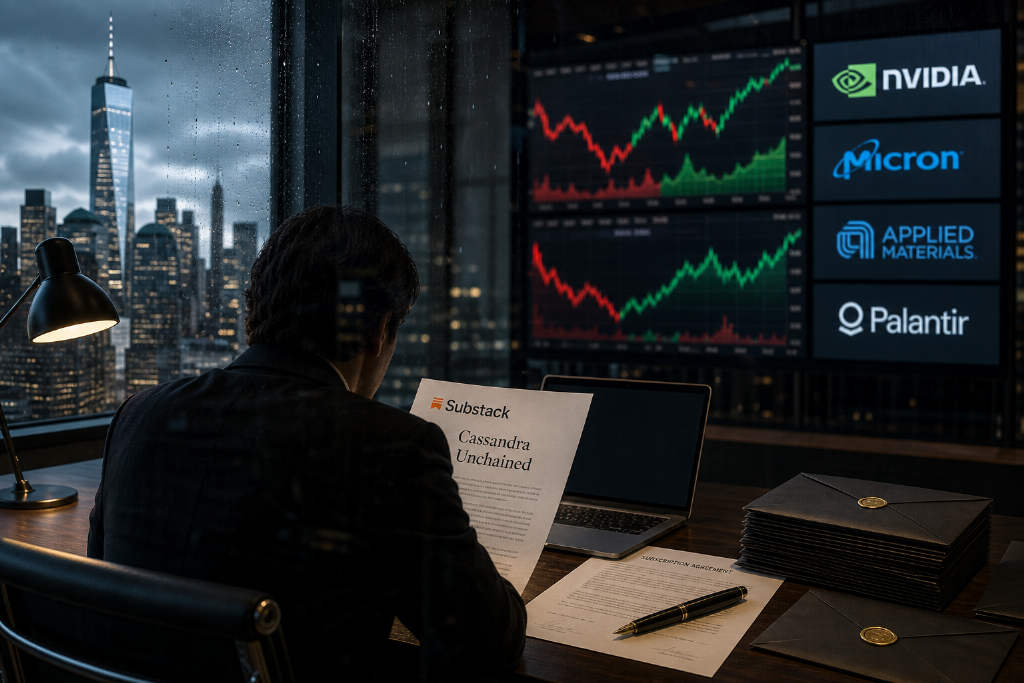
Michael Burry’s Substack newsletter, Cassandra Unchained, reached 300,044 subscribers and 346,680 followers just 231 days after launch, putting its theoretical annual revenue at about $113.7 million if every subscriber paid the $379 yearly fee. That figure is only an upper bound because Substack subscriber counts include free readers and Burry has not disclosed how many are paying, while platform fees also need to be deducted. At the same time, Burry’s bearish bets against AI and semiconductor names have come under pressure as many of those stocks have surged this year. Nvidia is up 29%, Applied Materials has climbed 206%, and Micron has jumped 697%, outpacing broader benchmarks including SPY and QQQ. The contrast has made his publishing business stand out as he continues to post position updates, valuation work, and trade records through the newsletter.

360
Michael Burry’s paid newsletter tops 300,000 subscribers in 231 days, with theoretical annual revenue of $113.7 million
Tokenized Sto
2026-08-14 00:39:10

Tokenized Stocks Emerge as the Next RWA Battleground After Tokenized Treasuries Lose Momentum

Tokenized U.S. Treasuries helped turn tokenization into a major market theme, but growth in that segment has slowed after assets climbed from $701 million on Jan. 1, 2024 to more than $15 billion on April 17, 2026. As that market levels off, tokenized stocks are gaining speed. According to the source article, the segment grew from $291 million on Jan. 1, 2025 to about $1.9 billion over the following year and a half. The competition now spans nearly every part of the market. Web3-native firms such as Securitize, Ondo Global Markets and xStocks are expanding their offerings, while Robinhood and Coinbase are building stock token products of their own. Traditional market infrastructure operators including DTCC, the New York Stock Exchange and Nasdaq are also moving in the same direction. A central issue is structure. The article lays out the U.S. Securities and Exchange Commission’s framework for tokenized securities, separating issuer-sponsored, custodial, linked and security-based swap models. Those choices shape what users actually get: full shareholder rights, broader onchain transferability, access to DeFi, or tighter compliance controls. The result is not one tokenized stock market but several competing approaches, each with different trade-offs around regulation, liquidity and onchain utility.

1290
Tokenized Stocks Emerge as the Next RWA Battleground After Tokenized Treasuries Lose Momentum
Tokenized Sto
2026-08-13 23:52:08

Tokenized stocks gain traction as exchanges, fintechs and market infrastructure firms pursue different paths

Tokenized stocks are emerging as a new battleground in real-world assets as growth in tokenized U.S. Treasuries slows. According to the article cited by WuBlockchain, the tokenized stock market has expanded from $291 million on Jan. 1, 2025 to about $1.9 billion, a 6.5-fold increase in roughly a year and a half. The piece argues that nearly every major participant in U.S. capital markets is now studying or launching tokenized equity products, including Web3-native firms such as Securitize, Ondo and xStocks, broker and trading platforms like Robinhood and Coinbase, and infrastructure operators including DTCC, the New York Stock Exchange and Nasdaq. A central theme in the report is that tokenized stocks do not follow a single model. The U.S. Securities and Exchange Commission’s framework divides tokenized securities into issuer-sponsored structures, custodial structures, linked securities and security-based swaps. Those designs differ in key areas: whether token holders receive full shareholder rights, how much freedom the assets have onchain, how strict compliance controls are, and whether U.S. users can access the products. The article also details how each company is positioning itself within those trade-offs, and why regulation, settlement infrastructure and distribution rules will shape the next phase of competition.

800
Tokenized stocks gain traction as exchanges, fintechs and market infrastructure firms pursue different paths
Market Analys
2026-08-12 03:03:43

Three veteran traders say speed, liquidity and capital efficiency now define stock trading on crypto platforms

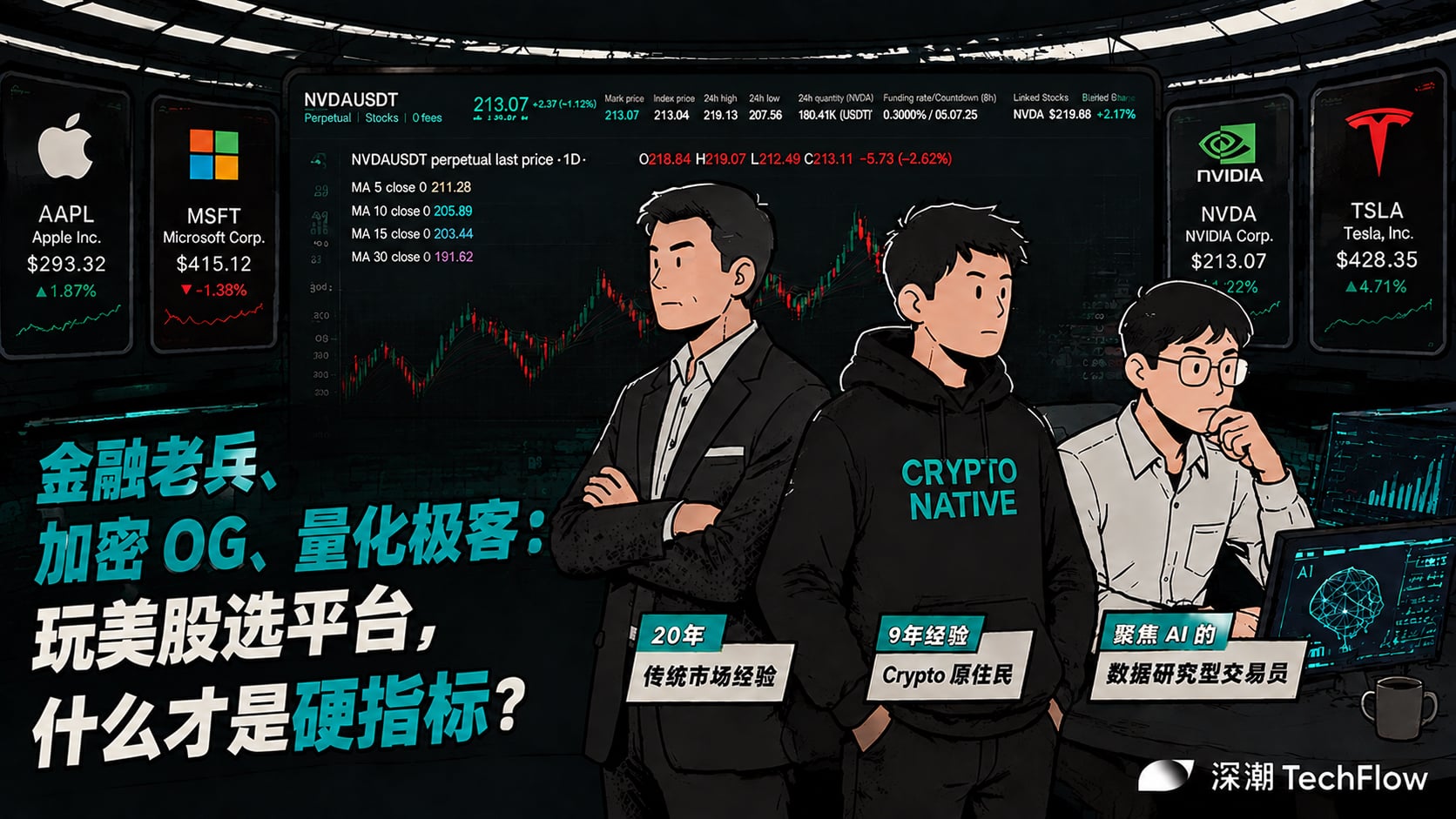
A long-form report by TechFlowPost argues that U.S. stock trading is shifting from legacy broker systems to crypto-native platforms, with little sign of reversal. Based on interviews with three experienced market participants — Rocky, Bean Ge and Xiadie Haida — the piece maps out what traders now treat as hard metrics when choosing a venue for equities: execution speed, order-book depth, total transaction cost, market-hours flexibility, information delivery and capital efficiency. The report says trading on centralized crypto exchanges is moving from a trial experience to a daily habit for some active users, especially during earnings season, when after-hours price moves can define outcomes. Bean Ge focuses on latency, liquidity and news tools; Xiadie Haida highlights 24/7 access, faster reaction to headlines and broader symbol coverage; Rocky looks beyond simple buy-and-sell access to how tokenized stocks can be used for yield, collateral and borrowing. TechFlowPost also reviews current platform positioning. Binance, OKX and Bitget are all expanding stock-related products, but with different emphasis across ecosystem integration, compliance, API access, tokenized products and AI-driven trading tools. The article further notes market projections cited by Rocky, who believes tokenized equities could reach a 10% penetration rate of the global stock market within three years, while regulation, transparency and on-chain composability remain central to broader adoption.

1010
Three veteran traders say speed, liquidity and capital efficiency now define stock trading on crypto platforms
KuCoin
2026-08-11 06:36:43

KuCoin Alpha Adds Ondo Tokenized Stocks, Starting With SPYon and NVDAon

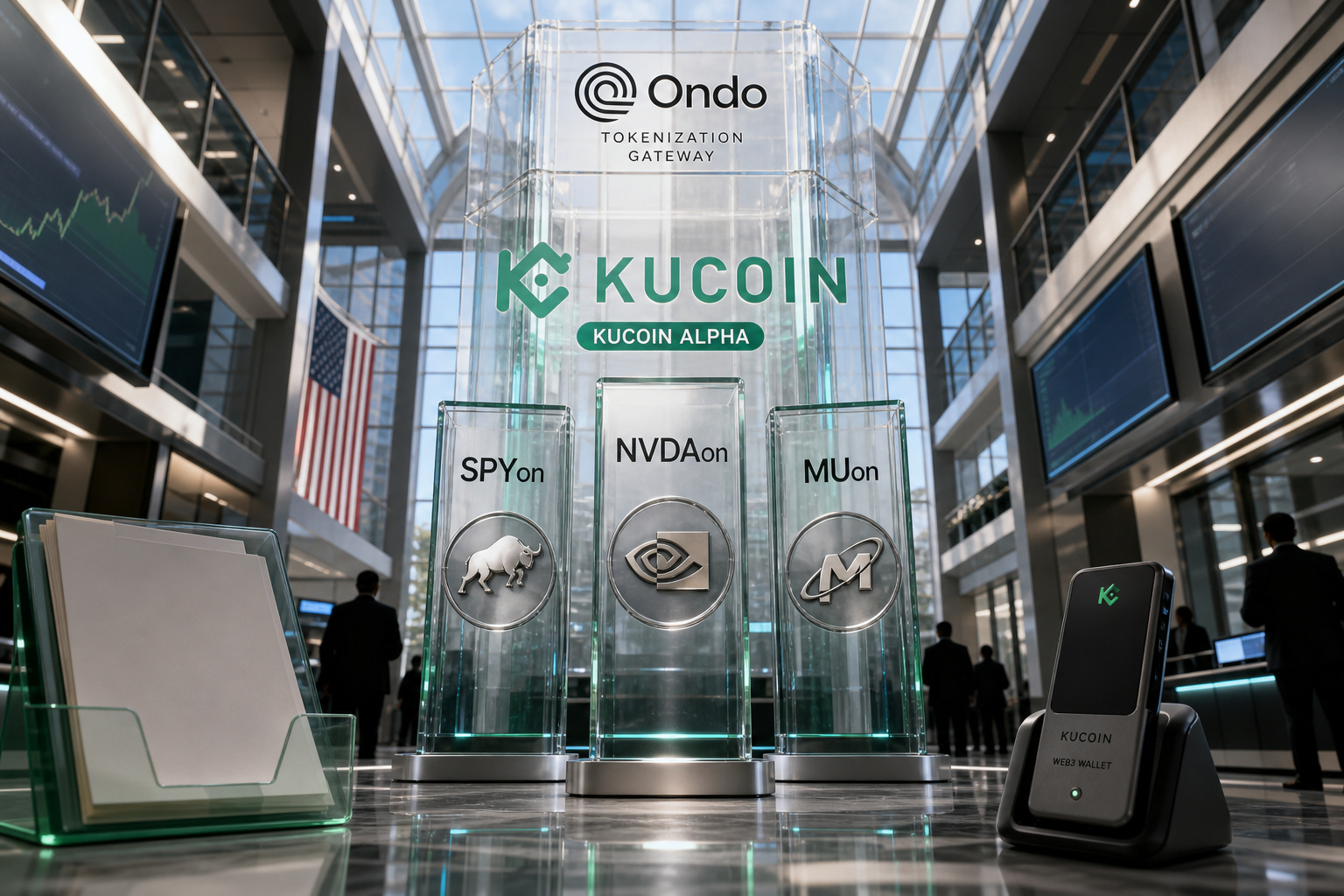
Traders on KuCoin can now buy and sell tokenized stocks and ETFs through KuCoin Alpha, the exchange's trading interface, after the platform integrated Ondo's tokenized assets. Users can execute trades directly without setting up an external wallet or opening a separate on-chain application. The first batch of supported products includes SPYon, NVDAon and MUon, tokenized instruments tracking technology, semiconductor and digital finance sectors. The move complements the Ondo tokenized stocks that KuCoin's Web3 wallet already carried, giving users two ways to access the same assets: Alpha offers the exchange application experience, while the wallet version emphasizes self-custody. KuCoin described the integration as part of its strategy to link traditional finance with the on-chain economy, saying the aim is to lower the barrier to entry for on-chain financial products by giving users a familiar interface rather than forcing them to navigate blockchain tools. The announcement was distributed by Chainwire.

1030
KuCoin Alpha Adds Ondo Tokenized Stocks, Starting With SPYon and NVDAon
xStocks
2026-08-09 04:50:56

xStocks Post Mentioning Hyperliquid Fuels Partnership Speculation

xStocks has stirred market chatter after its official X account posted a single word: “hyperliquid.” The post quickly drew attention because it came after several weeks of activity tied to Backed, the developer behind xStocks. According to the item, Backed has spent about 5,006 HYPE to secure 10 spot tickers, including NVDAx, SPYx and QQQx. Based on that sequence of events, members of the community are speculating that xStocks-related assets may be preparing to go live on the Hyperliquid platform. No formal cooperation was announced in the source material, and the current discussion remains at the level of market and community interpretation. The report was published by Odaily as a newsflash.

1030
xStocks Post Mentioning Hyperliquid Fuels Partnership Speculation
Michael Saylo
2026-08-08 07:08:08

Michael Saylor Lays Out His AI Financing Playbook and Long-Term Bitcoin Thesis

Michael Saylor used a wide-ranging interview on The Diary Of A CEO to tie together two ideas he sees as central to the next decade: using AI to invent new financial structures, and using Bitcoin as a long-term store of capital in a world where fiat money steadily loses purchasing power. Saylor said Strategy turned to AI in early 2025 after conventional funding channels had largely been exhausted. The company, already holding tens of billions of dollars in Bitcoin, needed a new instrument to keep raising capital for additional purchases. He said AI helped design a Bitcoin-backed preferred stock with a variable dividend structure, a product that became STRK. According to Saylor, the company completed a $250 million IPO, later raised another $8 billion through additional issuance, and ultimately sold $15 billion in credit assets across several tools. Beyond the financing story, Saylor argued that cash and bank deposits expose savers to long-term debasement, while housing often comes with taxes, insurance and financing costs that make it a poor store of value for many households. He compared Bitcoin with gold, the S&P 500 and real estate, framed Bitcoin as a globally accessible scarce capital asset, and explained why Strategy sold a small amount of BTC: to disprove what he called a dangerous market narrative that the company could never sell without triggering collapse.

1110
Michael Saylor Lays Out His AI Financing Playbook and Long-Term Bitcoin Thesis