Wafer Works
Oct 24, 2026

Wafer Works approves share sale and two convertible bond issues to fund debt repayment and 12-inch expansion

Wafer Works (6182), a silicon wafer maker, approved a three-part fundraising plan at its Oct. 23 board meeting, combining a cash capital increase with two domestic unsecured convertible bond offerings. The company said the proceeds will be used for two stated purposes: repaying bank borrowings and purchasing machinery and equipment. Under the equity deal, Wafer Works plans to issue 18 million new common shares with a total par value of NT$180 million. Of that amount, 10% will be reserved for employee subscription, 10% will be sold through a public offering, and the remaining 80% will be available to existing shareholders based on their holdings. The final issue price will be set after regulatory filing approval, using a market-based discount and consultation with the lead underwriter. The company also approved its ninth and tenth domestic unsecured convertible bond offerings, with maximum sizes of NT$3 billion and NT$2 billion, respectively. Both carry five-year terms and 0% coupon rates. Wafer Works said the funds will support capital spending tied to its Changhua Erlin plant, where it is pushing ahead with 12-inch silicon wafer production lines and related plant engineering.
720
Wafer Works approves share sale and two convertible bond issues to fund debt repayment and 12-inch expansion
Zhanxin Shares
Oct 23, 2026

Zhanxin Shares halves from post-listing high after Q3 loss, leaving foreign investors underwater

Zhanxin Shares, listed in Shenzhen as 301707.SZ, fell sharply on Oct. 22 after releasing weaker third-quarter results, with the stock hitting an intraday low of RMB 54.87 and closing at RMB 55.43, down 9.52%. The close marked a 57.33% drop from the intraday high of RMB 120.90 on its first trading day after the company went public on Aug. 7. Its third-quarter report showed revenue of RMB 411 million for the first nine months of 2026, down 18.94% year over year. Net profit attributable to shareholders came in at RMB 143 million, down 27.03%, while non-recurring adjusted net profit fell 26.57% to RMB 139 million. In the third quarter alone, revenue dropped to RMB 84.3867 million, down 49.43% from a year earlier and 57.02% from the prior quarter, while attributable net profit turned negative at RMB 589,200. The company did not publicly explain the decline in its latest filing. Still, its prospectus had flagged risks tied to procurement cycles in military electronics and broader industry conditions. Several peers have also reported pressure this year. The report noted that QFII investors including Merrill Lynch International, CICCFT10 under China International Capital Corporation Hong Kong Asset Management, Morgan Stanley & Co. International PLC, and Goldman Sachs would all be sitting on paper losses if they had held their positions through now.

800
Zhanxin Shares halves from post-listing high after Q3 loss, leaving foreign investors underwater
Hongxinyu
Oct 21, 2026

Hongxinyu clears HKEX hearing after reporting RMB 8.01 billion revenue in first four months of 2026

Shenzhen Hongxinyu Electronics has passed its Hong Kong listing hearing and is preparing for an IPO on the Hong Kong Stock Exchange. The prospectus shows the memory-chip company generated revenue of RMB 8.78 billion in 2023, RMB 8.72 billion in 2024, and RMB 11.238 billion in 2025, while profit for the period moved from a loss of RMB 117 million in 2023 to RMB 483 million in 2024 and RMB 1.364 billion in 2025. In the first four months of 2026, revenue reached RMB 8.01 billion and profit came to RMB 3.84 billion. The company, founded in 2018 and headquartered in Shenzhen, develops, produces, tests, and sells storage chip products. Its main product lines include embedded storage, solid-state drives, memory products, and mobile storage. Embedded storage was the largest revenue contributor in the first four months of 2026, accounting for 67.8%. Hongxinyu has completed multiple financing rounds since 2020. Its post-money valuation rose from RMB 816 million in March 2020 to RMB 10.759 billion in March 2025. Chairman and general manager Wu Yisheng, through several holding platforms, controls about 36.68% of the voting rights as of the latest practicable date, according to the filing.

2080
Hongxinyu clears HKEX hearing after reporting RMB 8.01 billion revenue in first four months of 2026
Elon Musk
Oct 20, 2026

Report says Musk is lining up Korean suppliers for Terafab, with first fab targeted before 2030

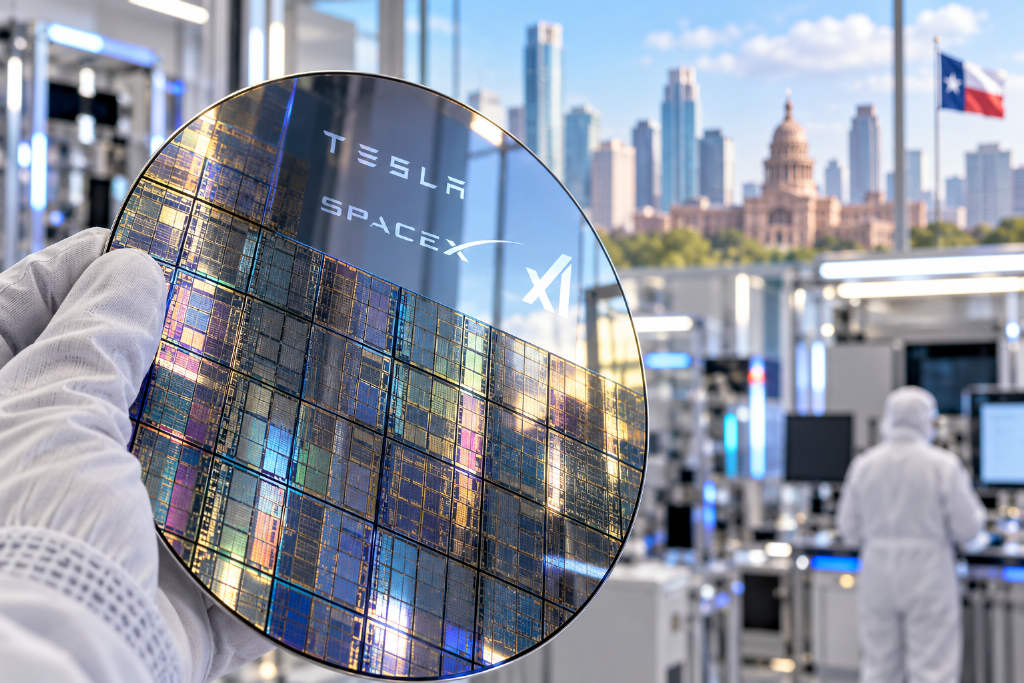
Elon Musk is stepping up supplier talks for Terafab, a semiconductor manufacturing project in Texas backed by Tesla, SpaceX, and xAI, according to an Oct. 20 exclusive from Korean outlet THE ELEC. The report says Musk’s team has recently approached about 10 South Korean companies spanning equipment, components, and materials, with more than half already under non-disclosure agreements and in product-level discussions. Terafab was announced publicly in March, though its structure and technical details have not been disclosed. The project’s long-term goal is to build a wafer fab capable of processing 1 million wafers per month within 10 years. Initial investment is pegged at $16.8 billion, with more than 3,000 jobs expected. Industry sources cited by THE ELEC expect the first-phase facility, designed for roughly 100,000 wafers per month, to be completed before 2030. The report also says Tesla is building a pilot fab inside Giga Texas in Austin ahead of mass production. Its first mission is to supply chips for Tesla’s self-driving and robotics efforts, as well as chips needed for SpaceX satellites and space data centers. On logic chips, the project is said to be working with Intel and in talks with TSMC, while memory production would be built separately.

860
Report says Musk is lining up Korean suppliers for Terafab, with first fab targeted before 2030
Semiconductor
Oct 18, 2026

Fab24hr, a free browser game about life inside a chip fab, is drawing attention online

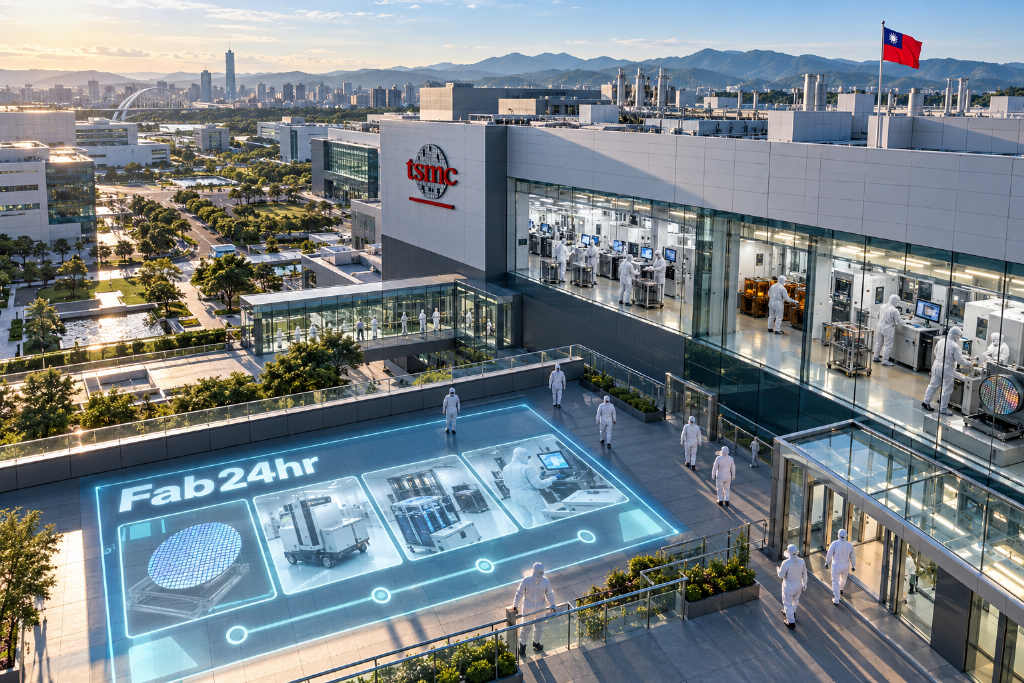
A free browser game created by Taiwanese internet user mrclty is gaining traction for turning semiconductor fab work into an interactive simulation. Titled Fab24hr: A Day in the Life of a Semiconductor Fab Worker, the game lets players step into the routines of fab engineers and operations staff, recreating equipment failures, process issues, shift handovers and production pressure. According to the source report, the release struck a chord with fab employees, while a Tom’s Hardware editor who tested it said the experience quickly made clear why workers in Taiwan’s wafer fabs feel intense pressure. The game includes two modes. One, “The Life Cycle of a Chip,” follows 12 chapters in which players move a hearing-aid chip from the R&D line to the end user, with three possible endings based on decisions made along the way. The other, “A Day in the Fab,” allows players to choose a plant location and role, including process engineer, manufacturing staff and equipment engineer. The game is free to access, requires no download or account registration, and can be played on both phones and computers through a web browser. It also includes explanations of technical terms for players without a semiconductor background.

1150
Fab24hr, a free browser game about life inside a chip fab, is drawing attention online
MemSilicon
Oct 14, 2026

MemSilicon completes tape-out of 1Gb RRAM chip MountTai 2026

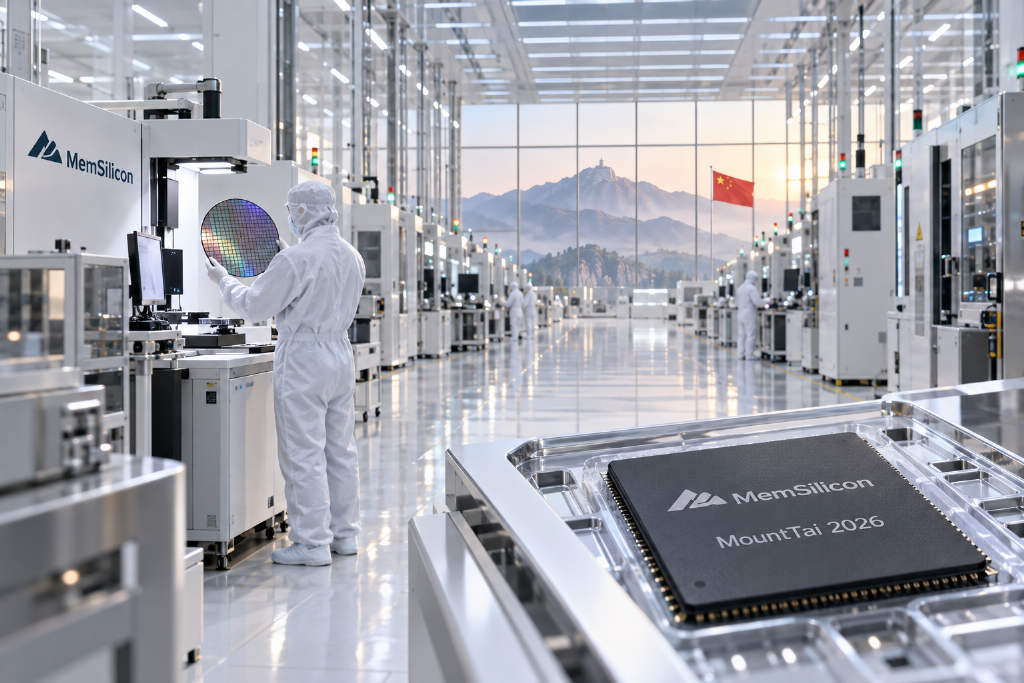
MemSilicon has completed the tape-out of its first-generation high-density, large-capacity RRAM chip, MountTai 2026, built on a 1TnR technology route. According to the company, the chip uses a 28nm CMOS process and a 1T4R cell structure, delivering 1Gb of capacity on a single chip and a density of 30Mb/mm². It also posts access latency below 20ns and includes on-chip hardware error-correction circuitry. MemSilicon said the design raises storage capacity per unit area by allowing multiple resistive memory cells to share a selection transistor, while remaining fully compatible with the CMOS platform. The chip is aimed at demand for high-density, large-capacity non-volatile on-chip memory in applications such as AI inference and embodied intelligence. The company said tape-out has been completed and validation work is now under way. The item was cited by QbitAI, according to Techub News.

1060
MemSilicon completes tape-out of 1Gb RRAM chip MountTai 2026
ASML
Oct 14, 2026

ASML lifts sales outlook again, sees demand outstripping supply in 2027 and 2028

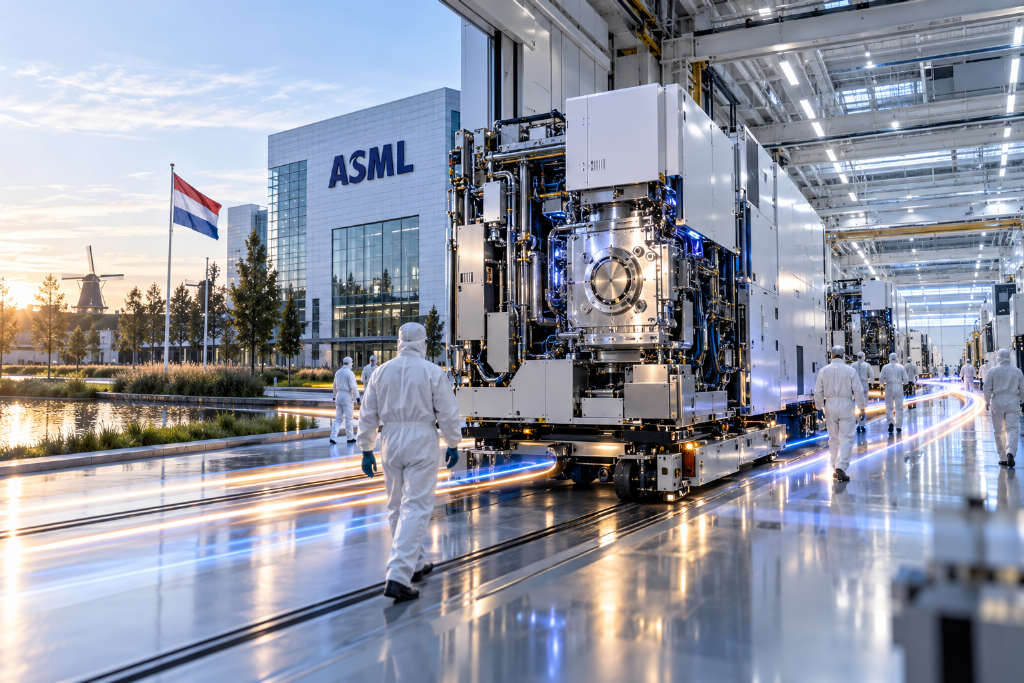
Dutch semiconductor equipment maker ASML has raised its full-year sales outlook for a third straight quarter, according to ChainCatcher. The company said it expects 2026 sales to come in between 44 billion euros and 45 billion euros. ASML also reported third-quarter net sales of 11.66 billion euros. The company said it plans to increase production capacity for low numerical aperture extreme ultraviolet lithography systems by 30% next year. Even with that expansion, ASML said it will not be able to fully meet market demand in 2027 and 2028. The update points to continued strength in demand for its chipmaking equipment over the next several years.

700
ASML lifts sales outlook again, sees demand outstripping supply in 2027 and 2028
CanSemi
Oct 14, 2026

CanSemi Debuts Above $100 Billion Yuan Valuation as Investors Bet on Silicon Photonics and Capacity Growth

CanSemi Semiconductor made its ChiNext debut on Oct. 13 and immediately drew attention for one reason: valuation. The company, which is still loss-making, opened at RMB 45 after pricing its IPO at RMB 12.01, a 274.69% jump that briefly put its market capitalization at about RMB 129.6 billion. It later closed at RMB 38.80, still up 223.06% on the day, with a market value of roughly RMB 111.7 billion. The pricing stands in sharp contrast to the company’s current financial profile. In the first half of 2026, CanSemi posted RMB 1.777 billion in revenue, up 68.76% year over year, but reported a net loss attributable to shareholders of RMB 1.052 billion and a gross margin of negative 24.46%. From 2023 through the first half of 2026, cumulative net losses exceeded RMB 7.5 billion. What investors appear to be buying is not present earnings, but a future built on rising utilization, improving product mix, and exposure to silicon photonics. Prospectus data show utilization climbed from 55.23% in 2023 to 96.38% in 2025, while the company says higher-value products such as SiPho, BCD power management, and HV display driver chips helped lift pricing. The market is also looking at a planned expansion to 120,000 wafers per month, nearly double the 63,300 wafers per month of actual capacity at the end of 2025. The company has said the earliest it expects to turn profitable is 2029, and that forecast depends on several assumptions, including revenue growth, margin recovery, capacity ramp-up, product commercialization, and government subsidies.

1090
CanSemi Debuts Above $100 Billion Yuan Valuation as Investors Bet on Silicon Photonics and Capacity Growth
Total 197 items
Go topage