Goertek
Oct 13, 2026

Goertek ends plan to spin off Goertek Micro for Hong Kong listing after two failed IPO attempts

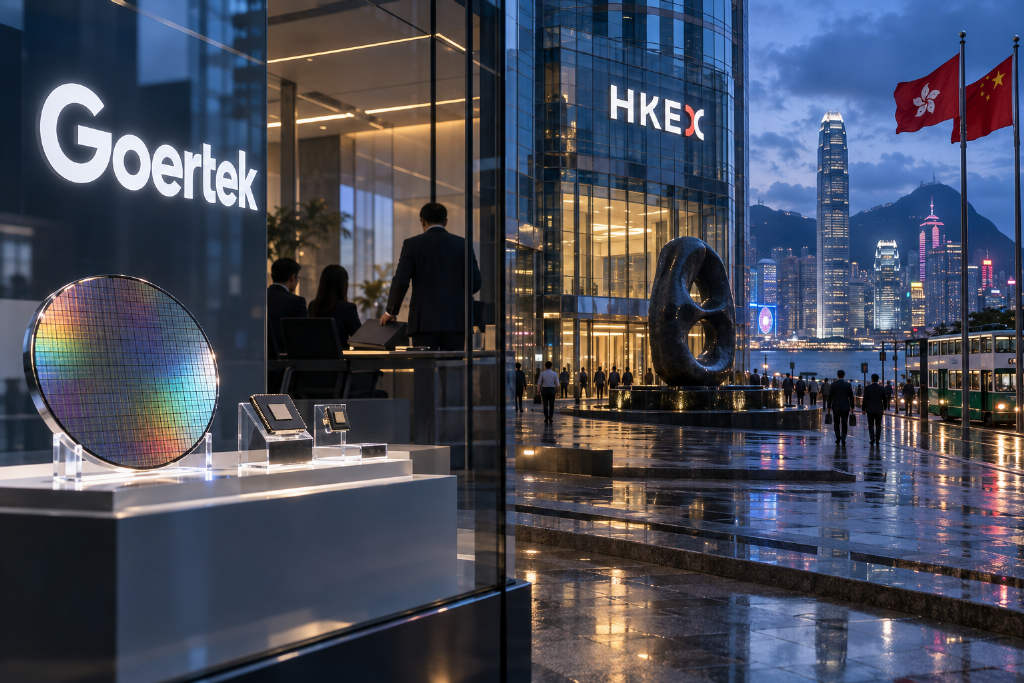
Goertek said on Oct. 12 that its board had approved the termination of a planned spin-off and separate listing of its subsidiary Goertek Microelectronics on the main board of the Hong Kong Stock Exchange. The company said it made the decision after weighing changes in the external environment and the development plans of both Goertek and Goertek Micro, adding that the move would not have a material adverse impact on operations, finances, or future strategy. The decision marks Goertek Micro’s second failed attempt to access the capital markets. The company had previously sought a listing on Shenzhen’s ChiNext board and submitted draft documents for a listing review meeting in October 2022, with a plan to raise 3.19 billion yuan, but that process did not succeed. It then turned to Hong Kong in January 2025, only for that path to be halted as well. Prospectus data cited in the report show Goertek Micro posted revenue of 3.12 billion yuan, 3 billion yuan, and 4.536 billion yuan in 2022, 2023, and 2024, respectively. It also completed a 1.95 billion yuan fundraising round in March 2021. Goertek shares closed at 20.85 yuan, giving the listed company a market value of 74.2 billion yuan.
940
Goertek ends plan to spin off Goertek Micro for Hong Kong listing after two failed IPO attempts
CanSemi
Oct 13, 2026

CanSemi jumps 274.69% on ChiNext debut as IPO proceeds target capacity expansion

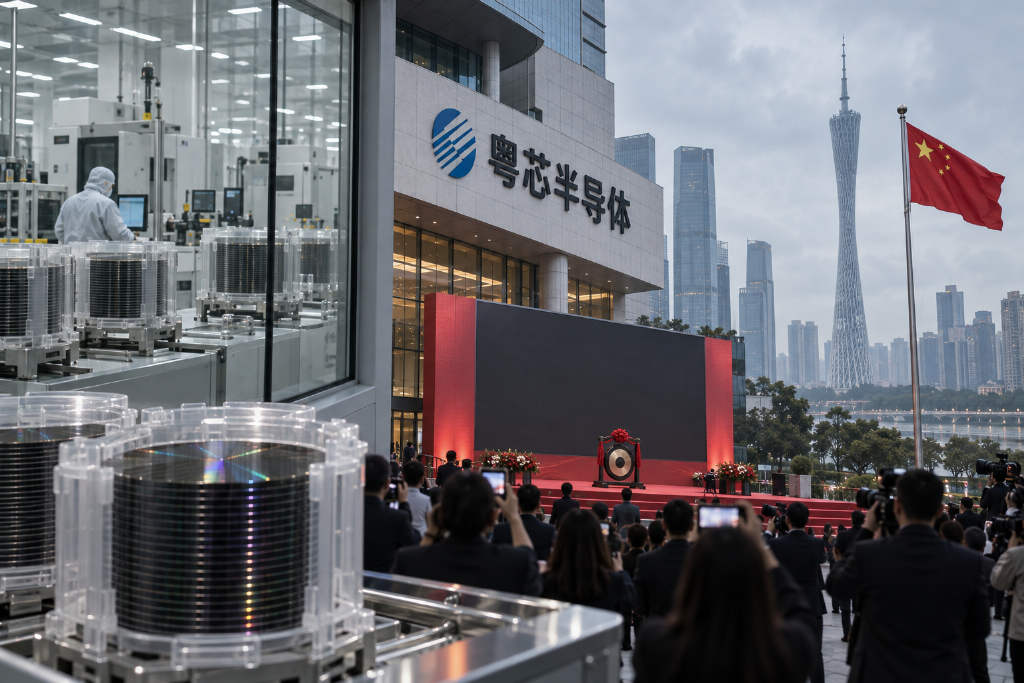
CanSemi Technology opened trading on Shenzhen’s ChiNext on Oct. 13 and surged 274.69% to 45 yuan per share, compared with its IPO price of 12.01 yuan. Based on a standard allotment of 500 shares, one winning subscription generated a paper gain of about 16,500 yuan on the first day. According to the prospectus and Wind data cited in the report, the company initially issued 513 million shares, with the total rising to 590 million after the full exercise of the over-allotment option. Online subscriptions came from 14.4354 million valid accounts for 423.383 billion shares, and the final online allotment after the callback mechanism was 179 million shares, with a winning rate of 0.0423786759%. CanSemi plans to raise a total of 7.5 billion yuan, with 3.5 billion yuan earmarked for capacity expansion, 2.5 billion yuan for R&D, and 1.5 billion yuan for working capital. The company said capacity utilization rose from 55.23% in 2023 to 96.38% in 2025, while the sales ratio reached 99.47%. Revenue increased from 1.044 billion yuan in 2023 to 2.582 billion yuan in 2025, but the company remained loss-making throughout the period, citing heavy depreciation and sustained R&D spending. It said, under a set of assumptions, it expects to break even on a consolidated basis as early as 2029.

950
CanSemi jumps 274.69% on ChiNext debut as IPO proceeds target capacity expansion
Applied Materials
Oct 12, 2026

Applied Materials expects revenue to double in coming years while keeping headcount growth in check with AI

Applied Materials expects its revenue to double over the next few years, but the semiconductor equipment maker does not plan to expand its workforce at the same pace. The company is relying more heavily on artificial intelligence tools in areas including product development and quality control, according to a Techub News brief citing Bloomberg Technology. The update points to a strategy in which AI is used to support operational scale without a matching rise in employee numbers. No further financial details, hiring targets, or timeline breakdown were disclosed in the source item. The report focused on the company’s expectation for revenue growth and its use of AI to manage labor expansion across key internal functions.

550
Applied Materials expects revenue to double in coming years while keeping headcount growth in check with AI
Micron
Oct 8, 2026

Micron Taiwan union wins strike mandate with 99% approval, seeks 15% operating profit sharing

Micron’s wafer fab union in Taoyuan, Taiwan, has formally secured the right to strike after members voted overwhelmingly in favor, according to a report cited from CNA. Of 2,258 eligible members, 2,012 cast ballots, for a turnout rate of 89.1%. The final tally showed 1,994 votes in favor, 14 against, and 4 invalid ballots, meaning approval reached 99% of votes cast. The union’s main demand is a profit-sharing mechanism tied to 15% of operating profit, replacing the current one-time bonus system determined by the company. The union said the proposal is meant to make compensation more transparent and linked to company profitability, while aligning with industry peers such as Samsung and SK Hynix. It also said the request does not mean payouts should continue when the company is loss-making. Micron had previously said it would issue what it described as the highest performance bonus in its history, with details expected in October. The union said it will wait for the company’s Oct. 8-9 board meeting and may notify employees of next steps by text message if no concrete outcome emerges. Taiwan’s Ministry of Labor said it respects the vote and urged Micron to present a practical proposal for negotiations.

980
Micron Taiwan union wins strike mandate with 99% approval, seeks 15% operating profit sharing
ASML
Oct 8, 2026

ASML and Zeiss Outline Hyper-NA EUV as the Next Step Beyond 0.55 NA

ASML and Carl Zeiss SMT researchers have published a technical paper that lays out a path toward Hyper-NA EUV lithography, defined in the paper as systems with a numerical aperture of at least 0.75. The proposal is framed as the most direct extension of today’s 0.55-NA high-NA EUV scanners, with a focus on keeping continuity with the current 13.5 nm EUV platform rather than shifting immediately to a shorter wavelength. According to the paper, a 0.75-NA system could largely reuse existing infrastructure, including EUV plasma light sources, mask technology, and much of the established scanner manufacturing stack. The authors argue that the move from 0.55 NA to 0.75 NA can be achieved within nearly the same system volume because it stays within the same folding geometry, unlike the earlier jump from 0.33 NA to 0.55 NA, which required a larger architectural change. The paper also details the trade-offs. Hyper-NA can either print smaller features at a similar image log-slope or improve imaging contrast at a fixed feature size, but it also brings tougher vector effects, questions around polarization illumination, and a sharp drop in depth of focus. To address those constraints, the authors point to thinner resists, tighter focus control, and a dedicated 0.75-NA micro exposure tool. The translated article was credited to the WeChat account Semiconductor Industry Watch, with authorship listed as ASML & Zeiss.

830
ASML and Zeiss Outline Hyper-NA EUV as the Next Step Beyond 0.55 NA
Wolfspeed
Oct 7, 2026

Wolfspeed rises 27% in after-hours trading after $1.5 billion loan commitment

Wolfspeed, a U.S. semiconductor company, rose 27% in after-hours trading, according to market data cited by Gate. The move came after the company had announced that it secured a $1.5 billion loan commitment. The update was published by ChainCatcher under the market analysis category. No other price data or company details were provided in the source. The report focused on the after-hours stock reaction and the financing commitment as the immediate disclosed development.

670
Wolfspeed rises 27% in after-hours trading after $1.5 billion loan commitment
Intel
Oct 7, 2026

Intel says it remains in Musk’s Terafab project as Musk insists the fab will be self-built and self-run

Intel CEO Lip-Bu Tan said on Oct. 7 that Intel will continue participating in Elon Musk’s Terafab chip manufacturing project, according to Bloomberg. Musk later pushed back on speculation about Taiwan Semiconductor Manufacturing Co. (TSMC) taking a leading role, saying on X that the fab would be built and operated by his side, with TSMC at most able to sublease part of the facility. The exchange came one week after Musk confirmed he had discussed potential cooperation with TSMC, putting control of the project back at the center of attention. Tan’s remarks publicly confirm that Intel, which joined Terafab in April, is still involved, though he did not disclose Intel’s exact role, the scope of cooperation, or a timeline. Market views remain split. JPMorgan said in an Oct. 5 report that if a deal with TSMC materializes, process technology and fab operations would likely remain under TSMC’s control, potentially through a joint-venture structure similar to JSMC or ESMC. Independent semiconductor analyst Alex, by contrast, argued the partnership may be difficult to complete under current conditions.

850
Intel says it remains in Musk’s Terafab project as Musk insists the fab will be self-built and self-run
Micron
Oct 7, 2026

Micron Taoyuan union wins strike mandate with 88.3% approval, timing still undecided

Micron’s Taoyuan union in Taiwan has secured the legal right to strike after 88.3% of members voted in favor during a ballot held from Oct. 1 to Oct. 6. The union said no strike date has been set, though chairman Lin Zhe-Rui said members would be notified by text message if a walkout is launched and that the action could be carried out as a surprise strike to limit the company’s ability to prepare in advance. Of 2,258 registered members, 2,012 cast ballots, producing an 89.1% turnout. The final tally showed 1,994 votes in favor, 14 against, and four invalid ballots. The union said the result cleared the legal threshold of support from more than half of all registered members, giving it formal strike authorization and the right to set up lawful picket lines. The dispute centers on four demands raised jointly by the Taoyuan and Taichung unions, including a one-time bonus tied to 15% of FY2026 operating profit on top of Micron’s existing IPP bonus system, and a shift from annual payouts to a quarterly 15% profit-sharing model starting in FY2027.

730
Micron Taoyuan union wins strike mandate with 88.3% approval, timing still undecided
Total 197 items
Go topage