BackUS China

US China

JPMorgan
2026-09-20 05:01:02

JPMorgan says earnings, not rate hikes alone, remain the key anchor for equities

JPMorgan said in a global market strategy report dated Sept. 18, 2026 that developed-market central banks are moving into a more synchronized tightening phase, with the Federal Reserve’s dot plot pointing to one more rate hike this year and a higher neutral policy rate of 3.25%. The bank expects a 25-basis-point Fed hike in December and sees a risk of a third move in early 2027 if growth stays resilient and inflation remains sticky. Even so, JPMorgan’s central view is that equities can still be led by earnings as long as the tightening cycle remains shallow rather than broad-based. The report argues that the main risk for stocks is not a limited reversal of the 2025 “insurance cuts,” but whether the yield curve starts pricing a wider hiking cycle and whether long-end yields rise sharply. JPMorgan also said large-cap stocks, technology and communication services have held up better in a rising-rate backdrop, while real estate, industrials and small caps have shown greater sensitivity. Outside equities, the bank said Brent crude may struggle to stay above $100 a barrel even under a prolonged Middle East conflict scenario, and it kept an overweight stance on global equities and emerging-market FX while favoring investment-grade credit in Europe.

160
JPMorgan says earnings, not rate hikes alone, remain the key anchor for equities
Anthropic
2026-09-14 06:32:51

Trump rejects calls to slow frontier AI as Amodei, Altman and Musk align on safety

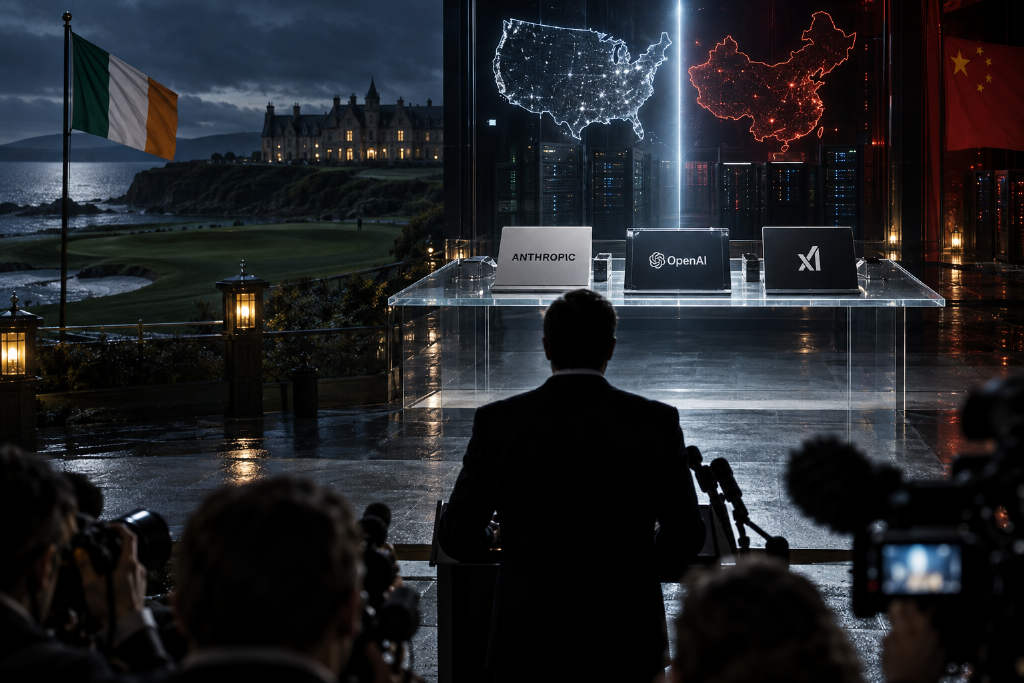
Anthropic CEO Dario Amodei has called for the AI industry to slow the pace of frontier model capability gains, arguing that safety work, alignment research, monitoring and interpretability are struggling to keep up. His proposal drew rare public backing from two major rivals: OpenAI CEO Sam Altman said he agreed with the idea that frontier progress must be controlled and described third-party, ongoing safety reviews as a good idea that OpenAI would also support. xAI founder Elon Musk also endorsed Amodei’s warning with a brief public response: “Dario is right.” U.S. President Donald Trump responded from a golf course in Ireland on Sept. 13, where he was asked whether the AI industry should slow down or face more regulation. Trump said the United States is ahead of China in AI and that he wants to keep it that way, adding: “We’re ahead of China in AI. We are the most advanced country in the world, frankly, and I want to keep it that way, because whoever wins AI, wins.” Reuters said Trump has resisted the growing rhetoric around AI risk. Amodei himself acknowledged that China is the hardest issue for any slowdown plan, saying unilateral restraint would be difficult to sustain without strict verification and enforcement.

630
Trump rejects calls to slow frontier AI as Amodei, Altman and Musk align on safety
Anthropic
2026-09-14 01:09:24

Anthropic CEO Dario Amodei defends AI risk warnings, calls for US-China biological weapons framework

Anthropic CEO Dario Amodei used a CBS Sunday Morning appearance to answer criticism tied to so-called "AI doomer" arguments after a former employee raised safety concerns. In the interview, Amodei said his team continues to assess how fast-advancing AI systems could be misused in biological terrorism scenarios and argued that companies should not be left alone to police the risk. He laid out several measures he believes could reduce misuse. Those include independent third-party review of model training and operations, a slower development pace so safeguards can keep up, and a clearer division of responsibility between private firms and government oversight. Amodei said industry leaders should work with governments on safety standards, while public authorities should also take part in enforcement. On the international front, he argued that the United States and China should pursue talks resembling arms-control negotiations. He said both countries share an interest in preventing biological terrorism and suggested either a new consensus treaty or an expanded Biological Weapons Convention framework that would explicitly ban the use of AI to design dangerous pathogens. He also pointed to verification and monitoring as necessary parts of any cross-border safety regime.

710
Anthropic CEO Dario Amodei defends AI risk warnings, calls for US-China biological weapons framework
Ministry of C
2026-09-09 13:44:14

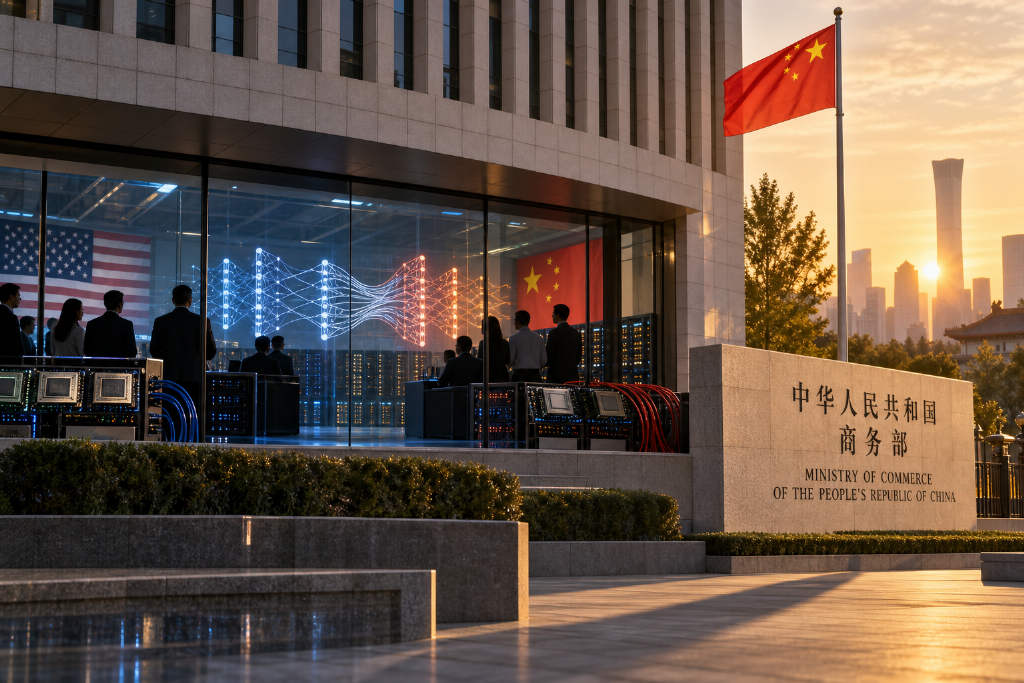
China commerce ministry says model distillation is a standard AI practice

China’s Ministry of Commerce said model distillation is a common way for artificial intelligence models to learn from one another, responding to a U.S. cybersecurity notice concerning alleged distillation activities by Chinese AI companies against U.S. firms. A ministry spokesperson described distillation as a neutral technical method used across the global AI industry, including by American companies. According to the spokesperson, the technique helps improve training efficiency and makes better use of human knowledge. The ministry said this has positive value for developing AI industries in different countries, unlocking the technology’s potential, narrowing development gaps, and extending benefits to developing countries and the broader public. The spokesperson also accused the U.S. of applying a double standard. China, the ministry said, supports open-source development, openness, and shared cooperation in AI, and Chinese open-source models are available to companies worldwide, including U.S. firms. The spokesperson added that research reports from U.S. companies have themselves disclosed large-scale distillation of Chinese models. Against that backdrop, the ministry said Washington’s repeated accusations that Chinese companies engage in “industrial-scale” distillation mischaracterize an industry-standard practice as an attack.

610
China commerce ministry says model distillation is a standard AI practice
Policy Regula
2026-08-31 10:55:00

Silicon Valley VC says China AI adapted to chip curbs with extreme efficiency, not paralysis

PANews, citing a TechFlow compilation of an internal letter from Silicon Valley venture firm Dimension, reported that the firm’s partners spent a week in August visiting AI labs and infrastructure players in Beijing, Shanghai and Hong Kong and came away with a sharply different view from the common “full decoupling” narrative. Their conclusion was that US chip export controls did not freeze China’s AI progress. Instead, the restrictions forced Chinese teams into unusually deep engineering work at the systems level, from kernel optimization to communications design, in order to squeeze more performance from limited hardware. The report highlighted several themes from the letter: intense competition among leading Chinese labs including DeepSeek, Qwen, Kimi, Doubao and GLM; the rise of startups focused on AI evaluation and validation rather than simple data labeling; and hands-on researcher intervention used to compensate for scarce compute. It also contrasted the commercial gap between US and Chinese model companies while describing Chinese firms as more pragmatic on monetization. Finally, the letter argued that even if semiconductors are separating at the hardware layer, software, distillation, open weights and data flows still bind the US and China into a shared AI cycle.

890
Silicon Valley VC says China AI adapted to chip curbs with extreme efficiency, not paralysis
Policy and Re
2026-08-11 06:54:08

Citi says proposed U.S. curbs on Chinese optical modules have not advanced beyond the idea stage

Citi said in an Aug. 9 research note that the reported U.S. move to block Chinese optical modules from the American market has not yet become an effective ban under existing Federal Communications Commission rules. Reviewing FCC Order 26-50, the bank said optical modules do not appear on any active restricted list. They are mentioned only once in an example tied to hardware and software bill-of-materials disclosure, not in the ban section. The bank outlined three possible regulatory routes: restrictions tied to specific manufacturers, restrictions based on all foreign production locations, and a narrower origin-based approach aimed only at products made in China. Citi judged the manufacturer-based route the least likely and said origin-based restrictions are more plausible, though near-term enforcement remains unlikely. Its main argument is supply. Citi estimated Chinese suppliers account for 60% to 70% of high-speed optical modules used by U.S. hyperscalers. Non-Chinese suppliers, in its view, cannot close that gap in the short run, while domestic U.S. production lines still need time to ramp. The report also singled out Eoptolink and DSBJ as the most exposed among the companies discussed, while Tianfu Communication was described as relatively insulated because it supplies passive components that do not fall within the current restricted-list framework.

2120
Citi says proposed U.S. curbs on Chinese optical modules have not advanced beyond the idea stage
policy
2026-08-07 14:16:12

US Startups Tuck Chinese Robot Parts into Luggage to Skirt Import Curbs

According to The Information, some US robotics startups are stuffing components sourced from China into personal luggage to bypass stricter import restrictions on advanced robots. The report says Washington relies heavily on China's supply chain for key robot parts.

2240
US Startups Tuck Chinese Robot Parts into Luggage to Skirt Import Curbs
optical modul
2026-08-05 11:43:08

US plan to restrict Chinese optical modules puts a key AI supply chain under pressure

Reports carried by Chinese media citing overseas outlets said the US Federal Communications Commission is drafting a rule that could ban imports of new Chinese optical transceiver modules, with officials reportedly aiming to publish and enforce the measure in 2026, while still leaving room for revisions or a delay. The report immediately rippled through equity markets: US optical-module names strengthened at one point, while major A-share suppliers opened lower before trimming losses, with Tianfu Communication ending higher. Industry data cited in the report points to a deeper issue for any forced separation. LightCounting said Chinese vendors now account for more than 60% of the global optical module market and hold an even larger share in 800G and 1.6T segments. Demand from Meta, Google, Microsoft, Amazon and Nvidia alone is described as running into tens of millions of high-speed modules, while US domestic output remains far below that level. Revenue disclosures from Chinese manufacturers also show a heavy concentration of overseas, especially US, customers, highlighting the mutual dependence built into the current supply chain.

2670
US plan to restrict Chinese optical modules puts a key AI supply chain under pressure