BackWorldpay

Worldpay

Mastercard
2026-08-21 00:35:00

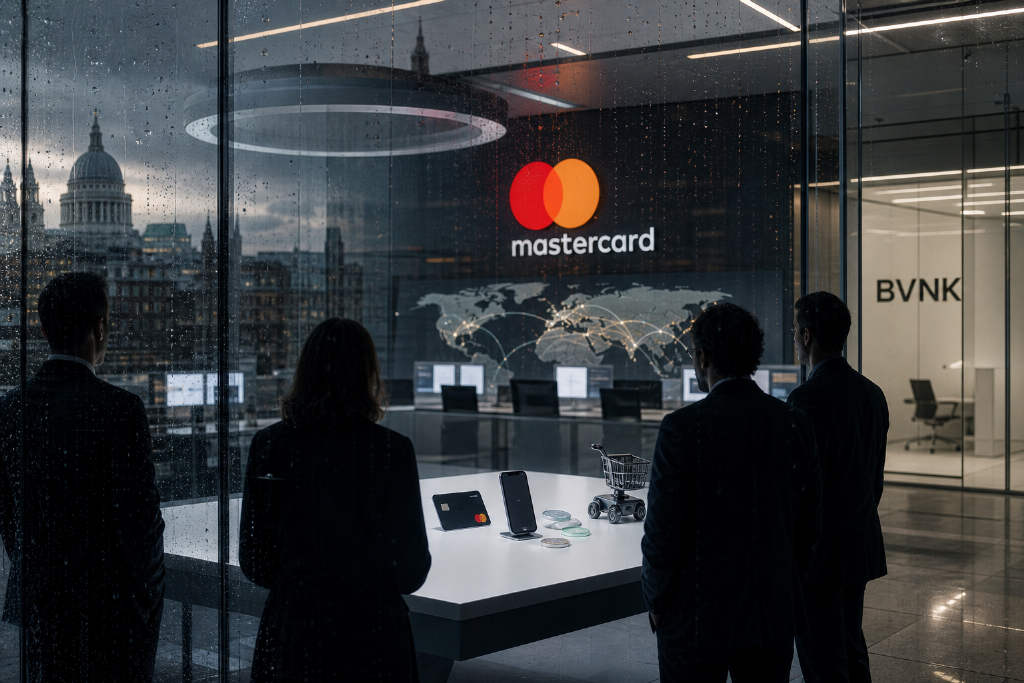
Mastercard’s stablecoin, agent commerce and AI thesis comes into focus with BVNK deal

Mastercard used its July 30 second-quarter earnings call and a same-day Motley Fool podcast appearance by CEO Michael Miebach to lay out a consistent view across three hot topics in fintech and crypto: stablecoins, agentic commerce and AI. His argument was not that every payment should stay on card rails. It was that settlement may move across several rails, while trust, security and interoperability remain the layer Mastercard intends to own. Miebach said stablecoins already have clear utility in some B2B and P2P flows, especially where correspondent banking is expensive and opaque, but argued there is "no problem to solve" for everyday pay-to-merchant spending. In agentic commerce, he drew a line between AI buying on behalf of people or businesses, where Mastercard believes cards and existing protections still fit, and machine-to-machine transactions, where on-chain permissioning and off-chain settlement may require new infrastructure. That framework helps explain Mastercard’s acquisition of BVNK, which closed on August 3 for $1.8 billion, five months earlier than originally planned. With BVNK bringing annualized stablecoin volume of about $30 billion, more than 25 licenses across 130 markets, MiCA authorization and SEPA euro connectivity, Mastercard is adding a working stablecoin settlement layer to support sending, receiving, storing and converting assets.
470
Mastercard’s stablecoin, agent commerce and AI thesis comes into focus with BVNK deal
PayPal
2026-07-29 02:03:13

After Rejecting a $53 Billion Buyout, PayPal Faces a Quarterly Test of Its Standalone Case

PayPal’s decision to reject a $53 billion privatization offer from Stripe and Advent International has turned its upcoming earnings release into an immediate referendum on management’s standalone strategy. The offer, disclosed by Reuters on July 15, valued the company at $60.50 a share, a 28% premium to the prior close, and was formally rejected on July 20. By saying no, PayPal’s board effectively argued that the company can generate more long-term value on its own than the cash now on the table. That claim lands at a difficult moment. PayPal’s market value has fallen from nearly $360 billion at its 2021 peak to about $44 billion when the offer emerged, even as payment volumes across the industry have kept growing. The company still controls assets that buyers clearly want, including PYUSD, Venmo, its branded checkout network and data tied to agentic commerce. But investors have also seen years of shifting strategy, CEO turnover, uneven execution and slowing growth in core branded checkout. With second-quarter results due on July 28, investors are looking for more than a headline beat. They want evidence that branded checkout can reaccelerate, Venmo can keep expanding and newer bets such as PYUSD and ChatGPT-linked payments can turn into revenue. If those signals do not appear consistently, the rejected offer may continue to frame how shareholders judge PayPal’s future.

1190
After Rejecting a $53 Billion Buyout, PayPal Faces a Quarterly Test of Its Standalone Case
Solana
2026-07-23 13:50:16

Solana Draws Banks and Payment Giants as Tokenized Assets Climb

Messari said Solana kept attracting institutional finance and payments activity in Q1. Its RWA market cap rose to $2.01 billion, stablecoin market cap reached $14.85 billion, and major firms expanded tokenized finance and payment use on the network.

1010
Solana Draws Banks and Payment Giants as Tokenized Assets Climb