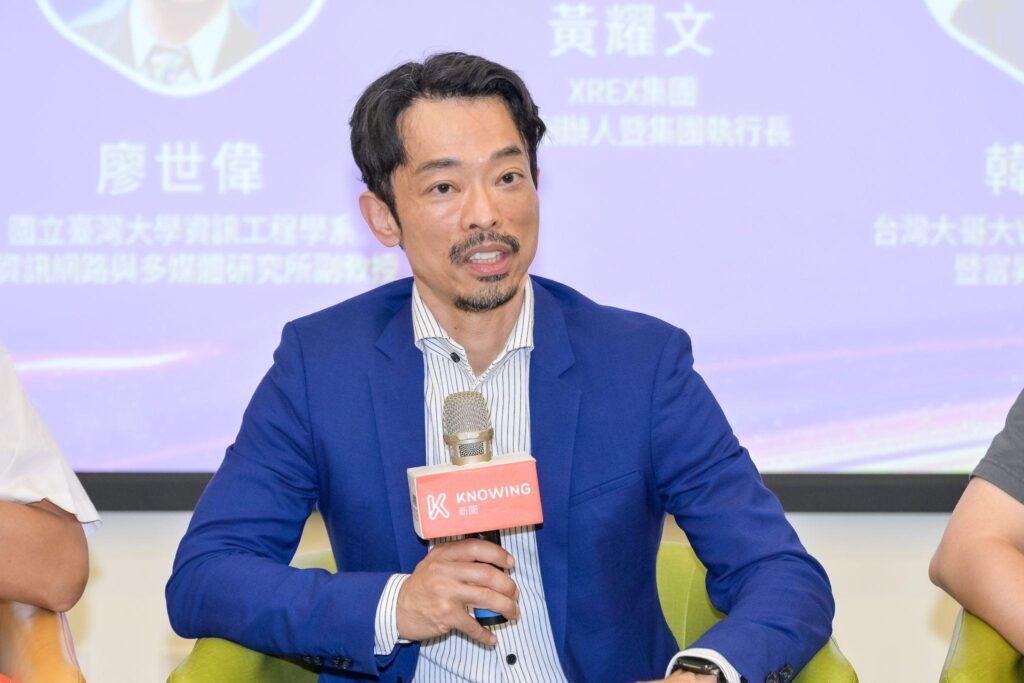
XREX2026-09-07 09:46:12XREX wins AFA Awards regulatory excellence honor as Taiwan and Singapore compliance work gains recognitionBlockchain financial institution XREX Group has won the Regulatory Excellence Award at the first AFA Awards, standing out from 88 corporate nominations across the Asia-Pacific region and becoming one of five overall winners. It was also the only Taiwanese team nominated by the Taiwan FinTech Association to take home an award. The recognition covered several parts of XREX’s business at once: its compliance operations and risk management efforts, its regulated presence in both Taiwan and Singapore, its virtual asset exchange operations, its stablecoin-based cross-border B2B payments business, and its regtech work aimed at strengthening anti-scam and anti-money laundering capabilities. According to the event structure described by the organizer, the awards were run by the Asia FinTech Alliance, whose member associations represent 16 Asian economies. Each economy could nominate up to seven companies. The first edition received 88 nominations, narrowed the field through top-30 and top-10 stages, and selected final winners after live presentations and Q&A before seven international judges on Sept. 1. During the final presentation, XREX Group CEO Wayne Huang said fraud and money laundering risks are not costs a single institution should bear alone, but a shared burden across the financial industry.920
AFA Awards2026-09-01 11:11:56XREX Named the Only Taiwanese Winner at AFA Awards 2026XREX was the only Taiwanese company to win an award at the inaugural AFA Awards 2026, taking the Regulatory Excellence Award at the final held in Taipei on September 1. The awards, organized by the Asia FinTech Alliance, drew more than 100 companies from 16 economies. After selection rounds that reduced the field to 30 and then 10 finalists, five awards were presented. Singaporean companies won three categories, while Malaysia’s PolicyStreet took the Fastest Growing Award. The other Singaporean winners were First Answer Pte Ltd, Liquid Group Pte. Ltd. and Finmo Tech Pte Ltd. XREX was founded in 2019 by Wayne Huang and Winston Hsiao. Its Taiwan entity is one of the first virtual asset service providers in Taiwan to complete anti-money-laundering registration with the Securities and Futures Bureau of the Financial Supervisory Commission. Its Singapore entity holds a Major Payment Institution license from the Monetary Authority of Singapore and operates the stablecoin-focused B2B cross-border payments platform XREX Pay. Five other Taiwanese companies also reached the shortlist, with BaaS Innovation and CyCraft entering the Top 10 and three others reaching the Top 30.1060
Taiwan2026-08-21 04:40:42Taiwan’s digital asset law is in force, but Chen Ching says stablecoin policy still needs top-level coordinationTaiwan’s Virtual Asset Service Act cleared its third reading on June 30, 2026 and was promulgated on July 22, formally putting virtual asset service providers under a dedicated legal regime. But former premier and former Financial Supervisory Commission chairperson Chen Ching said the law’s success should not be judged by how many licenses are issued. His main test is whether the government gives the sector sustained attention at the highest level. Speaking on episode 100 of XREX Group’s podcast Web3 Big Westward Expansion, Chen said the hardest questions begin after passage of the law: how Taiwan wants to develop virtual assets and stablecoins, who has final authority when agencies disagree, and whether firms will get a review process that is clear and predictable. He pointed to a structural issue in the law’s stablecoin provisions, where the Financial Supervisory Commission is the competent authority but approval for issuance also requires the central bank’s consent. Chen argued that stablecoins should be viewed not only as a financial product subject to compliance rules, but also through the lens of monetary sovereignty and national strategy. XREX co-founder and Group CEO Wayne Huang added that if trading can remain legally onshore, local currency has a chance to remain on-chain as well, especially as tokenized real-world assets become more important.1240
AFA Awards2026-08-19 08:31:58Six Taiwan companies make AFA Awards Top 30 ahead of Sept. 1 Taipei finalAsia FinTech Alliance on Aug. 11 released the Top 30 list for the inaugural AFA Awards, with six Taiwan companies making the cut from seven nominees recommended by the Taiwan FinTech Association. The shortlisted firms span financial infrastructure, regulatory compliance and market expansion, with names including XREX, Gogolook, OwlTing, CyCraft, Eastern Union and BaaS Innovation. According to TFTA honorary chair and AFA chairperson Tsai Yu-ling, all entrants first had to be nominated and screened in their home markets before competing against companies from 16 Asian economies. The first edition of the awards received 88 nominations across five categories. After the Top 30 round, the process will move into a second stage that will narrow the field to 10 finalists. The final round and awards ceremony are scheduled for Sept. 1, 2026, in Taipei, where the Top 10 companies will present in person to a judging panel drawn from financial and capital market institutions across Asia.1520
XREX2026-08-05 10:13:15XREX CEO Wayne Huang says quantum risk is bigger for finance than for BitcoinA new survey from the Global Risk Institute puts the odds of a quantum computer breaking today’s encryption at 28% to 49% within 10 years, rising to 51% to 70% within 15 years. Speaking at the 11th WHATs NEXT Quantum Technology Summit, XREX co-founder and group CEO Wayne Huang said that risk is more acute for the broader financial system than for cryptocurrencies. His argument was straightforward: banks and other regulated institutions can migrate on a regulator-led timetable, while Bitcoin has no central authority that can order a network-wide upgrade. Huang said the core problem is not simply whether quantum machines can break current cryptography today, but how long a full migration would take once institutions decide to move. In banking, that means reviewing account authentication, transaction signing, data transmission, and integrations with outside vendors, then testing and switching systems in phases. The article also points to “Harvest Now, Decrypt Later” attacks, in which encrypted data is collected now and cracked once quantum capabilities mature. The report also notes that Taiwan’s Financial Supervisory Commission issued a reference guide for post-quantum cryptography migration in June 2026, while the U.S. National Institute of Standards and Technology has already released post-quantum cryptography standards. Huang said Bitcoin faces a different hurdle: any quantum-resistance upgrade would depend on community consensus among miners, nodes, developers, exchanges, and users.1970