Nillion
Oct 15, 2026

Nillion to shut down its L2 network, asks NIL and ETH holders to move funds

Nillion, a decentralized privacy computing network, said its Layer 2 network will soon stop operating and urged users holding NIL or ETH on that network to move their assets as soon as possible. According to the project’s official notice, the transfer should be completed through Nillion’s official bridge, with funds moved back to the Ethereum mainnet. The announcement focused on user action rather than operational details and did not specify an exact shutdown date in the text provided. For users with balances still on the L2, the main takeaway is straightforward: assets need to be bridged out before the network goes offline. The notice specifically mentioned NIL and ETH and directed holders to use the official migration route rather than leaving assets on the retiring network.


630
Nillion to shut down its L2 network, asks NIL and ETH holders to move funds
Taiko
Oct 8, 2026

Taiko executes Proposal #39 on L1 and L2, adds Permit support to bridge and raises gas cap

Taiko has executed Proposal #39 across both Ethereum Layer 1 and the Taiko Layer 2 network after the proposal cleared the community veto window, according to the project team. The upgrade centers on improvements to the Taiko bridge and changes how token transfers can be handled.\n\nUnder the upgrade, the bridge’s ERC20Vault now supports Permit and Permit2. That means users no longer need to send a separate Approve transaction before bridging tokens, reducing one extra step in the flow. Taiko also raised the Ether-paid gas limit on the bridge as part of an early adjustment for changes tied to EIP-8037.\n\nThe team said it also deployed a new BridgedERC20V2 template on both L1 and L2. Taiko added that the updated functions have completed end-to-end testing across ETH, ERC20, ERC721 and ERC1155 assets, and that bidirectional bridge scenarios were included in those tests.

850
Taiko executes Proposal #39 on L1 and L2, adds Permit support to bridge and raises gas cap
Abstract
Oct 7, 2026

Abstract to shut down in phases, sets Dec. 15, 2026 deadline for asset withdrawals

Ethereum Layer 2 network Abstract said it will wind down operations and stop running on Dec. 15, 2026, warning that funds not bridged out by that date will become inaccessible. Users can move assets through the project’s official migration hub or its native bridge. In its statement, Abstract said a standalone chain focused on consumer crypto had become difficult to sustain, citing limited DeFi activity and thin onchain liquidity as factors behind stalled growth. The network was launched by the Pudgy Penguins team and had previously attracted more than 400,000 users, with over 144 applications deployed. The team also warned users to watch out for fake migration websites as the shutdown process begins.

720
Abstract to shut down in phases, sets Dec. 15, 2026 deadline for asset withdrawals
Stripe
Oct 5, 2026

Stripe pushes stablecoin card program globally, targets 100+ countries by year-end

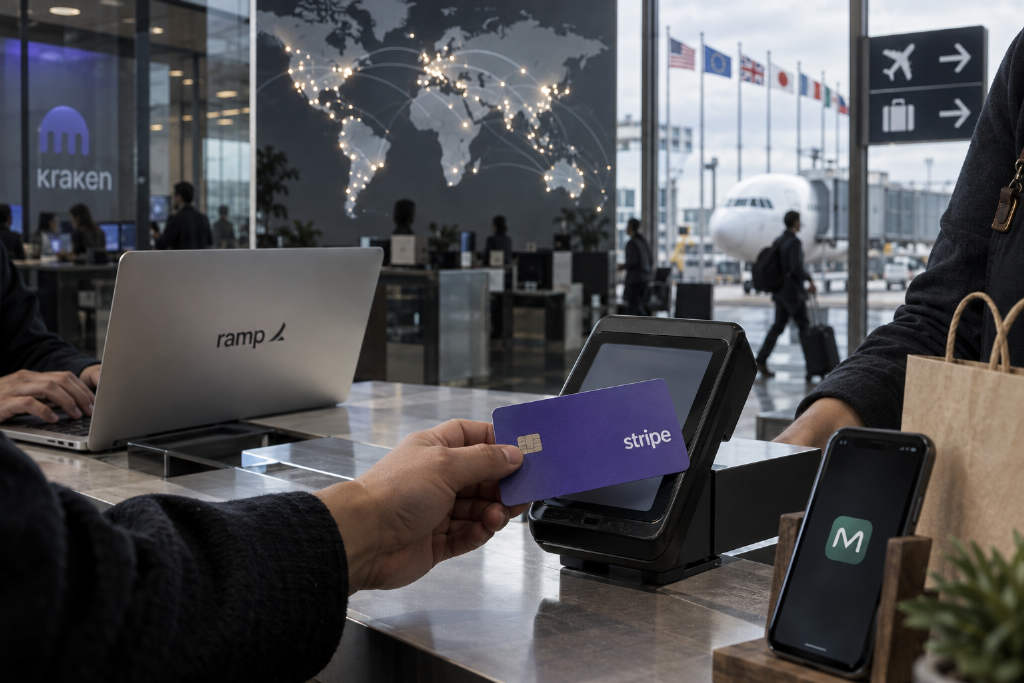
Stripe is expanding its stablecoin card business worldwide, betting that digital dollars can become another payment option for consumers and businesses alongside traditional currencies, according to CoinDesk. Henri Stern, Stripe’s head of stablecoins and crypto, said the company expects the program to reach more than 100 countries by the end of the year. Current customers include crypto exchange Kraken, fintech firm Ramp, and payments app Morse. Paymentscan data showed about $1.2 billion in stablecoin card spending last month, triple the level seen a year earlier. Stern said Stripe’s approach is to plug stablecoins into its existing infrastructure rather than build a separate crypto stack for users. Since 2018, the company has issued more than 400 million cards and processed hundreds of billions of dollars in card volume. Stripe’s stablecoin effort combines its issuing business with Bridge, the stablecoin infrastructure company it acquired in 2024 for $1.1 billion. The company has also acquired wallet infrastructure provider Privy, partnered with Paradigm on the payments-focused blockchain Tempo, and is a founding investor in Open Standard, which is developing Open USD.

640
Stripe pushes stablecoin card program globally, targets 100+ countries by year-end
Open Standard
Sep 30, 2026

Open Standard launches OUSD with free 1:1 minting and redemption

Open Standard has launched OUSD, a U.S. dollar stablecoin aimed at businesses and developers building internet-native financial products. The token is positioned for use across banking, cross-border payments, settlement and institutional trading. According to ChainCatcher, OUSD currently offers four integration paths, with APIs and tools covering settlement, payment orchestration, trading, foreign exchange conversion, wallets and card services. All access channels support free minting and redemption at a 1:1 exchange rate with the U.S. dollar. Businesses can already connect through Mastercard, Stripe and the Visa Stablecoin Platform, while a Coinbase integration is scheduled to open on Oct. 1. OUSD will natively support Base, Ethereum, Solana and Tempo, and it is set to debut on both centralized and decentralized trading venues including Coinbase, Kraken and Uniswap. The stablecoin is issued by Bridge, a Stripe-owned company. Its reserves are held with BlackRock, Lead Bank and BNY Mellon, with reserve attestations to be published monthly. Open Standard said it now has more than 200 partners spanning financial institutions, fintech companies, banks and global enterprises.

640
Open Standard launches OUSD with free 1:1 minting and redemption
XREX Group
Sep 29, 2026

XREX Group Holds 2026 Stablecoin Summit in Singapore With Curve and Bridge

XREX Group held its 2026 Stablecoin Summit in Singapore, with participation from DeFi protocol Curve and Bridge, the stablecoin infrastructure company owned by Stripe. According to the brief carried by Techub News, the event is focused on discussing how the stablecoin sector is maturing and where it may be headed next. The report did not disclose further details about the agenda, speakers, or specific outcomes from the summit, but it identified the event as a gathering centered on the development path of the stablecoin industry. The mention of Curve and Bridge places both decentralized finance and payment infrastructure companies within the discussion around stablecoin growth.

670
XREX Group Holds 2026 Stablecoin Summit in Singapore With Curve and Bridge
GNGN
Sep 28, 2026

GNGN-linked address deposits 6,100 ETH to Coinbase, worth $16.38 million

A GNGN-linked address deposited 6,100 ETH into Coinbase about eight hours ago, according to on-chain analyst Ai Yi, with the transfer valued at $16.38 million. The address involved was identified as 0x5d04...60db. On-chain records cited in the update show the ETH had been bridged from the Robinhood network to the Ethereum mainnet six days earlier. The funds may represent fee revenue generated on the Robinhood network. The report was published by Odaily as a brief market update and did not provide additional details beyond the observed transfer path, timing, and estimated value.

790
GNGN-linked address deposits 6,100 ETH to Coinbase, worth $16.38 million
DYORSWAP
Sep 28, 2026

DYORSWAP says fake GIWA mainnet incident has led to more than 200 ETH in user compensation

DYORSWAP, a multi-chain decentralized exchange, said the losses tied to the so-called fake GIWA Mainnet 9134 incident did not stem from an attack on its own contracts. In a statement released on Sept. 28, the team said both the project and its users were affected by a fraudulent network impersonating GIWA Mainnet 9134. According to DYORSWAP, the fake network deployed an OP Stack-like bridge and batcher on Sept. 27, 2026, at 02:10:59 UTC+8. Roughly 8.5 hours before deployment, the address involved received about 0.045 ETH from an address linked to ChangeHero. The bridge then saw three deposits totaling 0.4 ETH in the same second after just 39 blocks, with two of them being the first outgoing transfers from those wallets. DYOR said the pattern strongly matched internal test-wallet characteristics. On-chain data cited by the team showed that 1,335 addresses sent about 767.65 ETH into the bridge, and about 766.25 ETH was ultimately drained. The outflow transaction took place in Ethereum block 26067309. DYORSWAP said it has already paid more than 200 ETH from its own funds to affected users and that its investigation remains ongoing.

840
DYORSWAP says fake GIWA mainnet incident has led to more than 200 ETH in user compensation
Total 60 items
Go topage