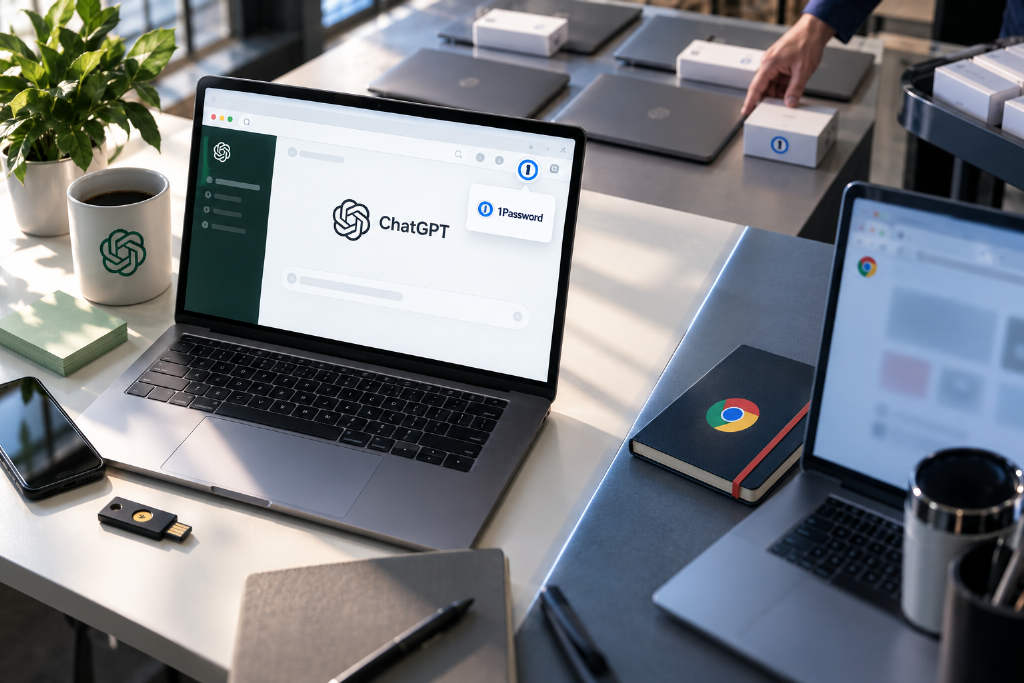
OpenAI2026-09-19 02:55:23ChatGPT desktop browser adds Chrome extension support, with 1Password shown in demoOpenAI has added Chrome extension support to the built-in browser inside the ChatGPT desktop app, allowing users to install, pin, and use extensions directly. The company’s demo featured 1Password, and enterprise administrators can also deploy and manage extensions across their organizations. The setup does not mirror a user’s existing Chrome environment, however. OpenAI’s documentation says the in-app browser runs separately, so it does not automatically inherit Chrome sign-ins, cookies, or previously installed extensions, which must be configured again inside ChatGPT. The browser now supports standard features including sign-in, tabs, downloads, and extensions. OpenAI engineer James Sun said the security boundary remains in place: Agent cannot directly operate extensions or read data stored inside them. In the 1Password example, a person can use the extension to fill in credentials, but ChatGPT cannot open the extension and retrieve passwords on its own. According to the report, the update is part of the ongoing integration of Atlas capabilities into ChatGPT after OpenAI said in July that Atlas would be shut down and its browser Agent functions moved to ChatGPT and Codex.350
OpenAI2026-09-03 11:46:10OpenAI folds Atlas browser functions into ChatGPT desktop after shutting standalone appOpenAI has moved away from Atlas as a standalone browser and folded its web-browsing functions into the ChatGPT desktop app, according to a product timeline centered on executive Tibo Sottiaux’s recent public posts. Sottiaux wrote on X that ChatGPT desktop has become his primary browser and that his productivity has "never been higher," a remark that reflects a broader shift inside OpenAI’s desktop strategy. The sequence laid out in the source shows several key steps. On July 10, ChatGPT Work rolled out to all Pro users, with OpenAI pushing users toward a new desktop app for full access to apps, browser functions and local files. After complaints about the redesign, Sottiaux acknowledged on July 17 that the first version missed the mark and said OpenAI would restore sidebar history and projects, add sync between Chat and Work, and support dual desktop modes. On Aug. 9, Atlas was officially shut down, and the same day OpenAI released a new ChatGPT desktop version combining Chat, Work and Codex with a built-in browser. OpenAI’s help documentation said browser-based agent capabilities were being moved into ChatGPT and Codex. The result is not the end of browsing, but the end of the standalone AI browser form factor inside OpenAI. The company now appears to be pursuing both an isolated in-app browser and Chrome-based access through the Codex Chrome extension when existing logins, sessions or extensions are required.960
Privacy Cash2026-07-21 04:02:11Privacy Cash adds support for BNB ChainDecentralized privacy protocol Privacy Cash has added support for BNB Chain, according to a post from the project on X. The update allows users to access privacy features directly in a browser. Privacy Cash also said users can carry out private cross-chain transactions through the protocol. No further technical details were disclosed in the source text. The announcement centers on two points: BNB Chain network support is now live, and browser-based privacy use is available alongside private cross-chain functionality. The source cited for the update is the project’s X post linked in the original item.1790
Google2026-07-10 08:00:13Google Adds AI-Powered Side-by-Side Search to ChromeGoogle has introduced an AI-powered side-by-side search feature in Chrome, allowing users to compare webpages and search results in one view, ask follow-up questions, and reduce tab switching during research.370