Binance2026-09-18 19:06:30Binance rolls out 24/7 FX perpetuals, starting with USD/BRL contractBinance is extending its derivatives business into foreign exchange with a round-the-clock perpetual futures product, starting with a US dollar-Brazilian real contract. The exchange said the USDBRLUSDT contract will launch on Sept. 21, settle in USDT and offer leverage of up to 100x. To keep trading open when traditional FX markets are closed, Binance is using a two-track pricing model: during normal foreign exchange hours, prices will follow a weighted index sourced from third-party data providers; on weekends and public holidays, pricing will switch to an orderbook-based method using an exponentially weighted moving average of orderbook prices. Binance trading head Shunyet Jan said the product is designed to extend price discovery beyond standard FX hours and give traders a venue to hedge or take positions at any time. The launch adds Binance to a broader group of crypto exchanges moving into FX-linked derivatives, following similar listings from Bybit and Kraken.490
Bitcoin2026-09-18 14:42:04BTC Open Interest Rises 8.21% in 24 Hours to $56.069 BillionBitcoin open interest across the global derivatives market rose 8.21% over the past 24 hours, according to data from Coinglass, with total open interest reaching $56.069 billion. The snapshot also showed how positions were distributed across major exchanges. Binance accounted for $11.946 billion in BTC open interest, the largest share among the platforms mentioned. Gate followed with $5.426 billion, while Bybit recorded $5.367 billion. OKX stood at $3.015 billion. The figures provide a market-wide view of outstanding BTC contract positions over the latest 24-hour period.590
OneKey2026-09-18 01:37:12OneKey founder Yishi Wang on AI-driven security, the Bybit hack, and how hardware wallets stay aliveOneKey founder Yishi Wang used a wide-ranging interview to map out how he entered crypto, how OneKey found its first users during DeFi Summer, and why he thinks AI has sharply compressed the timeline for both attackers and defenders. Speaking with Beca in an interview published by MarsBit, Wang said he first bought Bitcoin in 2013 while studying civil engineering, then later moved from ByteDance into crypto after deciding the industry offered faster feedback loops and a stronger personal conviction. He said OneKey’s early traction came in 2020, when larger on-chain users wanted hardware protection but found existing wallet setups cumbersome. Wang argued that local user experience improvements and open-source design helped OneKey win those users. He also described mistakes during the company’s growth phase, including nearly a year of product shortages and what he called premature design and over-optimization. A large part of the discussion focused on security. Wang said AI has cut the time needed to build a full attack chain from roughly two months with two or three senior researchers to two weeks with one security engineer in one recent case handled by OneKey’s Anzen Labs. He also walked through his reading of the $1.5 billion Bybit theft, saying the failure was not in the multisig contract, cold wallet, or Ledger device itself, but in a compromised Safe frontend engineer and a blind-signing flow that failed to show the real action being approved.580
Ethereum2026-09-15 18:42:05ETH open interest falls 5.53% in 24 hours to $31.353 billionEthereum open interest across the crypto derivatives market declined over the past day, according to data cited by ChainCatcher from Coinglass. Total ETH open interest stood at $31.353 billion after a 5.53% drop in the past 24 hours. Exchange-level figures in the data showed Binance with $8.65 billion in ETH open interest, followed by Gate at $2.909 billion, Bybit at $2.091 billion, and OKX at $1.668 billion. The update reflects a broad snapshot of ETH derivatives positioning across major trading venues at the time of publication. The figures were reported by ChainCatcher in a market analysis newsflash and attributed to Coinglass.720
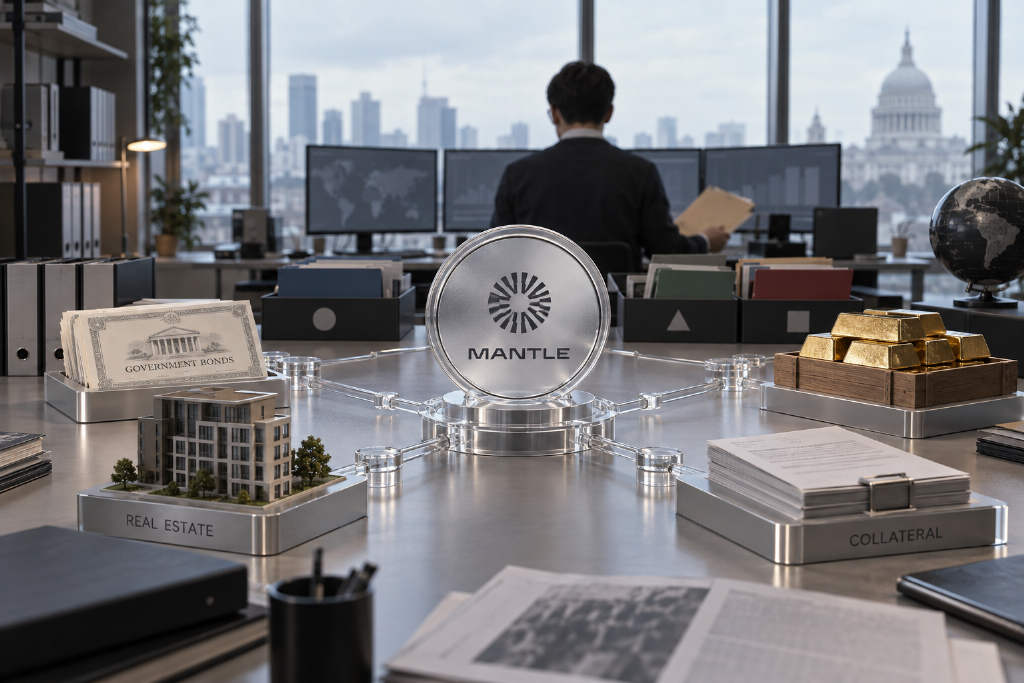
RWA2026-09-15 06:16:12Castle says tokenization is only the start as RWA competition shifts to onchain utilityCastle Labs Research argues that the next phase of real-world asset adoption will be decided less by how many assets a network can list and more by whether those assets can function as productive capital onchain. In its latest report, the research team says tokenized treasuries, stocks, credit products and funds no longer stand out simply because they exist on a blockchain. What matters now is whether they can move across venues, tap deep liquidity, serve as collateral and plug into strategies that give users more than a digital wrapper of a traditional instrument. Using Mantle as its main case study, the report maps out how an RWA ecosystem can be built in stages: starting with infrastructure, then expanding asset listings, then improving execution quality and composability, and only after that leaning harder into user acquisition and distribution. Castle says Mantle currently carries more than $225 million in RWA assets, with over 60% in Mantle Index Four Fund, 21% in syrupUSDT, 15% in Ondo USDY and 2% in xStocks. The report also highlights changing market structure. With tokenized assets now available from platforms including Kraken, Robinhood, Crypto.com, xStocks, Backed, Securitize, Ondo, Franklin Templeton and BlackRock, simple issuance is no longer enough. Castle says the sharper test is whether RWA can become usable, mobile and yield-generating capital across CEXs, DeFi venues and wallets.830
Bybit2026-09-14 09:43:23Bybit Lists LONGXIAUSDT Perpetual Contract With Up to 10x LeverageBybit has added the LONGXIAUSDT perpetual contract to its derivatives lineup, according to a newsflash published by Odaily. The newly listed contract is tied to Longxia and supports leverage of up to 10x. The source item was brief and did not include extra details such as listing time beyond "today," trading parameters other than the leverage cap, or broader product context. The update points to an expansion of the exchange’s available perpetual contract offerings, with LONGXIAUSDT now joining the platform’s contract market. Odaily identified the item as a market analysis newsflash, though the source text itself was limited to the listing notice and the maximum leverage level.870
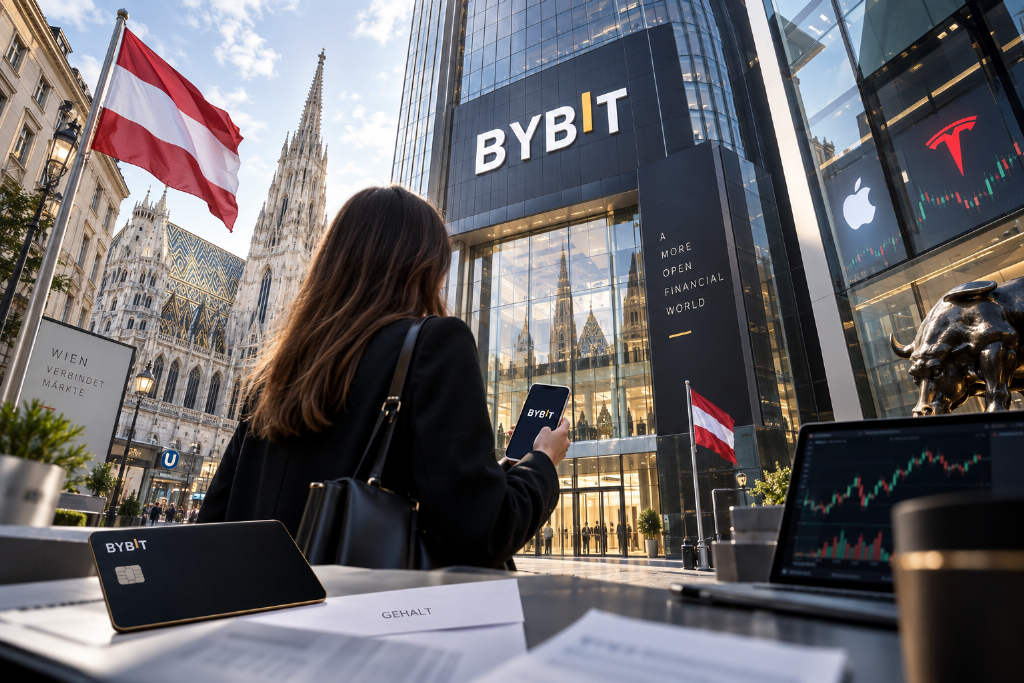
Bybit2026-09-13 05:22:54Bybit says three-license push in Europe will support bank accounts, bill payments and tokenized stock tradingBybit says its European strategy now rests on a three-part regulatory setup spanning electronic money, crypto-asset, and investment services permissions. In an interview with CoinDesk, founder and CEO Ben Zhou said the exchange has obtained an EMI license in Austria, already holds a MiCA license there, and expects to secure a MiFID license in about two months. Together, those approvals would allow European users to open accounts with an IBAN, receive salaries, make local transfers, pay utility bills, and trade crypto alongside tokenized equities and derivatives within one app. Zhou said an EMI license from Austria’s Financial Market Authority enables core banking-style services, while MiCA covers crypto trading across the European Union. The pending MiFID approval would add access to bonds, derivatives, and stock trading, including products tied to names such as Apple and Tesla. He also said MiCA alone has not produced profits after about a year of operation, arguing that multiple licenses are needed to compete in Europe. Zhou added that Bybit will keep working with partners in tokenized stocks, including Kraken’s xStocks, where he said Bybit remains the largest partner.910
Ethereum2026-09-11 19:42:05ETH futures open interest falls 5% over 24 hours, Coinglass data showsEthereum futures open interest across the market fell 5% over the past 24 hours, according to data from Coinglass, bringing the total to $32.118 billion. Among major trading platforms cited in the data, Binance held $9.266 billion in ETH futures open interest, Gate accounted for $3.039 billion, Bybit stood at $2.315 billion, and OKX recorded $1.8 billion. The figures reflect the latest snapshot of ETH derivatives positioning tracked by Coinglass.1420