defi

Yi Lihua
2026-09-02 09:32:43

Yi Lihua: Past Market Calls Mostly Correct, But Next Trades Need Caution

Yi Lihua said his market calls over the past few months have been mostly correct, but he does not expect that track record to carry over automatically, and he is urging traders not to relax. In remarks reported by Odaily Planet Daily, Yi said that after prices failed to break above the $81,000 resistance level a few days ago, he has stayed with a pullback view for the current phase. His expected downward move targets the 75.5 to 76 zone, with the market then heading higher toward the next resistance level at 86. Being wrong is normal, according to Yi. Many people think that sharing market views is an easy way to get disproven, and that one mistake can wipe out everything that was built before, but facing difficulties and making progress is the entrepreneurial spirit, and failure is simply part of the business process. His conclusion for traders: treat every trade with caution and start over each time, because correct judgment in the past does not guarantee correct judgment in the future.


20
Yi Lihua: Past Market Calls Mostly Correct, But Next Trades Need Caution
WuBlockchain
2026-09-02 09:05:48

WuBlockchain August tech report: BIP-110 stalls, Glamsterdam goes public, Solana moves toward 350ms

WuBlockchain’s August technology report tracked a broad set of blockchain infrastructure updates across Bitcoin, Ethereum, Solana, major Layer 2 networks, and several other ecosystems. The report said Bitcoin’s long-debated BIP-110 entered real activation in August but failed to gain support, with miner signaling at only about 2.5% during the mandatory signaling phase. Nodes enforcing the rule began rejecting non-signaling blocks from height 961,632, effectively creating a minority chain that produced only around two blocks before largely stalling, while the main Bitcoin network continued as normal. On Ethereum, the Glamsterdam upgrade moved from internal DevNet testing into a public test phase, with DevNet 8/Platåberget launched on Aug. 13 and the Gloas fork activated on Aug. 20. Testing has shifted from basic functionality to edge cases and client compatibility, while tentative testnet activation targets of Sept. 28 for Sepolia and Oct. 26 for Hoodi have been proposed. Hegotá also advanced from open proposal intake into a narrower candidate-selection stage. The report also highlighted rising performance competition across scaling networks. OP Mainnet upgraded from 250ms Flashblocks to 200ms Subblocks, Base outlined a 200ms Native Blocks plan, and Solana is preparing to reduce mainnet slot time to 350ms starting from epoch 1020. In parallel, Arbitrum said real mainnet blocks can now be proven with SP1-generated ZK proofs, extending its path toward a multi-proving architecture.

60
WuBlockchain August tech report: BIP-110 stalls, Glamsterdam goes public, Solana moves toward 350ms
Bybit
2026-09-02 09:59:09

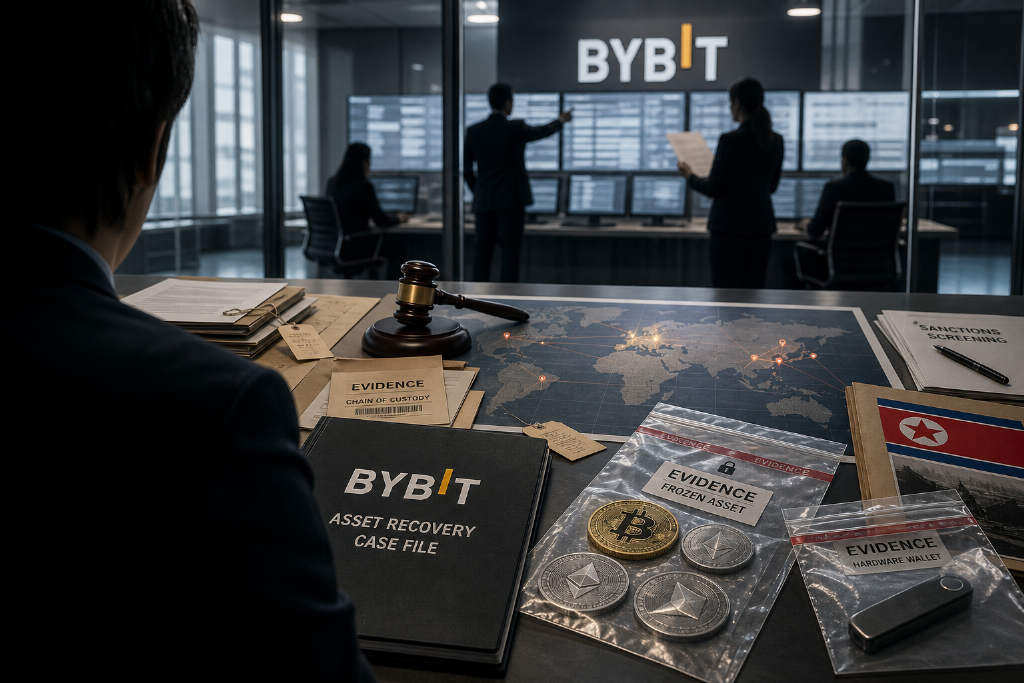
Bybit’s North Korea case shows how hard it is to turn traced crypto into recovered funds

Bybit’s civil action tied to the North Korea-linked hack lays out a broad recovery framework built on RICO claims, John Doe defendants, emergency injunctions and sanctions coordination. But the article argues that a legal strategy, even a sophisticated one, does not mean stolen assets are already recoverable. At the time Bybit disclosed the lawsuit, it said about $48.4 million in stolen assets had been recovered and another roughly $30.5 million had been frozen at more than 28 exchanges and custodians, for a combined $78.9 million, or about 5.3% of the initial $1.5 billion loss. The piece separates tracing, control, proof of ownership and final return as four different stages, each with its own failure points. It also highlights limits created by asset commingling, cross-chain transfers, mixers, peer-to-peer transactions and third-party claims. One example involved Australian citizen Joseph F. Corrigan, who challenged an attempt to include a Nexo wallet holding about $39,000 in crypto in a preliminary injunction. The second half of the article then turns to lessons for Web3 firms: build joint response systems before an incident, prepare freeze-request templates and contact networks in advance, preserve chain data in a form courts can use, map real-world control points over assets, and tier recovery efforts across jurisdictions, sanctions exposure and expected value.

40
Bybit’s North Korea case shows how hard it is to turn traced crypto into recovered funds
Sui
2026-09-02 09:28:00

Sui Network TVL Stabilizes at $1.2B, DeFi Liquidity in Focus

Sui Network's total value locked (TVL) has stabilized at around $1.2 billion, indicating sustained liquidity in its DeFi ecosystem. While TVL is not a direct proxy for user activity or protocol health, maintaining over $1 billion in locked capital helps Sui strengthen its position in the competitive layer-1 landscape. The next challenge is to convert this liquidity into deeper on-chain activity, including increased trading volume, lending, and stablecoin usage, which markets will watch closely.

20
Sui Network TVL Stabilizes at $1.2B, DeFi Liquidity in Focus
Tom Lee
2026-09-02 01:36:07

Morning Brief: Tom Lee Says Institutions Betting on Q4 Rally; Former SEC, CFTC Officials Urge Regulatory Easing for Crypto Perpetual Futures

Tom Lee predicts Bitcoin could reach $150,000 as institutions buy crypto stocks, calling current rally just the first wave. Former SEC and CFTC officials co-signed a letter urging risk-calibrated regulation to attract offshore perpetual futures back to the U.S. Bitfinex Securities lists 5 tokenized notes linked to Strategy and other Bitcoin reserve companies. 21 global financial institutions commit to forming a joint stablecoin company targeting 2027 launch. Other key stories: OSL Group revenue up 65.8%, Kraken parent partners with LSE to tokenize 100 UK stocks, Fed's Barr warns of rate hikes if inflation persists, Singapore MAS consults on stablecoin regulation, Thai SEC proposes allowing retail to trade overseas crypto derivatives, and more.

70
Morning Brief: Tom Lee Says Institutions Betting on Q4 Rally; Former SEC, CFTC Officials Urge Regulatory Easing for Crypto Perpetual Futures
AI Agent
2026-09-02 08:33:10

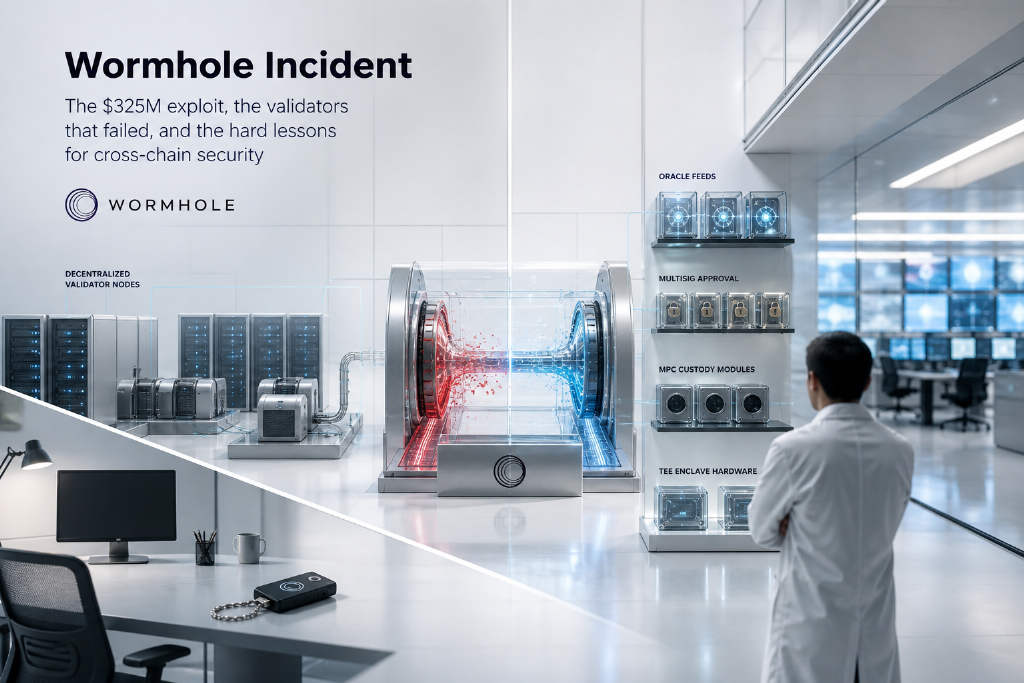
After the KelpDAO exploit, the harder question is who verifies what AI agents see and sign

The April 18, 2026 exploit of KelpDAO’s rsETH bridge exposed a familiar weakness in crypto systems: the failure point was not core cryptography, but the chain of authority around who could sign, what data they relied on, and how those checks were configured. According to LayerZero’s incident report, attackers used social engineering to obtain a developer session key, poisoned an internal RPC used by LayerZero Labs’ DVN, and suppressed external RPC endpoints with a denial-of-service attack, leading the signing service to certify forged messages. KelpDAO had also shifted its validation path from 2-of-2 to 1-of-1 DVN, removing an independent cross-check. CrowdStrike and Mandiant attributed the attack with high confidence to the North Korea-linked TraderTraitor group, also tracked as UNC4899. The article argues that this matters even more as AI agents gain onchain execution power through smart accounts, strategy wallets, and limited signing services. A valid signature can show that an authorized path was invoked, but not that the input data was sound, the decision matched policy, or the trade should have happened at that moment. It reviews the limits of oracles, dispute resolution, multisig bridges, MPC custody, and TEE-based systems, then examines DeepSafe’s CRVA design, which combines hidden committee selection, Ring-VRF, threshold MPC, and TEE. The model aims to reduce validator exposure and signing concentration, but it does not automatically determine whether the result being verified is actually correct.

40
After the KelpDAO exploit, the harder question is who verifies what AI agents see and sign
Bitcoin
2026-09-02 08:29:11

Bitcoin's 25% August Rally: The Strongest August Since 2017, but $81,000 Is the Real Battlefield

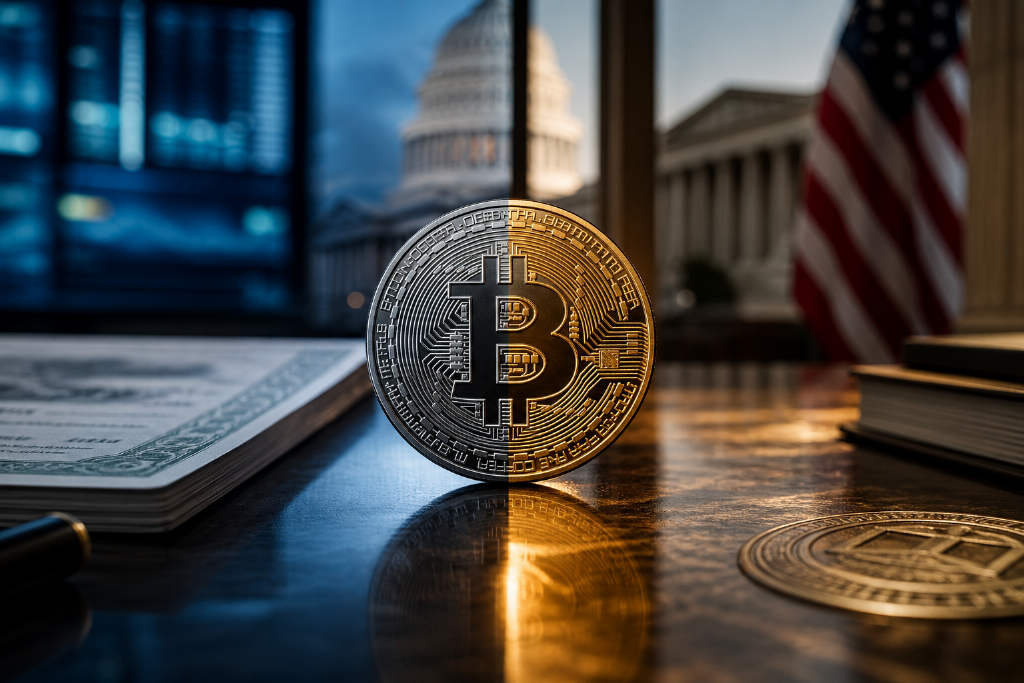
Bitcoin rallied about 25% in August, its strongest August since 2017, driven by the Treasury's expanded buyback, Washington's crypto policy push, and a record $1.4 billion short squeeze. The $81,000-$82,000 zone is the key resistance separating a trend reversal from a bear market rally. September's focus: the $76,000-$78,000 support, continued ETF inflows, and the long-end yield. Analysts view any pullback as a potential late-cycle buying opportunity.

50
Bitcoin's 25% August Rally: The Strongest August Since 2017, but $81,000 Is the Real Battlefield
RWA
2026-09-02 09:02:09

As Tokenized RWA Hits $37.29 Billion, the Market Is Testing What Ownership Really Means

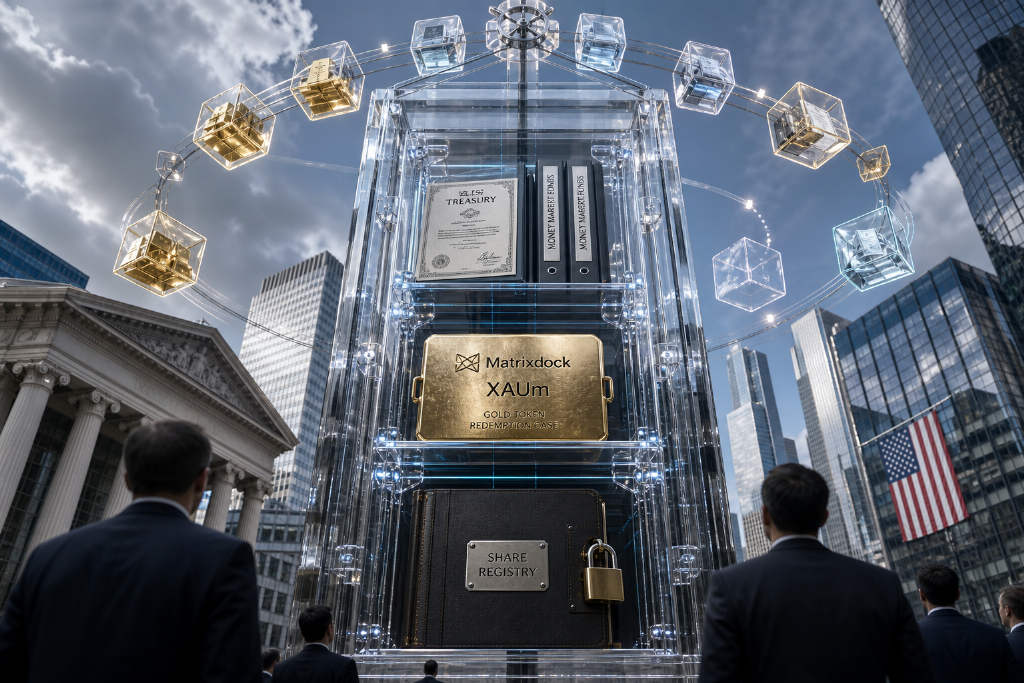
The tokenized real-world asset market is still expanding, but the main question is shifting. In a recent feature, BeInCrypto said tokenized RWA on public blockchains, excluding stablecoins, had reached $37.29 billion as of Aug. 3. U.S. Treasurys and money market products accounted for $16.16 billion, or about 43% of the total, while commodities stood at $4.6 billion and stocks and ETFs at $2.16 billion. The report argues that the market is moving past the simple issue of what can be tokenized and toward a harder one: whether holding a token actually gives the holder enforceable rights to the underlying asset. BeInCrypto centered that question in interviews with Matrixdock head Eva Meng, AMINA Bank Chief Product Officer Myles Harrison, Securitize Chief Operating Officer Billy Miller, and OKX US Chief Executive Officer Roshan Robert. The discussion covered settlement, ownership registration, and the mismatch between 24/7 token trading and financial infrastructure that still runs on traditional market hours. A case involving Matrixdock’s tokenized gold product XAUm drew particular attention: in April 2025, a holder redeemed 32.148 XAUm, burned the tokens, and received a 1-kilogram LBMA gold bar within T+3 after submitting the request. In the report’s framing, that process showed how token ownership is only part of the equation. What matters is whether the token can connect, through settlement, to the release and delivery of the real asset behind it.

40
As Tokenized RWA Hits $37.29 Billion, the Market Is Testing What Ownership Really Means