defi

crypto securi
2026-09-02 12:41:00

Crypto security losses hit about $215 million in August as price manipulation became the biggest threat

A monthly report from blockchain security firm ZeroShadow Technology said the crypto sector lost about $215 million to security incidents in August 2026, with attack activity staying elevated and risk shifting away from traditional smart contract bugs. The report, based on data compiled by several blockchain security monitoring platforms, put losses tied to hacking attacks and contract flaws at roughly $173.5 million, while phishing accounted for about $41.5 million. More than 16 protocol-related incidents were recorded during the month, pushing August well above July’s $97 million and making it the third-worst month of 2026 by losses so far. The report said the attack mix changed in a visible way. Price manipulation overtook conventional contract exploits as the leading source of damage, led by the roughly $75 million Tectonic incident on Cronos. Governance abuse and upstream dependency flaws also featured prominently, including the $8.5 million Term Finance case and a Cosmos EVM bug that affected six chains and caused $5.7 million in losses. ZeroShadow said the shift shows attackers moving toward governance privilege abuse, oracle and pricing manipulation, and shared component vulnerabilities, rather than relying only on exploitable code in contracts.


40
Crypto security losses hit about $215 million in August as price manipulation became the biggest threat
semiconductor
2026-09-02 12:13:13

China’s chip equipment push moves into tougher territory as metrology advances and bottlenecks persist

China’s semiconductor equipment industry is entering a more demanding phase, with the easiest import-substitution wins largely behind it and harder categories now drawing the most attention. At CSEAC 2026 in Wuxi, equipment makers and component suppliers used the show to present where domestic progress stands across process tools, metrology and inspection systems, advanced packaging, and core parts. In process equipment, companies such as Advanced Micro-Fabrication Equipment Inc. China (AMEC), NAURA, and Shanghai Micro Electronics Equipment showed continued expansion across etch, deposition, and lithography-related systems. But ion implanters remain a major weak spot. According to data cited by Aion Semiconductor, overall localization in ion implantation is still below 15%, with high-current tools below 10% and high-energy tools largely blank. Metrology and inspection appear to be moving faster. eGenerate, Yuwei Semiconductor, and SDRA were among the companies highlighted for equipment already in volume delivery or advanced validation. In advanced packaging, wafer-to-wafer bonding is more mature, while die-to-wafer bonding is still largely in validation. The report also points to continued progress in domestic core components, arguing that the sector is shifting from isolated breakthroughs toward broader ecosystem building, even as trust barriers, validation constraints, and long R&D cycles remain in place.

50
China’s chip equipment push moves into tougher territory as metrology advances and bottlenecks persist
Ethereum
2026-09-02 11:32:06

After Scaling, Ethereum’s Next Phase Targets Confirmation, Censorship Resistance and Wallet UX

A commentary published by Foresight and written by imToken argues that Ethereum’s roadmap is moving beyond a single-minded focus on scaling. After upgrades such as Dencun, Pectra and Fusaka pushed down rollup data costs, improved validator efficiency and prepared the network for higher data throughput, the next set of problems sits closer to actual usage: fragmented liquidity across multiple Layer 2 networks, long confirmation delays for bridges and exchanges, concentration in block building, weak censorship resistance, and a wallet model that remains difficult for mainstream users. The piece says Glamsterdam is still heavily performance-focused, highlighting ePBS under EIP-7732 and Block-level Access Lists, or BAL, under EIP-7928. But it also points to Fast Confirmation Rule, or FCR, as a mechanism that could give bridges, wallets and cross-chain infrastructure a strong confirmation signal in roughly 15 to 30 seconds under normal network synchronization, compared with around 13 minutes for full finality. Looking further out to Hegotá, the article places FOCIL, EIP-7805, at the center of Ethereum’s censorship-resistance push by forcing builders to include transactions listed by randomly selected validators. It also describes native account abstraction through EIP-8141, or Frame Transactions, as a deeper overhaul of Ethereum’s long-standing externally owned account model, with support for flexible authentication, native gas sponsorship and atomic batched execution.

40
After Scaling, Ethereum’s Next Phase Targets Confirmation, Censorship Resistance and Wallet UX
Polymarket
2026-09-02 11:40:35

Polymarket Launches US-Iran Ceasefire Prediction: 73% Probability by Sept 30

Polymarket has introduced a new prediction market on when the US and Iran will achieve a two-week ceasefire. Probabilities step up across deadlines, reaching 73% by Sept 30. The market defines a ceasefire as 14 consecutive days without qualifying US military strikes on Iranian soil, with settlement based on official statements and credible media reports.

20
Polymarket Launches US-Iran Ceasefire Prediction: 73% Probability by Sept 30
X Money
2026-09-02 11:24:56

X Money stops offering interest-like payouts to New Yorkers, switches to $300 bonus

The New York Department of Financial Services told Elon Musk’s X Money this week that it cannot keep paying bank-account-like interest on funds held for New York residents in non-bank accounts. X Money responded by offering New Yorkers a $300 "direct deposit bonus" as what it called interim compensation, while repeatedly stating that the payment "does not constitute APY or interest." According to Protos, X Money does not offer bank accounts in New York and instead uses a "stored value account" structure. The company says customers can earn yield, get cashback, send wires, mail checks, pay bills, and use free ATM withdrawals, while its marketing also references FDIC coverage. The report says customers could "obtain interest" through September 30 and then "earn a $300 bonus" after October 1. NYDFS approved X Payments as a money transmitter effective July 23, and X Money lists license number MT-105532 with a July 24 issuance date. Its own license page says X Payments LLC is not a bank, while its stored value terms state that X Payments is not a bank, is not FDIC-insured, and does not take deposits.

40
X Money stops offering interest-like payouts to New Yorkers, switches to $300 bonus
security inci
2026-09-02 10:20:11

Crypto Security Losses Hit $215M in August: Price Manipulation and Governance Flaws Dominant

August 2026 saw a total of $215 million in crypto security losses, a sharp increase from July's $97 million, making it the third-highest month of the year. Price manipulation attacks emerged as the top threat, with the Tectonic incident alone causing $75 million in damages. Governance vulnerabilities and upstream dependency exploits also played significant roles, with Term Finance losing $8.5 million and Cosmos EVM bug affecting six chains. Phishing scams evolved, including expired domain hijacking and a fake Trump-themed rug pull. ZeroTech Security recommends stronger governance controls, multi-source oracle pricing, and user vigilance against phishing links.

40
Crypto Security Losses Hit $215M in August: Price Manipulation and Governance Flaws Dominant
SEC
2026-09-02 10:05:36

SEC Proposes First Major Transfer Agent Rewrite Since the 1980s, Bringing Blockchain Into Share Ownership Records

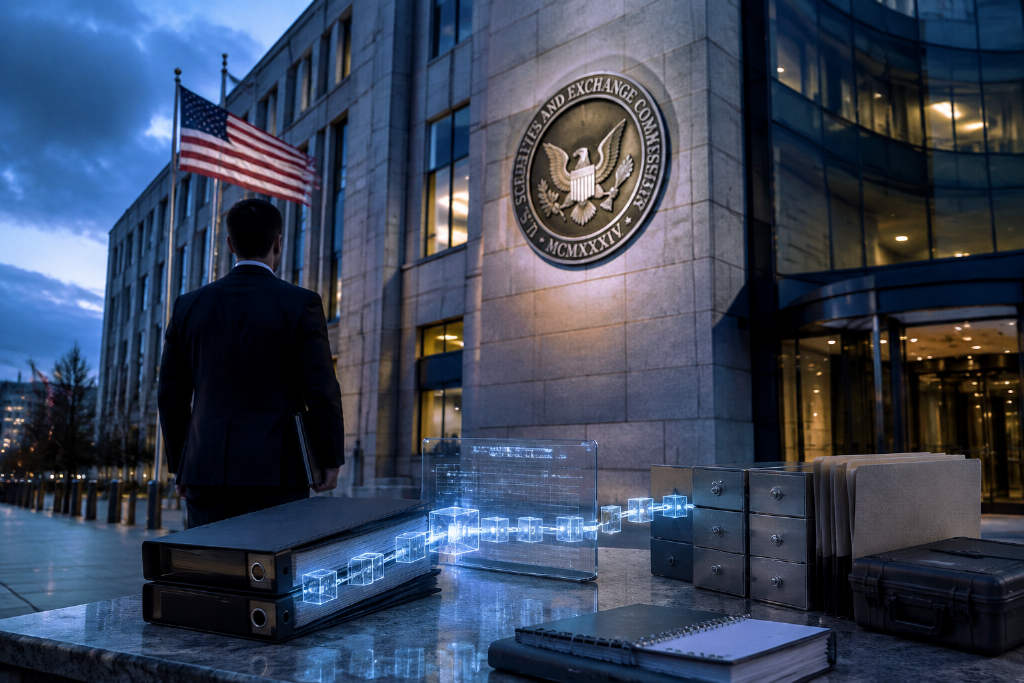
The U.S. Securities and Exchange Commission on Tuesday proposed a broad rewrite of the rules for registered transfer agents, the firms that keep the official record of who owns a company’s shares. The agency said it would be the first major overhaul since the rules were adopted in the late 1970s and early 1980s. The proposal would update definitions so they cover electronic records, blockchain-based records, and uncertificated securities, while also requiring written risk management policies, separate bank accounts for issuer and security holder funds, business continuity planning, and turnaround standards that match the current settlement cycle. Public comments will be due 60 days after publication in the Federal Register. The move matters for tokenized equities because a token tied to a real registered share still needs an authoritative ownership record. The SEC also tied the effort to Chair Paul Atkins’ wider market modernization push, and separately released the agenda for a Sept. 17 roundtable on 24-hour trading with participants from NYSE, Nasdaq, DTCC, Citadel Securities, State Street, BlackRock, Robinhood, and FINRA.

40
SEC Proposes First Major Transfer Agent Rewrite Since the 1980s, Bringing Blockchain Into Share Ownership Records
Policy Regula
2026-09-02 10:11:47

Treasury Yields Near 5% Force a Repricing Across U.S. Stocks, Gold and Crypto

U.S. Treasury yields moved back toward levels that markets treat as a line in the sand, with the 10-year yield rising to about 4.79% and the 30-year yield approaching 5.3% on Sept. 1. According to the report, that shift has become the main driver behind fresh weakness in risk assets rather than any single stock or sector. The Dow Jones Industrial Average fell 0.8%, the S&P 500 lost 0.7%, and the Nasdaq dropped 1%, marking a third straight daily decline for the major U.S. indexes. The article argues that the market is no longer focused only on whether the Federal Reserve will raise rates again. It is also reassessing how long elevated borrowing costs may stay in place as oil prices rise, inflation concerns persist, fiscal pressure builds in the United States, and demand for capital remains strong across areas tied to AI spending. In that setup, equities face valuation pressure, gold is pulled between higher real yields and safe-haven demand, and digital assets such as Bitcoin and Ether are being judged through both liquidity conditions and macro-hedge narratives. With the next Federal Open Market Committee meeting scheduled for Sept. 15-16, investors are expected to keep watching payrolls, CPI, PCE, oil prices and Treasury auctions for clues on inflation, growth and the path of yields.

40
Treasury Yields Near 5% Force a Repricing Across U.S. Stocks, Gold and Crypto